“Can’t overstate how much everyone must go see La grande bellezza,” Ferdinand Addis tweeted in September of 2013. “I want to spend the rest of my life staring at Toni Servillo’s forehead.” At that time, he was most widely known — to the extent that he was known to the public at all — as Ferdie Addis, author of books like Opening Pandora’s Box: Phrases We Borrowed From the Classics and the Stories Behind Them and I Have a Dream: The Speeches that Changed History (with Amen to That!: The Amazing Way the Bible Influences Our Everyday Language soon to be published). Though you wouldn’t necessarily visit the bookstore in search of these slim volumes, you might buy one on impulse, perhaps as a gift, upon spotting it beside the checkout counter. Whatever their raison d’être, these publications put Addis in the position be offered a contact to write a history of Rome, structured out of discontinuous episodes involving famed personages and high drama for maximum popular appeal.
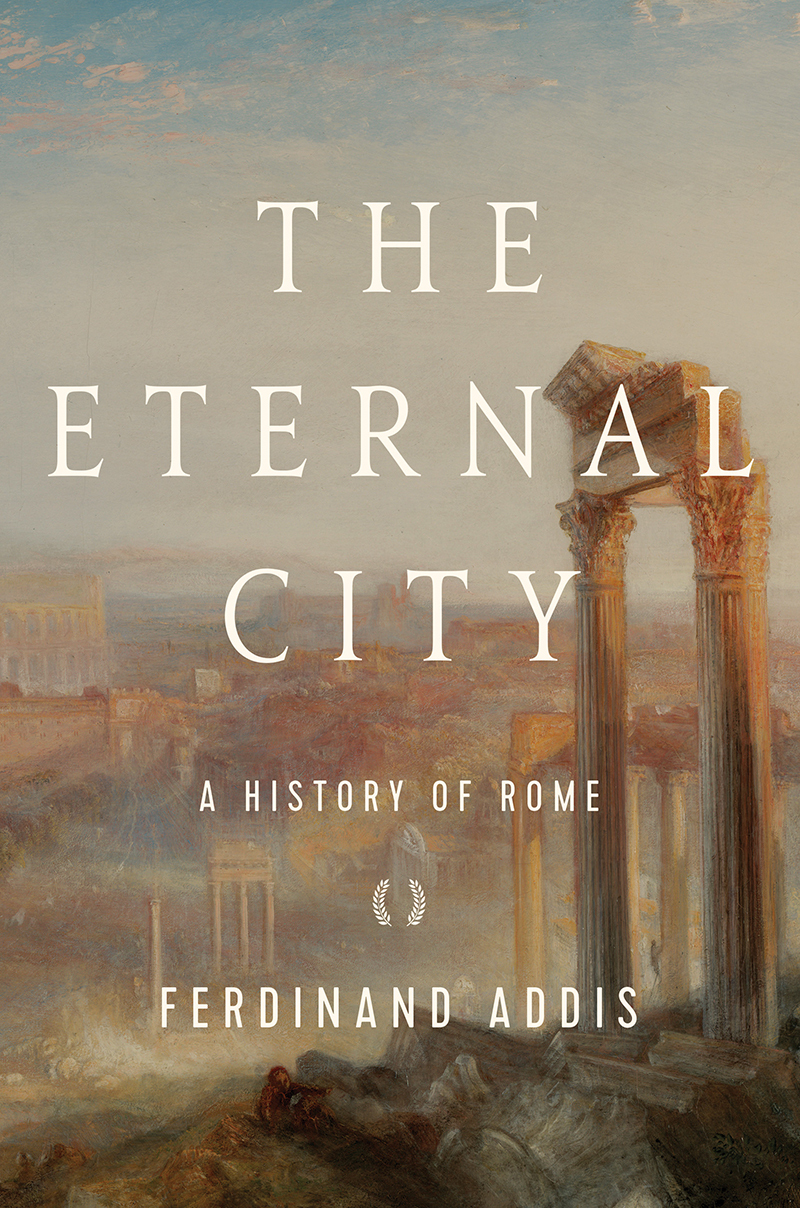
In the event, he didn’t write that book. Or rather, that book wasn’t written by Ferdie Addis, specialist in breezily explanatory collections of notable facts and quotable quotes rapidly produced for, and consumed at the same speed by, the British market. To his history of Rome Addis bought the dignity of his non-truncated given name, as well as that of a non-truncated research and writing process, which ultimately took something like seven times the yearlong period originally specified by the contract. The resulting book was convincing enough to be marketable abroad as well. When it came time to sell it in the United States, as The Eternal City: A History of Rome, Simon & Schuster insisted on calling it the work of a “master historian.” Addis himself protested against that description, as he tells it in one podcast interview, perhaps because of his relative youth and inexperience, at least by the standards of the Roman history field. Or perhaps it had to do with his not being an academic: an admirable choice, to my non-academic mind, as is his use of BC and AD for dates instead of the institutionally fashionable BCE and CE.
Read the whole thing at Substack.