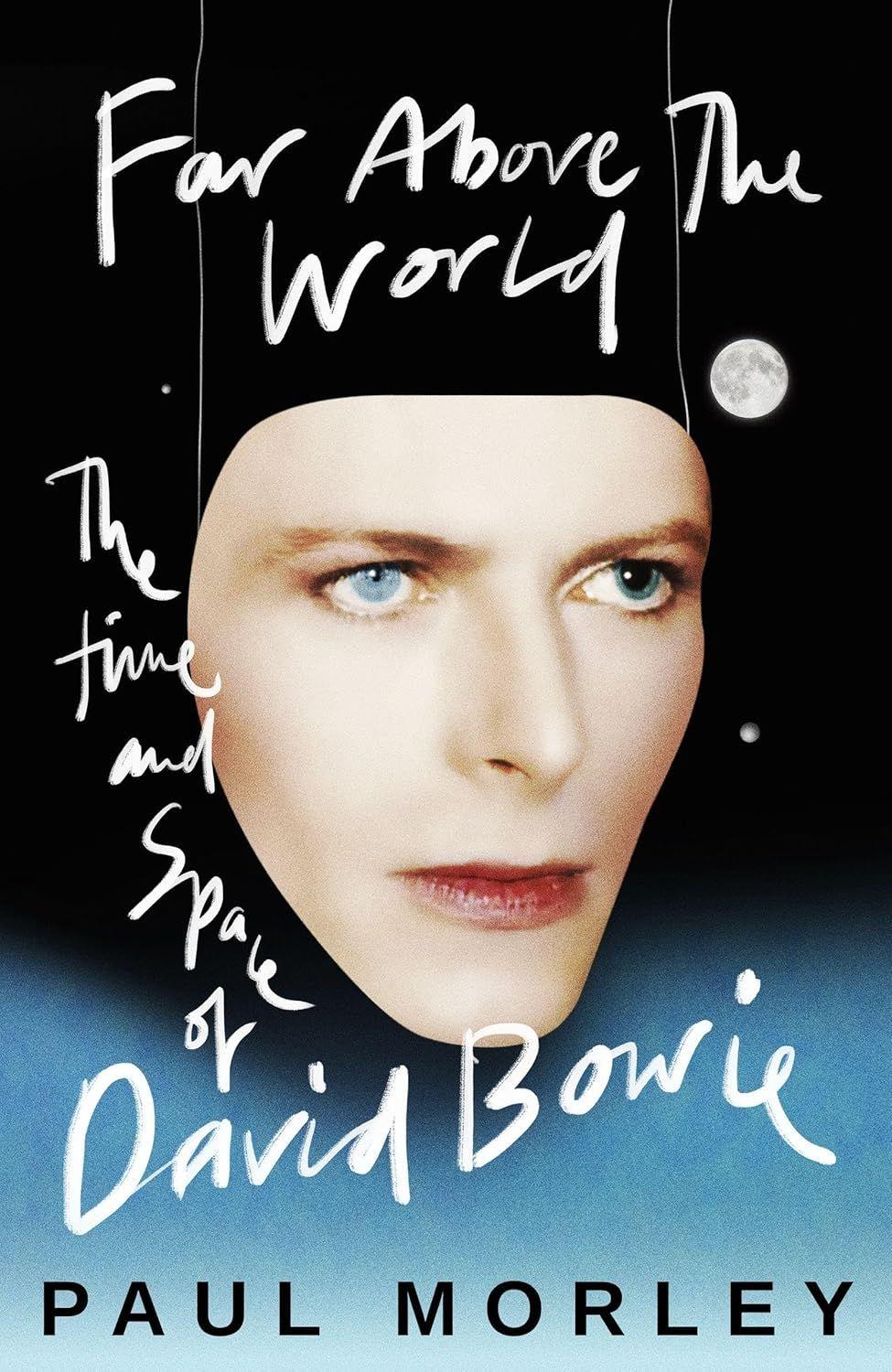
We now find ourselves living through one of those periods when everything seems to be going wrong. Economic troubles, the COVID-19 pandemic, two separate elections of Donald Trump to the presidency of the United States, large-scale destruction grinding on in places like Ukraine and Palestine, the proliferation of ever more trivial and addictive forms of social media, the pollution of the intellectual commons with meaningless content generated by artificial intelligence—to certain minds, this unfortunate streak began exactly 10 years ago, with the death of David Bowie. “The progressive intellectual life of moral critiques and ethical idealism that Bowie savoured, a romantic view of the world, turned to ash,” writes Paul Morley, a music journalist who contributed to New Musical Express in the late 1970s and early ’80s, in Far Above the World: The Time and Space of David Bowie (2025). “The kind of thoughtful, articulate and radical celebrity like Bowie started to seem as out of place as a silent movie star, as though ideas and complicated thinking were now as quaint as Chaplin and Keaton.”
Far Above the World is Morley’s second book about Bowie. The first, The Age of Bowie: How David Bowie Made a World of Difference, came out in July 2016, just six months after its subject shuffled off this mortal coil—or, as some fans would no doubt prefer to put it, returned to orbit. Written, in a kind of challenge to himself, in just 10 weeks’ time, the earlier book benefited from a degree of first-mover advantage, vulnerable though it was to charges of excessive speculation and self-indulgence. The intervening decade has given Morley ample time to write a more levelheaded meditation on his idol, indulge though his new book does in hyperbole of its own. “When David Bowie died, the universe itself groaned,” he writes in his introduction. “It too needed time to mourn. It slumped, lost in thought.”