Tuesday, February 11, 2014

People disagree about what most meaningfully indicates whether a Los Angeles neighborhood has turned “cool.” A seemingly disproportionate number of respected musical acts having emerged from it makes for one early sign. A sudden abundance of galleries and drinking spots there provides further, more solid evidence, amid which a few parking spots may stay open in the evening. Crime, for the most part, moves elsewhere. Its rents will, of course, rise — a force that inevitably renders the place uncool again. Somewhere during this process, the press naturally gets around to covering the neighborhood, and in the pre-internet era we would have said that heralded the beginning of the end; move into a part of town of which the newspapers have already made a big deal, and you’ve come too late.
Not quite so today, when every development, no matter how inconsequential, sends off a ripple of online coverage. My own suspicion that I’d do well to give a neighborhood further consideration emerges when it begins to produce lists, the kind that compile its “Eight Least-Known Concert Venues,” say, or its “Twelve Essential Cocktails,” its “Top Fifteen Highly Artisanal Coffee Experiences,” its “Five Most Authentic Pupuserías.” The growing prevalence of this form, long a mainstay of such bastions of journalistic rigor as Cosmopolitan magazine, doesn’t seem to everyone an entirely positive phenomenon, and most lists do little to hide their sole intention of milking a few clicks from office workers bored halfway to nihilism. Still, used as a delivery system for basic information about what you’ll find where, they may come in handy indeed. As Highland Park figured into more and more of them, I sensed that its moment had come.
Read the whole thing at KCET Departures.
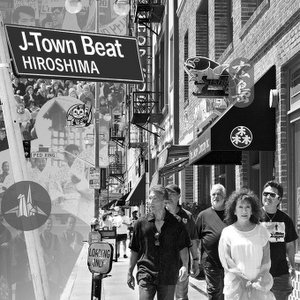 Colin Marshall sits down in Los Angeles’ Little Tokyo with Dan Kuramoto, founding member of the band Hiroshima who have now played for 40 years and recently released their 19th album, J-Town Beat. They discuss what he sees around him in the Little Tokyo in transition today as opposed to the one he grew up in 40 years ago; what it means to play “Los Angeles music” in this multi-ethnic city; how the band’s koto player June Kuramoto learned her classical instrument while growing up in a Los Angeles black ghetto; the question of whether you can build a modern, western band around the koto, which Hiroshima has always tried to answer; how musical traditions with deeper roots cooperate better together; making their musical mixtures work as, in microcosm, making America work; making the still mutable Los Angeles work as, in microcosm, making America work; his time as an Asian-American Studies department chair at CSU Long Beach, and what he found out about Japanese-Americans there; music as a “way of healing” from the self-hate he once took from the media; his lunch with Ridley Scott and Hans Zimmer; how it felt to become part of a group considered “the bad guys” again in the 1980s, just as Hiroshima really took off; the band’s first trip to Japan, and the visceral feelings it brought about; the universality of craft as an integral part of Japanese identity; the difficulties companies have had categorizing Hiroshima, and the special problems of the “smooth jazz” label; his lack of desire to play music for secretaries who just need their afternoons to pass more quickly; how they honed their chops in the Los Angeles black communities, and how black radio gave them their first big push; and the composition and meaning of the striking cover of their second album, Odori.
Download the interview here as an MP3 or on iTunes.
Tuesday, February 4, 2014

Though you can no longer go to a Japanese department store on the Miracle Mile, you can go to one in Hollywood. Half a century after Seibu took leave of Los Angeles, Muji arrived, representing the current shopping generation as thoroughly as its predecessor represented its own. Seibu, which in its native country harks far back, and far away, to the lavish department stores of fin-de-siècle Europe, theoretically dovetailed right in with the automobile-oriented, fully enclosed shopping experience, which developed so rapidly in postwar America in general and Southern California in particular. Why it didn’t take nobody can quite say, though at that time the country still regarded things Japanese as a novelty, and by the early 1960s traditional department stores, even those out on the “suburban” stretches of Wilshire Boulevard, had already ground to much larger, even farther-flung suburban malls, against whose comfortable convenience even the grandness of Seibu proved no match.
Despite occupying more square footage than any other branch in America, Hollywood’s Muji, by contrast, looks like a utilitarian, almost bare-bones operation. Clothes, snacks, housewares, gadgetry — all of it occupies a single floor, and little separates one type of product from another in placement, design, or (often nonexistent) packaging. Everything at Muji shares the family resemblance of maximum simplicity, a deceptively rigorous aesthetic reassuring shoppers that they haven’t paid for frivolity, for display, for bells and whistles. A far cry indeed from the days when opulence sold in quantity, and one whose number of eager respondents signals the definitive end of the developed world’s previous cycle of big spending. Muji’s product shows us something about the new vogue — for what we in America and Japan like to think of as the old, unwasteful virtues — but, given the newest wave of city life, so does its location.
Read the whole thing at KCET Departures.
Thursday, January 30, 2014

On the northwest side of Glendale Boulevard, Kaldi Coffee, which boasts a signature brew from beans “roasted locally in Atwater Village,” hosts a long-sitting procession of the unconventionally employed, customers in sometimes dire need of both caffeine to power their brains and electricity to power their laptops. (Indeed, it once provided all the material for a Los Angeles Times human-interest story on the lives of aspiring to mid-level screenwriters.) On the southeast side, Proof Bakery, though it also serves a fine cappuccino and an even better scone, offers neither outlets nor bathrooms, encouraging their clientele, and their precocious young children often in tow, to move briskly through. Such specialization of the already specialized now happens in this neighborhood way up in the northeast, which some rank as the “hippest” in Los Angeles, some either dismiss or applaud as a “brunch zone,” and some describe as the closest experience the city offers to the professionally lighthearted, indie-everything sensibility of Portland, Oregon.
Some may explain their move to Atwater Village by admitting that it lets them live a mildly suburbanized life without having to actually move into a suburb. Throughout much of the twentieth century, the whole of Los Angeles held out this same promise: maybe, just maybe, you could here have the cake of a comfortable lifestyle, while also eating the cake of culturally robust and environmentally stimulating surroundings. To this day, nobody has quite figured out whether to declare that an oasis or a mirage. But those seeking that elusive midpoint between crowded but exhilarating city center, and comfortable if sense-dulling bedroom community, have lately found their moving target hovering around the northeastern corner of Los Angeles, where Atwater Village perhaps stands as the frontier.
Read the whole thing at KCET Departures.
Wednesday, January 29, 2014
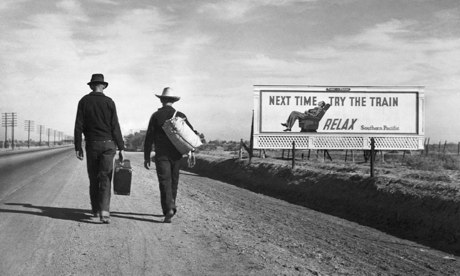
In drawing up our blueprint for a new metropolis, what can we learn about its layout from sprawling, stateless Los Angeles – whose grotesque size and dizzying variety of form surely repudiate the very notion of an ideal city? As soon as you think you’ve identified how it looks, how it acts, the condition to which it aspires, or even which nation or culture it belongs to, the opposite conclusion inevitably rushes up to confront you mere minutes down the road.
This lack of definition makes it no easy place to write about, and the challenge has reduced many an otherwise intelligent observer to the comforts of obscurantism and polemic. Nobody understands Los Angeles who thinks about it only through the framework of its entertainment industry, its freeways, its class divisions, or its race relations. I don’t even pretend to understand Los Angeles, but living here I’ve undergone the minor enlightenment whereby I recuse myself from the obligation of doing so.
My own time in LA has, in fact brought me to see many other world cities as theme-park experiences by comparison, made enjoyable yet severely limited by the claims of their images. San Francisco has long strained under the sheer fondness roundly felt for it, or at least for an idea of it, never quite living up to how people imagine or half-remember it in various supposedly prelapsarian states of 20, 40, 60 years ago. New York has similarly struggled with perceptions of it as the ultimate expression of the urban, and even lovers of Paris come back admitting that Paris-as-reality seems hobbled by Paris-as-idea.
I look around my own neighborhood of Koreatown and wonder what set of ideas could ever accommodate it. In its officially just under three, but in practice over five, of the densest square miles it churns business and culture brought straight from not just South Korea but southern Mexico as well. It all happens in and amid the sometimes incongruously grand structures of what they used to call the Ambassador District, an area swanky enough by the standards of 1930s and 40s America that it hosted Academy Awards ceremonies back then. I have a hard time imagining Koreatown emerging quite so robustly in any city contained by a vision.
Read the whole thing at The Guardian Cities.
Tuesday, January 28, 2014
 Colin Marshall sits down in Copenhagen’s Frederiksberg with Melanie Haynes, author of the blog Dejlige Days. They discuss the Danish national virtue of hygge (and the also important quality of dejlige); how she came to leave her native England for Denmark; the Copenhagen system of smiley-face food sanitation ratings; the Danish habit of both asking “Why are you here in my country?” and personally receiving her praise for the country; why she writes about festivals, eating, design, and “the relaxed life”; how the British operate in fifth gear at all times, and the Danish in third; her popular post on “becoming Danish,” and Denmark’s concept of immigration; the necessity to learn Danish so as to avoid perpetually apologizing all the time for your non-Danishness; her troubled period in Berlin, a city with which she could never really engage; how Danish society frowns on ambition versus how British society does; scarves and the way Danish women wear them; what pregnancy taught her about Danish life; the relative perception of taxes, and how her work in government public relations sheds light on it; how she intends to help her young son become a citizen of the world; what she wished she’d known about Denmark before coming; and her immediate feeling that she “should’ve always been here.”
Download the interview here as an MP3 or on iTunes.
Tuesday, January 21, 2014

For such a high-profile metropolis, Los Angeles has a curious relationship with the word “city.” Its detractors have, for the better part of a century, argued that the term doesn’t apply: witness the longevity of the quip calling Los Angeles six, twelve, nineteen, or (somehow, most often) 72 suburbs in search of a city, variously attributed to a gallery of wits including Aldous Huxley, H.L. Mencken, Robert Benchley, Alexander Woollcott, and (somehow, most often) Dorothy Parker. Sometimes even its defenders say close to the same thing, agreeing that Los Angeles has nothing to do with, and thus admits no judgment by, the standards, traditions, and expectations implied by the word “city.” According to either framing, the more you think about Los Angeles in terms of a city, the less satisfactory the place feels. Any part referring explicitly to itself as city thus automatically raises alarms of suspicion.
The residentless Universal City, a 415-acre area of the suburban San Fernando Valley wholly owned by Universal Studios, bends most anyone’s definition of “city” to or beyond the breaking point. A small piece of of it lays within the boundaries of Los Angeles proper, but the rest of it — the part visitors see — has, as an unincorporated area, given rise to such attractions as the Universal Studios Hollywood theme park; before that, the actual, functioning production facilities from which that park draws its theme; and most recently Universal CityWalk, essentially a shopping mall, but one that requires some explanation. In his essay “Considering CityWalk: A Brief History of the Mall and Artificial Neighborhoods“, Oliver Wang describes it as “an amusement park concept of sorts” which grounds its fantasy “in a longing for a particular kind of real city space: dense, busy, and vibrant.” That longing comes through loud and clear in the branding: CityWalk features an upper deck called CityLoft, which itself contains a cluster of eateries called CityFood. Back on the ground level, at least one kiosk sells “City Caps.”
Read the whole thing at KCET Departures.
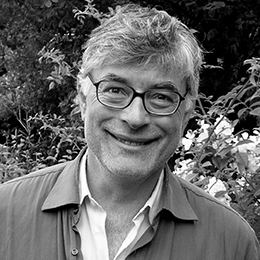 Colin Marshall sits down in Copenhagen’s Vesterbro with Per Šmidl, author of the bestseller Chop Suey, the essay Victim of Welfare, and the new novel Wagon 537 Christiania. They discuss the surprise foreigners, and especially Americans, feel upon discovering that a self-governing commune like Christiana has existed for over forty years in the middle of Copenhagen; how Christiana began as “a spiritual venture” and became “the last and greatest attempt Western man made to rid himself of the shackles of capitalism”; the criticism Danish society allows, but the price you must pay if you make it; how his speaking out resulted in his “confinement” to unpublishability; normal society as a corset, and the way life in a place like Christiana releases it; what it means when the protagonist of Wagon 537 Christiana discovers he can’t urinate; the question of whether one moves into Christiana because of an awareness of wanting to live differently, or simply because of a diffused feeling of something having gone wrong; the difference between short- and long-term Christianites, and the results they get from their respective stints there; how Henry Miller revealed to him “the importance of personal liberation”; how he wrote Chop Suey while keeping his contact with the Danish state to a minimum, and the Czech exile he moved into after he completed it; the societal “lie” he felt he had to expose by writing Victim of Welfare; the state as an eternal parent who considerers unacceptable the individual’s desire to live; how Christiana could possibly have survived as long as it has; what his time outside the Danish state taught him; and the importance of living a life between countries.
Download the interview here as an MP3 or on iTunes.

Vital stats:
Format: one-, two-, three-hour conversations presided over by a painter and a pornstar
Episode duration: 1-3h
Frequency: twice weekly, at least
I started downloading DVDASA [RSS] [iTunes] knowing only that it involved a pornstar — and I didn’t even know the pornstar. Not to say that a known pornstar would have held out much promise; Caleb Bacon, now host of Man School, demonstrated the severe conversational limitations of pornstars the hard way on his previous show The Gentlemen’s Club. Sit even the supposedly “creative” and “smart” pornstars now in vogue down for an interview, and you soon find out that those labels indicate the somewhat less impressive “creative and smart by pornstar standards.” Still, pornstars lead unusual and thus fascinating careers, especially now that the democratization of media technology has dramatically altered, and will more dramatically alter, their very role in the culture. Now that anyone can potentially get naked before the camera for an audience of thousands, the professionals have to bring something extra to the table. Even pornstars almost entirely lacking the gift of verbal expression can shed at least a little light on what that feels like.
Asa Akira, DVDASA’s porn-starring co-host, doesn’t lack the gift of verbal expression, although read between the lines of what she has to say about the demands of stardom in the modern-day porn business, and it all echoes what David Foster Wallace wrote in his 1998 report from the Adult Video News awards: “The more acceptable in modern culture it becomes, the farther porn will have to go in order to preserve the sense of unacceptability that’s so essential to its appeal. As should be evident, the industry’s already gone pretty far; and with reenacted child abuse and barely disguised gang rapes now selling briskly, it is not hard to see where porn is eventually going to have to go in order to retain its edge of disrepute. Whether or not it ever actually gets there, it’s clear that the real horizon late-’90s porn is heading toward is the Snuff Film.” Until that time arrives, she joins David Choe, DVDASA’s non-porn-starring co-host, twice a week for one-, two-, three-hour conversations about sex, race, relationships, food, flying first-class, and crapping in Starbucks cups. (And sure, they sometimes talk about porn, but by now the novelty of Akira’s pornstardom seems to have worn off.)
Read the whole thing at Maximum Fun.
Tuesday, January 14, 2014

I brought a friend visiting from Canada on one of my nighttime bus rides down Wilshire Boulevard. Halfway through the trip, he looked out all the windows in search of any feature that might identify the area around us. Finding none, he turned to me and simply asked. When I told him that we’d reached Beverly Hills, he reacted with incredulity: what could this dark, silent row of office buildings possibly have to do with that internationally recognized pair of words, less a place name than an incantation of opulence? I tried my best to explain that, despite Wilshire’s status as the closest thing to the “main street” of western Los Angeles, it doesn’t necessarily play the same role for all the neighborhoods, districts, and municipalities through which it passes.
So if Wilshire doesn’t expose the heart of Beverly Hills, he asked, then what street does? I could only offer an assumption: Rodeo Drive. Among impassioned shoppers everywhere, its name surely sparks as much of reaction as that of Beverly Hills itself. Its four blocks between Wilshire and Santa Monica Boulevard run through the middle of the “golden triangle,” a commercial zone that, though small, has successfully exported its image of itself far and wide. More than a few Angelenos who originally came from other countries have told me that, when they envisioned Los Angeles from afar, they’d imagined miles of glossy façades fronted by palm trees; a landscape of vertiginously high-end brands and forbiddingly expensive boutiques; parking jammed with Rolls Royces, Maseratis, and Hummers; numerous plastic surgery clinics; cafés and spas populated by those clinics’ even more numerous clients waited on by the soap-opera stars of tomorrow.
Read the whole thing at KCET Departures.
