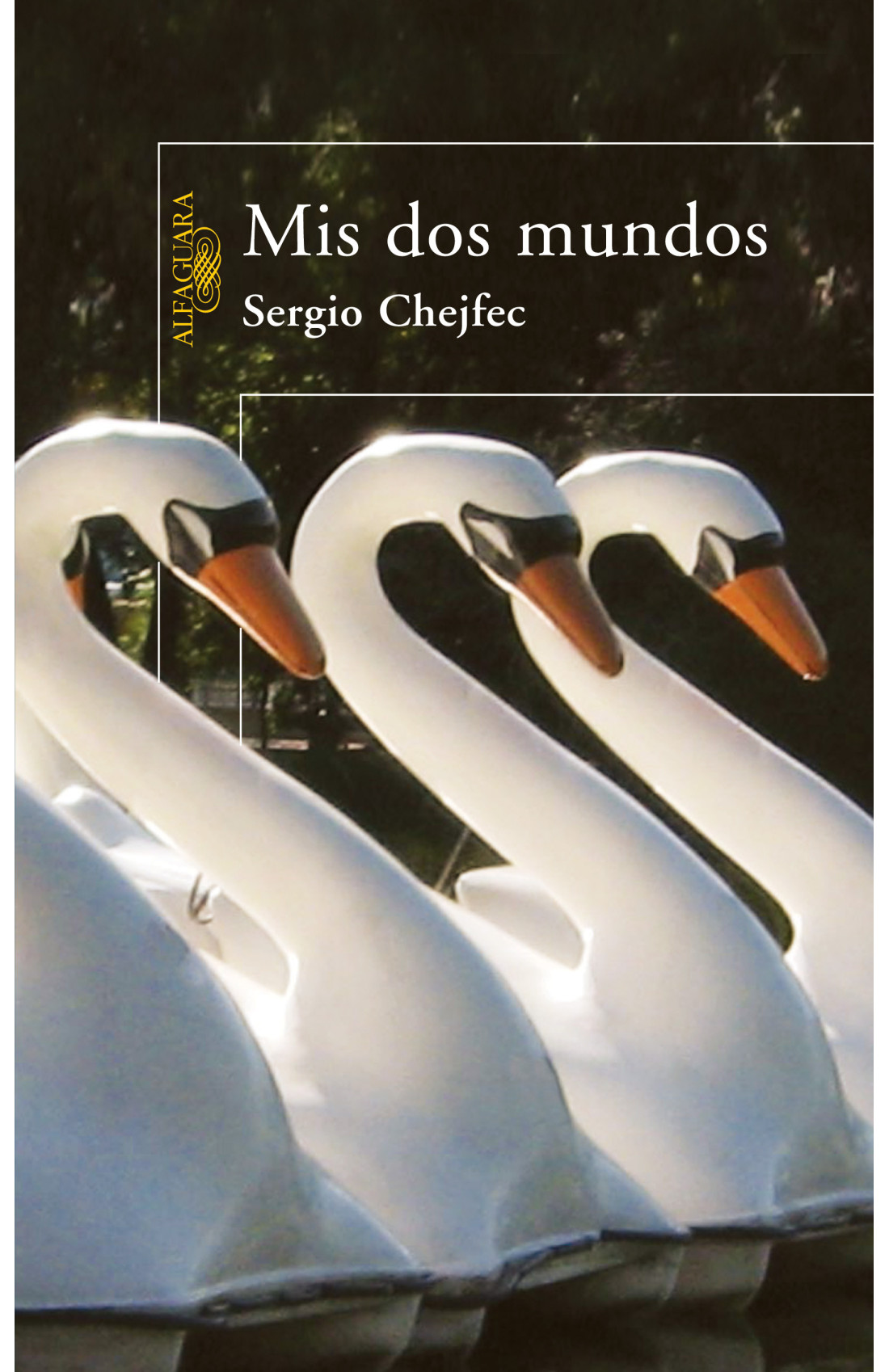
“Are you deeply interested in how an Argentinean observer might phenomenologically regard a southern Brazilian city, combined with his philosophy of walking, in fictional form?” once asked economist Tyler Cowen in a post on his long-running blog Marginal Revolution. He went on to give his own answer: “I am.” The context was one of his occasional “What I’ve been reading” roundups, and the book in question was Mis dos mundos by Sergio Chejfec — or rather My Two Worlds, as it had just then, in 2011, been published in an English translation by Margaret Carson. Though I’d already been reading Marginal Revolution for years at that point, I can’t recall whether that description piqued my interest when Cowen first posted it, when I had scant experience with cities or travel in any case. But when I found my way back to it last year, my desire to read such a book, ideally in the Spanish original, could hardly have been stronger. Looking up Chejfec and his body of work, I wondered — as I do ever more frequently about Latin American writers — where he’d been all my life.
By that point, Chejfec had been gone for nearly two years, having died of cancer in 2022 at age 65. He began publishing in Spanish since 1990, the year he left his native Buenos Aires for a fifteen-year stint in Caracas, but My Two Worlds was his first English translation; the same press, Open Letter, has since put out The Planets, The Dark, and The Incompletes. These are all, in one sense or another, novels, or at least novellas, though Chejfec was known for eschewing many of the elements novel-readers tend to expect: plot, dialogue, named narrators. The unnamed narrator of Mis dos mundos, a writer, finds himself in the aforementioned southern Brazilian city to appear at its literary festival. In the text, he recounts not the events of the festival, but a walk he takes the following day to an urban park not far from his hotel, having been captivated by the green expanse representing it on his map. The sights and sounds he encounters during preparations for this outing the night before and on the day of the outing itself send his narration down various byways of memory and contemplation — many more, it feels at the end of 128 pages, than could normally be explored within the confines of such a short book.
Read the whole thing at Substack.