Skip to content

Los Angeles, the City in Cinema: the Bonaventure Hotel


What building most clearly signifies Los Angeles? In a built environment with few easily legible architectural icons, the Bonaventure Hotel has come to stand for the city as no other building does. Since opening in 1976, John C. Portman Jr.’s quintet of reflective cylindrical towers atop a stark concrete base has played in urban Los Angeles films not just an incidental if striking piece of background detail, but a piece of visual shorthand for Los Angeles (or its destruction), an ominous space for illicit dealings, a stop on or pathway for a chase, a convergence point for a final showdown, or even a part of completely different cities or realities. And like Los Angeles itself, filmmakers frequently exploit certain of the Bonaventure’s features, or even invent ones that don’t exist, while ignoring its other qualities entirely.

The video essays of “Los Angeles, the City in Cinema” examine the variety of Los Angeleses revealed in the films set there, both those new and old, mainstream and obscure, respectable and schlocky, appealing and unappealing — just like the city itself.

Los Angeles Review of Books Podcast: James Sie and Sungyoon Choi

Colin Marshall talks with James Sie, voice actor, onscreen actor, and author of a new debut novel, Still Life Las Vegas. This alienated young artist’s coming-of-age story in the decidedly non-glamorous part of Sin City weaves together Greek myth, family myth, and Liberace, doing so with not just text but graphic-novel sections as well. Sungyoon Choi, the artist behind those sections, also joins in on the conversation.

You can stream the conversation just above, listen to it on the LARB’s site, download it on iTunes.

Where Is the City of the Future?: The 21 Candidates for City of the Future, Revealed

As you may know, for every $2000 we raise on Byline, the “Where is the City of the Future?” project will grow to involve another potential city of the future. The first $2000 will result on a report on Los Angeles; the second $2000, a report on Seoul. But from that point on, I’ll do all the project’s subsequent in-depth, multimedia travel-cultural-urbanistic explorations on cities of the supporters’ choosing.

First, I’ll head out to any cities named by individual supporters who have pledged the top reward amount. (If you’ve got a particular city you’d really like to see involved, that might be the path for you.) After that, I’ll put it to a vote each time. Today, I present to you the master list of Pacific Rim cities this project might cover, including all those for which you’ll have the opportunity to cast your vote if you support “Where Is the City of the Future?” at the $40 level or higher:

Los Angeles, USA
San Francisco, USA
Seattle, USA
Honolulu, USA
Lima, Peru
Santiago, Chile
Vancouver, Canada
Sydney, Australia
Melbourne, Australia
Auckland, New Zealand
Wellington, New Zealand
Tokyo, Japan
Osaka, Japan
Seoul, South Korea
Busan, South Korea
Shanghai, China
Beijing, China
Taipei, Taiwan
Hong Kong
Singapore
Ho Chi Minh City, Vietnam
Hanoi, Vietnam
Jakarta, Indonesia
Bangkok, Thailand
Manila, Philippines
Kuala Lumpur, Malaysia

Perhaps this list includes a favorite city of yours. Perhaps it includes your hometown. Or perhaps it just includes a few Pacific Rim metropolises about which you’ve been curious. If we raise $10,000, we can cover five of them; if we raise $26,000, we can cover half of them; if we raise $52,000, we can cover all of them.

Support “Where Is the City of the Future?” in its remaining 42 days of fundraising, and you’ll bring us all closer to learning just what each of these cities has to teach us in the 21st century — the urban century. For more information, head on over to the project’s page on Byline.

Where Is the City of the Future?: How to Make Your City the City of the Future

Throughout the two months of fundraising for “Where Is the City of the Future?”, I’ll write regularly about what the project intends to do, how the project intends to do it, and how you can play an important part in it. You already know one important part you can play: the part — and a considerably important one indeed — of becoming a supporter on Byline. But if you’ve already done so, or plan to do so soon, chances are you live in a future-minded Pacific Rim city yourself, or at least you’ve got one or two such places you especially like. And so you might wonder this: “How can I make my city the city of the future?”

So far, we’ve come up with a few different ways you can make your preference heard. The most effective — as well as the most fun — would be to choose the top supporting option, which entitles you to not just my writing one of the series’ reports on your Pacific Rim city of choice, but my getting your thoughts on it (ideally over whatever you would consider the city’s most interesting food or drinks) when I arrive there. But given the expenses related to time and travel that method involves, it admittedly won’t fit into every supporter’s budget.

If, however, you support at any amount from $40 and above, you’ll have the chance to vote in each “election” of a potential city of the future, which will happen between each report I write after the first two (on Los Angeles and Seoul) and any chosen by top-level supporters. At the conclusion of one report, I’ll put up a poll listing out the candidates for an upcoming one, and you can in that way raise the chances of a report appearing on your favorite Pacific Rim city.

You might, of course, also try to convince me through other means, such as Twitter, one of the prime platforms of our time for making one’s case. I’m @colinmarshall over there, so feel free to send me an @ reply that lets me know why I should consider your city a possible city of the future. Is it do do with its architecture? Its culture? Its commerce? Its transit? Its food? Its very location? Send a compelling enough tweet postcard, and your city might well appear in the list I post next time, which will reveal all the Pacific Rim cities for which you’ll definitely be able to vote in the first round after Los Angeles and Seoul.

But who knows? The city of the future might turn out to be some place none of us have yet thought about — except you.

Announcing My New Project, “Where Is the City of the Future?” on Byline

Presenting “Where is the City of the Future?”, an in-depth search across the Pacific Rim for the best city to lead us into the urban century ahead — and a brand new model of journalism.

Not long after the turn of the 21st century, the world’s urban population surpassed its non-urban population for the first time ever. And the deeper humanity gets into the this century, the more urbanized our world becomes: developing cities develop, neglected cities revitalize themselves, and the long-standing great cities of the world continue to find (or struggle to find) new ways of accommodating all those who’ve never stopped coming to live in them.

How can the ever-growing urban world prepare itself for things to come? This series of reports aims to discover just that by taking as close as possible a look at cities all across the Pacific Rim, from 20th-century metropolises looking toward the future like Los Angeles, Seattle and Vancouver to compact city-states like Singapore and Hong Kong to fast-developing capitals like Jakarta and Bangkok to lower-profile but nevertheless inventive “sleeper” cities like Wellington and Santiago to east Asian megacities like Seoul, Tokyo, and Shanghai.

City of the Future Byline image

Each of these cities, and many others along the Pacific Rim, have important lessons to teach every other. In order to learn them, each report will delve into as many cultural, architectural, and urbanistic aspects of the city at hand as possible, combining both text and photographs, and informed by both extensive on-the-ground exploration and in-depth conversations with those who know these fascinating urban places best. The result will draw from the Pacific Rim’s cities a host of ideas, daringly innovative or resiliently time-tested, that the rest of the urban world can put into practice.

I’ve just launched “Where Is the City of the Future?” as one of the flagship projects on Byline, a new platform for crowdfunded journalism. For every $2000 raised there, I’ll go report on a Pacific Rim city. The series will begin with reports on Los Angeles and Seoul, and will continue on indefinitely to potential cities of the future in an order voted on by you, the backers. Other rewards include access to the ongoing conversation about the direction of our urban world in the supporters’ cafe, a print collection of all the reports at the end of the series’ run, postcards personally sent from each city on which I report, and even the addition of your Pacific Rim city of choice to the series.

You can get involved at the project’s Byline page. Thanks very much indeed — and I look forward to finding the city of the future together.

Diary: This American Road, Sunnyvale

Sunnyvale 2015 - 1

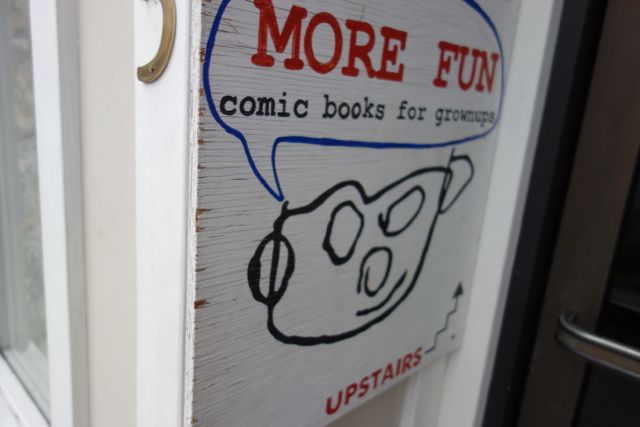
We took a different route down from Eugene so we could continue stopping in different cities than we had on the way up. But given the total time we’d blocked out for the road trip, this meant we had to take the stretch from Eugene to Sunnyvale, the site of our next overnight stay, in one day. Google Maps said it would take eight and a half hours, but either it lied or I took too long buying comic books at More Fun when we made our second stop in Ashland. In any case, we left in the morning and got there, over 500 freeway miles later (quite a few of them on freeways I’d never heard of, during which I felt sure we would soon arrive when in reality we had hours to go), at night.
American culture, such as it is, has so internalized driving that this sort of haul has become, if not an everyday accomplishment, then a task pretty much everyone finds themselves doing sooner or later. Strategies to handle it vary from era to era and American to American, but I find that a steady flow of podcasts helps. We listened to almost nothing but 책 읽는 시간, or Time to Read a Book, Korean writer Kim Young-ha’s podcast where he reads aloud and comments on short works of fiction by authors from Asia and the west, his own included. The world of Korean podcasts has produced several such shows (I also like 읽어드림), and on this trip with so few opportunities for day-to-day practice, they at least helped keep my listening skills up. (It greatly improves one’s overall well-being to maintain solid daily block of study time — and work time and exercise time, for that matter — on the road, but we had to keep moving.)

Sunnyvale 2015 - 2

I barely ever drive in everyday life, so every three hours, I found myself simply having to get out of the car and stand around. And I didn’t always follow this rule, but I think it works best to stop for more small meals rather than fewer large ones. “Hearty eating” is your enemy in 21st century America, especially when you have to spend all day in a car. Nevertheless, we ate heartily and gratefully upon arriving at the home of another Korean-and-American couple (for those playing the intercultural coupling home game, they go on the list including the other Korean-and-American couple in Alameda, the Filipino-and-American couple in Seattle, the South African-and-American couple in Vancouver, the half-Japanese-and-half-Japanese couple in Eugene, and the Korean-and-American couple taking this very trip) who moved to Sunnyvale from Pasadena a few months ago.
Sunnyvale 2015 - 3

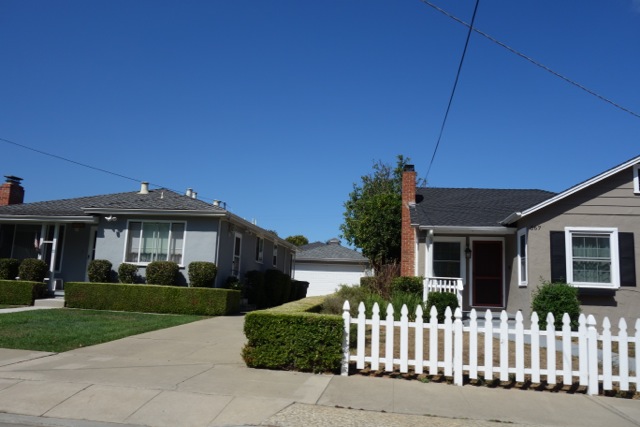
The nighttime approach to the city past office park after colossal office park reminded me of nothing so much as Orange County — and in some ways, Silicon Valley stands as one of San Francisco’s Orange County equivalents — but in the light of day I found their actual neighborhood, a classically postwar sort of place, free of the sort of McMansions one expects in “the O.C.” You can also walk from there to the Philz Coffee, which, though that San Francisco chain has recently made inroads into Los Angeles proper, has yet to become a possibility in points farther south. You can also bike to Cupertino, home of Apple headquarters, to eat in the company cafeteria, as the American husband does nearly every day to have lunch with his Korean wife, whose new Apple job necessitated their move.
Sunnyvale 2015 - 4

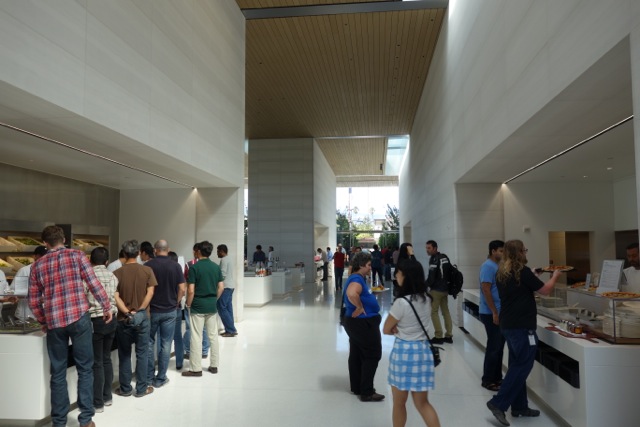
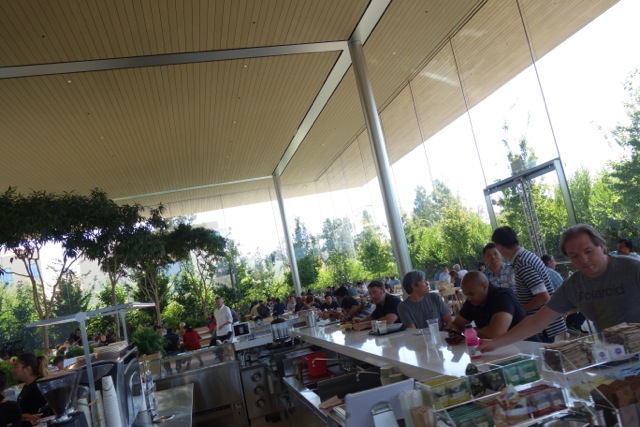
She offered us a couple of guest badges to join her for one last proper meal before heading back to Los Angeles, and we did not, to put it mildly, refuse. In middle school, I once signed up for a week of tours around the then-hot tech companies that had established themselves in and around Seattle (we of course went to Microsoft, but also the likes of Starwave), coming away not quite understanding what most of them did but nevertheless deeply impressed with the food available right there in their offices. (I would later have the exact same experience touring college campuses.) But it turns out that tech-company food has come almost as far as technology itself, and we faced a difficult choice between all the tasty-looking offerings at the stations built into this giant iPod of an eatery. Having met the friends that brought us here through Korean language classes in Los Angeles, I ultimately went with the day’s “Korean pulled pork special” in a nod to the culture that brought us together in the first place.
Sunnyvale 2015 - 5

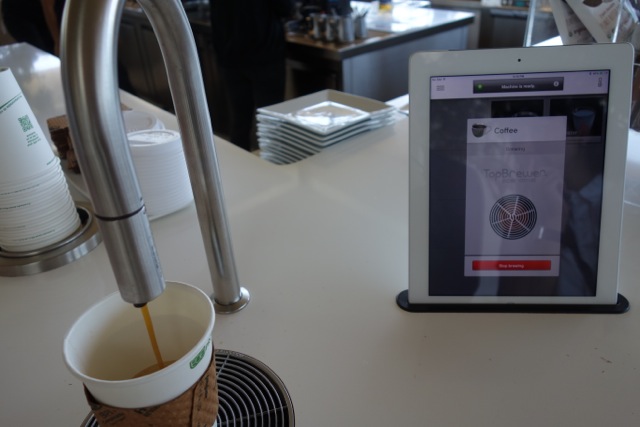
At Apple, you talk about Google and Facebook — and more to the point, about the food at Google and Facebook. Word on the street says that, while those other big two of the big three do feed you for free rather than just at subsidized prices, for the highest pure culinary quality, you go with Apple every time. (And besides, at Google you’re subject to their endless psychological experimentation to get you to eat less: floppy trays, opaque candy jars, and so on.) Our plates of fish and Korean sandwiches and bowls of grilled shishito peppers and mushroom soup, priced down into reasonability by the company’s vast resources, attested to that, as did the one-dollar espresso at the cafeteria’s coffee bar. But I think I got an even better deal than that: black coffee not just for free, but dispensed out of a spout controlled by an iPad. We’d left home on a road trip, but arrived in the future.

Diary: This American Road, Eugene

Eugene 2015 - 2

We rolled into Eugene without knowing anything about it but that a friend who lives near Seattle loves the place — “God’s country,” he calls it. It certainly has one up on Seattle at the moment in terms of not having been recently roughed up by a storm. But much about Oregon’s third city has begun to intrigue me. “They say ‘Keep Portland weird,'” someone or other we encountered on this trip said, “but Eugene’s weirder.” And not long ago in Los Angeles, I happened to meet a University of Oregon professor who brought his family to Eugene six years ago for the job and has found a good deal to like, so we made plans to meet up with him at a local brewery as soon as we got in.

Eugene 2015 - 3

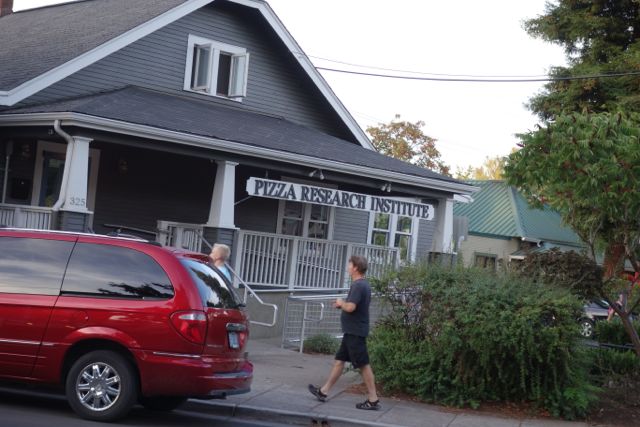
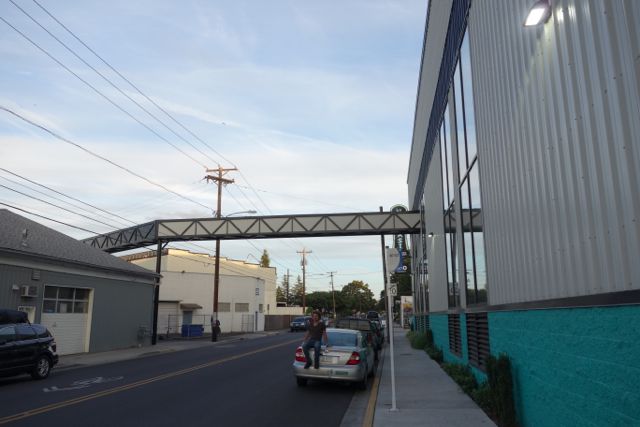
Eugene doesn’t show its best face right away — or at least not right away on a Monday afternoon. Many of the businesses we past looked intriguing (especially in combination, like the saw-sharpener next to the vape shop), but most of the people we passed on the street looked like either runaways or burnouts, and later conversations revealed that, indeed, the place has an unusually high old-hippie quotient with not much in the way of industry to balance it out. But the University of Oregon brings in a lot of new blood, so the professor told us, though a mixture of college students and the Aged of Aquarius does create… a certain kind of place. It certainly creates a beer-loving kind of place: on the light end of the spectrum, you can go with Falling Sky (whose slogan of “Let it Pour” mischievous locals with Sharpies seem to like to convert into “Let it Poop”), and on the dark end, the well-known Ninkasi, who’ve literally changed the color of the neighborhood by painting their large complex with their signature teal.

Eugene 2015 - 5

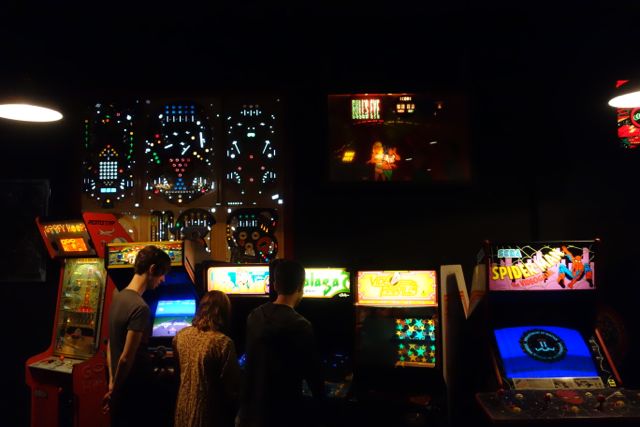
They call the neighborhood in question the Whiteaker, and it doesn’t want for college-town amenities even in addition to Ninkasi and the other breweries headquartered there, including a food co-op (where I heard a couple of man-buns in line swapping stories about scoby explosions) and a fully equipped barcade. Especially in the Whiteaker, Eugene shows signs of being one of the at least semi-viable bohemias of our time, though I couldn’t get over the emptiness of the drive between it and Portland. It takes only two hours in real time, but the sheer lack of development between the cities makes it feel like twice that — and, for some obscure reason, makes me genuinely angry as I push through it.

Eugene 2015 - 7

Walk far enough out of the Whiteaker, and in not too long you get to Eugene’s downtown — but if you do take too long, you might get there after the point in the evening at which it hands itself over to the drifters. We strolled past the sidewalk tables of one of downtown Eugene’s few night spots in the wake of a violent, nonsensical disagreement between diners and a couple of large, filthy young fellows with their almost as large and filthy dogs in tow. Others of their kind had overtaken several of the public spaces we passed, turning them into open-air bars (or consumption spaces for other substances of choice) of their own.

Eugene 2015 - 4

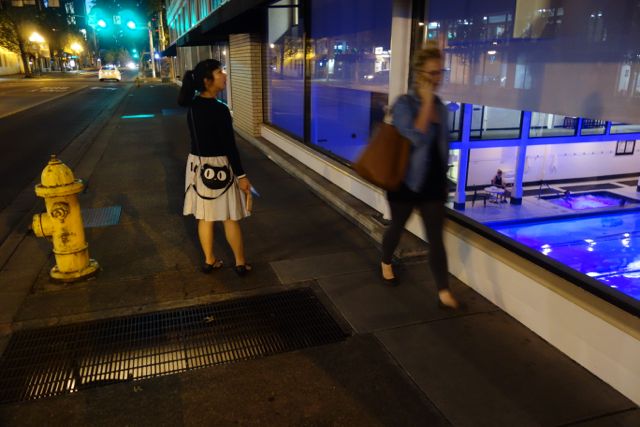
But the downtown has “good bones,” as they say. On our way out of it back to our Airbnb (a “mud room” with an outhouse, but surely among the nicest outhouses in town), we passed an impressive couple of blocks with a library, community college, and central bus station, all looking recently built. At one point, we found ourselves standing by a stately athletic club, the blue glow of its below-ground pool visible from a sidewalk-level window. I left Eugene feeling like I’d have more to discover next time, given what I’d glimpsed so far (and given the unexpected things I’d only heard about, like the rare Japanese-immersion elementary school to which the professor sends his young son). I’ll just have to grit my teeth to get there.

Diary: This American/Canadian Road, Vancouver

Vancouver 2015 - 4

Oregon had offered us weather pleasant enough to go out on the deck (or whatever our Airbnb of the night had in the way of an outdoor area) and catch up on work, sometimes with a bottle of wine. Seattle, not so much. We even crossed the Washington border under clear skies — or as clear as they get around there this time of year, anyway — but then the text messages started coming in from friends up there: “Stay on I-5; the 405’s down to one lane.” “I hope we get power back by the time you arrive.” “Shit is fucked up north.”

Vancouver 2015 - 1

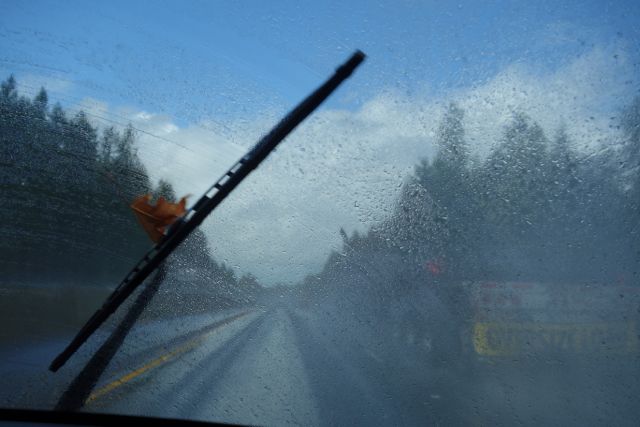
We soon got into the rain, and memories of growing up in the northwest myself flooded, as it were, right back. Making our way past downed trees, inching down roads jammed with traffic diverted by other roads covered by even more downed trees, I reflected upon how, though Seattle proper rarely loses power, somehow the suburbs have severe difficulty keeping the lights on all year round. A storm hits and you lose electricity for a day, two days, three days. The friend we stayed with lost power for six days one winter, and now, still living in the region but married and in a nicer apartment, he’d lost it again.

Vancouver 2015 - 2

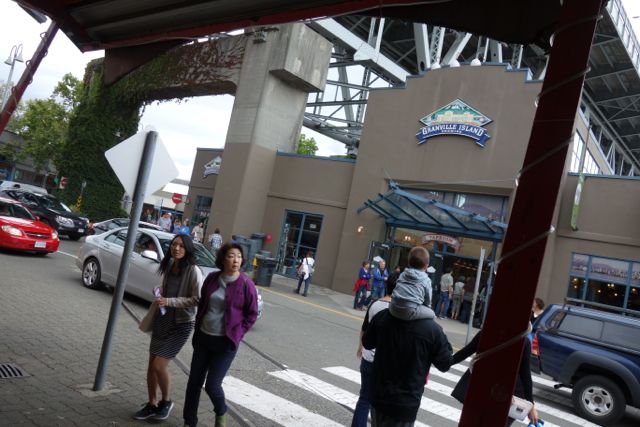
Given the frequency with which these parts have to do without, many establishments just keep the gears turning when the lights go out. We spent the afternoon overlooking the water as we drank beer in a dive past which I drove countless times in my high school days, then ventured into a darkened nearby Safeway in search of harder stuff. (A kid in a miner-style lamp hat opened their liquor cabinet for us.) But even with our supply of the drink assured, these conditions made it an ideal time, we all agreed, to take the party even farther north, to Vancouver — and thus to take it international. First stop: the Granville Island brewing company, for yet more beer (albeit beer only available in British Columbia).

Vancouver 2015 - 5

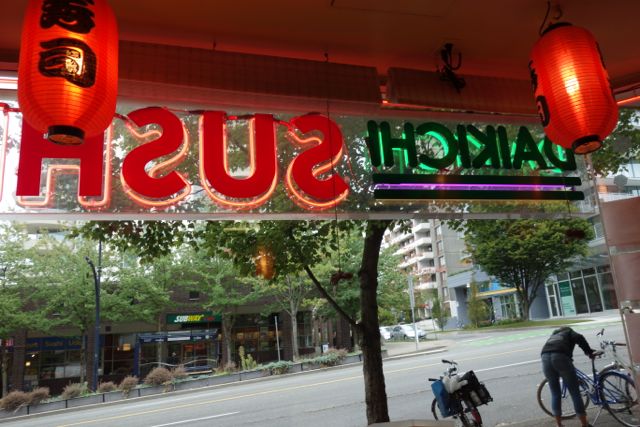
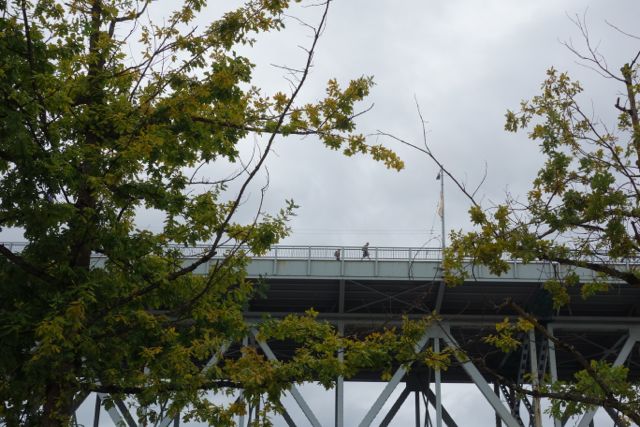
Cultural transplantation has become something of a theme in this trip, but then again, it’s also become a theme in my social circle — and maybe more to the point, in my entire life. We, a Korean-and-American couple and a Filipino-and-American couple, had crossed into Canada to visit a South African-and-American couple who have made their home in Vancouver for years now. But before paying a visit to their much-renovated (albeit at the moment temporarily unelectrified, though touches like a translucent bathroom door mitigated the problem) new Kitsilano house, we crossed the Burrard Bridge to pick up food from Daikichi, whose menu not only boasts low, low prices (even in Canadian dollars) but several variations on what I’ve come to regard as the acme of Vancouver cuisine: sweet potato sushi.

Vancouver 2015 - 3

Chris, the American half of that South African-and-American couple, keeps a blog about the city called Reflecting Vancouver (where he has written about the actual becoming-Canadian process as well). I’ve known him since first grade, and the intervening 24 years, our sets of interests have both slanted toward cities in general — more or less independently, but not, I would say, quite 100 percent so. (Generational tends — we both count among the supposedly urban-oriented “Millennials” — explain some of it as well.)

Vancouver 2015 - 6

Vancouver’s beacon shone to Chris early on, and he made his city-driven move of expatriation at least seven years before I’ll have made mine. This has given him time to establish the kind of life that has allowed he and his partner to put together the rooftop garden in which we all sat and, over yam rolls and additional beer, talked about cities, languages, transit, and travel. I insisted that everyone come visit us as soon as we’ve set ourselves up in South Korea, an idea that met with no opposition. And eventually the power even came back on.

Diary: This American Road, Portland

Portland 2015 - 4

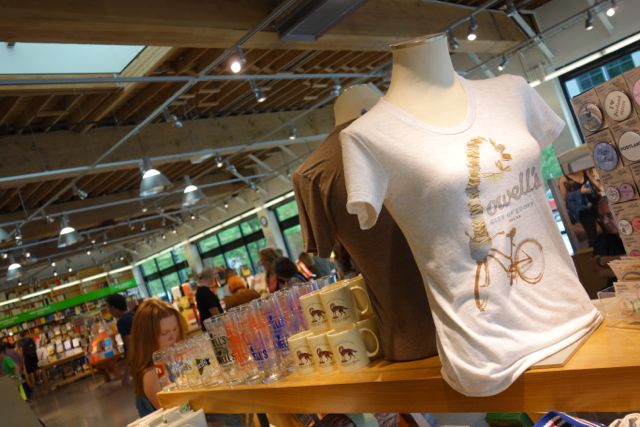
As a wise friend once told me, “Powell’s is what Portland is for.” Since I seem to come to Portland about once a year these days, I’ve found plenty of other purposes for the city — to provide pods and pods of food carts, for instance — but that proposition holds basically true: no trip to Portland, whether a dedicated visit by air or a stop on a road trip like this one, feels complete without at least an hour spent exploring Powell’s City of Books, and at least another hour spent reading the fruits of that browsing at the Powell’s City of Books and watching the Actual City of Portland just beyond its expansive windows.

Portland 2015 - 2

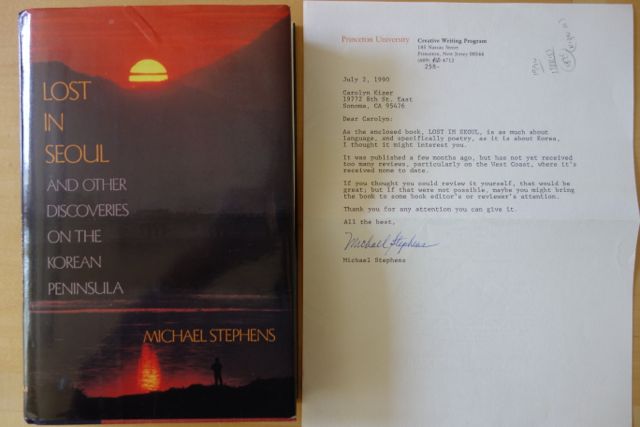
Not wanting to load myself down with many more books just two months before moving to Korea (although I really don’t have as vast and unwieldy a library as some friends expect), I decided I’d only buy something from Powell’s for myself if it seemed put on the shelf specifically for me. Lo and behold, in the “TRAVEL — ASIA” section (always an early stop) I found a crisp copy of Michael Stephens’ Lost in Seoul, one of the few modern book-length, first-person narratives by a westerner in Korea. It came out in 1990, two years after Simon Winchester’s cross-country foot journey Korea: A Walk Through the Land of Miracles, four years before Clive Leatherdale’s Olympics-era travelogue To Dream of Pigs, and the same year as Michael Shapiro’s season-by-season chronicle of development and democratization The Shadow in the Sun.

Lost in Seoul

I’ve enjoyed all these books, but Lost in Seoul, though long out of print and likely the least known of the bunch, stands out. Stephens writes not just a Korean travelogue, but the story of several different visits to the country over a period of years during which he comes to grips with not just life in another culture, but life among his Korean wife’s extended family. (“For Okhee,” reads his dedication page, “nae boo-in kwa chin-goo.”) He also has somewhat different professional interests than the average westerner writing on Asia. The copy I found at Powell’s contained a letter, written on Princeton stationery from Stephens himself, addressed to a certain Carolyn Kizer. “As the enclosed book, LOST IN SEOUL, is as much about language, and specifically about poetry, as it is about Korea,” he writes, “I thought it might interest you.” Kizer, I later found out, became poetry famous herself by writing about the Pacific Northwest, and died October of last year. (The book’s price sticker says it had hit the shelf that May.)

Portland 2015 - 6

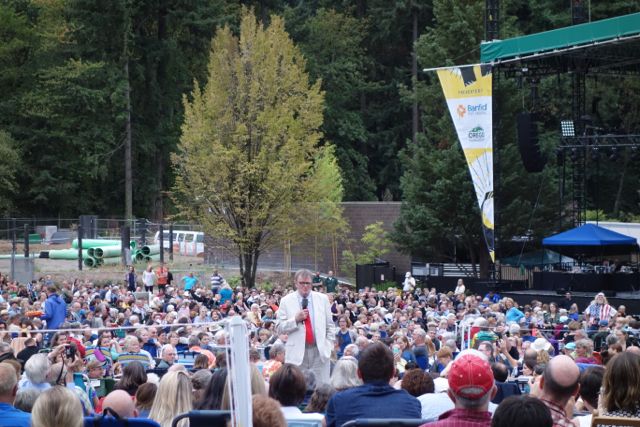
With the Korean life coming up ourselves, we’ve made this west coast road trip as part of a sort of American farewell tour. In Portland, we saw Garrison Keillor doing more or less the same thing, putting on one of the shows that makes up A Prairie Home Companion‘s “America the Beautiful” tour, Keillor’s last before finally passing along the mic and retiring from hosting duties. We actually structured our whole trip around this event, since I got Jae the ticket as a birthday present months ago. I’ve never followed A Prairie Home Companion very closely, but I wanted a chance to see the show’s demographic up close and personally, and what more vivid way to do it than in a sold-out crowd in one of the four or five cities, as Keillor chided, “that actually believe Bernie Sanders could win?”

Portland 2015 - 3

I get why a personality-driven variety show like A Prairie Home Companion would, after more than forty years (mostly) on the air, gain a fervent following. But how, I’ve always wondered, has it gained such a fervent following — and such a large one? It makes sense that some people enjoy bluegrass, some people enjoy gospel, some people enjoy long improvised monologues filled with jokes about the difference between Lutherans and Episcopalians, and some people enjoy nostalgic jingles for nonexistent products, but the very center of that Venn diagram has somehow turned Keillor’s project into an international phenomenon. More power to him, I guess, though he also has his haters. Relaxing in the Division Street Townshend’s Tea the day before the show, I came across a Q&A in Willamette Week with one of America’s foremost Keillor-haters, the man who launched the  “Cancel Goddam Prairie Home Companion petition on Change.org.

Portland 2015 - 1

Personally, I hope Keillor devotes his the time freed up by retiring from the show to writing more about Denmark. Those who prefer his singing about power milk biscuits might not know this, but the man has made quite an investment in Danish culture, going so far as to marry a Danish woman and move to Copenhagen in the 1980s (which put A Prairie Home Companion on hiatus). He’s on the next wife now, but he maintains the affinity for Denmark. “Everybody ought to have Denmark as a possibility out there in the future somewhere,” he said just before making the move, “wherever you think you might need it.” It makes me think of that Thomas Jefferson-attributed line, “Every man has two countries — his own and France.” It also makes me wonder whether Michael Stephens has returned much to Korea over the past 25 years. And it makes me realize that, whenever I again live in the United States, I’ll have two cities — my own and Portland.

Portland 2015 - 5

Diary: This American Road, Ashland

One pro of a west coast road trip: you get interesting cities and towns spread out the whole way across it. One con of a west coast road trip: not many of those come between the San Francisco Bay Area and the middle of Oregon. This dearth of civilization becomes especially pronounced in the proposed State of Jefferson which, if its on-again-off-again movement one day succeeds in turning in into an actual state, would encompass most or all of this punishingly rural stretch of northern California and Southern Oregon. Sometimes I wish Jefferson could get up the momentum not just to form a new state of the Union, but a new state entirely; then maybe it could break off the continent and we could somehow close the geographical gap it leaves, thus improving all future west coast road trips for everyone.

DSC02746

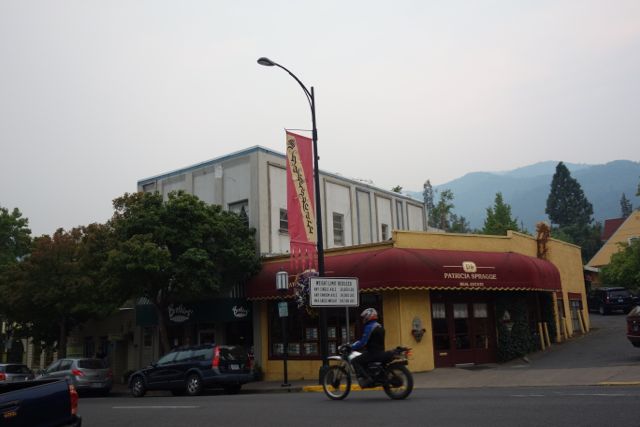
But I never wish that for long, since a loss of Jefferson would mean a loss of Ashland, Oregon. I first saw Ashland at the very end of junior high, on a school trip to the Oregon Shakespeare Festival, pretty much the main thing the world knows Ashland for (though I’d consider “festival” a bit of a misnomer, since the thing runs nearly ten months of the year). We’d considered taking in a performance on this very road trip, but the stars aligned against us: when we got into Ashland, nearby fires had smoked out the evening’s show at the outdoor theater, and as for the following afternoon’s show at an indoor theater, well, the cheap seats had already sold out.

DSC02720

I didn’t mind so much, since it would’ve been hard to beat the Oregon Shakespeare Festival of my eighth-grade year. We stayed in the dorms at Southern Oregon University (home of Jefferson Public Radio) and, apart from a handful of mandatory theater experiences, had the better part of a week totally to ourselves. The memories of even the titles of the plays we say have dimmed, but the memory of getting away from adult supervision hasn’t. I remember bargaining with waitresses at downtown restaurants to split single dishes between three of us so we could save our meal allowance on more entertaining things, roaming the streets in search of convenience stores with arcade games on which to spend some of that money, and as many trips as possible to More Fun (“Comic Books for Grownups”) to spend the rest of it, where I purchased and binged on the complete run of Peter Bagge’s Hate, and thus became, in some sense, a grownup.

DSC02774

But now that I’ve become in every sense a grownup, the downtown restaurants are the entertaining things. (Not that I dropped out of Hate fandom; in fact, I’ve interviewed Peter Bagge three times over the past five years, all of which you can hear in the Notebook on Cities and Culture guide to the Pacific Northwest.) Our sidewalk-table dinner at an Ashland wine bar counted as one of the meals by ourselves of this trip precision-engineered to provide as many opportunities for meals with friends as possible. We know people in our other stops — Alameda, Auburn, Portland, Seattle, Vancouver, Eugene, Sunnyvale, Santa Barbara — but not in Ashland, which I suppose makes the fact that we spend a decent chunk of time in Jefferson’s cultural capital (and will spend another on our way back) an advertisement for the place in itself.