Most Americans I know hesitate to embrace all of “American culture.” This makes sense, considering the broadness of any such umbrella, one that would have to cover a population of 300 million with origins across the entire world. So we pick and choose from this country’s bulging social, political, cultural, and aesthetic grab bag, taking what we want and leaving (when not insistently repudiating) the rest. You might follow baseball but dismiss football, dream of your own car but not your own house, or hold one opinion about country music and its polar opposite about rap. This goes as well for the clothing styles we think of as distinctively American. To divide us, just start a debate about the influence of athletic wear on our national dress. The clothes of surfing, skating, and tennis, among other sports, have all since the Second World War greatly influenced everyday wear here — not, I would think, to the approval of every Put This On reader.
For a richer object of study, consider preppy, as Jeffrey Banks and Doria de la Chapelle do in Preppy: Cultivating Ivy Style, which examines the eponymous style of dress from its origins in the twenties through its adaptive evolution in each subsequent era. But how to define it without pinning it down too squarely? The authors quote Dierdre Clemente in the Journal of American Culture as astutely calling it an “ironic blend of rumpled and conservative.” Preppy, at its most viable, strikes me a rakish hybrid of the primly traditional and insouciantly athletic. This sounds like the stuff of mere trend, but the book marshals a quote on the contrary from social critic John Sedgwick arguing that “fashion has no place in the Ivy League wardrobe. The Ivy Leaguer is really buying an ethic in his clothing choices [ … ] a puritanical anti-fashion conviction that classic garments should continue in the contemporary wardrobe like a college’s well-established and unquestioned curriculum.” The doctrinaire preppy wears the correct navy blazer and khakis, naturally, but only when correctly weatherbeaten.
Read the whole thing at Put This On.


 We’ve roamed cities like Los Angeles, San Francisco, Portland, Vancouver, Mexico City, Kyoto, Nara, and Osaka. We’ve talked to writers, broadcasters, critics, comedians, designers, bloggers, academics, journalists, artists, editors, and monologists. We’ve planned a fourth season that will reach such fascinating world cities as Toronto, Copenhagen, and London. But Notebook on Cities and Culture’s
  A mere 24 hours remain in

 We’ve so far raised $1655
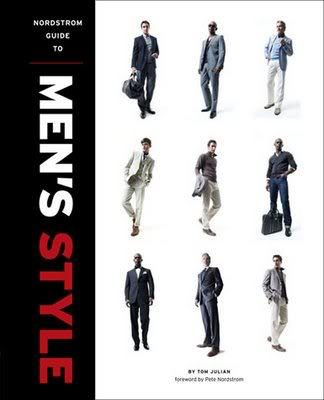 I haven’t set foot in a Nordstrom in years. Come to think of it, maybe I’ve never entered one at all. They seem expensive, and I — perhaps you, too — tend only to break out that kind of money at the most obscurely specialized of specialty shops: places with new-old-stock tie clips from sixties Japan, pocket squares made of battleship blueprints, aftershave left over from the days of Empire, that sort of thing. Certainly not old-school department stores that make me suspect my purchases will underwrite walls full of dark wood. But that caricatures unfairly a business like Nordstrom, which has provided stylistic succor to generations and generations of men in need of a wardrobe, and which I can’t imagine afflicted by the national plague — downfall of so many other men’s shops — of full-time suit salesmen who dress carelessly themselves. Though our age has seen the decline of the department store as a concept, Nordstrom appears to have retained not just its reliability, but a certain respectability as well. That merits a few points right there.