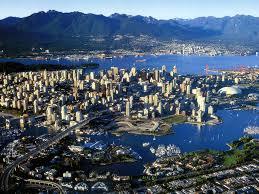
 Though often overlooked as one of the great West Coast cities, Vancouver, BC synthesizes many of the most appealing qualities of its American counterparts. The Canadian outpost combines San Francisco’s walkability, Portland’s livability, Seattle’s seaside surroundings, and Los Angeles’ slickness, all in a carefully designed urban setting. The city’s current state is the result of development that has taken place over the past several decades. Yet Vancouver’s skyscrapers, gleaming condominium towers and urban center can make it difficult for the uninitiated visitor to see everything else that the city has to offer: These four books look deeper to reveal a much more distinctively textured Northwest metropolis.
Vancouver: Representing the Postmodern City edited by Paul Delany
While parts of Simon Fraser University professor Paul Delaney’s academic reader on Vancouver have become less relevant over time, other parts have become more valuable by highlighting the artistic, architectural, and commercial elements of the city that have best weathered the building bubbles and waves of immigration. Delany also considers how the city has been represented in architecture and the arts, and explores Vancouver as the setting for the novels of notable resident William Gibson. Though one might assume that a sci-fi novelist would appreciate Delaney’s futuristic approach to the city, Delany told me that after he handed Gibson a copy of Representing the Postmodern City for an autograph, the writer returned it with an unambiguous inscription: “No mo’ po-mo!”
Read the whole thing, which also includes Douglas Coupland, Charles Demers, and Timothy Taylor, at Bookforum. I assure you that its passive-voice sentences somehow found their way in during editing. See also my previous Bookforum syllabus on Western literary expats in postwar Japan. (The next should similarly cover Korea.)

On the latest Los Angeles Review of Books podcast, I have a conversation with David Iserson, writer for such television programs as New Girl, Up All Night, and The United States of Tara as well as the author of the new comic young adult novel Firecracker. You can listen to the conversation on the LARB’s site, or download it on iTunes.

Heading north on the Red Line one morning, I looked around the crowded car and saw only tourists from abroad. Chinese, many of them huddled together over guidebooks and most wearing bulky, expensively long-lensed cameras around their necks, made for the most visible presence. I also spotted a Francophone family, the father of which flipped through the pages of Lonely Planet’s “Ouest américain.” Which part of the city had they chosen to explore, I wondered as we passed through Koreatown and Los Feliz, then turned toward Hollywood. None of them got off before I did, at Western Avenue, which led me to suspect the worst: the train would soon disgorge them all onto the Hollywood Walk of Fame. A conversation with some visiting Germans the week before had primed me to make that assumption. When I asked them where the friends and literature they’d consulted suggested they go in Los Angeles, they recalled only a few: the Santa Monica Pier. Universal Citywalk. The Walk of Fame.
They at least came with an advantage over some visitors, who show up secure in their many assurances received that Los Angeles contains, in its nearly 500 square miles, nothing at all, and that they can continue guiltlessly on to San Francisco. Others hear that Los Angeles at least offers Disneyland, a thirty-mile drive out of the city and into another county entirely. But most travelers with a little time on their hands seem to wind up, sooner or later, on Hollywood Boulevard. I don’t mean to condemn an entire street, much less one that runs for five miles through several different neighborhoods, but it seems to pull people as if with its own gravitational force into the wrong one, Los Angeles’ embarrassing equivalent of Fisherman’s Wharf or Times Square. I make an exception for the Egyptian Theatre, whose stream of revival screenings from the American Cinematheque did more than its part to convince me that I could live in no other city in America, but west of Vine Street, Hollywood Boulevard saddens, especially when you consider how many people take it, surely with no small bewilderment, as representative of the entire city.
Read the whole thing at KCET Departures.
 Vital stats:
Format: golden-age Loveline, more or less, but with fewer calls and more discussions of the breakdown of society
Episode duration: 45m-1h10m
Frequency: 8-9 per month
Mention this though I often do when writing about things Adam Carolla-related, I tuned in to Loveline throughout my adolescence with a near-religious dedication. Those nightly two hours with Carolla and “Dr. Drew Pinsky” on sex, drugs, medicine, home improvement, auto repair, and the state of the republic had formative effects I can’t possibly overstate. (They even taught me, broadcasting out of their decrepit Culver City studio, quite a bit about the geography of Los Angeles that would come in handy when I landed here myself.) Though ostensibly an advice show, and one that did sometimes spend a solid hour taking calls from stoned fifteen-year-old snowboarders worried about herpes, Loveline produced its most memorable gems of wisdom — not just about pills or booze or dental dams or plywood, but about life itself — with nobody on the phone, and nobody in the studio (certainly not from the gallery of “drunken rockers and stupid actresses,” as Carolla has since described the guest list) but its co-hosts. They admitted that they didn’t do the show for the callers, who half the time wouldn’t even pretend to accept their counsel, but the listeners. As one of those listeners, I can vouch for the benefits.
Like any nightly live show, especially one hosted by fellows busy even by celebrity standards, Loveline weathered the occasional absence: another doctor sitting in for Drew, another comedian for Adam. This taught us that, while either individual could hold their own, we tuned in for the combination, the pairing, the duo — the sum greater than the parts. The inquisitive, education-loving, clinically-minded, mild if sometimes twitchy Dr. Drew’s yin balanced the education-free, down-and-dirty/nuts-and-bolts, outwardly base but secretly incisive Adam’s everyman yang, making 1995 through 2005, the years between Carolla’s hiring as a co-host and his departure to helm a morning show on KLSX, the program’s near-official golden age. (Pinsky’s presence goes back to the early eighties, and continues to this day, alongside that of someone named Psycho Mike.) Apart from occasional guest appearances by Carolla on Loveline or Pinsky on Carolla’s radio show and, later, flagship podcast, 2005 through most of 2012, constituted lean years indeed for we who consider ourselves appreciators of Adam and appreciators of Dr. Drew, but out-and-out fans of Adam and Dr. Drew.
Read the whole thing at Maximum Fun.
Once again, thanks very much indeed to all you listeners who backed Notebook on Cities and Culture‘s fourth season on Kickstarter. The planning begun as soon as the drive ended, and now it pleases me to announce that the season will premiere on Thursday, August 1st. We’ll start off in Los Angeles, then move on to Copenhagen and London in the fall, and then to Toronto in the spring. If you have any suggestions of cultural creators, internationalists, and observers of the urban scene whom you’d like to hear interviewed in those cities, please do let ’em rip (to colinjmarshall at gmail, specifically). Make sure you don’t miss an episode by subscribing on iTunes.
In the meantime, consider tiding yourself over with the interviews I’ve hosted and produced for the Los Angeles Review of Books podcast, including most recently literary historian Loren Glass on Grove Press, Tosh Berman on Sparks, David Shook on translating Mexican novelist Mario Bellatin, and Jeff Weiss with Evan McGarvey on Biggie and 2pac.

Call it cynicism if you must, but if I went to someplace called the “Arts District” in most North American cities, I wouldn’t necessarily expect to find art; in most cases, I’d expect to find nothing at all. The name smacks of official desperation, bringing to mind last-ditch efforts to rebrand blocks you’d never even walk through with an absolute minimum outlay of money or effort. You can envision the meetings: what revitalizes tired, dangerous industrial areas? Why, artists. And what do artists do? Arts, of course. And up go the signs. That an influx of artists in the sixties and seventies actually did bring Manhattan’s Lower East Side back from the brink of more or less literal destruction has put ideas into the head of other cities across the continent ever since. It brings to mind the Melanesian “cargo cult,” whose members supposedly built imitation airstrips out of wood and radios out of coconuts in hopes of therefore receiving the same deliveries of goods as did their departed World War II occupiers. The cargo cultists staffed their bamboo control towers and waved their semaphore leaves as imitatively as they could, so the story goes, but nothing ever happened.
It thus comes as a surprise that, in Los Angeles’ Arts District, something has actually happened, and, more to the point, continues to happen. Yet for quite some time, it seemed unclear whether it had or would. “Downtown was doomed,” says the narrator of Thom Andersen’s documentary “Los Angeles Plays Itself” of the city’s faltering core in the immediate postwar era. “In the eighties, it went vertical, and there was an attempt to promote loft living on its eastern margins, an effort advertised in a few films, but even artists found the new urbanism daunting.” We now know this area, between downtown proper and the Los Angeles River’s west bank, as the Arts District. Back in 2004, when Andersen’s film came out, the neighborhood already had its name, but evidently it still lacked its current regard. Less than a decade before that, the Arts District didn’t even merit an entry in Leonard and Dale Pitt’s encyclopedia “Los Angeles A to Z”, though the law that put artists’ residences in formerly industrial buildings above-board goes back to 1981. You may even now venture into the Arts District and find yourself unimpressed, but bear in mind the way we’ve framed so much of Los Angeles today: don’t look at what it is; look at what it’s becoming.
Read the whole thing at KCET Departures.

On the latest Los Angeles Review of Books podcast, I have a conversation with literary historian Loren Glass, author of Counter-Culture Colophon: Grove Press, the Evergreen Review, and the Incorporation of the Avant-Garde. You can listen to the conversation on the LARB’s site, or download it on iTunes.

Just last weekend, I found myself in Silver Lake attending the closing party of Brightwell, my friend (and fellow KCET Departures columnist) Eric’s gentlemen’s shop. He may have opened the first such business in modern Silver Lake, but I guarantee you he won’t have opened the last. The neighborhood has over the past couple of decades grown only more dense with the relatively young, and thus with that great current fascination of America’s relatively young, artisanal retail. Then again, Japan’s twenty- and thirty-somethings have joined both the shop-small and neo-gentleman movements with even greater zeal; scouts from the Tokyo-basedPopeye, “the Magazine for City Boys,” dropped in on Brightwell while researching their Los Angeles issue. From foreign style journalists to shoppers in need of a respectable aftershave or tie clip, we act like Renaissance scholars poring over ancient Greek texts, deliberately and almost desperately attempting reconstruct the old aesthetics and practices of true manhood. Though Eric’s shop may have gone, I imagine the streets of Silver Lake will remain an advantageous place to set out on your own quest for this lost wisdom.
Recent years have so strengthened the area’s association with creative, style-conscious, do-it-yourselfism that, when I first moved to Los Angeles as a twenty-six-year-old without any particular prospects for a traditional job, friends simply assumed I would land in Silver Lake. They did so for understandable reasons, but they assumed wrong; I chose Koreatown instead, barely giving “the Portland of Los Angeles” consideration at all, mostly because of the bewildering thinness of its connection to the rest of the city. How, I wondered, did Silver Lake become such a center of “cool” when rail doesn’t even reach it? When the buses keep you waiting for ten minutes at a stretch? When even walking from one end of the neighborhood to the other can feel, on a sufficiently hot day, like a grueling ordeal? The journey from Brightwell to the local library comes to almost a mile, and heaven help he who then wants to stop for lunch in the fashionable Sunset Junction — named, ironically, for its convergence of two streetcar lines in the early 20th century — which necessitates two miles’ further schlep.
Read the whole thing at KCET Departures.

Vital stats:
Format: a “podcast about language, from pet peeves, syntax, and etymology to neurolinguistics and the death of languages”
Episode duration: 25-30m
Frequency: 1-2 per month, with gaps
I grew up with a reputation as a “smart kid.” Given your presence here, maybe you did too. If so, I do hope you handled it better than I did. Po Bronson explained a large part of my own burden in a New York Times Magazine article a few years ago: hearing myself called smart, I set about protecting the image by avoiding any task, intellectual or otherwise, at which I might not easily succeed, a condition that persisted into my twenties. Worse, I gained this aura of intelligence to some extent illegitimately, by learning to read early and from then on cargo-cultishly employing whichever words and phrases I thought might impress adults. So I spent my childhood ever more fearfully performing what amounted to smoke-and-mirrors act, but at least it kept me off drugs. It also taught me about the power of language, and, ultimately, the importance of using that power productively. One example of unproductive use: compulsively correcting grammar and usage aloud.
Most kids lead such boring lives here in America that, if we’ve received the mixed blessing of stronger-than-usual verbal ability, we can’t resist passing the time by ridiculing mismatched tenses, split infinitives, and even grocer’s apostrophes. We become what, in his review of Bryan Garner’s A Dictionary of Modern American Usage, David Foster Wallace memorably called SNOOTs, “just about the last remaining kind of truly elitist nerd,” “the sorts of people who feel that special blend of wincing despair and sneering superiority when they see EXPRESS LANE — 10 ITEMS OR LESS or hear dialogue used as a verb or realize that the founders of the Super 8 motel chain must surely have been ignorant of the meaning of suppurate.” SNOOTs and only SNOOTs, you might assume, make up the audience for Lexicon Valley [iTunes], Slate’s “podcast about language, from pet peeves, syntax, and etymology to neurolinguistics and the death of languages,” but the show turns out to take a broader view of the subject. I report this with great relief, having spent the past five years listening to foreign-language podcasts and broadening my own linguistic Weltanschauung thereby.
Read the whole thing at Maximum Fun.

On the latest Los Angeles Review of Books podcast, I have a conversation with Tosh Berman, founder of TamTam Books, former longtime book buyer at Book Soup on the Sunset Strip, and author of Sparks-Tastic: Twenty-One Nights with Sparks in London. You can listen to the conversation on the LARB’s site, or download it on iTunes.