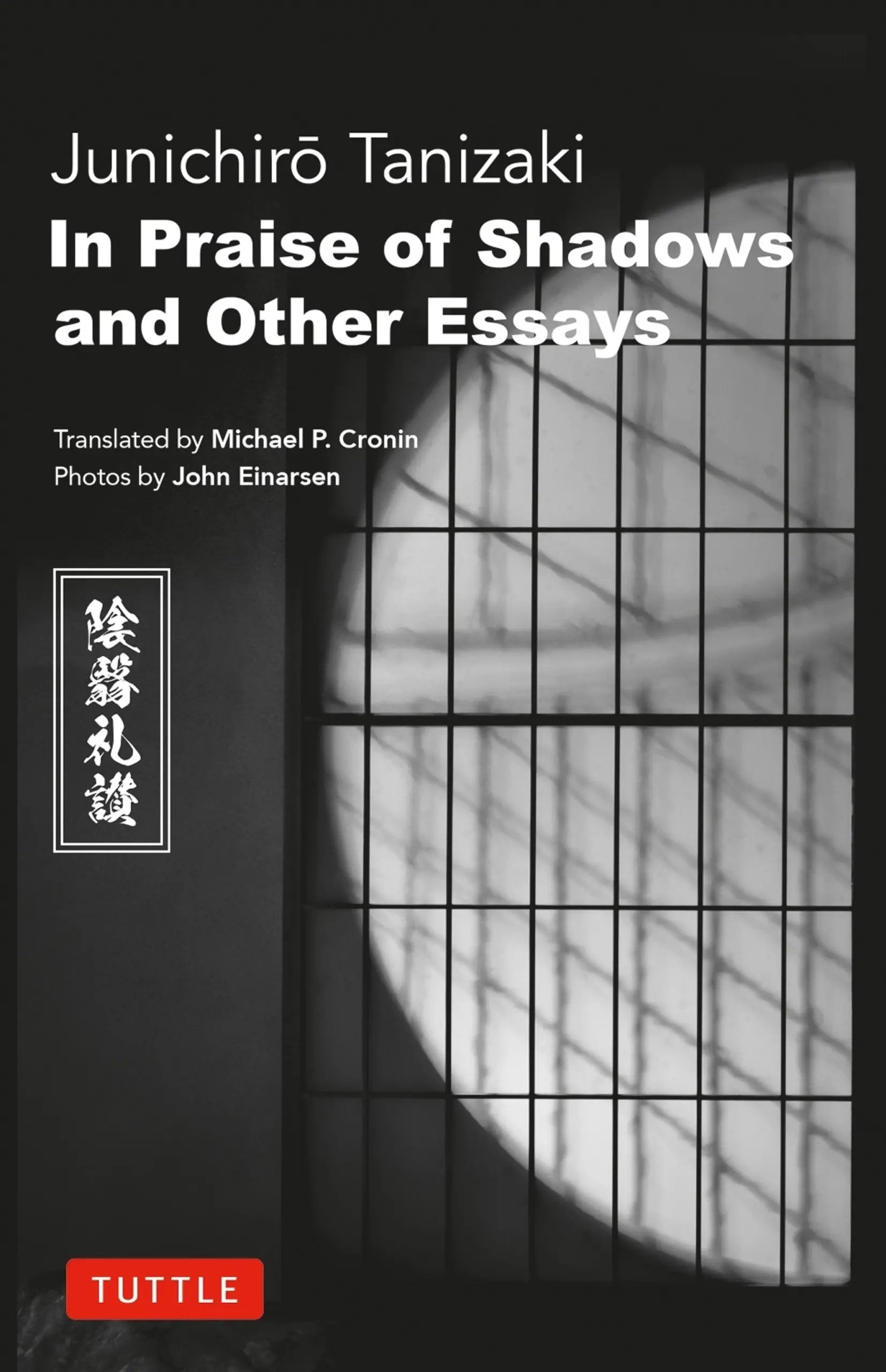
IN THE 1960S, many readers of Japanese literature in English translation were drawn in by the “Big Three” living novelists: Yasunari Kawabata, Yukio Mishima, and Jun’ichirō Tanizaki. Tanizaki died first, in 1965, a year after being favored to win the Nobel Prize (it went to Jean-Paul Sartre instead; Kawabata would win it three years later, becoming the first Japanese writer to do so). Born in 1886, Tanizaki was the oldest of the Big Three and the most rooted in the civilization of a Japan that was, by that point, almost completely effaced by the process some would call modernization, and others Westernization. Tanizaki’s relationship to that process followed a familiar arc for that particular generation, which came of age at the turn of the 20th century. For him, an early, undiscriminating preference for all things new and Western—practically equivalent terms at the time—eventually gave way to a mournful, somewhat defensive, and even ostentatious reverence for the old ways of life being cast off by his homeland.
“Most Japanese picture the author as a kimono-clad literary giant expounding on the essence of Japanese culture,” writes the celebrated architect Kengo Kuma in his foreword to Gregory Starr’s 2017 English translation of Tanizaki’s extended essay In Praise of Shadows. More so than Kawabata or Mishima, “our impression of Tanizaki is of a larger-than-life figure—a member of an older generation who lived in another universe and had an appreciation of the deepest aspects of the cultural milieu.” Indeed, by the time Kuma was born, in 1954, Tanizaki had already written virtually all the work on which his reputation rests, including the novels Naomi (1925), Some Prefer Nettles (1929), and The Makioka Sisters (1948). Those books treat seriously, if sometimes luridly, the theme of Japan’s transformation in a world dominated by the West. By comparison, In Praise of Shadows (1933),originally commissioned by a magazine and published in serial form, may at first seem insubstantial. And yet, some consider this brief meditation on domestic architecture, restaurant lighting, theater costumes, and wooden outhouses Tanizaki’s true masterpiece.
Take, for instance, the Japanologist René Sieffert, who in the preface to his French translation calls it a book “que je ne suis pas le seul à tenir pour son chef-d’œuvre” (“which I am not the only one to consider his masterpiece”). Éloge de l’ombre was the first version of Shadows—or rather, In’ei Raisan, to use its Japanese title—to appear in that language in 1977, the same year an English translation was first published in book form. The latter is the work of two translators: Edward G. Seidensticker, one of the notable American Japanologists originally brought east by the war and subsequent occupation, and the Australian scholar of Japanese literature Thomas J. Harper. Seidensticker’s first translated excerpts of Tanizaki’s essay ran in the Japan Quarterly in 1954 (two decades after it was published in Japan) and were picked up the following year by The Atlantic Monthly. Harper translated the remainder for the book that appeared in 1977, which, despite its patchwork assembly, has remained the gold standard among In Praise of Shadows’ English translations, due not least to the highly crafted quality of its prose.
Read the whole thing at the Los Angeles Review of Books.