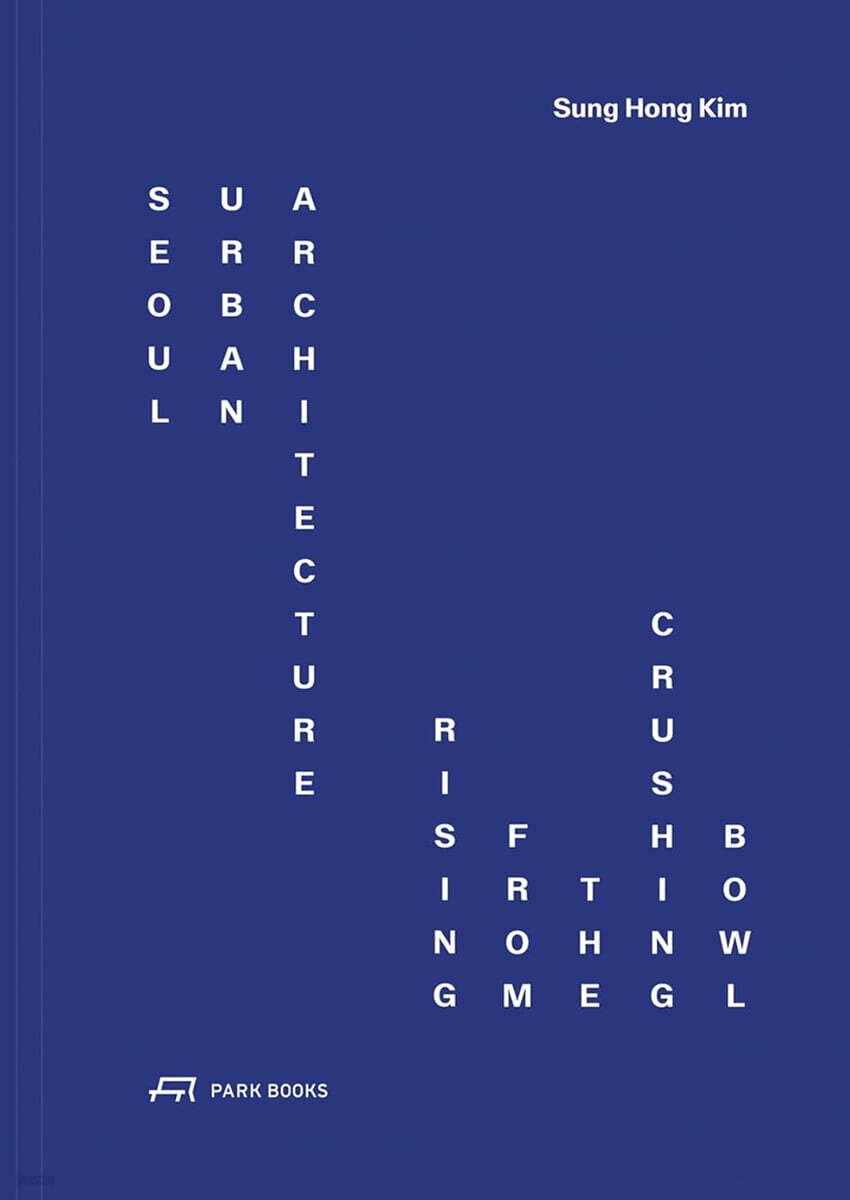
First-time visitors to Seoul tend to go home favorably impressed by the city on the whole, if not by its appearance in particular. Some may feel relieved to find that, contrary to the impression given by so many photographs in Western media, it isn’t just mile after unrelieved mile of indistinguishable tower blocks. Yet apart from certain central tourist sites, like Gyeongbokgung, the main royal palace, or Namsan, the mountain with its speared-revolving-restaurant tower, few of its vistas remain in memory for long. Seoul’s built environment can strike outsiders as at once too monotonous and too eclectic: architectural form and decoration do vary, but mostly in odd or illegible ways. It must also strike some insiders similarly, given the proliferation in recent years of Korean books about the proper arrangement of urban space, certain of whose authors have risen to at least minor celebrity status. The architect Yoo Hyunjoon, for instance, has extended his brand with a popular Youtube channel called Sherlock Hyunjoon, on which he often investigates the mystery of why the development of Seoul has produced results so much less satisfactory than in other world cities.
Though I enjoy Yoo’s work — despite, come to think of it, still being unfamiliar with his actual architecture — I can’t say that I share his opinion of Seoul’s deficiencies, even after having spent more than a decade here. To my mind, it has no deficiencies, or at least none that bother me enough to inspire fantasies about living elsewhere. This view isn’t entirely uncommon among longtime Western expatriates, even those who reliably launch into rants against Korean society a few drinks into the night. Many of us, after all, moved here from countries whose major cities, despite their considerable wealth, suffer from impediments to business, rates of violent crime, inadequacy of public transit, and daily inconveniences that simply wouldn’t be accepted in twenty-first-century Seoul. To us, the existence of usable restrooms in every single subway station feels like nothing short of a miracle, as I often tell bemused Koreans. (”But where do you go in New York if it’s an emergency?”) Many of them seem not to perceive these qualities — or rather, to perceive more clearly the fact that their capital has nothing to match Central Park, Champs-Élysées, or even the alleyways of Tokyo.
Read the whole thing at Substack.