Skip to content

Notebook on Cities and Culture S4E3: Constellation of Villages with Lynn Garrett

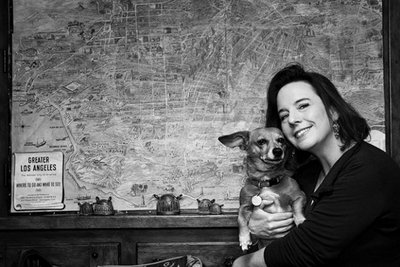
Colin Marshall sits down at the top of the Hotel Wilshire with Lynn Garrett, proprietor of popular online community Hidden Los Angeles and fifth-generation Angeleno. They discuss how best to prepare Germans for their Los Angeles vacation, since their guidebooks have failed; which human needs the many persistent myths about this city fulfill; how here, you are your own salvation; the revitalization of the Los Angeles River, as against the notion that “all it is is dead bodies and gang members”; Los Angeles as reflector of the observer’s own particular hatreds; getting to know the city not as a city, but as a constellation of villages; her art-school exploration of the city back when she “didn’t know not to”; who hangs out and talks on Hidden Los Angeles, and which topics get them most fired up; the human tendency to get upset about change of any kind, whether positive or negative, and to adjust perceptions accordingly; what happened when Hidden Los Angeles went viral, attracting 250,000 followers; Caine’s Arcade, Skid Row charities, and all the other ways she’s found the community can help (when not arguing); what the followers teach her about Los Angeles, the city no one person can possibly know; and what she learns from leaving the city, as well as how she makes herself an outsider when in it.

Download the interview from Notebook on Cities and Culture’s feed or on iTunes.

(Photo: James Acomb)

Podthoughts: The Faroe Islands Podcast

Vital stats:
Format: interviews with the movers and shakers of an archipelago you probably haven’t heard of
Episode duration: 15-45m
Frequency: 2-5 per month

When I first heard of The Faroe Islands Podcast [RSS] [iTunes], I heard it as a sort of punchline. “Oh man, this archipelago off of Europe? That only has 50,000 people? The Faroe Islands? There’s an entire podcast about it.” But really, how far does this separate it from so many other podcasts? This show covers all aspects of life on the Faroe Islands, and going by its episodes on Faroese broadcasting, any media pertaining to the place manages near-automatically to draw the attention of a sizable chunk of the population. A reasonably successful podcast about, say, one particular Doctor Who Doctor might attract five or ten thousand listeners. But a Faroe Islands news broadcast pulls in an astonishing fifty percent of the viewership. More than a few of those 25,000 — or of the English-speaking fraction of that 25,000, anyway — would, I wager, want to take a listen to The Faroe Islands Podcast, a production about a niche country in a niche-friendly medium, even if only out of curiosity.

This narrow focus has another advantage. Listening the show’s 182-and-counting episodes, I kept thinking back to, of all books, Robert Pirsig’s Zen and the Art of Motorcycle Maintenance. In it, Pirsig relates a story from his alter ego Phaedrus’ teaching days at Montana State College. One of his students wants to write “a 500-word essay on America” but can think of nothing to say. When Phaedrus suggests she write about just the city of Bozeman instead, she still comes back empty-handed. He then tells her to write just about Bozeman’s main street, but she again comes back without a paper. He finally suggests she write only about the front of Bozeman’s opera house, beginning with its upper-leftmost brick.

Read the whole thing at Maximum Fun.

Los Angeles Review of Books podcast: Ken Baumann

On the latest Los Angeles Review of Books podcast, I have a conversation with writer, publisher, and actor Ken Baumann, who currently plays Ben Boykewich on The Secret Life of the American Teenager and just published his first novel Solip. He’s now at work on a book on the classic Super Nintendo role-playing game Earthbound. You can listen to the conversation on the LARB’s site, or download it on iTunes.

Notebook on Cities and Culture S4E2: Prada and Fallas-Paredes with Brigham Yen

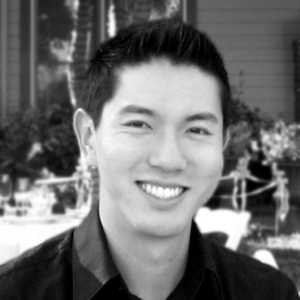
Colin Marshall walks through downtown Los Angeles with Brigham Yen, Realtor and author of the urban renaissance blog DTLA Rising. They discuss the sort of neighborhood that can rise from nothing, and whether Los Angeles’ downtown has come back from a deeper state of nothingness than other downtowns; the “bones” of a city’s center, and how Los Angeles’ have remained sound through all its problems; the late introduction of public space here; his car-centric youth in the San Gabriel Valley suburbs, and how going to San Francisco for school changed everything; the enduring “obesity” of Los Angeles’ streets, even as it has become the fastest-changing city in America; in what order transit, restaurants, bars, shopping, and housing needed to return downtown; how streets become “activated” with human energy; Broadway’s prospects for becoming “one of the coolest streets in America”; the healthy urban balance of a Prada by a Fallas-Paredes; how he began writing about cities by writing about Pasadena, and how interaction between the blogging half of his career and the real-estate half has deepened ever since; how he responds to longtime Angeleno’s complaints about “brainwashed Millennials” and their fallen expectations; the special importance of an undisputed urban center amid a sea of suburbia; the laid-back sensibility he hopes Los Angeles can retain during its transformation; and what dream people can see actively (and successfully) pursued if they visit downtown Los Angeles themselves.

Download the interview from Notebook on Cities and Culture’s feed or on iTunes.

Notebook on Cities and Culture S4E2: Prada and Fallas-Paredes with Brigham Yen

A Los Angeles Primer: Century City

“We’re gonna live in Century City,” sings Tom Petty on his and the Heartbreakers’ 1979 song named after the place. “Go ahead and give in — Century City. Like modern men and modern girls, we’re gonna live in the modern world.” At that time, Century City, 176 acres built up against Westwood and Beverly Hills, may still have looked like a viable concept of the future. Even as recently as 2004, it provided both setting and title for a short-lived CBS science-fiction legal drama set in then then-far-flung year of 2030. Now, at least in my experience, it serves primarily as a navigational aid: if you can see downtown, if you can see the mountains, and if you can see the thirty- and forty-story towers of Century City’s narrow skyline, you can roughly triangulate your location in Los Angeles. Handy though that may sound, I suspect the district’s builders, working in the late fifties and early sixties with a piece of the former 20th Century Fox backlot, had — as that era’s builders often did — something grander in mind.

“Nothing dates faster than people’s fantasies about the future,” said art critic Robert Hughes, standing in Brasília, in an episode of “The Shock of the New”, his television series on modernism. “This is what you get when perfectly decent, intelligent, and talented men start thinking in terms of space rather than place, and single rather than multiple meanings. It’s what you get when you design for political aspirations rather than real human needs. You get miles of jerry-built platonic nowhere infested with Volkswagens.” Each and every one of my trips past Century City — and before now, all of them took me past it, since I never had a legitimate reason to enter — got me thinking about Brazil’s highway-wrapped, monument-studded capital, planned and built whole in the late fifties, officially inaugurated in 1960. Just three years later, Century City’s first building would open. Later that decade, the Century Plaza Hotel, designed by World Trade Center architect Minoru Yamasaki, would have its ribbon cut; his West Coast twin towers of the Century Plaza would open in 1975.

Read the whole thing at KCET Departures.

Notebook on Cities and Culture S4E1: An American Rediscovery with City Walk

Colin Marshall sits down at the Old Pasadena offices of Rigler Creative with Thomas Rigler, Steve Reich, and Caitlin Starowicz, creators of City Walk, a new television and web series from KCET and Link TV on the transformation of American cities and our ability to walk in them. They discuss the walkability of Old Pasadena right beneath them; City Walk‘s origin as a project purely about the health benefits of walking, and how it expanded; their own discovery of the new walkability of American cities as they shot and researched the show, how they found they’d already been documenting that “wave of change” almost inadvertently; their insights into the vision of park planner Frederick Law Olmsted; the buildup of frustration with postwar American cities, and what planning for and living around the car has to do with it; what they felt when experts elsewhere argued that, in fact, Los Angeles is the city of the walkable future; how they learned the distinctive urban language of this city, whether they grew up here or came to it later; the end of one form of the American Dream, the beginning of another, and the consequent “slumming of the suburbs”; how much the context for their interview and urban exploration material has widened with time and additional research; what it takes to make a show about experiences, not messages; City Walk‘s distinctive aesthetic, meant to represent the life of a city itself, and how the Iverson Mall Walkers fit into that; and how they revived the magazine-format show for the internet just as cities have revived themselves for the 21st century.

Download the interview from Notebook on Cities and Culture’s feed or on iTunes.

A Los Angeles Primer: Chinatown

“A good urban context and the history it represents teach, with a sense of humor, even kitsch how to live.” So, in “Travels in Hyperreality”, writes Umberto Eco, who, despite not necessarily having Los Angeles in mind, nevertheless sets up a pillar of the mental framework needed to consider this city. Much of what appeared here in the early- to mid-twentieth century — the countless unprecedented forms of advertising, the theme parks, the buildings shaped like the products sold within, the freeways — must have at first seemed somehow “unreal,” and calculatedly so. While some of these have since vanished, the intervening decades have seen a steady drip of reality, even mundanity, seep into the survivors. What we might once have held up for ridicule as Los Angeles kitsch, we now barely even notice at all unless we look carefully enough. Take Chinatown: some regularly use and even enjoy it, while most seem to have only the vaguest awareness of its existence. In 1938, the year Olvera Street developer Christine Sterling opened one of its predecessors, China City, everyone would have had an opinion.

“China City must have been a sight to behold,” writes William Gow in the article “Building a Chinese Village in Los Angeles.” “Located near Olvera Street in downtown Los Angeles, only a few blocks from the nearly completed Union Station, the walled city featured buildings adorned in Chinese-style architecture, a lotus pond, and Chinese rickshaw rides. There was a temple, and replica buildings from the set of the 1937 Hollywood blockbuster, ‘The Good Earth.’ Costumed Chinese American workers greeted tourists, and a Chinese opera troop performed live shows in front of the shop of Hollywood recruiter Tom Gubbins.” What a staggering wealth of kitsch this urban simulacrum of a cinematic simulacrum of a Chinese village must have offered. Alas, one 1939 fire weakened China City, and a second 1948 fire destroyed it. When you walk through today’s Chinatown, you walk mainly through the descendant of New Chinatown, the other late-thirties development that competed with China City to both employ Chinese and Chinese-Americans and provide free-spending Angelenos with a non-threatening Middle Kingdom experience.

Read the whole thing at KCET Departures.

Los Angeles Review of Books podcast: Songs in the Key of Los Angeles

On the latest Los Angeles Review of Books podcast, I have a conversation with Josh Kun, professor at the University of Southern California’s Annenberg School for Communication and Journalism and co-curator of Songs in the Key of Los Angeles, a multi-platform collaboration with the Library Foundation of Los Angeles and the Los Angeles Public Library that brings to life the Library’s collection of sheet music pieces that range from the 1840s through the 1950s. Following that, I have a conversation with new City Librarian John Szabo. You can listen to the conversation on the LARB’s site, or download it on iTunes.

A Los Angeles Primer: Third Street Promenade

I hear a wide variety of languages spoken in greater Los Angeles, but nowhere have I found a richer Babel than the very same place whose other chief attractions include shoe shopping at Foot Locker, a hamburger at Johnny Rockets, and a 3D Hollywood spectacle at the AMC 7. No matter how hard I concentrated on one nearby conversation conducted in an exotically indecipherable tongue, I could understand no more than two words: Abercrombie and Fitch. Though surrounded by a near-Platonic ideal of retail homogeneity, I also beheld the diversity of the world before me; what’s more, I did so from a reasonably comfortable seat, the free availability of which hardly comes guaranteed in the public spaces of Southern California. Yet you usually stand a decent chance of finding one (especially if you go, as I do, in the middle of weekdays) at Santa Monica’s Third Street Promenade, which offers a concentration of the American commercial mainstream, attracts representatives of seemingly every known nation, and amid it all still cultivates scatterings of the grotesque.

Santa Monica itself presents something of a challenge to those writing or thinking about Los Angeles: though possessed of status as a separate municipality, distinctive blue-and-yellow street signs, and even its own bus system, few Angelenos would even consider excluding it from their conception of their city. Hence my use of “greater Los Angeles” above, a commonly heard fudge of a term meant to catch those zones that, while legally — and, perhaps to some of their residents, psychologically — separate from Los Angeles, remain, for many intents and purposes, its neighborhoods. Incorporated in 1886 and now hosting a population nearing 90,000, Santa Monica ranks in league with, say, Pasadena as a particularly large, venerable, and on the whole wealthy example of what some call Los Angeles’ “satellite cities.” That certainly sounds a bit cooler than “suburbs,” and indeed describes places a bit cooler than the traditional bedroom community, usually with greater density and a less utilitarian identity. Yet the Third Street Promenade, today a Santa Monica attraction seemingly equal in drawing power to its signature pier, at first looks like nothing more than an a linear, al fresco version of the hulking, monolithic shopping malls now decaying in suburbs everywhere.

Read the whole thing at KCET Departures.

Before next season starts, read a few essays from my forthcoming book on Los Angeles

Notebook on Cities and Culture‘s fourth season begins in just over two weeks, on Thursday, August 1st, with a series of in-depth conversations conducted right here with the cultural creators, internationalists, and observers of the urban scene in LosAngeles. Until then, why not consider tiding yourself over with a few essays from my forthcoming book, A Los Angeles Primer: Mastering the Stateless City? The good folks at KCET Departures (a Los Angeles-centric site operated by the big public television station in these parts) have been running an essay from it each week for months now, each based in a different part of the city, and thus each one examining a different realm of its world-in-microcosm.

“One can technically live an entire Koreatown life in only Korean or Spanish – or indeed, only English – within these almost three square miles, but it would by no means count as a full one.”

“Say what you will about their limited reach; the Red and Purple Lines surely must rank among the cleanest, most comfortable, least urine-smelling systems in America. You may lose twenty minutes waiting on platforms, but you’ll have taken a subway — in Los Angeles!”

“The place to stock up on canned green tea, buy a genuine futon, burn an hour at the arcade, eat a heaping plateful of Hayashi rice, or gaze upon the finest men’s style magazines: Little Tokyo remains all these, but does it, strictly speaking, remain Japanese?”

The freeways fascinate in the same way the crueler university social experiments of the sixties fascinate: they show us something about ourselves, though not necessarily something we want to see.”

“Built around one of the few traditionally strollable ‘cute streets’ Los Angeles has to offer, Larchmont Village has undergone an intriguing, if subtle, process of cultural fragmentation since the era of the Three Stooges and Raymond Chandler.”

“An object of fascination for the writers of ‘When Harry Met Sally’ to ‘The Simpsons’, restaurant critics to Yelpers, Ethiopian cuisine has its Los Angeles center on a single block of Fairfax Avenue. We can easily visit Little Ethiopia for a satisfying meal, but how, then, to assure ourselves of our ability to engage with a culture beyond paying for its food?”

“Neither urban nor suburban, Silver Lake, with its namesake reservoir and surfeit of fascinating houses, has become a space for style, wellness, and artisanal retail. But should we fear a rising monoculture?”

“Tourist guidebooks may direct Los Angeles’ visitors from abroad to the Walk of Fame, but just two miles east on Hollywood Boulevard, they’ll find a much more fruitful cultural experience — certainly a spicier one — in Thai Town, a neighborhood with less David O. Selznick and more Apichatpong Weerasethakul.”

You can read about these places and more at KCET Departures’ A Los Angeles Primer page, which posts a new essay each Tuesday. Naturally, I welcome any and all suggestions and pieces of feedback savvy readers such as yourselves may have to offer.