Thursday, August 22, 2013

On the latest Los Angeles Review of Books podcast, I have a conversation with three New York poets as they visit Los Angeles: Adam Fitzgerald, editor of Maggy and author of The Late Parade; Tom Healy, chairman of the Fulbright Foreign Scholarship Board and author of Animal Spirits; and Robert Polito, newly appointed president of The Poetry Foundation and author of Hollywood and God. You can listen to the conversation on the LARB’s site, or download it on iTunes.

“You could always live in Venice,” a friend suggested as I considered both an employment prospect in Santa Monica and my own unwillingness to live someplace so seemingly distant and expensive. Venice, the next beach city south (albeit one incorporated into Los Angeles proper since 1926), has long reveled in the reputation of offering a cheaper, less controlled, more bohemian alternative to its neighbor. Though I didn’t come away with the Santa Monica job, I did come away fascinated by this other, storied place in which, under different circumstances, I may or may not have lived. I still occasionally make the westward ride over there, never quite believing that just over an hour’s pedaling from downtown brings you to what feels like a separate reality: Venice’s abundance of cheerful, alternately slick and decrepit seaside architecture; its retail areas that range between highly curated and seemingly lawless; its European-filled beach; its famously freakish boardwalk.
Yet I hear the boardwalk doesn’t host as many freaks as it used to, the newer shops only vaguely reflect neighborhood history and identity, those crumbling apartments cost a pretty penny, and as for those live-work spaces with their planes of light wood and glass and surfboards resting on steel balconies, you might as well not even ask. Venice still feels, on the ground, like a distinct, and distinctively more relaxed, realm from the city to its east. Such realms, of course, inevitably make you wonder if they felt even more different before, in a time on which you’ve missed out. Decades ago, Jan Morris described Venice as “a struggling enclave of unorthodoxy,” “a forlorn kind of suburb” built upon “the remains of a fin de siècle attempt to recreate the original Venice, ‘Venice Italy,’ upon the Pacific coast. A few Renaissance arcades remain, a Ruskinian window here and there, and there is a hangdog system of canals which, with their low-built bridges, their loitering ducks, and their dog-messed paths, their smells of silt and dust and their air of stagnant hush, really do contrive to preserve a truly Venetian suggestion of decay.”
Read the whole thing at KCET Departures.
Wednesday, August 14, 2013

First came the movies, then came the road-builders, then came the criminals, and now come the hipsters: people tell this same basic story about several Los Angeles neighborhoods, but half the time I hear it, I hear it with Echo Park as the subject. Charlie Chaplin and the Keystone Kops anointed the place with the glamor of classic film comedy; then the freeways walled it off, if for the most part psychologically, from the wider city; then the neighborhood came to host the troubled young Latino culture in which Allison Anders set “Mi Vida Loca,” still the accepted cinematic text of modern Echo Park. But that movie came out in 1993, and the intervening twenty years have rendered much of its setting almost as unfamiliar as the one Chaplin’s Tramp stumbled gracefully through nearly eight decades before. Maybe Anders shot scenes of Mousie and Sad Girl ordering craft beer and kale salads and left them on the cutting room floor, but I doubt it.
You can eat such salads at Echo Park Lake, where a well-known Hollywood brunch joint just opened a café to feed those made hungry by pedal-boating. In the time I’ve spent in Echo Park, I’ve sensed nothing more threatening in the offing than the prospect of falling out of one of those boats, a spill that, while gross, wouldn’t threaten your life. Besides, if you’d taken it years ago, when the lake counted as just one more of Los Angeles’ characteristically forlorn bodies of water, you’d have found it even grosser. As far as the neighborhood surrounding it has come in the past couple of decades, the newly re-engineered, re-landscaped, rehabilitated lake strikes even me, who never really experienced the bad old Echo Park, as incongruously pleasant. The same goes for media-savvy evangelist and noted Los Angeles historical character Aimee Semple McPherson’s Angelus Temple, which for ninety years has exuded its impression of vast white sweep right there on the other side of Park Avenue. If a day of water-pedaling, worship, or both, puts you in the mood for one of those aforementioned specialty ales, you won’t have to go far down Sunset to find them.
Read the whole thing at KCET Departures.
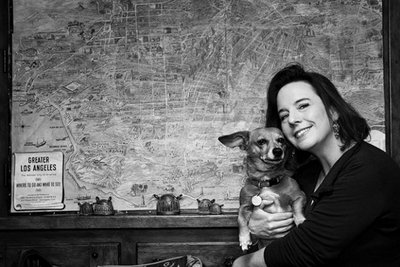 Colin Marshall sits down at the top of the Hotel Wilshire with Lynn Garrett, proprietor of popular online community Hidden Los Angeles and fifth-generation Angeleno. They discuss how best to prepare Germans for their Los Angeles vacation, since their guidebooks have failed; which human needs the many persistent myths about this city fulfill; how here, you are your own salvation; the revitalization of the Los Angeles River, as against the notion that “all it is is dead bodies and gang members”; Los Angeles as reflector of the observer’s own particular hatreds; getting to know the city not as a city, but as a constellation of villages; her art-school exploration of the city back when she “didn’t know not to”; who hangs out and talks on Hidden Los Angeles, and which topics get them most fired up; the human tendency to get upset about change of any kind, whether positive or negative, and to adjust perceptions accordingly; what happened when Hidden Los Angeles went viral, attracting 250,000 followers; Caine’s Arcade, Skid Row charities, and all the other ways she’s found the community can help (when not arguing); what the followers teach her about Los Angeles, the city no one person can possibly know; and what she learns from leaving the city, as well as how she makes herself an outsider when in it.
Download the interview from Notebook on Cities and Culture’s feed or on iTunes.
(Photo: James Acomb)

Vital stats:
Format: interviews with the movers and shakers of an archipelago you probably haven’t heard of
Episode duration: 15-45m
Frequency: 2-5 per month
When I first heard of The Faroe Islands Podcast [RSS] [iTunes], I heard it as a sort of punchline. “Oh man, this archipelago off of Europe? That only has 50,000 people? The Faroe Islands? There’s an entire podcast about it.” But really, how far does this separate it from so many other podcasts? This show covers all aspects of life on the Faroe Islands, and going by its episodes on Faroese broadcasting, any media pertaining to the place manages near-automatically to draw the attention of a sizable chunk of the population. A reasonably successful podcast about, say, one particular Doctor Who Doctor might attract five or ten thousand listeners. But a Faroe Islands news broadcast pulls in an astonishing fifty percent of the viewership. More than a few of those 25,000 — or of the English-speaking fraction of that 25,000, anyway — would, I wager, want to take a listen to The Faroe Islands Podcast, a production about a niche country in a niche-friendly medium, even if only out of curiosity.
This narrow focus has another advantage. Listening the show’s 182-and-counting episodes, I kept thinking back to, of all books, Robert Pirsig’s Zen and the Art of Motorcycle Maintenance. In it, Pirsig relates a story from his alter ego Phaedrus’ teaching days at Montana State College. One of his students wants to write “a 500-word essay on America” but can think of nothing to say. When Phaedrus suggests she write about just the city of Bozeman instead, she still comes back empty-handed. He then tells her to write just about Bozeman’s main street, but she again comes back without a paper. He finally suggests she write only about the front of Bozeman’s opera house, beginning with its upper-leftmost brick.
Read the whole thing at Maximum Fun.

On the latest Los Angeles Review of Books podcast, I have a conversation with writer, publisher, and actor Ken Baumann, who currently plays Ben Boykewich on The Secret Life of the American Teenager and just published his first novel Solip. He’s now at work on a book on the classic Super Nintendo role-playing game Earthbound. You can listen to the conversation on the LARB’s site, or download it on iTunes.
Wednesday, August 7, 2013
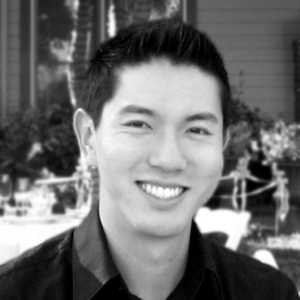 Colin Marshall walks through downtown Los Angeles with Brigham Yen, Realtor and author of the urban renaissance blog DTLA Rising. They discuss the sort of neighborhood that can rise from nothing, and whether Los Angeles’ downtown has come back from a deeper state of nothingness than other downtowns; the “bones” of a city’s center, and how Los Angeles’ have remained sound through all its problems; the late introduction of public space here; his car-centric youth in the San Gabriel Valley suburbs, and how going to San Francisco for school changed everything; the enduring “obesity” of Los Angeles’ streets, even as it has become the fastest-changing city in America; in what order transit, restaurants, bars, shopping, and housing needed to return downtown; how streets become “activated” with human energy; Broadway’s prospects for becoming “one of the coolest streets in America”; the healthy urban balance of a Prada by a Fallas-Paredes; how he began writing about cities by writing about Pasadena, and how interaction between the blogging half of his career and the real-estate half has deepened ever since; how he responds to longtime Angeleno’s complaints about “brainwashed Millennials” and their fallen expectations; the special importance of an undisputed urban center amid a sea of suburbia; the laid-back sensibility he hopes Los Angeles can retain during its transformation; and what dream people can see actively (and successfully) pursued if they visit downtown Los Angeles themselves.
Download the interview from Notebook on Cities and Culture’s feed or on iTunes.
Notebook on Cities and Culture S4E2: Prada and Fallas-Paredes with Brigham Yen

“We’re gonna live in Century City,” sings Tom Petty on his and the Heartbreakers’ 1979 song named after the place. “Go ahead and give in — Century City. Like modern men and modern girls, we’re gonna live in the modern world.” At that time, Century City, 176 acres built up against Westwood and Beverly Hills, may still have looked like a viable concept of the future. Even as recently as 2004, it provided both setting and title for a short-lived CBS science-fiction legal drama set in then then-far-flung year of 2030. Now, at least in my experience, it serves primarily as a navigational aid: if you can see downtown, if you can see the mountains, and if you can see the thirty- and forty-story towers of Century City’s narrow skyline, you can roughly triangulate your location in Los Angeles. Handy though that may sound, I suspect the district’s builders, working in the late fifties and early sixties with a piece of the former 20th Century Fox backlot, had — as that era’s builders often did — something grander in mind.
“Nothing dates faster than people’s fantasies about the future,” said art critic Robert Hughes, standing in Brasília, in an episode of “The Shock of the New”, his television series on modernism. “This is what you get when perfectly decent, intelligent, and talented men start thinking in terms of space rather than place, and single rather than multiple meanings. It’s what you get when you design for political aspirations rather than real human needs. You get miles of jerry-built platonic nowhere infested with Volkswagens.” Each and every one of my trips past Century City — and before now, all of them took me past it, since I never had a legitimate reason to enter — got me thinking about Brazil’s highway-wrapped, monument-studded capital, planned and built whole in the late fifties, officially inaugurated in 1960. Just three years later, Century City’s first building would open. Later that decade, the Century Plaza Hotel, designed by World Trade Center architect Minoru Yamasaki, would have its ribbon cut; his West Coast twin towers of the Century Plaza would open in 1975.
Read the whole thing at KCET Departures.
 Colin Marshall sits down at the Old Pasadena offices of Rigler Creative with Thomas Rigler, Steve Reich, and Caitlin Starowicz, creators of City Walk, a new television and web series from KCET and Link TV on the transformation of American cities and our ability to walk in them. They discuss the walkability of Old Pasadena right beneath them; City Walk‘s origin as a project purely about the health benefits of walking, and how it expanded; their own discovery of the new walkability of American cities as they shot and researched the show, how they found they’d already been documenting that “wave of change” almost inadvertently; their insights into the vision of park planner Frederick Law Olmsted; the buildup of frustration with postwar American cities, and what planning for and living around the car has to do with it; what they felt when experts elsewhere argued that, in fact, Los Angeles is the city of the walkable future; how they learned the distinctive urban language of this city, whether they grew up here or came to it later; the end of one form of the American Dream, the beginning of another, and the consequent “slumming of the suburbs”; how much the context for their interview and urban exploration material has widened with time and additional research; what it takes to make a show about experiences, not messages; City Walk‘s distinctive aesthetic, meant to represent the life of a city itself, and how the Iverson Mall Walkers fit into that; and how they revived the magazine-format show for the internet just as cities have revived themselves for the 21st century.
Download the interview from Notebook on Cities and Culture’s feed or on iTunes.

“A good urban context and the history it represents teach, with a sense of humor, even kitsch how to live.” So, in “Travels in Hyperreality”, writes Umberto Eco, who, despite not necessarily having Los Angeles in mind, nevertheless sets up a pillar of the mental framework needed to consider this city. Much of what appeared here in the early- to mid-twentieth century — the countless unprecedented forms of advertising, the theme parks, the buildings shaped like the products sold within, the freeways — must have at first seemed somehow “unreal,” and calculatedly so. While some of these have since vanished, the intervening decades have seen a steady drip of reality, even mundanity, seep into the survivors. What we might once have held up for ridicule as Los Angeles kitsch, we now barely even notice at all unless we look carefully enough. Take Chinatown: some regularly use and even enjoy it, while most seem to have only the vaguest awareness of its existence. In 1938, the year Olvera Street developer Christine Sterling opened one of its predecessors, China City, everyone would have had an opinion.
“China City must have been a sight to behold,” writes William Gow in the article “Building a Chinese Village in Los Angeles.” “Located near Olvera Street in downtown Los Angeles, only a few blocks from the nearly completed Union Station, the walled city featured buildings adorned in Chinese-style architecture, a lotus pond, and Chinese rickshaw rides. There was a temple, and replica buildings from the set of the 1937 Hollywood blockbuster, ‘The Good Earth.’ Costumed Chinese American workers greeted tourists, and a Chinese opera troop performed live shows in front of the shop of Hollywood recruiter Tom Gubbins.” What a staggering wealth of kitsch this urban simulacrum of a cinematic simulacrum of a Chinese village must have offered. Alas, one 1939 fire weakened China City, and a second 1948 fire destroyed it. When you walk through today’s Chinatown, you walk mainly through the descendant of New Chinatown, the other late-thirties development that competed with China City to both employ Chinese and Chinese-Americans and provide free-spending Angelenos with a non-threatening Middle Kingdom experience.
Read the whole thing at KCET Departures.