Skip to content

Los Angeles Review of Books podcast: Songs in the Key of Los Angeles

On the latest Los Angeles Review of Books podcast, I have a conversation with Josh Kun, professor at the University of Southern California’s Annenberg School for Communication and Journalism and co-curator of Songs in the Key of Los Angeles, a multi-platform collaboration with the Library Foundation of Los Angeles and the Los Angeles Public Library that brings to life the Library’s collection of sheet music pieces that range from the 1840s through the 1950s. Following that, I have a conversation with new City Librarian John Szabo. You can listen to the conversation on the LARB’s site, or download it on iTunes.

A Los Angeles Primer: Third Street Promenade

I hear a wide variety of languages spoken in greater Los Angeles, but nowhere have I found a richer Babel than the very same place whose other chief attractions include shoe shopping at Foot Locker, a hamburger at Johnny Rockets, and a 3D Hollywood spectacle at the AMC 7. No matter how hard I concentrated on one nearby conversation conducted in an exotically indecipherable tongue, I could understand no more than two words: Abercrombie and Fitch. Though surrounded by a near-Platonic ideal of retail homogeneity, I also beheld the diversity of the world before me; what’s more, I did so from a reasonably comfortable seat, the free availability of which hardly comes guaranteed in the public spaces of Southern California. Yet you usually stand a decent chance of finding one (especially if you go, as I do, in the middle of weekdays) at Santa Monica’s Third Street Promenade, which offers a concentration of the American commercial mainstream, attracts representatives of seemingly every known nation, and amid it all still cultivates scatterings of the grotesque.

Santa Monica itself presents something of a challenge to those writing or thinking about Los Angeles: though possessed of status as a separate municipality, distinctive blue-and-yellow street signs, and even its own bus system, few Angelenos would even consider excluding it from their conception of their city. Hence my use of “greater Los Angeles” above, a commonly heard fudge of a term meant to catch those zones that, while legally — and, perhaps to some of their residents, psychologically — separate from Los Angeles, remain, for many intents and purposes, its neighborhoods. Incorporated in 1886 and now hosting a population nearing 90,000, Santa Monica ranks in league with, say, Pasadena as a particularly large, venerable, and on the whole wealthy example of what some call Los Angeles’ “satellite cities.” That certainly sounds a bit cooler than “suburbs,” and indeed describes places a bit cooler than the traditional bedroom community, usually with greater density and a less utilitarian identity. Yet the Third Street Promenade, today a Santa Monica attraction seemingly equal in drawing power to its signature pier, at first looks like nothing more than an a linear, al fresco version of the hulking, monolithic shopping malls now decaying in suburbs everywhere.

Read the whole thing at KCET Departures.

Before next season starts, read a few essays from my forthcoming book on Los Angeles

Notebook on Cities and Culture‘s fourth season begins in just over two weeks, on Thursday, August 1st, with a series of in-depth conversations conducted right here with the cultural creators, internationalists, and observers of the urban scene in LosAngeles. Until then, why not consider tiding yourself over with a few essays from my forthcoming book, A Los Angeles Primer: Mastering the Stateless City? The good folks at KCET Departures (a Los Angeles-centric site operated by the big public television station in these parts) have been running an essay from it each week for months now, each based in a different part of the city, and thus each one examining a different realm of its world-in-microcosm.

“One can technically live an entire Koreatown life in only Korean or Spanish – or indeed, only English – within these almost three square miles, but it would by no means count as a full one.”

“Say what you will about their limited reach; the Red and Purple Lines surely must rank among the cleanest, most comfortable, least urine-smelling systems in America. You may lose twenty minutes waiting on platforms, but you’ll have taken a subway — in Los Angeles!”

“The place to stock up on canned green tea, buy a genuine futon, burn an hour at the arcade, eat a heaping plateful of Hayashi rice, or gaze upon the finest men’s style magazines: Little Tokyo remains all these, but does it, strictly speaking, remain Japanese?”

The freeways fascinate in the same way the crueler university social experiments of the sixties fascinate: they show us something about ourselves, though not necessarily something we want to see.”

“Built around one of the few traditionally strollable ‘cute streets’ Los Angeles has to offer, Larchmont Village has undergone an intriguing, if subtle, process of cultural fragmentation since the era of the Three Stooges and Raymond Chandler.”

“An object of fascination for the writers of ‘When Harry Met Sally’ to ‘The Simpsons’, restaurant critics to Yelpers, Ethiopian cuisine has its Los Angeles center on a single block of Fairfax Avenue. We can easily visit Little Ethiopia for a satisfying meal, but how, then, to assure ourselves of our ability to engage with a culture beyond paying for its food?”

“Neither urban nor suburban, Silver Lake, with its namesake reservoir and surfeit of fascinating houses, has become a space for style, wellness, and artisanal retail. But should we fear a rising monoculture?”

“Tourist guidebooks may direct Los Angeles’ visitors from abroad to the Walk of Fame, but just two miles east on Hollywood Boulevard, they’ll find a much more fruitful cultural experience — certainly a spicier one — in Thai Town, a neighborhood with less David O. Selznick and more Apichatpong Weerasethakul.”

You can read about these places and more at KCET Departures’ A Los Angeles Primer page, which posts a new essay each Tuesday. Naturally, I welcome any and all suggestions and pieces of feedback savvy readers such as yourselves may have to offer.

Books about Vancouver

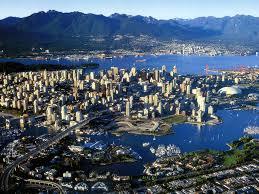
Though often overlooked as one of the great West Coast cities, Vancouver, BC synthesizes many of the most appealing qualities of its American counterparts. The Canadian outpost combines San Francisco’s walkability, Portland’s livability, Seattle’s seaside surroundings, and Los Angeles’ slickness, all in a carefully designed urban setting. The city’s current state is the result of development that has taken place over the past several decades. Yet Vancouver’s skyscrapers, gleaming condominium towers and urban center can make it difficult for the uninitiated visitor to see everything else that the city has to offer: These four books look deeper to reveal a much more distinctively textured Northwest metropolis.

Vancouver: Representing the Postmodern City edited by Paul Delany

While parts of Simon Fraser University professor Paul Delaney’s academic reader on Vancouver have become less relevant over time, other parts have become more valuable by highlighting the artistic, architectural, and commercial elements of the city that have best weathered the building bubbles and waves of immigration. Delany also considers how the city has been represented in architecture and the arts, and explores Vancouver as the setting for the novels of notable resident William Gibson. Though one might assume that a sci-fi novelist would appreciate Delaney’s futuristic approach to the city, Delany told me that after he handed Gibson a copy of Representing the Postmodern City for an autograph, the writer returned it with an unambiguous inscription: “No mo’ po-mo!”

Read the whole thing, which also includes Douglas Coupland, Charles Demers, and Timothy Taylor, at Bookforum. I assure you that its passive-voice sentences somehow found their way in during editing. See also my previous Bookforum syllabus on Western literary expats in postwar Japan. (The next should similarly cover Korea.)

Los Angeles Review of Books podcast: David Iserson

On the latest Los Angeles Review of Books podcast, I have a conversation with David Iserson, writer for such television programs as New Girl, Up All Night, and The United States of Tara as well as the author of the new comic young adult novel Firecracker. You can listen to the conversation on the LARB’s site, or download it on iTunes.

A Los Angeles Primer: Thai Town

Heading north on the Red Line one morning, I looked around the crowded car and saw only tourists from abroad. Chinese, many of them huddled together over guidebooks and most wearing bulky, expensively long-lensed cameras around their necks, made for the most visible presence. I also spotted a Francophone family, the father of which flipped through the pages of Lonely Planet’s “Ouest américain.” Which part of the city had they chosen to explore, I wondered as we passed through Koreatown and Los Feliz, then turned toward Hollywood. None of them got off before I did, at Western Avenue, which led me to suspect the worst: the train would soon disgorge them all onto the Hollywood Walk of Fame. A conversation with some visiting Germans the week before had primed me to make that assumption. When I asked them where the friends and literature they’d consulted suggested they go in Los Angeles, they recalled only a few: the Santa Monica Pier. Universal Citywalk. The Walk of Fame.

They at least came with an advantage over some visitors, who show up secure in their many assurances received that Los Angeles contains, in its nearly 500 square miles, nothing at all, and that they can continue guiltlessly on to San Francisco. Others hear that Los Angeles at least offers Disneyland, a thirty-mile drive out of the city and into another county entirely. But most travelers with a little time on their hands seem to wind up, sooner or later, on Hollywood Boulevard. I don’t mean to condemn an entire street, much less one that runs for five miles through several different neighborhoods, but it seems to pull people as if with its own gravitational force into the wrong one, Los Angeles’ embarrassing equivalent of Fisherman’s Wharf or Times Square. I make an exception for the Egyptian Theatre, whose stream of revival screenings from the American Cinematheque did more than its part to convince me that I could live in no other city in America, but west of Vine Street, Hollywood Boulevard saddens, especially when you consider how many people take it, surely with no small bewilderment, as representative of the entire city.

Read the whole thing at KCET Departures.

Podthoughts: The Adam and Dr. Drew Show

Vital stats:
Format: golden-age Loveline, more or less, but with fewer calls and more discussions of the breakdown of society
Episode duration: 45m-1h10m
Frequency: 8-9 per month

Mention this though I often do when writing about things Adam Carolla-related, I tuned in to Loveline throughout my adolescence with a near-religious dedication. Those nightly two hours with Carolla and “Dr. Drew Pinsky” on sex, drugs, medicine, home improvement, auto repair, and the state of the republic had formative effects I can’t possibly overstate. (They even taught me, broadcasting out of their decrepit Culver City studio, quite a bit about the geography of Los Angeles that would come in handy when I landed here myself.) Though ostensibly an advice show, and one that did sometimes spend a solid hour taking calls from stoned fifteen-year-old snowboarders worried about herpes, Loveline produced its most memorable gems of wisdom — not just about pills or booze or dental dams or plywood, but about life itself — with nobody on the phone, and nobody in the studio (certainly not from the gallery of “drunken rockers and stupid actresses,” as Carolla has since described the guest list) but its co-hosts. They admitted that they didn’t do the show for the callers, who half the time wouldn’t even pretend to accept their counsel, but the listeners. As one of those listeners, I can vouch for the benefits.

Like any nightly live show, especially one hosted by fellows busy even by celebrity standards, Loveline weathered the occasional absence: another doctor sitting in for Drew, another comedian for Adam. This taught us that, while either individual could hold their own, we tuned in for the combination, the pairing, the duo — the sum greater than the parts. The inquisitive, education-loving, clinically-minded, mild if sometimes twitchy Dr. Drew’s yin balanced the education-free, down-and-dirty/nuts-and-bolts, outwardly base but secretly incisive Adam’s everyman yang, making 1995 through 2005, the years between Carolla’s hiring as a co-host and his departure to helm a morning show on KLSX, the program’s near-official golden age. (Pinsky’s presence goes back to the early eighties, and continues to this day, alongside that of someone named Psycho Mike.) Apart from occasional guest appearances by Carolla on Loveline or Pinsky on Carolla’s radio show and, later, flagship podcast, 2005 through most of 2012, constituted lean years indeed for we who consider ourselves appreciators of Adam and appreciators of Dr. Drew, but out-and-out fans of Adam and Dr. Drew.

Read the whole thing at Maximum Fun.

Notebook on Cities and Culture season four begins August 1st

Once again, thanks very much indeed to all you listeners who  backed Notebook on Cities and Culture‘s fourth season on Kickstarter. The planning begun as soon as the drive ended, and now it pleases me to announce that the season will premiere on Thursday, August 1st. We’ll start off in Los Angeles, then move on to Copenhagen and London in the fall, and then to Toronto in the spring. If you have any suggestions of cultural creators, internationalists, and observers of the urban scene whom you’d like to hear interviewed in those cities, please do let ’em rip (to colinjmarshall at gmail, specifically). Make sure you don’t miss an episode by subscribing on iTunes.

In the meantime, consider tiding yourself over with the interviews I’ve hosted and produced for the Los Angeles Review of Books podcast, including most recently literary historian Loren Glass on Grove Press, Tosh Berman on Sparks, David Shook on translating Mexican novelist Mario Bellatin, and Jeff Weiss with Evan McGarvey on Biggie and 2pac.

A Los Angeles Primer: The Arts District

Call it cynicism if you must, but if I went to someplace called the “Arts District” in most North American cities, I wouldn’t necessarily expect to find art; in most cases, I’d expect to find nothing at all. The name smacks of official desperation, bringing to mind last-ditch efforts to rebrand blocks you’d never even walk through with an absolute minimum outlay of money or effort. You can envision the meetings: what revitalizes tired, dangerous industrial areas? Why, artists. And what do artists do? Arts, of course. And up go the signs. That an influx of artists in the sixties and seventies actually did bring Manhattan’s Lower East Side back from the brink of more or less literal destruction has put ideas into the head of other cities across the continent ever since. It brings to mind the Melanesian “cargo cult,” whose members supposedly built imitation airstrips out of wood and radios out of coconuts in hopes of therefore receiving the same deliveries of goods as did their departed World War II occupiers. The cargo cultists staffed their bamboo control towers and waved their semaphore leaves as imitatively as they could, so the story goes, but nothing ever happened.

It thus comes as a surprise that, in Los Angeles’ Arts District, something has actually happened, and, more to the point, continues to happen. Yet for quite some time, it seemed unclear whether it had or would. “Downtown was doomed,” says the narrator of Thom Andersen’s documentary “Los Angeles Plays Itself” of the city’s faltering core in the immediate postwar era. “In the eighties, it went vertical, and there was an attempt to promote loft living on its eastern margins, an effort advertised in a few films, but even artists found the new urbanism daunting.” We now know this area, between downtown proper and the Los Angeles River’s west bank, as the Arts District. Back in 2004, when Andersen’s film came out, the neighborhood already had its name, but evidently it still lacked its current regard. Less than a decade before that, the Arts District didn’t even merit an entry in Leonard and Dale Pitt’s encyclopedia “Los Angeles A to Z”, though the law that put artists’ residences in formerly industrial buildings above-board goes back to 1981. You may even now venture into the Arts District and find yourself unimpressed, but bear in mind the way we’ve framed so much of Los Angeles today: don’t look at what it is; look at what it’s becoming.

Read the whole thing at KCET Departures.

Los Angeles Review of Books Podcast: Loren Glass

On the latest Los Angeles Review of Books podcast, I have a conversation with literary historian Loren Glass, author of Counter-Culture Colophon: Grove Press, the Evergreen Review, and the Incorporation of the Avant-Garde. You can listen to the conversation on the LARB’s site, or download it on iTunes.