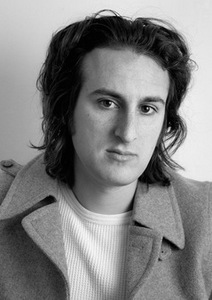
 Colin Marshall sits down in Los Angeles’ Franklin Hills with Jeff Weiss, music writer for the LA Weekly and many other publications, editor of The Passion of the Weiss, co-host of the podcast Shots Fired, and co-author of the book 2pac vs. Biggie. They discuss the total time of his life spent waiting for rappers to show up to interviews; Tyler the Creator and Odd Future as today’s representatives of Los Angeles, and what the collective has to do with West Coast experimentalism and the city as a magnet for eccentrics; how he fights his personal war against cliché; kids today, and their tendency to listen to music of all eras, including golden ones, several of which we live in at any given time; Dam-Funk, Matthewdavid, Flying Lotus, and the new, highly Los Angeles-y genre they have created; the genesis of modern instrumental hip-hop; the un-irony of Los Angeles, and your need to carve out your own world within the city if you live in it; his journey from jock to writer, and his novel about a real tragedy on his baseball team; his childhood growing up in a culture-free household; how he one day found himself “hate-watching” Girls; how the Low End Theory helped him stop hating Los Angeles, and how the city concurrently “opened its gates” more generally; which albums can mentally prepare you for the city, and especially for its absurdity; his mentorship by Herbert Gold, the alleged rival of Jack Kerouac; and the only two prices that have come down in the past decade: that of cocaine, and that of writing.
Download the interview from Notebook on Cities and Culture’s feed or on iTunes.
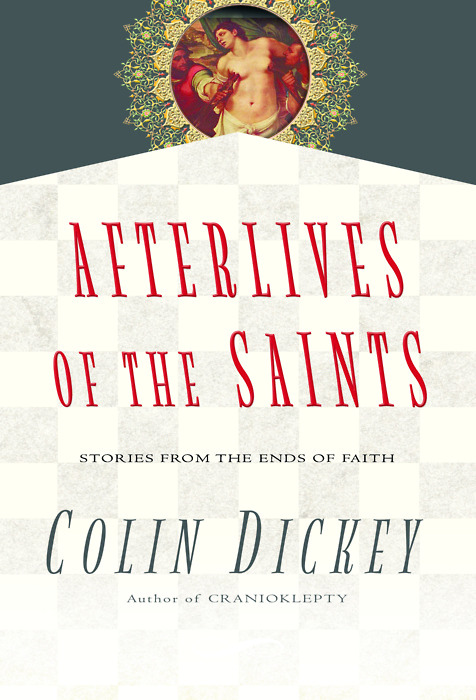
On the latest Los Angeles Review of Books podcast, I have a conversation with Colin Dickey, author of Cranioklepty: Grave Robbing and the Search for Genius, and Afterlives of the Saints: Stories from the Ends of Faith, frequent patron of the Museum of Jurassic Technology, and a man who knows his skulls, his obsessives, his haunted hotels, and his Stephen Kings. You can listen to the conversation on the LARB’s site, or download it on iTunes.

“I AM THE FEDER,” read the banner above. The feder? Oh no, I thought: another Jewish tradition of which I’ve gone through life ignorant. Maybe it has something to do with seder, which, as I understand it, involves a ceremonial meal. Or maybe it doesn’t; all I know about it I inferred from an advertisement for “The Last Seder”, a production at Fairfax Avenue’s Greenway Court Theater. The banner, too, appeared on Fairfax, though further south, and only when I moved a few steps to the side did I realize that the message continued on another segment of which a tree had blocked my view. “I AM THE FEDERATION,” went the full declaration, as in the Jewish Federation of Greater Los Angeles, which I like to think validates the spirit of my first assumption. The other banners along this stretch of Fairfax, known as the Fairfax District, promoted the Anti-Defamation League. For a moment, but only a moment, the neighborhood’s character seemed easily understood.
A San Franciscan friend of mine has a saying: “Everybody in San Francisco is a little bit gay. Everybody in New York is a little bit Jewish. Everybody in Los Angeles is a little bit Mexican.” We might thus call the Fairfax District (which, strikingly and almost uncomfortably by the standards of Los Angeles, comes off as not Mexican in the least) a little bit New York, albeit a version of New York that never rises above four stories, and reaches that height only grudgingly. Kosher sandwich shops, challah bakeries, diamond dealers, something called the “Diamond Bakery”: this texture comes from an enduring density of traditional Jewish businesses, not to say stereotypical Jewish businesses. (I imagine the Anti-Defamation League themselves would have something to say about The Bagel Broker, were it a fictional location on a television show and not a real one just down Beverly.) Over all this the formidable Canter’s Delicatessen has presided, all day and all night except on Rosh Hashanah and Yom Kippur, since 1931.
Read the whole thing at KCET Departures.

Little Tokyo sold me on Los Angeles. My northern Californian childhood introduced the delights of San Francisco’s Japantown, still one of my beloved areas, but every time I go there, it looks to have wearily endured yet another wave of exodus and surrendered to yet another degree of decrepitude. This, of course, makes for its own kind of charm; fallen places often seem to me the only ones worth visiting. Little Tokyo, too, feels fallen, and richly so, though with an accent of resilience I no longer sense in its San Franciscan predecessor. Whatever becomes of either of these neighborhoods — whose residents will always describe them as more vibrant twenty, thirty, forty years ago — I can’t imagine them losing their core usefulness when you need to stock up on canned green tea, buy a genuine futon, burn an hour at the arcade, eat a heaping plateful of hayashi rice, or gaze upon the finest men’s style magazines.
Free & Easy, for the record, ranks as the finest men’s style magazine, at least for my sensibility and money (when I can bear to part with the price of an imported issue). But Japan, an incubator of unusually robust print and menswear cultures, produces dozens more, all meriting the serious dresser’s attention. I read them, and occasionally purchase them, in Little Tokyo’s branch of the Japanese bookstore chain Kinokuniya, whose Seattle location absorbed much of my adolescent allowance. In each session at their Free & Easy shelf, I practice my Japanese reading while beholding full-page photos of middle-aged graphic designers and record producers in bespoke suits and handsomely worn brogues, reclining on Eames chairs and vintage road bicycles. But I try not to think about why I have to stare so hard at these expensive foreign magazines in the first place. The city streets around me, alas, suffer from a near total-absence of living, breathing, three-dimensional dandies from whom to learn proper style. Nice try, Mike Davis, but nothing in “City of Quartz” indicts Los Angeles so thoroughly as our population of fifty-year-old men in hoodies.
Read the whole thing at KCET Departures.
 Colin Marshall sits down in Pasadena with journalist Patt Morrison, best known for her “Patt Morrison Asks” column in the Los Angeles Times, her years hosting Life and Times and Bookshow with Patt Morrison on public television as well as Patt Morrison on KPCC, and her book Rio L.A.: Tales from the Los Angeles River. They discuss her childhood in an Ohio town of 2,000 people, where the nearest cool place was a book; how and why her family decided to pull up stakes and stay on the move before suddenly deciding to settle in Tuscon, Arizona, a bustling metropolis by comparison; how she developed a kind of historical fourth-dimensional vision, letting her see what’s been here as well as what is here; how she came to Los Angeles for Occidental College, and what she discovered here; what others have discovered in Los Angeles, like the individuality of expression, bordering on eccentricity, that comes with a certain type of property; how reading about Nellie Bly as a child convinced her then and there to become a journalist; the lessons she’s learned from working across several major media; what she read to better understand Los Angeles, and what books she’d put in the city’s welcome wagon kit; her drive to collect stories about “then” as well as “now”; Los Angeles’ authentic-ness, as opposed to its authenticity; what you need to master to live the ever-growing number of lifestyles possible in the city; retaining that Los Angeles sense of perpetual astonishment, and reinforcing it by regularly traveling abroad; why we seem to have forgotten the importance of clothing on the West Coast, and whether $500 sweatpants and $100 filp-flops say something meaningful about Los Angeles; popular confusion about the real eastside-westside border, and what she’s done to fight the misconceptions; and what to keep in mind when you, too, come to Los Angeles.
Download the interview from Notebook on Cities and Culture’s feed or on iTunes.

On the latest Los Angeles Review of Books podcast, I have a conversation with Matthew Specktor, author of American Dream Machine, a multigenerational novel at once thoroughly about Hollywood the industry and about Los Angeles the place. You can listen to the conversation on the LARB’s site, or download it on iTunes. (You can also read Richard Rayner’s essay on American Dream Machine for the LARB here.)
 Colin Marshall sits down in Glassell Park with comedian and man of cinema Chris Gore, who has talked movies on such television shows as The X Show, The New Movie Show with Chris Gore, and Attack of the Show; has written books including The Ultimate Film Festival Survival Guide, The Complete DVD Book, and The Fifty Greatest Movies Never Made; hosts the podcast PodCRASH with That Chris Gore; and has a new comedy album and picture book coming up called Celebrities Poop. They discuss how he takes his work seriously, but not himself; his “war” on the top five podcasts; his contretemps with Representative Dan Lungren while editing Videogames magazine; Colin’s Podthought on PodCRASH, and the superiority of essays and films that don’t tell you how to feel; his first television appearances on FX, and how he there learned to read a teleprompter by pretending not to read it; growing up a Michigander and a nerd, discovering alternative culture through film (and building his own eight-millimeter home theater at age seven) while actively not giving a shit what anyone thought of him; his choice to come to Los Angeles because it smelled less like pee than New York; his place in film culture versus nerd culture, and the word “nerd” versus the word “geek”; how he makes a podcast out of his appearances on other podcasts in the podcast Mecca that is Los Angeles; meeting and talking to cool people as a byproduct of a career, or as the raison d’être of one; which of them buys cars and which of them buys bespoke suits; what it felt like being around for the nineties’ American indie film boom, and why only Quentin Tarantino has kept up his auteur’s head of steam from those days; and why he made My Big Fat Independent Movie when that boom got to be too much.
Download the interview from Notebook on Cities and Culture’s feed or on iTunes.
 Colin Marshall sits down above Spring Street in downtown Los Angeles with Tyson Cornell, proprietor of Rare Bird Books and Rare Bird Lit, former longtime Director of Marketing & Publicity at Book Soup on the Sunset Strip, punk rocker, and co-editor of the forthcoming essay collection Yes Is the Answer: And Other Prog Rock Tales. They discuss the seeming contradiction between Los Angeles’ image as an “unreaderly” place and its rank as the largest book market in America; this city’s tendency not, unlike other cities, to tell you straight-up what it is; how his study of the American newsstand brought him to Los Angeles, and then to Book Soup; the perspective he gained on Los Angeles through both working newsstands and having as a neighbor the manager of the Laugh Factory; how the reading came first in his life, and then the punk rock; Yes Is the Answer and the supposed antagonism between punk and prog; his time rocking in the both-advanced-and-retrograde Japan alongside former hair metalists; Sparkstastic, the upcoming book on Los Angeles (but England-beloved) band Sparks by Tosh Berman, also formerly of Book Soup; the nature of working at a bookstore, or of trying and failing to work at a bookstore, among the industry’s classically high-functioning freaks; how much crazier crazy writers can get than crazy rockers, and the ultimately tiresome nature of the non-Thompson, non-Bukowski literary wild man persona; the way that books and bookstores seem both unimprovable, in away, and yet somehow headed straight for disappearance; why books cost so much, and the advantage of slapping dogs on their covers; and the implications (and potential conspiracy theories surrounding) girls who make millions on their self-published vampire e-books.
Download the interview from Notebook on Cities and Culture’s feed or on iTunes.

