Given its Space Needle-like role as a synecdoche for the city in major motion pictures and television shows, you might assume Pike Place Market amounts to to no more than Seattle’s own Times Square or Fisherman’s Wharf. Refreshingly, though, the place offers a robust enough selection of reasonably appealing businesses and lays close enough to downtown (even within downtown, depending on where you draw the lines) that almost as many locals as tourists mill around there. I’d always enjoyed visiting as a kid, when I lived twenty miles away, but I get the same kick out of it — a kick at a culinary angle, usually — now that I live 1200 miles away. But I come now with undeniable tourist status, confirmed by the Pike Place bookstore clerk who asked me where I was from before I so much as opened my mouth. I told him, and he asked if I was a celebrity. “Your secret’s safe with me,” he assured me when I said no.
He asked the girl who strolled in next the same question. “South Korea,” she replied. He asked where. “Seoul,” as almost every Korean tourist says. I then turned toward her and asked, in Korean, where specifically in Seoul. Though my command of the language barely counts as functional, she still made with the standard reaction of shock and amazement, covering her mouth and making a slightly strangled laugh-like noise. We continued to chat for a bit, and she got around to the other standard reaction: the question of why I could possibly want to learn her language. When I lived in Santa Barbara, struggling with whatever Korean materials I could come by, haltingly asking clarifying questions from the few Korean-speakers I encountered, and taking Japanese classes as a close-enough substitute, I could only shrug and mutter something suspiciously thin about liking Korean movies. Now, living in Los Angeles’ Koreatown, frequenting the Korean Cultural Center, eating Korean meals on the regular, and having a Korean girlfriend, I can come up with suspiciously many reasons. My interest in the country used to look weird; now the fact that I haven’t actually been there yet looks weird. How long can the world wait for Notebook on Cities and Culture: Seoul?
Half of my loose Seattle to-do list went untouched on this trip, a half which included revisiting Hosoonyi up in Edmonds, the cradle of my enthusiasm for Korean cuisine. (I first went there because it was a favorite of my high school girlfriend’s Korean mom and her sisters, a fact you can probably snap neatly into this whole narrative.) So I have a high priority for the next visit: trying once again their renditions of all the dishes that have since entered my life’s regular rotation. (Especially kimchi jjigae — it’s really good, it’s delicious.) Other targets for my next round of Seattle exploration include:
- Queen Anne, a neighborhood whose existence I barely recognized in my Washingtonian years but which bristled with pins whenever I looked up coffee shops on Yelp
- Wallingford, a neighborhood I mainly know as the current home of Archie McPhee, but which seems to have turned over the past decade into a Portlandesque paradise of food and drink
- University and Roosevelt Ways, my main Seattle hangouts (and, in their revival cinemas and video stores, the cradles of my cinephilia) as a high school student free to enjoy college-towniness while feeling only the grinding meaninglessness of high school rather than the overwhelming meaningless of college itself
- The still pretty new Link Light Rail line
Though I do feel faintly bummed about not getting to ride the Link, local friends assure me that I would have been hard pressed to find a reason to. Unless, of course, nobody could drive me to the airport. I guess that’s what Seattleites use it for: going to and from the airport, assuming they live near the tracks. Seattle has nevertheless wasted no time building this molehill of a benefit into a mountain of superciliousness with a marketing campaign built around a sensible-grandma-type figure called — wait for it — the Voice of Reason. This town, I thought to myself, face meeting palm.
(I didn’t have a chance to to ride the South Lake Union Transit streetcar, either, though it must have something going for it. Besides its acronym, I mean. Imagine the conceptual spokeswomen that generated.)
If Tao Lin couldn’t explain Seattle for you, maybe William Dietrich can. Almost ten years ago, he wrote an article for the Seattle Times called “A Tale of Three Cities“, and I think of it whenever I think about Seattle, Portland, or Vancouver:
With our Space Needle and sports teams, Pike Place Market and gorgeous geography, Boeing and Microsoft, Starbucks and Amazon, Seattle likes to think of itself as top dog in the Pacific Northwest. We’re trendy. Muscular. Diverse. Big.
But when it comes to livability, we seem stuck in first gear and our neighbors are more than a little condescending. Seattle’s OK, they say, but a little crass. Yokels on planning. Bumpkins on design.
“Seattle has an ethic of passivity,” says Portland developer John Russell. “People throw up their hands and say there’s nothing we can do.”
[ … ]
Sound Transit is run by a board of local officials from King, Pierce and Snohomish counties whose elected allegiance is to their individual jurisdiction, not the metro area. Moreover, transit dollars are split to be spent in five separate sub-regions that, while promoting “equity,” starve the effort to get rail started at its logical but expensive core — Seattle — so it can later radiate outward.
To make matters worse, Seattle has a frequently-warring, strong mayor-strong council form of city government. By contrast, Portland’s tiny council of a mayor and four commissioners means just three votes are needed for a decision. Moreover, each commissioner is given oversight of city departments like a cabinet minister, making them directly responsible for bureaucratic performance.
Hence what I’ve come to consider one of Seattle’s main advantages: convenient placement between its northerly and southerly PNW metropolis neighbors. But you still tend to have to drive between them. Then again, that goes for much of the greater Seattle area itself. The region’s agonizing (and shockingly recent) struggles even to decide what sort of rapid transit to build come across most entertainingly in Peter Bagge’s comic “My Very Own Monorail“. Despite composing it for the libertarian magazine Reason, he doesn’t come off as particularly doctrinaire on transit issues. I’ll invite him on my show (for a third interview!) when I get to recording Notebook in Seattle. You’ll hear more.
(I did try to ride the Seattle Center Monorail, but it doesn’t accept whale cards.)
Aside from its governmental and geographical tangles, I’ve long sensed that Seattle suffers from especially unhealthy city-suburb relations. Part of this comes from having grown up in one of these suburbs; part of it comes from feeling like they conspire to deflect me from the city itself. I lived in a ‘burb eighteen miles out of downtown; went to high school in a ‘burb thirteen miles out of it; learned to love Korean food in a ‘burb fourteen miles out of it; stayed with a friend this trip in a ‘burb ten miles out of it; and made a grueling 90-minute ‘burb-to-‘burb bus journey to meet another friend for a three-beer lunch (which is to say, a lunch consisting of three beers). Amid all this ‘burbing, I heard several different people speculate about exactly how many feet of shattered glass in which, when The Big One inevitably comes, downtown Seattle will find itself choked. Small price to pay, I’d say.
Still, make your connections and you can have fun in a few of these far-flung municipalities. Why, in one of them (eighteen miles out!) I met Colin Williamson, for years my very favorite writer at PCGamer magazine — which, during the years I read PCGamer, pretty much meant my favorite writer. As the only genuinely funny reviewer on staff, he got thrown the obvious duds, especially the high-profile obvious duds. The last piece I read from him, on Jon Romero’s long-delayed Daikatana, survives only as a forum post. (The magazine hasn’t exactly taken pains to keep its archives available.) It turns out that Colin’s life after game journalism involved a decade in Japan, studying and working in game production. He spent a goodly chunk of this time in the western Kansai region, and specifically the city of Osaka — where I shall find my own self two weeks from now! If you’re of the Nipponophile/gamer/student-abroad bent, you have a fascinating read ahead in his blog Colin’s House of Shame, where he recounts his journey from rural Pennsylvania to enrolling in Kansai Gaidai to taking film classes with the Donald Richie (“Yeah, I’d always see him going around with different girls on his arms.” “… girls?“) at Temple University to laboring away for various Japanese game developers.
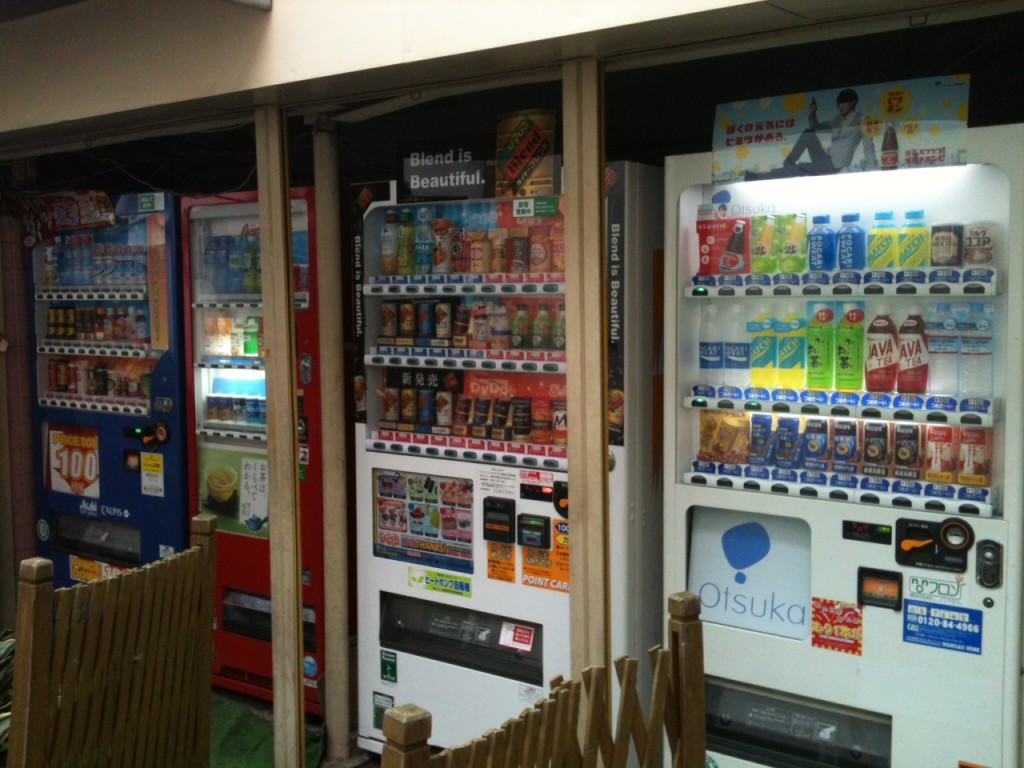
Buying alcohol in Seattle brought back memories. I remember accompanying my dad to the local liquor stores in childhood, and only now, filled with southern Californian drinking experience, do I wonder about these images. Spartan in their wood-grain decor, utilitarian in their organization and presentation, and early in their closing hour, these shops seemed conceptually imported from East Germany or worse. Only years later did I learn that the state actually did run them: by Washington law, nobody else could sell the hard stuff. The repeal of this law not long ago has allowed friends who remained Seattleites to feel their hand tremble as it descends, for the first time, on a bottle of vodka right there in the QFC. But many of these former state sellers, especially the ones out in the sticks, still feel vaguely Soviet, and people complain of the kind of taxes on alcohol that make five-dollar transit passes sound like a bargain. It seemingly went off as one of those fumbled law-loosenings, like British Rail in the nineties, that offers the citizenry a cherished opportunity to gripe about both the public and the private sector. Far grimmer evidence of Washington’s squirreliness over the drink appears in its strip clubs, which sell only eight-dollar Cokes and, if you’re lucky, six-dollar Kool-Aids. You’ll have more fun watching patrons periodically duck out to their cars to surreptitiously pound a fortifying Steel Reserve.
But heed my words: wherever you buy it, if you burn through the Grey Goose, don’t follow it up in desperation with the dregs of a bottle of Smirnoff’s fluffed marshmallow. Only the most intense phở can treat the resulting hangover. Fortunately, if you roam around greater Seattle, you’ll find a hell of a lot of it.
[Previous diaries: Portland 2012, San Francisco 2012, Mexico City 2011]
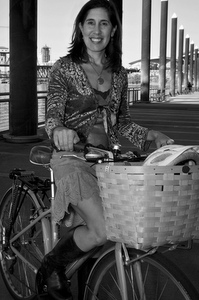 Colin Marshall sits down in southeast Portland with Mia Birk, author of Joyride: Pedaling Toward a Healthier Future and President of Alta Planning + Design, which strives to make biking, walking, and mass transit an integral part of daily life. The discuss exactly how much happier he would have been riding a bicycle to the interview than riding a bus; the way Portland “got the ball rolling” for its cycling infrastructure development in the nineties; the moments of surprising hostility she found upon first pedaling down Portland streets; bicycle infrastructure as a facilitator of cooperation; how to extend enthusiasm for cycling beyond the guys in Lance Armstrong spandex to those who simply need to get somewhere; the ill effects of America’s having spent decades incentivizing driving, and exactly how European cities like Copenhagen pulled so far ahead; how she gauges the cycling in a new town, asking first to see “the good, the bad, and the ugly”; the importance of creating conditions of delight for riding in a city, and the need to re-teach the occasional public official how to use a bike before doing so; how the declared identity of a city affects the implementation of cycling within it; how she finds you can fit “a little party” into every day; and what, exactly, to do when you turn up in Portland yourself, jonesing to ride.

 Colin Marshall sits down in northwest Portland with comic artist and film critic
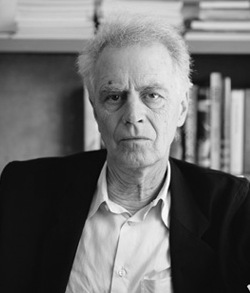 Colin Marshall sits down in Silver Lake with Thom Andersen, professor at the California Institute of the Arts’ School of Film/Video and director of films including Red Hollywood, the new Reconversion, and the well-known documentary Los Angeles Plays Itself, on the truth and falsity of the city’s representation in motion pictures. They discuss The Fast and the Furious shooting on his street; the end of the current era of impressive car chases crafted by Nicolas Winding Refn and Quentin Tarantino; H.B. Halicki’s original Gone in 60 Seconds, and the importance of its literalism regarding greater Los Angeles’ South Bay; how rarely mainstream cinematic interest looks beyond white people of “immodest means,” and what the films that do go beyond them achieve (such as the creation of detective films that actually involve detecting); Killer of Sheep, Boyz n the Hood, and the differences between garden-variety “gang movies” and those that truthfully deal with survival; the questions to do with the black population, bank bailouts, and the destruction of the working class he believes movies could address but rarely do; how much more interesting reality is than our imaginations, which by now have long since filled up with junk; Los Angeles as a representational battleground, and the way filmmakers have an alibi here not to do important work; the native’s lack of advantage in understanding this city, and the outsider’s advantage in making it strange again, as seen in Zabriskie Point, The Outside Man, Model Shop, and Point Blank; the changes in Los Angeles, how they vanish in comparison to the changes in major Asian cities, and how they have for the most part taken place among the people rather than in the infrastructure; the racism of Crash versus the naïveté of Falling Down; his continuing fascination with the Los Angeles wherein people struggle to make a living; and what fillms and books can to do change minds, given that they so often make minds in the first place.
 Colin Marshall sits down in San Francisco’s South Beach with entrepreneur, author, blogger, traveler, and learner
 Colin Marshall sits down in San Francisco’s Bernal Heights with
  Colin Marshall sits down in San Francisco’s Yerba Buena Gardens with Cariwyl Hebert, founder of the community-based classical music appreciation society