Skip to content

Notebook on Cities and Culture S2E14: Next Year, Jerusalem with Peter Orner

Colin Marshall sits down in San Francisco’s Bernal Heights with Peter Orner, author of the novels Love and Shame and Love and The Second Coming of Mavala Shikongo and the short story collection Esther Stories as well as co-editor of the nonfiction collections Underground America: Narratives of Undocumented Lives and Hope Deferred: Narratives of Zimbabwean Lives. They discuss the heightened Americanness of Chicago and what it has offered his literary sensibility; our tendency as Americans, for good and ill, to chase stuff, whether in the city or the suburbs; his fascination with how life simply goes on amid grand (and possibly meaningless) power struggles; how, as a fresh college graduate, he found his was to Namibia; how his experience compares with the fictional Scottish doctor who falls in with Idi Amin in The Last King of Scotland, especially in the sense of the gnawing burden of non-belonging; life in a country where things slow down, and the space for thought that provides; how Namibia inspired him to write a story of a man lost in a Kafkanly inescapable shopping mall, and how he used a school’s sole typewriter to compose it; his constant aspirations to the condition of the short story collection, the “highest form,” and how even his novels secretly take that form; the experimentalism of great books that don’t seem experimental, like Bleak House or Moby Dick; how Namibia’s situation compares to that of Zimbabwe, and how many of Zimbabwe’s problems can be laid at the feet of Robert Mugabe; how he experiences a San Francisco beyond the Fisherman’s Wharves and the Transamerica Pyramids; and his criticism of the city’s increasing pricing out of families that leads, ultimately, to a loss of stories.

Download the interview from Notebook on Cities and Culture’s feed or on iTunes.

Seattle Diary II

Given its Space Needle-like role as a synecdoche for the city in major motion pictures and television shows, you might assume Pike Place Market amounts to to no more than Seattle’s own Times Square or Fisherman’s Wharf. Refreshingly, though, the place offers a robust enough selection of reasonably appealing businesses and lays close enough to downtown (even within downtown, depending on where you draw the lines) that almost as many locals as tourists mill around there. I’d always enjoyed visiting as a kid, when I lived twenty miles away, but I get the same kick out of it — a kick at a culinary angle, usually — now that I live 1200 miles away. But I come now with undeniable tourist status, confirmed by the Pike Place bookstore clerk who asked me where I was from before I so much as opened my mouth. I told him, and he asked if I was a celebrity. “Your secret’s safe with me,” he assured me when I said no.

He asked the girl who strolled in next the same question. “South Korea,” she replied. He asked where. “Seoul,” as almost every Korean tourist says. I then turned toward her and asked, in Korean, where specifically in Seoul. Though my command of the language barely counts as functional, she still made with the standard reaction of shock and amazement, covering her mouth and making a slightly strangled laugh-like noise. We continued to chat for a bit, and she got around to the other standard reaction: the question of why I could possibly want to learn her language. When I lived in Santa Barbara, struggling with whatever Korean materials I could come by, haltingly asking clarifying questions from the few Korean-speakers I encountered, and taking Japanese classes as a close-enough substitute, I could only shrug and mutter something suspiciously thin about liking Korean movies. Now, living in Los Angeles’ Koreatown, frequenting the Korean Cultural Center, eating Korean meals on the regular, and having a Korean girlfriend, I can come up with suspiciously many reasons. My interest in the country used to look weird; now the fact that I haven’t actually been there yet looks weird. How long can the world wait for Notebook on Cities and Culture: Seoul?
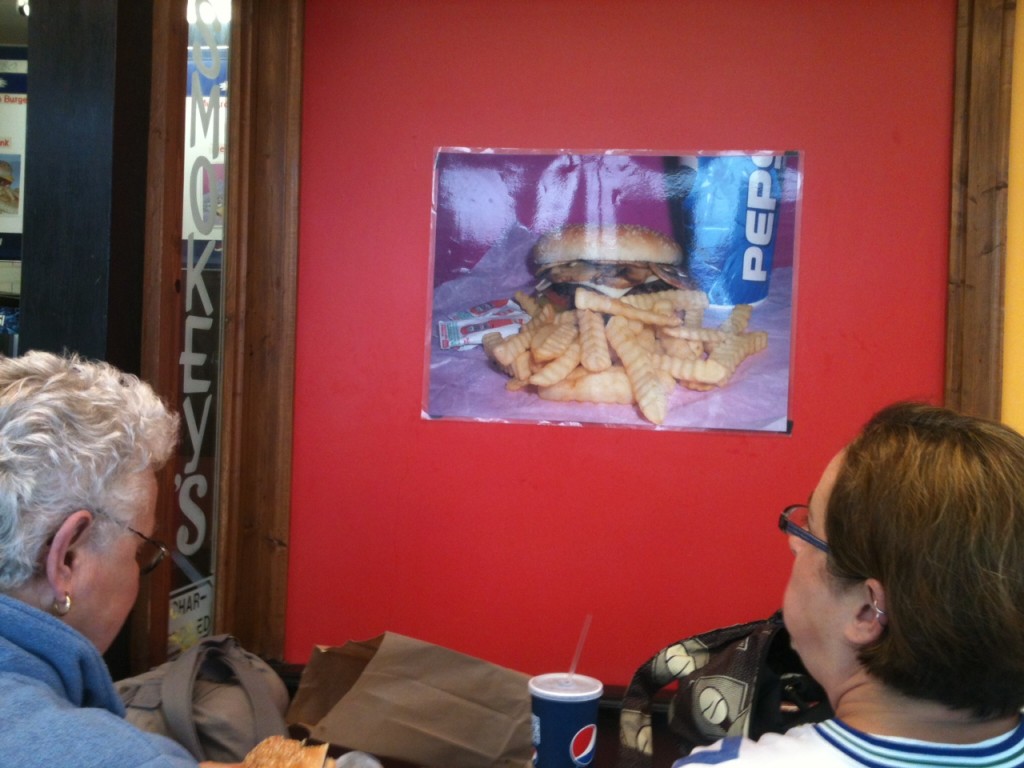
Half of my loose Seattle to-do list went untouched on this trip, a half which included revisiting Hosoonyi up in Edmonds, the cradle of my enthusiasm for Korean cuisine. (I first went there because it was a favorite of my high school girlfriend’s Korean mom and her sisters, a fact you can probably snap neatly into this whole narrative.) So I have a high priority for the next visit: trying once again their renditions of all the dishes that have since entered my life’s regular rotation. (Especially kimchi jjigae — it’s really good, it’s delicious.) Other targets for my next round of Seattle exploration include:

  1. Queen Anne, a neighborhood whose existence I barely recognized in my Washingtonian years but which bristled with pins whenever I looked up coffee shops on Yelp
  2. Wallingford, a neighborhood I mainly know as the current home of Archie McPhee, but which seems to have turned over the past decade into a Portlandesque paradise of food and drink
  3. University and Roosevelt Ways, my main Seattle hangouts (and, in their revival cinemas and video stores, the cradles of my cinephilia) as a high school student free to enjoy college-towniness while feeling only the grinding meaninglessness of high school rather than the overwhelming meaningless of college itself
  4. The still pretty new Link Light Rail line

Though I do feel faintly bummed about not getting to ride the Link, local friends assure me that I would have been hard pressed to find a reason to. Unless, of course, nobody could drive me to the airport. I guess that’s what Seattleites use it for: going to and from the airport, assuming they live near the tracks. Seattle has nevertheless wasted no time building this molehill of a benefit into a mountain of superciliousness with a marketing campaign built around a sensible-grandma-type figure called — wait for it — the Voice of Reason. This town, I thought to myself, face meeting palm.

(I didn’t have a chance to to ride the South Lake Union Transit streetcar, either, though it must have something going for it. Besides its acronym, I mean. Imagine the conceptual spokeswomen that generated.)
If Tao Lin couldn’t explain Seattle for you, maybe William Dietrich can. Almost ten years ago, he wrote an article for the Seattle Times called “A Tale of Three Cities“, and I think of it whenever I think about Seattle, Portland, or Vancouver:

With our Space Needle and sports teams, Pike Place Market and gorgeous geography, Boeing and Microsoft, Starbucks and Amazon, Seattle likes to think of itself as top dog in the Pacific Northwest. We’re trendy. Muscular. Diverse. Big.

But when it comes to livability, we seem stuck in first gear and our neighbors are more than a little condescending. Seattle’s OK, they say, but a little crass. Yokels on planning. Bumpkins on design.

“Seattle has an ethic of passivity,” says Portland developer John Russell. “People throw up their hands and say there’s nothing we can do.”

[ … ]

Sound Transit is run by a board of local officials from King, Pierce and Snohomish counties whose elected allegiance is to their individual jurisdiction, not the metro area. Moreover, transit dollars are split to be spent in five separate sub-regions that, while promoting “equity,” starve the effort to get rail started at its logical but expensive core — Seattle — so it can later radiate outward.

To make matters worse, Seattle has a frequently-warring, strong mayor-strong council form of city government. By contrast, Portland’s tiny council of a mayor and four commissioners means just three votes are needed for a decision. Moreover, each commissioner is given oversight of city departments like a cabinet minister, making them directly responsible for bureaucratic performance.

Hence what I’ve come to consider one of Seattle’s main advantages: convenient placement between its northerly and southerly PNW metropolis neighbors. But you still tend to have to drive between them. Then again, that goes for much of the greater Seattle area itself. The region’s agonizing (and shockingly recent) struggles even to decide what sort of rapid transit to build come across most entertainingly in Peter Bagge’s comic “My Very Own Monorail“. Despite composing it for the libertarian magazine Reason, he doesn’t come off as particularly doctrinaire on transit issues. I’ll invite him on my show (for a third interview!) when I get to recording Notebook in Seattle. You’ll hear more.

(I did try to ride the Seattle Center Monorail, but it doesn’t accept whale cards.)

Aside from its governmental and geographical tangles, I’ve long sensed that Seattle suffers from especially unhealthy city-suburb relations. Part of this comes from having grown up in one of these suburbs; part of it comes from feeling like they conspire to deflect me from the city itself. I lived in a ‘burb eighteen miles out of downtown; went to high school in a ‘burb thirteen miles out of it; learned to love Korean food in a ‘burb fourteen miles out of it; stayed with a friend this trip in a ‘burb ten miles out of it; and made a grueling 90-minute  ‘burb-to-‘burb bus journey to meet another friend for a three-beer lunch (which is to say, a lunch consisting of three beers). Amid all this ‘burbing, I heard several different people speculate about exactly how many feet of shattered glass in which, when The Big One inevitably comes, downtown Seattle will find itself choked. Small price to pay, I’d say.
Still, make your connections and you can have fun in a few of these far-flung municipalities. Why, in one of them (eighteen miles out!) I met Colin Williamson, for years my very favorite writer at PCGamer magazine — which, during the years I read PCGamer, pretty much meant my favorite writer. As the only genuinely funny reviewer on staff, he got thrown the obvious duds, especially the high-profile obvious duds. The last piece I read from him, on Jon Romero’s long-delayed Daikatana, survives only as a forum post. (The magazine hasn’t exactly taken pains to keep its archives available.) It turns out that Colin’s life after game journalism involved a decade in Japan, studying and working in game production. He spent a goodly chunk of this time in the western Kansai region, and specifically the city of Osaka — where I shall find my own self two weeks from now! If you’re of the Nipponophile/gamer/student-abroad bent, you have a fascinating read ahead in his blog Colin’s House of Shame, where he recounts his journey from rural Pennsylvania to enrolling in Kansai Gaidai to taking film classes with the Donald Richie (“Yeah, I’d always see him going around with different girls on his arms.” “… girls?“) at Temple University to laboring away for various Japanese game developers.

Buying alcohol in Seattle brought back memories. I remember accompanying my dad to the local liquor stores in childhood, and only now, filled with southern Californian drinking experience, do I wonder about these images. Spartan in their wood-grain decor, utilitarian in their organization and presentation, and early in their closing hour, these shops seemed conceptually imported from East Germany or worse. Only years later did I learn that the state actually did run them: by Washington law, nobody else could sell the hard stuff. The repeal of this law not long ago has allowed friends who remained Seattleites to feel their hand tremble as it descends, for the first time, on a bottle of vodka right there in the QFC. But many of these former state sellers, especially the ones out in the sticks, still feel vaguely Soviet, and people complain of the kind of taxes on alcohol that make five-dollar transit passes sound like a bargain. It seemingly went off as one of those fumbled law-loosenings, like British Rail in the nineties, that offers the citizenry a cherished opportunity to gripe about both the public and the private sector. Far grimmer evidence of Washington’s squirreliness over the drink appears in its strip clubs, which sell only eight-dollar Cokes and, if you’re lucky, six-dollar Kool-Aids. You’ll have more fun watching patrons periodically duck out to their cars to surreptitiously pound a fortifying Steel Reserve.

But heed my words: wherever you buy it, if you burn through the Grey Goose, don’t follow it up in desperation with the dregs of a bottle of Smirnoff’s fluffed marshmallow. Only the most intense phở can treat the resulting hangover. Fortunately, if you roam around greater Seattle, you’ll find a hell of a lot of it.


[Previous diaries: Portland 2012, San Francisco 2012Mexico City 2011]

Notebook on Cities and Culture S2E13: Greatly Great Music with Cariwyl Hebert

Colin Marshall sits down in San Francisco’s Yerba Buena Gardens with Cariwyl Hebert, founder of the community-based classical music appreciation society Salon97. They discuss New Yorker classical music critic Alex Ross’ hatred of “classical music”; her project of pretension removal and safe-place creation; how she identified a need in the way her work in classical music proved a reliable conversation-ender; developing and implementing the idea of the classical listening party around which  Salon97 is now based; listening party themes that draw attention and/or create tension, and how she strikes the correct balance between too schmaltzy and not schmaltzy enough; having to begin musical discussions with pure opinion, and bringing out the controversial lives of the composers to generate discussion; returning the social aspect to classical music, by beer, wine, or other means; what, exactly, a composer can infuse their music with while keeping it “classical”; the life of the classical music enthusiast in San Francisco, whether or not it crosses into competitive culture-vulturing; what  a Salon97 listening party is actually like, versus Ross’ experience of the concert hall; why we sat down at our concerts in the Victorian era and never stood back up; the casualizing influence of the tech industry and how it opens up the various levels of San Francisco culture; and how you can watch Mozart doing stuff.
Download the interview from Notebook on Cities and Culture’s feed or on iTunes.

Seattle Diary I

You can prepare no better for Seattle, to my mind, than by reading Tao Lin’s Stranger article “What I Can Tell You About Seattle Based on the People I’ve Met Who Are From there (I Live in Brooklyn),” at once the most and least informative piece ever written about the city:

When I make myself think concretely about Seattle, I get an image of a 12-year-old Native American boy reading a Sherman Alexie story collection in a Starbucks and it’s raining outside, then I seriously think, “The harsh reality of growing up in Seattle. Seems bad. Hard.” But if I think abstractly about Seattle, I feel a strange emotion like I’m currently living in a clean, well-furnished house with expensive electronic equipment in Tennessee in May by a small river on a green hill with no other houses nearby and that I have a steady cash flow and am working on multiple projects each day with a lot of excitement and no obligations. It feels really good and the opposite of hard. So “Seattle” abstractly means to me something like “basking in the sunlight of overwhelming gratitude for life and art” but concretely means to me something like “feeling like there’s no possible routes for escaping a life of poverty and alcoholism while staring at sentences written by Sherman Alexie in an environment of people shouting things like ‘quadruple soy latte.'” I don’t know. I feel “tricked.”

I grew up in Seattle, or rather, in one of Seattle’s eastern suburbs. (The one where Microsoft is.) But I went to school in Seattle proper for a sizable chunk of my childhood and subsequently spent most of my weekends there, so I’ve logged many a memory within city limits. Coming up in this part of the Pacific Northwest inured me to the psychological damage its harsh gray sky tends to inflict on transplants. (Hell, garments in varying shades of “harsh gray” make up a full third of my wardrobe.) The DSM-IV terms this condition I have avoided “seasonal affective disorder,” and when you type that into Google, two  suggested searches pop up immediately: “seasonal affective disorder pacific northwest,” and “seasonal affective disorder seattle.” My girlfriend packed me off on this trip with a bag of delights that included a hip flask; were I SAD-susceptible, I’d have taken one look upward upon deplaning, sought the nearest source of liquor to fill it, and started taking slugs right away.

My friend Nick, who grew up in California, once told me of his love for Portland. “I’d move there in a heartbeat,” he insisted, “but I just can’t deal with the light cycles.” I had only known “light cycles” as those things the guys ride in Tron. But I imagine that whatever bothers him and so many others hits its nadir during this particular season, the fall. Having entered the PNW at such an early age, I’ve actually come to enjoy the flattened, steely, early-darkening autumnal Seattle condition more than any other. The rain, of which I have yet encountered none, can make it trying to get around, but when it pours, just stay home and drop the needle onto some old-school. I can imagine no more suitable setting.

As soon as I moved from western Washington to southern California, I noticed one stark difference: teriyaki joints do not dot the southern Californian cityscape. Neither native western Washingtonians nor southern Californians will immediately understand this, since the phrase “teriyaki joint” means nothing in particular to the southern Californian, and a western Washingtonian notices the actuality of teriyaki joints no more than a fish notices the water in which it swims. The standard greater-Seattle-area teriyaki joint — and here you’re seldom more than half a mile from one — offers a fairly utilitarian menu of plates involving rice, a pile of something like salad, and meats typically limited to beef, chicken, and pork. Shrimp and tofu if you get lucky. I snapped the above menu at Teriyaki Bowl in Madison Park, the off-campus lunch spot of choice at the school where I did junior high, but I could’ve done it anywhere. Few businesses in Los Angeles serve the particular segment of eaters that these teriyaki joints do; you either have to go way down the scale, where you find the purveyors of atrocious Mexican-geared Chinese food, or considerably up it, to the sushi specialists which might grudgingly and perfunctorily serve you a plate of sweetened chicken if you demanded it. But why would you?

If you really want to experience a city, give yourself missions to complete within it. My own missions typically arise, when not from interviewing, from my failure to pack certain essential items in my luggage. This often leads me into fruitful clothes-shopping expeditions, as it did this week in Seattle’s Westlake Center. Knowing I needed another jacket, I semi-consciously and semi-unconsciously did not bring one with me, hoping on some level that Seattle’s fast roughening weather would force my hand. (In any given Los Angeles moment, one never really needs needs a jacket.) Even as I was purchasing one, my friend Julian’s co-worker berated him for not lending me one. “He’s from California,” she said. “He don’t know.” Despite having lived twelve formative years up here, I get treated like a naturalized Angeleno whenever I visit. What’s more, I actually feel like one.

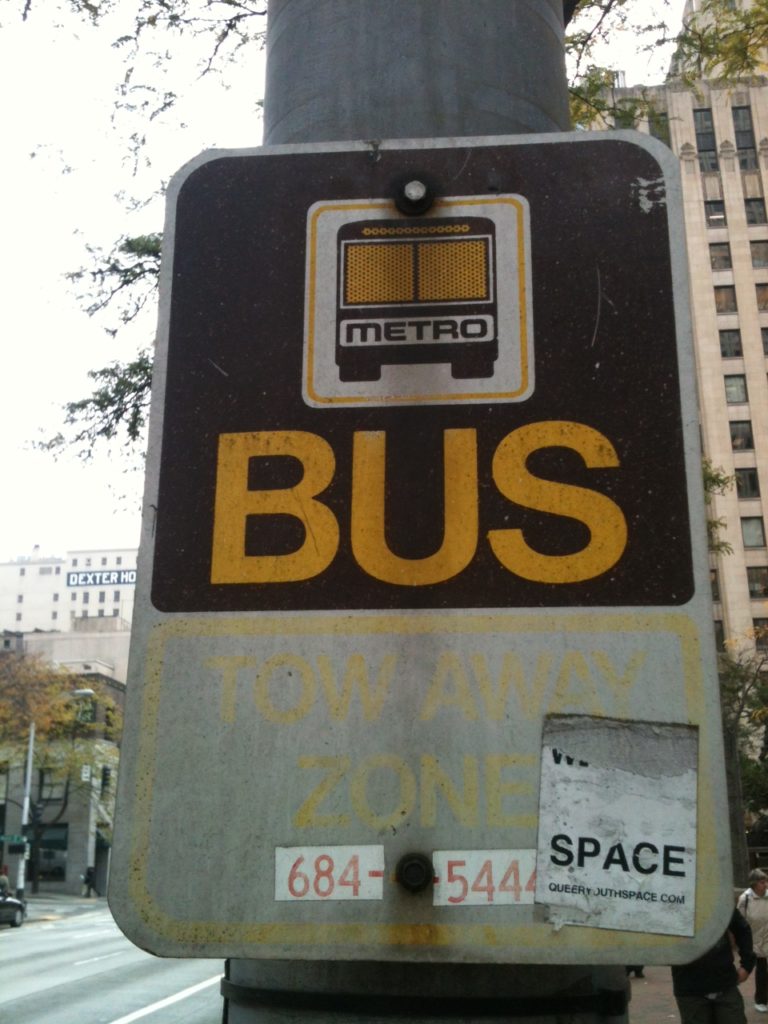
Toward the end of my sixth-grade school year, a couple teachers spent a week taking a small group of us around town by bus. They aimed, I suppose, to teach us feckless pubescents how to navigate an urban environment, but since most of my classmates there seemed primed to drive minty fresh SUVs to school on the morning of their sweet sixteen, the intended lesson probably didn’t take. I had fun, but came away from Seattle’s bus system even more bewildered when I started, not intending to rejoin what I saw as a farrago of unpredictable routes, indecipherable transfer slips, and interminable standing-around sessions any time soon. Despite having a much easier time navigating the city as a Google Transit-equipped 27-year-old than as an essentially technology-bereft preteen, I can now say for sure that Seattle suffers serious transit problems. The worst of these is probably that a bus ride costs $2.25. If you want to buy a smartcard — and I collect few other souvenirs — it will set you back an astonishing five bucks. (Compare San Francisco’s two-dollar Clipper card, or Los Angeles’ one-dollar TAP.) And the card doesn’t even work on the poor old Seattle Center Monorail. And the card is named after a whale.

I find Seattle pretty cool, really I do. At least most of the time. But at moments — and maybe only because I come from around these parts — I just have to facepalm.


[Previous diaries: Portland 2012, San Francisco 2012Mexico City 2011]

Notebook on Cities and Culture S2E12: Good Old Shareware with Stan James

Colin Marshall sits down in San Francisco’s Mission at the Noisebridge hacker space with Stan James, founder of Lijit, creator of the first browser-based massively multiplayer games, co-host of the 7th Kingdom podcast, and author of a book in progress on technology and our minds. They discuss Noisebridge itself and its almost Utopian qualities; how the supernormal stimuli of cat videos create addiction; how his early multiplayer games could created addiction; San Francisco’s position as the American city to be in for those with technological interests, not exclusively technological interests; the optimal Mission-style burrito ordering strategy; how we’ve left the concept of immersion in virtual reality behind in favor of always being at least a little bit on the internet, and how we can see it in the ways we navigate and even date; stepping outside our reactions to new technological developments by going back to Plato; parental disregard for the protocol of Skype calling; his life in Berlin, another city where people go to do projects and make things; how and why he became “Wandering Stan,” and the importance he’s found of digging into others’ lives when he’s in actual places; whether younger so-called “digital natives” can better handle technological addictiveness; how wide a swath of the human experience San Francisco offers; how he discovered the difference between his engaged-in-a-project face and his dead-eyed Reddit-browsing face; and how Avril Lavigne reached Nepal before she reached him.

Download the interview from Notebook on Cities and Culture’s feed or on iTunes.

Portland Diary III

With a “greater” area of nearly 500 square miles and blocks that can feel 500 yards long, Los Angeles has instilled in me a certain sense of distances. Rarely in that city do I need to ride my bike anywhere farther than twelve miles away, but on its roads that can take an hour. Portland, by contrast, had me believing I could reach any point from any other within fifteen minutes — and often I could! Luxuriating in this ease, I began turning up late to things by day four or five. Portland’s much-discussed Urban Growth Boundary no doubt plays a part in this, as does the fact that I didn’t have any business to do out in the sticks. Some, like Dorothy Parker famously pronouncing on “72 suburbs in search of a city,” consider any business in Los Angeles sticks business, but I think of it like this: how many other cities offer neat stuff in places that would anywhere else come to no more than bedroom communities? I saw little evidence of Portland offering equivalents of oysters in San Pedro, barbecue in Compton, or soup dumplings in Alhambra, but I’d be fascinated to find out if it secretly does.

One should begin the day in Portland, my instincts told me, with a lavish vegan breakfast. I ate one at the Vita Café on northeast Alberta Street, a neighborhood several Portlanders described to me as the current locus of much of both the city’s interestingness and its gentrification. (I then proceeded to satisfy my sense of incongruity by interviewing the founder of the Portland Meat Collective.) Not long before, I found myself pedaling down southeast Division Street, kombucha in hand, texting. Clearly, it didn’t take me long to get about this Portland life. Spend so much as a weekend in the city and you’ll feel how easily you can relax into the Stumptown sensibility, a filter that for me both enhances and reduces everything passing through. Biking from coffee shop to coffee shop, buying artisanal bacon chocolates, and browsing stacks of used books, I felt personally enhanced — and, somehow, personally reduced.

In Los Angeles, at least Los Angeles east of La Cienega, things just sort of present themselves raw, barely affected for either good or ill by their surroundings. It tells you how much I have internalized this atomization that, in Portland, I kept thinking with mild surprise that may have ultimately edged into mild irritation, Hey, they speak English at every business here. Despite all I recommend about it, I could never, ever call the town stateless. Portland exists in the state of Portland, the world of Portland, indeed the reality of Portland. As much as I wish other cities would take pages from its playbook — specifically the ones about cycling infrastructure, street trees, cool bridges, and the soil that allows charming cafés to grow like mushrooms — I fear that the instructions wouldn’t translate, that the innovations which thrive in Portland and in turn help Portland thrive would crumble immediately to dust in the harsh outside air. As David Sedaris wrote in Japan about such fragile, civilized conveniences as outdoor vending machines:

“Can you believe it?” he asked. “In the subway station, on the street, they just stand there, completely unmolested.”

“I know it,” I said.

Our Indonesian classmate came up, and after listening to us go on, he asked what the big deal was.

“In New York or Paris, these machines would be trashed,” I told him.

The Indonesian raised his eyebrows.

“He means destroyed,” Christophe said. “Persons would break the glass and cover everything with graffiti.”

The Indonesia student asked why, and we were hard put to explain.

“It’s something to do?” I offered.

“But you can read a newspaper,” The Indonesian said.

“Yes,” I explained, ” but that wouldn’t satisfy your basic need to tear something apart.”

Sports even felt different in Portland. Adam, to my delight, took me to a Timbers game, and there I gazed upon what looked to me like the nuclear core of Portland pride. That core would be located on the end of the window-and-door-manufacturer-sponsored stadium dominated by something called the Timbers Army. My interviewee Mike Russell, in his comic on the subject, describes them as the team’s “very large, very loud fan brigade.” The Timbers struggle — I get the sense that they bear an underdog reputation similar to that of Japanese baseball’s Hanshin Tigers, a team with an equally culturally revealing fanbase that I would pay dearly to watch play were I visiting Osaka in baseball season — but their Army’s enthusiasm never wanes. Up they show, clad in sometimes handmade Timbers gear and waving often handmade Timbers flags. The match ended in a 1-1 tie, but the home goal released, among other bursts of celebration, twin clouds of green smoke. This drew out many a camera phone, not slowest mine.

“KEEP PORTLAND WEIRD,” read occasional patches of inexplicably official-looking graffiti. But what, in Portland, counts as weird? I get the sense that visitors would readily stick that label on, say, a unicyclist rolling down the street in a Utilikilt and a Darth Vader helmet. You no doubt have a nontrivial chance of seeing such a sight on Portland avenues — I myself noticed more Utilikilts than I’ve seen in southern California, uh, ever — but Portland weird strikes me more as a variety of goofiness than deep strangeness. Los Angeles weird, as I soon remembered upon returning home, unsettles you. Go from the City of Roses to the City of Angels, and Utilikilt Vader becomes a middle-aged man who looks normal from a distance but upon closer inspection has a long-dry drool stain running down his shirt, no shoes, several missing toes, and a Bluetooth earpiece into which he yammers neither sanely nor quite insanely. (Take this one step further, and you get Mexico City weird.)

Portland more than anywhere else makes me consider the question of whether a city’s strengths and weaknesses, its points of livability and unlivability, don’t just balance each other but emerge from each other. What you love about a city, in this framework, dictates what you hate about it, and vice versa. If Los Angeles fails at integrating its constituent parts into a coherent common culture, it therefore succeeds at avoiding letting those parts dissolve into homogeneity. (Hence, superior taquerías.) If Portland has succeeded in developing a distinctive yet user-friendly sensibility and avoiding the classic varieties of harsh urban strife, it may have also failed to cultivate an aesthetic and intellectual churn sufficiently exciting to flow over its UGB-defined borders. Not that it makes much sense to speak in this context of “success” and “failure”; were I feeling more Californian, I’d bust out the yin and the yang. I certainly didn’t come to Portland to proclaim that it’s got nothin’ on Los Angeles, although in many senses, it’s got nothin’ on Los Angeles. In equally many senses, though, Portland has everything on Los Angeles. I’ve already got my next visit booked three months from now, which speaks for itself. This time, I’m bringing my lady; someone‘s got to split these Black Tiger milkshakes with me.


[Previous diariesSan Francisco 2012Mexico City 2011]

Notebook on Cities and Culture S2E11: Authenticity v. Utopia with Jonathon Keats

Colin Marshall sits down somewhere in between San Francisco’s Chinatown, Nob Hill, and Russian Hill with conceptual artist, experimental philosopher, and writer Jonathon Keats, author of the upcoming book Forged: Why Fakes Are the Great Art of Our Age. They discuss his own role as, above all, a fake; his attempt to epigenetically clone such celebrities as Lady Gaga, Michael Phelps, and Barack Obama; Forged, forgery, pursuit of simulacra, and Wim Wenders’ Notebook on Cities and Clothes; content’s ongoing release from form, and how it sends out the concept of forgery even as it brings it back in; the enthusiastically forged paintings of Jean-Baptiste-Camille Corot, and Thomas Kinkade’s massively replicated, “master highlighted” images; authenticity as it relates to spaghetti and meatballs; San Francisco’s intriguing tension between the claims of its own authenticity and its vision of itself as an experimental utopia — or, in his words, its simultaneous tendencies toward the “incredibly smug” and “very insecure”; why Europeans love San Francisco, and whether that has anything to do with the city’s ultimate derivation from their own; his thought experiments’ usefulness as “curiosity amplifiers,” generating larger questions than the ones they came from; the difference between doing experimental philosophy in San Francisco and in other countries, like Italy; and the exhilarating American freedom that also numbs.
Download the interview from Notebook on Cities and Culture’s feed or on iTunes.

(Photo: Jen Dessinger)

Portland Diary II

“You from one of those… Ivy league places?” A Scatman Crothers-ish TSA agent asked me this, half-accusingly, as I passed through his station, thus continuing the long tradition of my being attributed to regions I’ve never even visited. Not really, I haltingly responded, and the man softened. “Hey, that’s alright,” he said. Ain’t nothing wrong with that.”

Geoff Dyer writes that Friedrich Nietzsche “loved what he called ‘brief habits’ but so hated ‘enduring habits’ that he was grateful even to the bouts of sickness or misfortune that caused him to break free of the chain of enduring habit. (Though most intolerable of all, he went on, would be ‘a life entirely devoid of habits, a life that would demand perpetual improvisation. That would be my exile and my Siberia.’)” The passage comes in Dyer’s essay “Otherwise Known as the Human Condition”, in which he describes his perpetually restarting quest, in each city he lives in or visits, to find the ideal cappuccino and donut for his “elevenses.” (That’s a British thing.) Even these few short days in Portland have me reveling in Nietszcheanly brief habits of my own, the most enjoyable of which finds me waking up early, hopping on my bicycle, and riding across one of the Willamette River’s many bridges (I still haven’t counted them) for coffee on the east side of town. Theoretically I could continue this habit in Los Angeles, heading east for a cafe de olla or something, but the Los Angeles River, for all its neglected Repo Man charm, doesn’t offer quite the same experience.

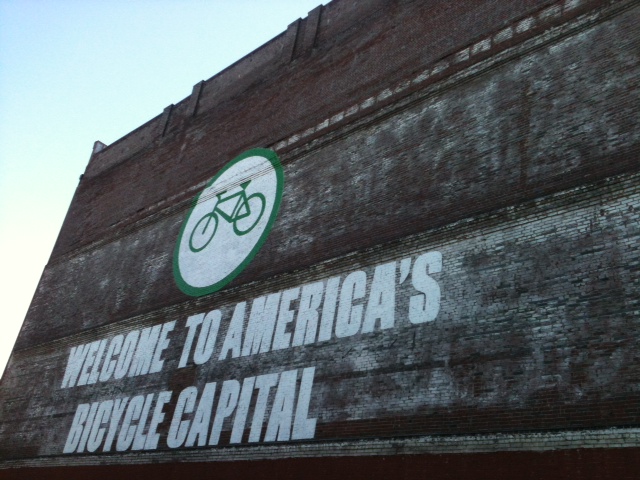
Pulling up a map, I see that eight bridges connect one half of Portland to the other. My first cycle trips across these proved glorious enough that I decided to ride across them all. After interviewing bicycle planning consultant Mia Birk, I immediately rented a Jamis and commenced two-wheeled exploration. This strikes me as the way to most thoroughly figure out a city, even the bicycle-unfriendly ones; hell, almost everything I’ve figured out about Los Angeles, I’ve figured out while biking. A purely psychological advantage accompanies the navigational one. David Byrne, who in part inspired me to do this, writes in Bicycle Diaries that, on a bike, “your unconscious is free to kind of mull over what it is you’ve got to deal with that day or whatever creative stuff you’re working on. Sometimes the problems get a little closer to being solved by the time you get to where you’re going.” Or as Douglas Coupland said, albeit about driving, it’s “the only place where you’re legally allowed to not deal with your problems. It’s enforced meditation and this is good.”

So if you want to start cycling-as-everyday-transport anywhere in North America, start it in Portland. Alas, the city’s relatively astonishing density of cycle-related infrastructure and amenities quickly inflated to ludicrous proportions my expectations for same. Then came the night that I blindly attempted to cross the Fremont Bridge, which is pretty much the 405. That went… ingloriously.

I’ll recommend another city exploration strategy, if you can swing it: adhere to a schedule not dictated by where you feel like going or where you think you “should” go, but where your interviewees can conveniently meet you. Coming to my Notebook on Cities and Culture guests has taken me to neighborhoods, and often those neighborhoods’ finest coffee shops, that I never would have otherwise considered visiting. In Portland specifically, I’ve tended to meet people way out east, right up to 82nd Avenue — past which, as one guest assured me, the really troubling meth crimes begin.

Sitting down for drinks with those friends and guests who happen to be interviewers, full-time or occasional themselves, I’ve picked up several useful techniques lately. (For this is how I live my life: my interests include literature, film, food, cycling, drinking, cities, making friends, and cycling to city bars to have drinks with friends where we eat and talk about film and literature.) One mentioned starting off with explicit follow-up questions  to those asked by previous interviewers. Another described how, given his interest in architecture, he thinks about conversation as a means of discovering the structures — intellectual, aesthetic, social, commercial — his interlocutors see themselves operating within. (Yeah, I totally get off on ideas like that.) Another praised Jon Stewart’s technique of setting down his hand on the  table before him to subtly signal that he has a question about what his guest’s saying at that moment. I’ve been trying these out here in Portland. They work!

Only bring up Portlandia when absolutely necessary: I set this policy before even leaving Los Angeles. Yet most of the Portlanders I talk to bring up the show before I do, and they seem of a surprisingly unified mind about it. Yes, Fred Armisen and Carrie Brownstein exaggerate the place, but only just. And yes, everyone has real-life stories to tell that could appear, with little alteration, as Portlandia sketches. I can report that the dream of the nineties is alive in Portland. Though that dream has much to recommend it, I never myself dreamt it. (By the same token, Portland girls really do look like that, and then some, but I go for something quite different.) The line about this city being “where young people go to retire” carries a chilling truth, and it seems to me that what happens in Portland tends to stay here. Portland has created its own reality, and pleasingly so, but how seriously are you  supposed to take someone who lives in their own reality?

As my friend Adam, dozen-year Portland resident, said, “Yeah, Portlandia‘s a great show about this city. Next season they should do a satire.”

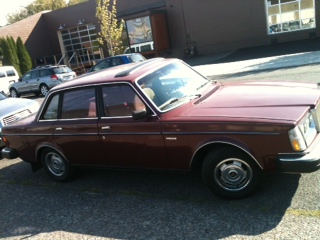
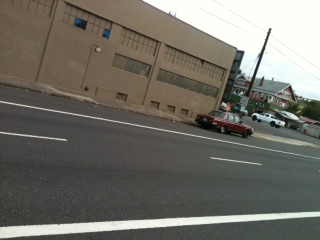
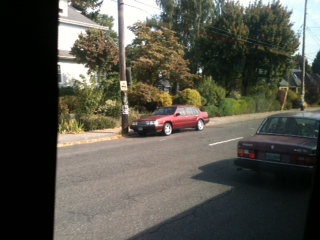
But Portlanders really do drive Volvos. More specifically, Portlanders drive maroon Volvos and early-eighties Volvos. More specifically still, Portlanders drive maroon early-eighties Volvos. Because my ex-girlfriend drove just  such an automobile, I assumed that my familiarity with them prompted me to notice each one that passed by. But then I realized that I noticed one every hour or two. This gave me a useful organizing photographic principle; I took many more maroon early-eighties Volvo shots than you see here. Snapping one in motion remains my white whale. My girlfriend girlfriend, by contrast, drives a green Mini, of which I have seen exactly one in Portland. But it wasn’t the right shade of green. (British thing.)


[Previous diaries: San Francisco 2012, Mexico City 2011]

Portland Diary I

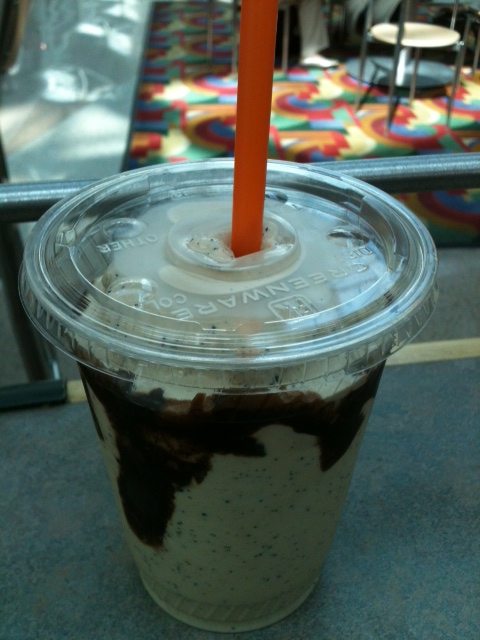
“Black Tiger milkshakes!” This my girlfriend exclaimed after I brought up my imminent trip to Portland. “It would probably be an exaggeration to say that a Black Tiger shake is made with vanilla ice cream, eight shots of espresso, and two pounds of ground coffee beans,” food writer Matthew Amster-Burton says about the drink about which she enthused. “But that’s what it tastes like.” Promising that night to pound one as soon as I landed in Portland, I proceeded to do just that a mere quarter-mile from my arrival gate. (Portland’s airport has at least one Coffee People stand right in there.) I worried that the cashier would look at me funny when I demanded a hypercaffeinated milkshake at 10:00 in the morning, but figured the same suspension of social rules applies to airport Coffee Peoples as to airport bars: who knows what time zone you’re coming from? (The very same one, in my case.) In the event, she looked at me a little funny.

Waking up at 4:00 a.m., I downed a French press of coffee to ensure alertness enough to catch my flight. On the plane itself, I accepted at least one further cup of coffee. Then the Black Tiger attacked soon after I set foot on Portlandian soil. I promptly made my way to an interview, at a coffee shop, where I naturally purchased an iced coffee to keep me on my game. A couple years back, Brian Eno gave a lecture at Long Beach State, and during it — apropos what, I can’t remember — he told of the severe panic attacks he used to experience. It turned out that they’d simply been brought on by his ever-intensifying coffee habit. This struck me as faintly implausible at the time, but on this particular day I internalized exactly what he meant. Watching my hands shake, it suddenly felt inexplicably urgent that I make sure the same lady who recommended I down the bulk of this caffeine megadose was still alive back home. I had no reason to believe she wasn’t (although I did find myself shaken earlier upon witnessing horrific auto wreck, featuring a corpse still slumped in an exploded-looking vehicle, on the still-dark highway to LAX), but she was off camping, out of cellphone range, which only fed the flames.

Lesson learned: Brian Eno is never wrong. Lesson reinforced, I mean.

Traveling solo, I demand little in the way of creature comforts: hostel bed, hostel shower, transit pass, and a decent density of wi-fi enabled coffee shops (which can make a cappuccino worth a damn) in which to work. Never one to eat at a real “sit-down restaurant” alone, I tend to limit myself to the fruits of trucks, stands, and whatever the sandwichcraft of those wi-fi enabled coffee shops can muster. Validatingly, a friend who lives half his year in Japan swears by that country’s convenience stores as a food source, and the frequency of my Los Angeles lunchtime visits to Nijiya, Marukai, and Famima! have set me in good stead to pick up that habit. In Portland, I have thus far relied upon the town’s recently famous food carts, not-especially-mobile trailers clustered into a series of parking lot-based “pods” throughout the city. The one near O’Bryant Square offered up a pulled pork sandwich on my first night. On my second, a tired-looking lady from the Philippines (“It’s been a long day”) served me up a heap of chicken adobo and whatever pancit she could find around. I have heard tell of Thai pumpkin curry. I have heard tell of poutine.

The caffeine disaster combined with the displacement of an early-morning flight combined with the mental bandwidth consumption of my still-forming interviewing schedule did, briefly, strike the fear into me that absolutely everything — everything — had gone to shit. You have known this feeling, surely, and you know that it tends to pass. But don’t you sometimes wonder if it simply comes as a function of diet, fresh air, and exercise? As soon as I’d had a night’s sleep, eaten something leafier than a milkshake, and rented a bike to ride around, I could hardly remember what had so distressed me before. We vainly pin our malaise on grander concerns, even as the evidence of terribly mundane physiology mounts behind it all.

(My traditional visit(s) to Voodoo Doughnut will therefore have to wait until my final day in the city. As for that poutine cart… I’ll try, sans promises, to hold it down.)

Hands shaking, words barely forming, I interviewed cartoonist and film critic Mike Russell mere hours after landing in Portland. Two weeks ago, he happened to make an illustrated blog post about travel; specifically, about having found and read “the Angst-Journal I Kept During A Eurail Vacation 20 Years Ago.” He draws ten lessons from this harrowing journey into his youthful mind, and I find number six particularly resonant:

Look around. Observe. Get outside yourself. I was disappointed during the re-read to learn that I spent most of my angst-journal dumping my sensitivities on the page instead of, you know, writing down the names and addresses and stories of the people I met and the incredible vistas I was seeing. “Feeling” might be less important than “looking,” as it turns out.

Having never done the traditional young American’s extended trips — Eurail zig-zagging, Southeast Asia backpacking, Central America-traversing — I often wonder if I’ve missed out on important formative experiences abroad. Then again, I avoided those prescribed excursions precisely because of the age-related expectation. I just couldn’t bear the idea of being another Freshly College-Graduated Early-Twentysomething (or worse, Freshly High-School Graduated Late-Teenage) American in Europe. All told, now that making up for lost travel time has become the order of the day, I suppose I prefer doing so as a late-twentysometing: one who has at least scraped together a serviceable amount of maturity, one who has shed the armor plates of identity that enable what Russell calls the “I-get-artfully-drunk-and-write-Linklater-scripted-poetry-in-my-journal, Ethan Hawke brand of angst,” and one who has awfully serious interviewing work to do. We get to know ourselves at this age, however tentatively, and as such — pace those C8H10N4O2 freakouts  — we don’t get so worked up and upset, not like before. It’s a good time to start things.

Despite expressing great general satisfaction with the city, nearly every Portlander I’ve talked to admits mild to great dissatisfaction with its lack of diversity. Los Angeles, by contrast, offers diversity as an advantage and perhaps little else. But damn, what an advantage.


[Previous diaries: San Francisco 2012, Mexico City 2011]

Notebook on Cities and Culture S2E10: Eco Chamber with Ethan Nosowsky

Colin Marshall sits down in San Francisco’s Mission with Ethan Nosowsky, Editorial Director at McSweeney’s. They discuss security breaches at the McSweeney’s office by overenthusiastic fans seeking a physical connection to their favorite publisher of physical books; his tendency to act as “the Joe Lieberman of publishing” in his editorial career, carrying unchanging tastes through changing times; Geoff Dyer, the writer with whom he has worked the longest, and how the subject-independence of Dyer’s writing parallels the subject-independence of his editing; the counterintuitively un-self-indulgent qualities of “Dyeristic” prose; memoir booms vampire booms, and the eternal bad-book boom; how he finds the real action in hybrids of fiction and essay, and how those forms provide the surprises that all art should; his life in New York publishing before his homecoming to the San Francisco Bay area, and how he has come to regard the ecosystem/echo chamber of the New York literary scene at a distance; the dominance of food and technology over books in Bay Area culture; David Byrne‘s new How Music Works, and other books that you want certain authors to write; and the potential usefulness of the authorly switcheroo, as when Dyer planned to write a book about tennis but wrote a book about Andrei Tarkovsky’s Stalker.

Download the interview from Notebook on Cities and Culture’s feed or on iTunes.