Above you’ll find my triumphant return to Sam Greenspan’s 11 Points Countdown. This time, he sat me down for a morning Boddington’s-in-hand discussion of the United States’ eleven most overrated landmarks, as voted by his viewership. He’d been to all of them; I’d been to none of them but, bizarrely, EPCOT Center. Had we done the top fifteen most overrated, I would have told all my childhood Space Needle stories. Hell, I think I nearly did anyway.
Colin Marshall sits down at downtown San Francisco’s Contemporary Jewish Museum with monologist Josh Kornbluth. They discuss the proper pronunciation of the word “monologist”; his simultaneous return to the practice of oboe-playing and late entry into things Jewish; the question of whether Andy Warhol is “good for the Jews,” and how he spun it into a monologue; the qualities of faith shared by Judaism and the communism of his childhood, which still releases endorphins when he thinks about it; the difficulty of dragging beautiful, pure abstractions of any kind into the concrete human sphere; Haiku Tunnel, the “FUBU of office workers”; the implicit premise of perhaps most monologues that everything ultimately connects to everything; how to show you’ve put in the hours on a performance by presenting its artifice just right; building a career in the San Francisco Bay Area, and how the place ratchets the average New York Jew’s stress level down from eleven to ten; New York as his own personal primordial ooze; how San Francisco tends to push out its aspirers, especially where theater is concerned; the outsider’s longing to understand music, Judaism, or both, and how he’s come to experience both as practices; and the wonder of trying, failing, and trying again at one’s craft within a community.
Vital stats:
Format: modern Japanese rock and modern Japanese rock talk
Episode duration: 35m-2h
Frequency: monthly
My friends who taught English in Japan in the nineties insist that the glory days have gone. They describe having stood in the blast radius of the last and most exciting flowering of Japanese popular culture, that which burnt out with the twentieth century. Of course, older Japanese scholars I meet insist that, on the contrary, the country stopped generating exciting works of art around the end of the sixties. I’ve never met him, but somewhere, a supercentenarian Japanophile surely insists that nothing of note has come out of Japan since before the Second World War. Each of these laments applies to a different facet of the culture: the music twenty years ago, the film and literature fifty years ago, and eighty years ago… oh, I don’t know, netsuke?
None of this rearguard action for the mind or minds behind It Came from Japan [iTunes], the music podcast of the eponymous music agency. It Came from Japan itself has the unusual and highly geographically specific mission of, and I quote, “bring the freshest, creamiest Japanese bands to the UK.” Rock bands, specifically. And yes, the UK, specifically. An unusual pairing, you might think, but upon reflection the countries have much in common: small, islands, bound by a vast and often tacit superstructure of position and obligation, valuing politeness yet incubating youth cultures of studied rudeness. In both lands over the past half-century, these last have tended to execute their rebellion in one form especially: rock music.
Colin Marshall sits down in San Francisco’s Castro with Daniel Levin Becker, member of the experimental literary group Oulipo, reviews editor at the Believer, and author of Many Subtle Channels: In Praise of Potential Literature. They discuss whether Oulipo membership impresses the ladies; his earlier, long pre-Oulipo days, when he would make mixtapes consisting entirely of songs without the letter “e” in the title; his fascination with taking mundane patterns, applying enough work to them, and making something pretty incredible; palindromes, beau présent, homophones, metro poems, mathematical constraints, and Greimas squares; his Fulbright-enabled stay in Paris to organize Oulipo’s junk, which led to his writing a book on the group, and then to their offer of membership even before he thought he had accrued the necessary literary steez; whether Paris retains its status as a literary-minded young American’s dream, and its status as a “literary mindfuck” nevertheless; what Paris legitimizes, including but not limited to sexy Orangina animals; “gamification,” in the artistic, urban, and Silicon Valley senses; the possible use of Oulipian restrictions in Many Subtle Channels itself; what makes Oulipo distinctively French, and what its irony about the canon may have in common with the irony of D.A.R.E. shirts worn in the United States; the Believer as a representative of west coast United States literary culture, and how the scrappiness of Chicago stands in contrast; and when he suspends his Chicagoan-ness, and how much of that involves not eating spicy meats.
Colin Marshall sits down in a back room in San Francisco’s Haight-Ashbury with Christin Evans and Praveen Madan, owners and transformers of The Booksmith, and now Kepler’s in Menlo Park. They discuss being deemed “corporate refugees” by their employees for their tech consulting past; creating a positive, aspirational experience that doesn’t make bookstores seem like broccoli; what they learned from spending date nights in other cities, having dinner and then visiting the local independent bookstores; the importance of offering serendipity, deeply knowledgeable service, and a multisensory browsing experience; how they’ve come to hold 200 events a year, including their popular bookswaps, born of customers’ desire to meet people in places other than bars; what makes Haight-Ashbury something more than a neighborhood where a lot of fun stuff happened a long time ago, and how they made it a first priority to connect with the local community; the parallel non-profit functions of community bookstores, including public education; what makes bookstores businesses, but not normal businesses; “matchmaking” books to readers such as Dwight, lover of Russian history; how they create an addiction to books, bearing in mind that half of America doesn’t read a book afer high school; what the controversy about Yann Martel’s Beatrice and Virgil illustrates about The Booksmith’s “high-touch” business model; the abstraction of life in corporate consulting, and the total lack of abstraction of life in bookselling; bookstores as social networks when you want to unplug from social networks; and the mind-expanding books that running The Booksmith has brought into both of their lives.
A formerly closeted middle-aged gay man in the seventies: that’s what I felt like when I made peace with my desire and began seriously drinking coffee. I’d avoided it until about age 25, having feared falling into obsessive source- and preparation-related obscurantism and that tiresome pissing contest over who can drink it the least sweet. Now the pursuit and consumption of coffee, in its various forms — with an eye toward preparation, of course, and never sweetened — underlies much of my psychology of place. The brightest dots on my mental map of Los Angeles indicate coffee shops of reliable quality. San Francisco convinced me, after two or three days, that I could trust it to provide a respectable cup within a block or two of wherever I happened to alight. Having hit up a few local operations, I can recommend Four Barrel for espresso and Philz, which operates under an ethos so pure that they refuse even to introduce espresso, for iced coffee.
San Franciscans told me about Blue Bottle. I tried to heed their word. Oh, the stories about Blue Bottle’s rendition of iced coffee, brewed with chicory and so strong that they all but require you to accept their offer of milk added. The perpetual blackness of my coffee arises not from my need to feel like a Real Man — as for how I do act on that need, the less said, the better — but my lack of trust in myself to correctly add a non-ruinous amount of milk, cream, or sugar. My final interview of this trip took place at 6:00 on Sunday near the Ferry Building, which I heard contains a Blue Bottle stand. On the BART trip up there from Bernal Heights, I knew only anticipation. Imagine my surprise when I found that seemingly every business within ten blocks southwest of the Embarcadero closes on evenings and weekends — even Starbucks, of which I saw sixteen, fifteen darkened, not to mention all the Peetses. As for the evening of a weekend, well, that gave me a sense of what downtown Los Angeles must have felt like at its nadir. I would tell South Beach (for they call this shuttered neighborhood that) to get on the stick, but in San Francisco, you have only to walk a mile, and everything changes.
Certain friends of mine, not coincidentally some of the most hard-traveling ones, have a look I call “omni-racial.” Most of the places they go, they could potentially pass as a native, at least visually. (Even the most omni of them often tends to break the illusion when they open their mouths, though some are adept polyglots.) I have whatever look is exactly the opposite of this; locals approach me as a foreigner everywhere, especially where I live. Strangers standing nearby routinely lean over and ask where I’m from, or even, when I’m speaking English, “what language that is.” A security guard approached me the other week with a tentative “Bonjour?” I say this all by way of recommending Everett & Jones, a barbecue place in North Berkeley, where one of the cooks asked me where I come from. Los Angeles, I proudly replied. He reacted with pure disappointment: “Aw, man, I thought you’d say maybe Switzerland, Sweden, someplace like that.”
Literature, cinema, music, conversation, the ladies: all of these provide their own flavors of mental stimulation, each one essential in its own way. But as yet I have discovered no more high-bandwidth source of mental stimulation than taking a chunk of time and using it to simply wander around an unfamiliar city, alone, with no defined destination. You’ll find the practice sets your mind off in so many directions, few of them expected, dredging up and creatively repurposing sunken memories all along the way. Modern novels suggest the presence of more adherents than me. Think of the genre-disregarding books of W.G. Sebald; think of Vertigo‘s second story: “In Vienna, I found that the days proved inordinately long, now they were not taken up by my customary routine of writing and gardening tasks, and I literally did not know where to turn. Every morning I would set out and walk without aim or purpose through the streets of the inner city.” Think of Sebald’s living heirs, like Teju Cole; think of the first page of Open City, about the New York walks that “steadily lengthened, taking me farther and farther afield each time, so that I often found myself at quite a distance from home late at night, and was compelled to return home by subway.” I was compelled to return by BART and Muni — certainly not by cable car — but hey, same difference.
From Adam Cadre’s (recommended) writeup of The City & The City: “Because I’m never looking for a McDonald’s, I don’t bother to slot the ones that I see into my mental map. [ … ] When I moved to New York City, I left my car in California, figuring that it would be more of a hindrance than an asset; I spent the subsequent year getting around town by subway and by foot, and thought I got to know the city pretty well. Then I fetched my car to help with the move to Massachusetts, and discovered that I had no idea how to drive around New York. My sense of where things were was oriented to the subway map. I thought my favorite pizza place was far from my apartment, because I lived along the F line and the pizza place was on the Q, and getting there meant a long horseshoe trip through downtown Brooklyn. It turned out that it was a five-minute drive away, in the opposite direction from the train. And when I went there I felt like I was driving through some city I’d never been to before, because even though I recognized most of the locales I passed through, they weren’t coming in the right order.”
When navigating unfamiliar cities, it helps, in a sense, to have in hand an iPhone or similarly “smart” GPS-equipped mobile device. I say “in a sense” because, in the presence of a signal (and, in San Francisco, I learned precisely what all those who bitch about AT&T’s coverage mean), getting truly lost becomes impossible. The moments of disorientation I experienced in my relatively recent pre-smartphone life struck me as valuable, especially in Mexico City, which put other layers of foreignness above and beneath my geographical confusion, and Washington D.C., where the lostness, though mild, would tend to occur in the middle of the night and last hours. With luck, I won’t figure out how to make my iPhone work in Japan.
Can you feel total despair in San Francisco? Sure, some of the addicts, burnouts, and runaways on the streets surely do from time to time — though I suspect a percentage of them self-medicate, a practice which may contribute to their condition — but nothing in my experience of the city, on this trip or any other, suggests that a normal San Franciscan life would ever involve the starker varieties hopelessness or alienation. Only with great difficulty can I imagine any life in Los Angeles not involving routine bouts with the starkest varieties of hopelessness and alienation. San Francisco feels like a domed land, one that has insistently built its own reality, and isn’t that why people so love to visit? Isn’t that why I so love to visit? One never, or at least rarely, needs to face the silent void in San Francisco; Los Angeles sits upon the silent void. This sounds like I’m about to pull up stakes from Koreatown and drop them right back down into the Mission, but no. Speeding back toward downtown on the LAX shuttle, I understood what I’d already known: for all the malaise it can potentially inflict, no American city fills me with exhilaration they way Los Angeles does, and none fascinates me more. But some come close.
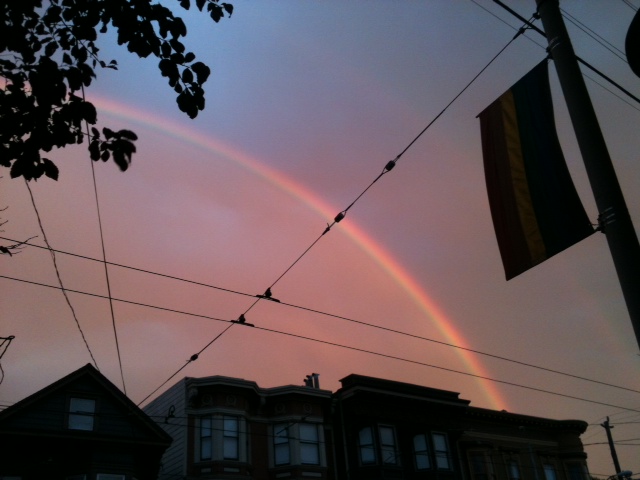
“Might I suggest checking out the rainbow to the east?” an interviewee texted, on his way to meet me in the Castro. Looking up from my phone, I indeed saw a rainbow to the east. Glancing around, I saw the even more compelling sight of everyone on the street pulling out their iPhones, iPads, Droids, and what have you to take pictures of it. “You only see people staring at the sky like this in disaster movies,” my guest pointed out when he arrived. That, I added, is where so many films of futuristic apocalypse got it wrong: they failed to foresee how we’d all point mobile devices at the source of our destruction. (And yes, unwarranted chants of “double rainbow” began immediately. Here we have a difference between San Francisco and Los Angeles: San Francisco’s pedestrians have been on the internet.)
In the north of the city, Google Transit often recommends I ride a cable car to reach my next destination, but I no longer listen. Only on this trip have I finally accepted that cable cars, while quaint — because quaint — do not count as a viable means of conveyance. Every few years comes a motion to dismantle the system, but the forces defending San Francisco’s beloved historic identity always swoop in to defeat it. (Besides, the cable cars must shake considerable revenue out of European pockets.) The first time I tried to catch one, it passed me right by. “Car’s full,” insisted the conductor, though how they determine capacity on vehicles nearly always laden with excess side-hangers I fail to understand. The second time, the car I waited for never turned up. The third time, I did manage to hop aboard, though the car ground to a halt almost immediately due to another broken down on the track ahead. I disembarked, amid a throng of formerly thrilled Germans.
“Man knows how to sit,” muttered a bum after a few minutes of hanging out in my peripheral vision, staring at me. He then approached the cafe’s cashier, demanded to use the “loo” without purchase, and flew into a psychotic rage when she said no. I want to turn this into a humblebrag but can’t quite figure out how. Still, a highly agreeable place to work. Notes from Underground. Green and Van Ness.
Whether you come from Los Angeles and visit San Francisco or come from San Francisco and visit Los Angeles, your brain will automatically and frequently make direct comparisons between the cities. The instinct of the urban Californian demands this, but I don’t endorse it. You can only hope to minimize the invidiousness of these comparisons. Half the time, in any case, I feel as if San Francisco represents the incomparable apple to Los Angeles’ incomparable orange; the other half, I find the cities so basically similar that any contrast seems born of minor-difference narcissism. But I admit that San Francisco retains, at least for the moment, absolute superiority as regards the allure of the ladies riding its public transit. One day, Los Angeles will attain parity in this most vital metropolitan indicator. Maybe not today, and maybe not tomorrow, but one day — and tears of joy shall fill my eyes.
“Everybody in New York is a little bit Jewish. Everybody in San Francisco is a little bit gay. everybody in Los Angeles is a little bit Mexican.” – a friend theorizing, correctly, about American cities.
Of all the overtly San Franciscan musicians in my collection, I listen to Bart Davenport the most. Three years ago, he put out an album called Palaces that took me by surprise — have a listen to its first two cuts, the title track and “Jon Jon”, and get an idea of his range — and I’ve kept an ear on his career ever since. Walking west on the Embarcadero, I decided to enjoy a geographically relevant earbud soundtrack and fired up Davenport’s new song “Cheap Words”. In its Los Angeles-set video, he drives past the chrome head of Vladimir Lenin on La Brea and 4th, which thrills me. I thought I might invite him to record an interview while in town, but looking up his contact information, I found that he had actually relocated to Los Angeles. Perhaps this explains, or is explained by, his sonically apparent decision to participate in the early-eighties revival now underway. I’ll make him a “home” interview.
Colin Marshall sits down in a Wallace Neff dome in Pasadena with visual and sound artist Steve Roden. They discuss whether art can exist without constraints; his enthusiasm for “dumb ideas,” such as painting with his mouth; the influence of Buckminster Fuller’s Operating Manual for Spaceship Earth, which he found in a gutter as a kid; the inspiration a Jimi Hendrix impersonator gave him, and how he went on to enter the Los Angeles punk scene of the late seventies and early eighties; his punk band’s catalog, including such songs as “Kill Reagan” and “Jesus Needs a Haircut”; his skill set consisting primarily of patience and the ability to evolve slowly; working in forms that admit the most failure, and thus produce the most interestingness; the days when he would hang out at the Westwood Tower Records until midnight, and the clerk that gave him an all-important copy of Brian Eno’s Another Green World; the beauty of playing an instrument you know nothing about, and of other ideas born of incomplete information; his involvement with languages he doesn’t speak, including researching Walter Benjamin without German, studying in Paris without French, and translating Swedish poetry without Swedish; finding the unknown in Los Angeles, and what it means to be able to traverse the city with ease or difficulty; the importance of maintaining a one-man practice; and his uncommonly fruitful experiences reading liner notes.
I once hated and feared San Francisco. Then again, I did so from three feet off the ground, in an era that saw the city’s struggles with filth and homelessness reached their most vicious. Upon growing up, I began calling San Francisco “an amusement park for 36-year-olds.” Indeed, the closer I get to that age, the more I approach the place as a welcome diversion instead of an aggressive, bewildering hellscape. If you want clean streets, observed my friend Chris (the Livejournalist formerly known as Cobalt999), you could have found them in any communist capital. San Francisco may lean well left, but not in quite that way. San Francisco may still flaunt its remaining patches of urban strife, grime, and decay, but it doesn’t fully embrace that kind of cityhood. San Francisco offers something else.
Having grown so accustomed to the built environment of Los Angeles, I’d wondered how San Francisco’s would now strike me. As I made my way back into this city I used to visit so often, two contrasts jumped right to the fore. First, everything looks somewhat older. Second, everything looks considerably more… undulant.
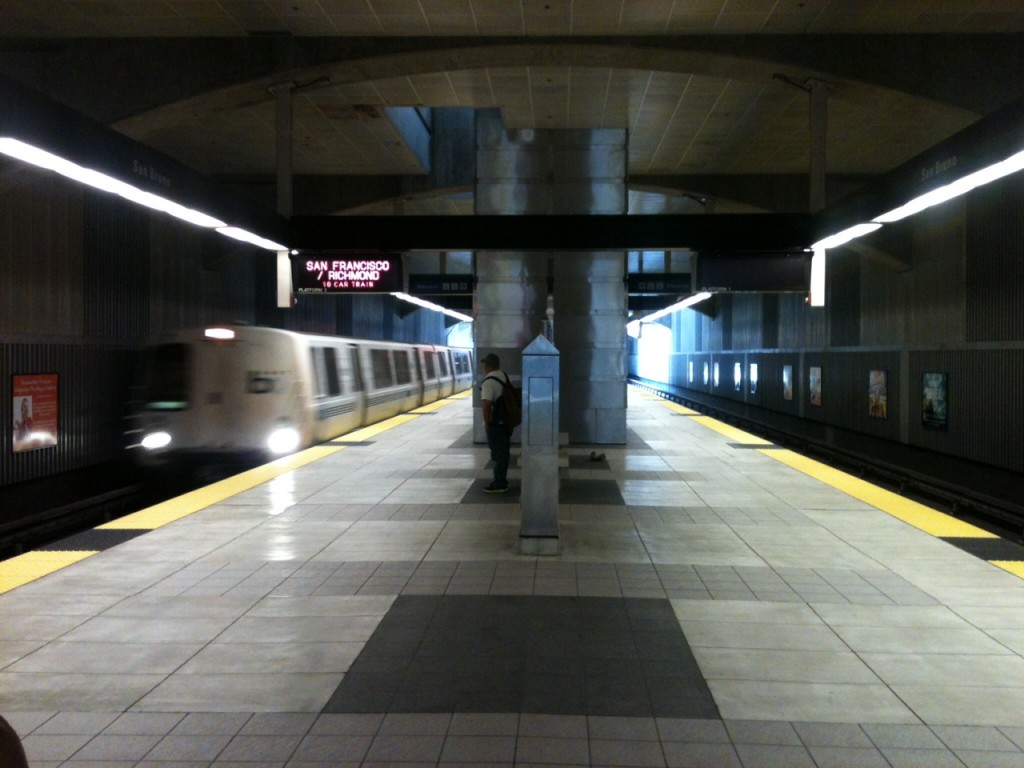
Transit having become an urban fascination of mine, I’d looked forward to spending more time than ever before (and I’d spent none before) riding the various vehicles run by BART, Muni and whatnot. As it happened, I found occasion to get around by bus, surface train, and subway all within the first few hours. BART, though analyzed as a great planning disaster by no less an authority on these matters than Sir Peter Hall, seems serviceable enough and has a homely seventies-ish appeal. (Certainly the station announcements could make you believe that text-to-speech technology has stood still since then.) Muni’s trains, though I’ve heard they routinely fall into agonizing slowness, have a similarly homely seventies-ish appeal. I have yet to determine the era of which San Francisco’s buses bear the mark (some look retro, restored from distant glory days), but they seem wearier than Los Angeles’. Then again, Los Angeles’ bus riders seem wearier than San Francisco’s, and deeply so — by which I mean utterly defeated.
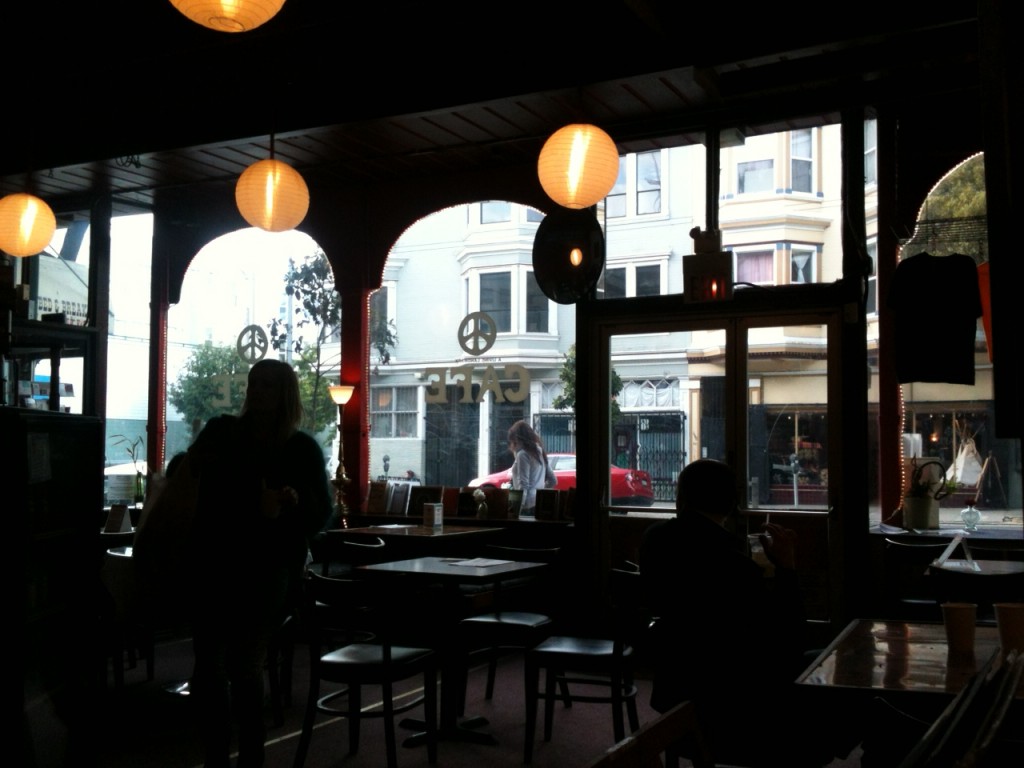
Should you find yourself in Haight-Ashbury and in need of a place to sit down and do some writing, The Red Victorian Peace Center has a reasonably accommodating cafe. Be apprised, though, that their strength must lay in their capacity as a Peace Center, since it sure doesn’t lay in their cappuccino-making abilities.
Two or three times a week, Angelenos comment on my Chrome bag. Usually the strap’s gryphon-emblazoned buckle catches their eye. (“Hey, cool Ferrari thing!” said a middle-aged lady on western Hollywood Boulevard whom I did not acknowledge.) The globally peripatetic French-Canadian-Korean polyglot cinephile expressed surprised at this. “Everyone has them in San Francisco,” she said, drawing upon very recent memories of having lived there. Walking around the Mission, I can confirm that, yes, everyone has them in San Francisco. Turns out Chrome has its headquarters here. I imagine they’ve partnered up with the city government; real San Franciscans can probably pick up free messenger bags, as many as they like, at some depot.
Ending my first day of San Francisco interviewing in the Mission, I thought I’d mark the occasion by eating a genuine Mission-style burrito: you know, those overstuffed, foil-wrapped monstrosities that, consumed late at night, test the limits of human digestion. While technically available in southern California, Mission-style burritos aim for a far different demographic than do even the most burrito-oriented Los Angeles eateries I frequent, so I hardly ever encounter them. Daring myself, I went all the way and ordered a corruption of the Mission-style burrito, a “California burrito” bursting with steak, avocado, sour cream, and, yes, French fries. You wouldn’t have wanted to watch the ensuing ordeal, my indulgence in a perfect yin-yang of pleasure and disgust, savoring and self-loathing. “Were this the only image in the world, you’d be forced to give it your full attention,” as David Sedaris wrote, “but fortunately there were others.”
Not having spent deliberate or meaningful time away from Los Angeles in nine months, I watched downtown pass through the windows of the LAX Flyaway shuttle and wondered how quickly I would begin pining away. The answer, obviously, is that I won’t, not in five days. But the feeling didn’t rise from the isolated prospect of this trip; it rose from the symbolic acceptance of a career, and thus a life, designed around — indeed, dependent upon — ultimately spending as much time “away” as “home.” Even that distinction will blur, as I suppose I accept that it must.
Being someone for whom aloneness feels like living burial, I suppose I could have chosen a more suitable life than one involving so much reading, writing, and filmgoing. True, you do sit among dozens to hundreds of others when you see a movie, but that strikes me as isolation by other means. I suppose I could also have chosen a more suitable city than Los Angeles, whose endemic lonely-crowd cultural and intellectual alienation detractors have reflexively (if not rigorously) asserted for decades and decades.
Yet I’ve taken few other options seriously, geographically or existentially speaking, and the moments of near-true connection that have come along thus far just about convince me to stay the course. Over the year I have now logged in this city, Los Angeles Plays Itself has, in the three times I’ve seen it, reliably catalyzed such moments, and the very act of attending its showings has shed light on, if not my obscure object of desire, then the obscure desire itself.
The documentary, directed by CalArts professor and longtime Angeleno Thom Andersen, mounts something a defense against all the cinematic abuse Los Angeles has taken since the invention of the medium. The movies have remorselessly mangled its distinctive geography; they’ve routinely, and often shabbily, tarted it up to simulate other, more “real” cities; they’ve reduced it to a vast, multi-purpose nowhere, at once bland and garish. Once you start noticing this custom, whether you learn of it through Andersen or elsewhere, you can’t stop noticing it.
One of the many, many film clips Los Angeles Plays Itself marshals in the argument comes from Cobra, a neon-drenched mid-eighties Sylvester Stallone vehicle and staple of my own teenage late-night cable viewing. One of its elaborate car chases jumps, with a single cut, from the cement canals of Venice thirty miles south to Long Beach harbor. Even if you can’t describe that sleight of hand, you can feel it. Perhaps you’d expect even worse from a picture in Cobra’s league, but that brazen manhandling of reality startles me every time — and it seems to raise a rather more complicated reaction in Andersen.
Against this geographically lazy car chase, the documentary summons a geographically fastidious one from H.B. Halicki’s 1974 Gone in 60 Seconds, which speeds in a rigidly “literalist” fashion through greater Los Angeles’ South Bay. The narration flatly proclaims that film “Dziga Vertov’s dream: an anti-humanist cinema of bodies and machines in motion,” a line which never fails to draw a laugh from me. It also drew one, I couldn’t help but notice, from the girl sitting next to me, a globally peripatetic French-Canadian-Korean polyglot cinephile who moved to Los Angeles from San Francisco two months ago and will soon decamp to rural Colorado to — as I understand it — tend to horses for a few weeks.
This screening of Los Angeles Plays Itself happened to come at the right time: two weeks after I met her, and one week before the farm calls. While I’ve come to regard Andersen’s film as an essential first phase in the grand, futile project of understanding Los Angeles, something inside me also insisted that she, in particular, would find it a highly resonant viewing experience. That hunch and others, even though two weeks would seemingly provide little to go on, proved correct, almost frighteningly so. Locked in to the right subject, it seems, the subconscious mind figures things out.
As with people, so with cities. It took very few visits to Los Angeles before I echoed, albeit quietly and only to myself, Brigham Young’s pronouncement upon reaching Salt Lake Valley: “This is the place.” I could lay out countless minor reasons why — specific places, foods, experiences, and notables that feel tailored for me, and I for them — but the irreducible gestalt, despite taking the form of a place sometimes referred to not like hell but as hell, really made the choice for me.
Having now lived here for a year, I’ve built up my stock of descriptors. Los Angeles attracts me with both its statelessness and its aimlessness. The city seems to roll along encumbered by no more pressing claims from the United States of America than from Latin America, or Asia, or even Europe. It periodically undergoes times of great change — we find ourselves in one now — without ever quite displaying awareness of what it means to become. Getting up close, taking one encounter at a time, I’ve often thought of Los Angeles as an ideal match for me. Stepping back, taking in the protean, elusive whole, the very idea turns ridiculous, but I suspect something squares that circle. The subconscious mind figures things out.
Built visually out of only other feature films, Los Angeles Plays Itself includes pieces of Cobra, Gone in 60 Seconds, and 200 others besides. (It always surprises me how much of The Replacement Killers made it in.) This has rendered the documentary effectively unreleasable in any easy-to-find form (though you might find one imperfect solution above). I’ve managed to see it three times in my year here, each instance psychologically aligning with my experience of Los Angeles more closely than the last.
My first viewing came almost immediately, presented by one of the first friends I made in town, a former CalArts film student. As I understand it, people usually face a considerably longer struggle before being all-importantly “invited in” to Los Angeles, whether professionally, socially, or cinematically. My second viewing, one of the picture’s regular appearances at Santa Monica’s Aero Theatre, put me — surely an old hand, after six months here — in the role of the introducer. I brought two friends from Santa Barbara and, straight from Vancouver, Chris, the Livejournalist formerly known as Cobalt999. Chris played an unusual part: the visitor from a high-livability-ranked urban paradise (so I’ve read) genuinely interested in getting a handle on the likes of Los Angeles.
This third time, on my 367th day of residence, I realized I no longer call the place “L.A.” Andersen never did. “Maybe we adopted it as a way of immunizing ourselves against the implicit scorn,” he says, “but it still makes me cringe. Only a city with an inferiority complex would allow it.” He also never professes love for Los Angeles, and neither do I. The proper chemistry arises from time to time, but when I look intently at the city, it stares back expressing a discomfiting oscillation between alluring encouragement and flat disregard.
The sparks that fly between me and the elements of Los Angeles I choose to engage distract from an underlying sense of inevitable rejection made somehow more dreadful by its obvious benignity. Upon first meeting my latest Los Angeles Plays Itself viewing companion, I described this city as “my cruel mistress.” I meant it as a joke, and “cruel” implies too much intention, but clearly, the subconscious mind figures things out. Los Angeles has gradually become a mistress, built up unnoticed in my lower mental tiers, without a legitimate wife to oppose.
Stranger still, she stands, exuding favorable signals all the while, at just enough of a remove — always centered elsewhere, or about to be — to not literally merit the title. Yet I foresee myself linked to her, however tentatively. I foresee myself never quite knowing when I’m throwing good time, money, and faith after bad. I foresee myself leaving, temporarily but as often and as long as possible, pretending to do so not out of compulsion, not out of necessity, not out of fear, but out of choice.
 Colin Marshall sits down at downtown San Francisco’s Contemporary Jewish Museum with monologist
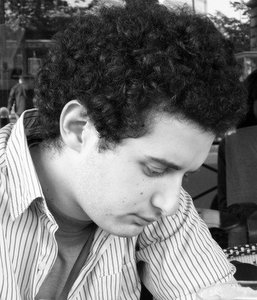 Colin Marshall sits down in San Francisco’s Castro with
 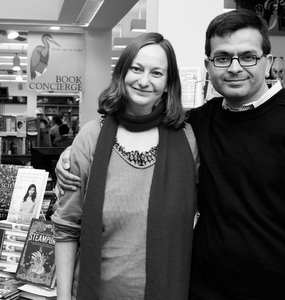 Colin Marshall sits down in a back room in San Francisco’s Haight-Ashbury with Christin Evans and Praveen Madan, owners and transformers of



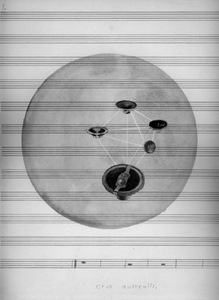 Colin Marshall sits down in a Wallace Neff dome in Pasadena with visual and sound artist