 “The end is nigh,” tweeted an aphorist I admire, “for all books must now bear the explanatory subtitle — the mark of the beast.” The Suit’s title bears not just that mark, but one of interference before the colon as well. The author wanted to title his book The Dandy; his publisher, afraid that wouldn’t sell, proposedThe Suit: A Machiavellian Approach to Men’s Style, which suggests a manual on how to manipulate the corporate world through dress. This puts Machiavelli in a misleading light, but the term Machiavellian sees such misuse that the assumption comes naturally. However, in Nicholas Antongiavanni we have a serious appreciator of Machiavelli as well as menswear. He meant to have his original title reference The Prince, and just as Machiavelli advises a prince, Antongiavanni advises a dandy, “the enemy of the splendiferous and the effeminate” who favors “simple clothes, pristine in cut, immaculate in fit [ … ] never ostentatious, always manly.”
Alas, we live in a time of few princes, and nearly as few dandies. Prince Charles counts as both, and Antongiavanni makes a case study out of him more than once. He also draws lessons from the dress of American newscasters and presidents. “Brokaw is the most elegant,” he observes of the former group. “Rather’s clothes fit well, but he is so slavish in aping his hero Edward R. Murrow — even patronizing the same Savile Row tailor — that he cannot be said to have any style of his own.” President Johnson, envious of Kennedy, “sought out a London tailor whom he told to make him ‘look like a British diplomat.’” Of Carter, Antongiavanni writes only that “it is one thing to wear Hawaiian shirts in Key West or jeans and cowboy boots when splitting wood, and another to address the people from the Oval Office in a sweater.”
Read the whole thing at Put This On.
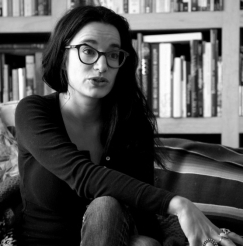 Colin Marshall sits down in Mexico City’s Colonia Condesa with Gabriela Jauregui, writer, poet, and co-founder of the publishing collective sur+. They discuss her childhood in Coyoacán and at what point during it she realized she lived in a place with a rich literary history; her coming up reading and speaking Spanish, English, and French; the real beginning of Latin American small presses, and what it means for the excitement of Spanish-language literature; why Mexican books get shrinkwrapped, anyway; how she mastered English while studying in Los Angeles, and the pleasure she finds in writing in a language not quite her own, especially one with weird exceptions, non-rules, and all the qualities of a “pirate language”; what her interest in the mechanics of language has to do with her pursuit of poetry; how you never quite know who’s a poet in Latin America; the way Los Angeles revealed itself to her, and how understanding Mexico City involves approaching it as something between Los Angeles and New York; her memories of growing up in Mexico City’s “dark years,” including but not limited to fake M&Ms; “Malinchismo,” the Mexican idea that whatever is Mexican is by definition inferior, and how it has fallen away, at least in part, where art and literature are concerned; how to read your way into Los Angeles of Mexico City, and if you don’t want to read, how to use Alejandro Jodorowsky movies for the same purpose; and all the layers of history you can experience in Mexico City that, unlike in Europe, you can experience all at once.
Download the interview from Notebook on Cities and Culture’s feed or on iTunes.
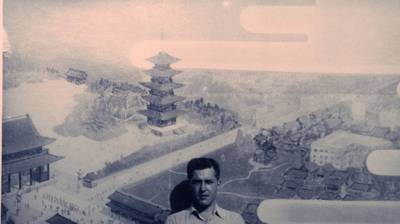
My new syllabus for Bookforum magazine covers four favorite volumes on life in postwar Japan by four favorite literarily inclined Western expats: Pico Iyer, John Nathan, Donald Keene, and the late Donald Richie:
The 1950s through the 80s saw Japan go from post-war disrepair to world-frightening powerhouse, adapting and even improving all manner of Western inventions from cars and consumer electronics to jeans and rock music. While America and Britain observed these developments from afar, a number of expatriate writers registered more thoughtful assessments of the rapidly changing situation on the ground. These Westerners, many of whom first came to Japan during the Second World War, brought outside perspectives to this endlessly fascinating era of unprecedented—and unsurpassed—Japanese development and engagement with the world.
The Inland Sea by Donald Richie
Richie came to Tokyo in 1947 with the American occupation force and effectively never left. By the mid-1960s, he saw the city he loved falling—or rather, rising—into unrecognizability. Discontent with Japan’s rush into the first world, Richie threw himself into domestic travel, documenting the small towns and island outposts he encountered in The Inland Sea. Though I read the book on a trip to Osaka, a center of vulgar commercial energy, The Inland Sea showed me how the Japanese live, or once lived, in humbler places. “I don’t care if I never come back,” Richie announces not once but twice. This “learned, beautifully paced elegy for one of ‘the last places on earth where men rise with the sun and where streets are dark and silent by nine at night’,” Richard Lloyd Parry wrote of the book, “is the only full-length work of Richie’s that will be remembered a generation from now.” But for extra credit, do seek out The Japan Journals, an incomplete but thoroughly entertaining account of Richie’s life as a “smilingly excluded” outsider.
Read the whole thing at Bookforum.

West Hollywood came into official being on November 29, 1984, 25 days after I did. But which of us wears our years with greater dignity? I strain to look timeless, but timelessness, improperly cultivated, slides easily into blandness; West Hollywood can rest assured, at least, that it runs little risk of that. A mixture of the uneasily dated and the insistently progressive, the tiny municipality — an “r” shape containing less than two square miles, surrounded on most of its edges by Los Angeles proper — would seem now to punch above its weight in most of the important modern rankings: food, no doubt; culture, in certain senses, yes; street life, seemingly so; homosexuality, most definitely.
Urban theorist Richard Florida gives the homosexual population serious weight when gauging a city’s vitality, having gone so far as to order the metropolises on something called a “Gay Index.” This goes especially for cities driven by what he calls the “creative class” — engineers, scientists, designers, artists, media-makers — and thus it looks like no coincidence that West Hollywood labels itself “The Creative City.” A walk down its stretch of Santa Monica Boulevard, surely some kind of Gay Index in and of itself, presents rainbow-striped crosswalks at intersections, rainbow-striped city logos on police cars, and a variety of specialized bars and sex shops. But unlike, say, San Francisco’s Castro, the neighborhood doesn’t feel like a solemn monument to lost hedonism. By late 1984, Castro-style hedonism had taken its last rites anyway; West Hollywood, at least on certain streets, keeps living, keeps breathing, keeps chatting itself up. (Though not in a way everyone necessarily finds palatable. “The term ‘WeHo boy,'” as a friend and longtime resident of the neighborhood patiently explained to me, “is not meant as a compliment.”)
Read the whole thing at KCET Departures.
 Colin Marshall sits down in Mexico City’s Colonia Condesa with Juan Carlos Cano and Paloma Vera, founders of the architecture and urbanism practice CANO | VERA. They discuss how everything in Mexico City’s built environment exists “behind,” being interesting in irregular ways; all the untrue superlatives you hear growing up about how Mexico City is the biggest in the world, and what an abstract concept “the biggest city” turns out to be anyway; the miracle of Mexico City’s continued improvisational operation, especially as regards garbage collection; the amount of architect-less building going on in Mexico City, and what they’re doing to help make it easier and more efficient; the creation of cities through the creation of connections, rather than through the building of beautiful things; where best to walk in the giant soufflé that is Mexico City; the intrinsic sense that Mumbai, Bangkok, or São Paulo make when you come from Mexico City, and how you feel at home when you have to discover, anonymously, what a place is about; the meaning of Condominio Insurgentes to the urban environment, and the question of who built the thing in the first place; the city as a mirror of society’s favorite ideas in one particular moment; the contradictory image of Mexico as a place where nothing works, but everything moves; the historical Mexican relationship to space as it appears both in Teotihuacan and Ciudad Universitaria, in pre-Hispanic markets and downtown today; how Mexico City grew and ego; and the Zócalo, the best place in town to both feel and fill the void.
Download the interview from Notebook on Cities and Culture’s feed or on iTunes.

On the latest Los Angeles Review of Bookspodcast, I have a conversation with Margot Lachlan White, author of Waking Up in Tehran: The Untold Story of Iran’s Revolution, coming this summer. Her eyewitness account of Iran’s Revolution tells of political resistance to dictatorship, civil war against the Kurds, arrest, interrogation and imprisonment, all of which occurred during the years she spent in Iran as a human rights observer. She also has a few things to say about the accuracy of Argo. You can listen to the conversation on the LARB’s site, or download it on iTunes.
Wednesday, March 27, 2013

“So they put chapulines in their kimchi?” a friend in Mexico City asked about my neighborhood. I do hold out hope that eateries in Koreatown, the district of Los Angeles it makes the most (and the least obvious) sense for me to live in, will one day offer its fermented cabbage topped by roasted grasshoppers. For now, the dish remains one we prepare at home. The Chilango’s half-joking expectation came in response to my explanation of Koreatown’s demographics: a sizable wedge of Koreans, as you’d expect, but an even larger one from the chapulin-rich southern Mexican state of Oaxaca. Yet these groups, despite living at the highest population density the entire city, seldom mix. If I want my kimchi sprinkled with chapulines, or my street-grilled sopes topped with kimchi, or my bulgogi served in mole, I’ve got to do it myself.
Looking over the Los Angeles map in search of a home, I understood only in the abstract how much the city would, for better and worse, ask me to do myself. But I did know full well that few if any other cities in the world have blocks that put busy makeshift sincronizada griddles right up against coffee shops pouring six-dollar sweet potato lattes with equal briskness, or utilitarian panaderias against bass-leaking, quasi-legitimate noraebang (that is, Korean karaoke bars). This occurs without much of a normalizing flow — or diluting flow — of what the purely theoretical average American might recognize as average Americans. All this sprouted in the remains of what the 1930s called the Ambassador District, which former resident and well-known food critic Jonathan Gold describes as a place “when the old ballroom around the corner hosted big bands, when a romantic night out in the neighborhood might have involved a show at the Cocoanut Grove, big steaks at the Brown Derby, maybe cocktails afterward at the Town House or the Cove.”
Read the whole thing at KCET Departures.
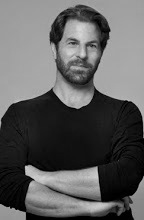 Colin Marshall sits down in Mexico City’s Colonia Roma with artist-turned-food writer Nicholas Gilman, author of the book and blog Good Food in Mexico City: Fondas, Food Stalls, and Fine Dining. They discuss the culinary importance of places like Mercado Medellín; how Mexico City’s art, not its food, first brought him here (make a beeline though he did to the handmade tortillas when he first arrived at 18); all the warnings about “what you shouldn’t do” in Mexico City — or, for that matter, the New York City of the seventies and eighties in which he grew up; the strides Mexico City has made in the past fifteen years, especially as regards cleaning up pollution and opening up small business and culinary opportunities; his career switch from painter to food writer, and his discovery that you simply “don’t have to suffer so much” in Mexico City; his realization that no useful English-language food guides to the area existed, how that prompted him to publish his own, and the great deal of attention it soon drew; what people get wrong when they first go eating in Mexico City, such as understanding the “timing” of the food; the dismantling of the car culture, the institution of bicycle programs, and the conversion of Mexico into at least a new “second-world” country; his eating strategies in a new city, including looking for their markets; the importance of tapping into a city’s social knowledge, especially that possessed by taxi drivers; how to convince people you want to eat “the real thing,” i.e., the food they themselves eat; bringing a necessary outsider’s perspective to another culture; the various misconceptions that linger about Mexican food; the usually unhappy experiences of foreign cuisines that make it to Mexico; and when best to eat huitlacoche.
Download the interview from Notebook on Cities and Culture’s feed or on iTunes.

Vital stats:
Format: interviews with writers and editors of long-form articles
Episode duration: 35m-1h
Frequency: weekly
Say 3:00 a.m. has rolled around. I’ve walked my lady home, downed whatever wine remained in the night’s bottle, sent the day’s last few dangling e-mails, read two or three page-downs on Twitter, glanced at Facebook, and checked the New Yorker for anything new from Anthony Lane. Icould go to bed. Or I could check Longform.org. Though I rarely admit it, I only direct my browser that way in hopes of finding a 3,000-, 5,000-, or — jackpot — 10,000-word article so interesting as to deprioritize sleep and the dull preparations it demands. I imagine you’ve done this too. If you happen to have a day job, maybe you’ve burned hours of your employer’s time — even days of it — reading articles aggregated by Longform and its ilk (Longreads, say), luxuriating in a combination of boredom, fascination, and sheer spite. I had to ditch my own day job after envisioning the decades ahead melting into an ocean of text, often damned interesting but essentially opiate.
Though I no longer rely on Longform as that sort of drip-feed, it has remained in my night-elongating rotation — no morning pressure to get to “the office,” after all — and I took notice when the site began putting out a podcast [RSS] [iTunes]. The show delivers not audio versions of long-form articles but interviews with the sort of people who write and commission them: folks from New York magazine, the New Yorker, the New York Times, the New York Times Magazine… you know, the publications whose sites you pull up after dark looking for an extended distraction. (Also publications with “New York” in the title. Longform does have its office, I believe, in New York, but guys, come on — America has two cities.) Built at the intersection of an addiction to long-form articles and a compulsion to listen to interview podcasts, the Longform Podcast should sit right in my personal (and thus professional) wheelhouse. Yet I approached with trepidation.
Read the whole thing at Maximumfun.org.
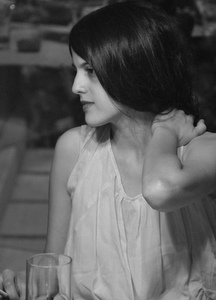 Colin Marshall sits down in Mexico City’s Colonia Roma with novelist and essayist Brenda Lozano, author of the Todo Nada and contributor to Letras Libres. They discuss the space Spain’s troubles have opened for Latin American literature; the passion for Shakespeare and Oscar Wilde she learned from one particular teacher; how she began seriously reading in English, and only later in her native Spanish; the difference in enjoyment of Spanish versus English literature, and how the languages ultimately behave like two different animals; the importance of the pleasure of reading, as well as the acknowledgment thereof; poetry as pure sugar; Mexico City’s combination of high culture and bad parties; how, when she began writing essays, she found ways to have a good time writing about even assigned topics, and what it revealed about the general skill of having a good time wherever you happen to go; the three years of her early twenties she spent writing a “terrible novel,” and what they later gave Todo Nada; her conviction of the overestimation of youth, which led her to build the novel around an aged character, but a young narrator; what could possibly be the sales pitch for Dorian Gray stockings; the newly widened Mexican generation gap; her need to “close the door” when writing, so literary influences like Jorge Luis Borges or Clarice Lispector can’t step right in; her first, worldview-changing encounter with Fernando Pessoa, when she asked, “Is this literature?”; what she felt standing next to a wax Octavio Paz; the current absence of non-wax literary fathers; her Mexico City literary community, a group of argumentative friends; getting to know places through literature, like Japan through Banana Yoshimoto, 1930s Los Angeles through John Fante, or indeed Mexico City through Roberto Bolaño; and, despite her having been born and raised there, her continued excitement about writing in Mexico City.
Download the interview from Notebook on Cities and Culture’s feed or on iTunes.