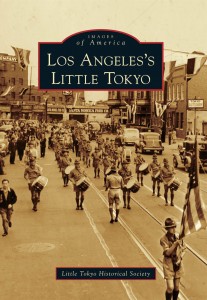
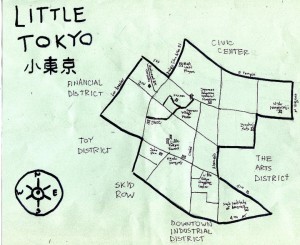
 Only natural, I figure, to go from the Images of America book on where I live in Los Angeles to the Images of America book on a neighborhood that first fired up my interest in Los Angeles. Before I moved, visits to Little Tokyo underscored Santa Barbara’s failure to provide certain necessities: ramen shops, sit-down arcade machines, Kinokuniya, fresh-griddled imagawayaki, 1-Man Band Arthur Nakane. After I moved, I would often ride the subway to Little Tokyo in the mornings just to eat snacks and explore. Some Los Angeles visitors might ask what there is to explore, given that, even at its height, Little Tokyo covered not much more than a square mile. I reply that the neighborhood’s tininess and the distance from its boom years make it a richer experience, not a poorer one. As I wrote about the view from Cafe Dulce, a Little Tokyo coffee shop I frequent, you sit below the hotels Miyako and Kyoto Grand, those aging hulks of near-colonial seventies and eighties Japanese prosperity, you defocus your eyes a little, and you almost feel like that Bubble never burst.
A friend once asked me what I’d change about Little Tokyo. “Nothing,” I replied. He followed up, incredulous: “So you think it’s perfect?” Well… certainly not, but better to live amid distinctive imperfection than perfection, am I right? This makes intuitive sense to me, but I remain unsure quite how to explain it. I suppose it fits in with that whole notion of wabi-sabi — the appreciation of beauty in the imperfect, impermanent, and incomplete — which, in this context, at least has the credibility of coming from Japan. As in Little Tokyo, so in greater Los Angeles: an interviewee once observed that, looking at the city, you often can’t tell whether it’s coming up or falling down. To get the most out of either the larger or the smaller place, you must appreciate that ambiguity in itself. You must also lay down enough shoe leather to get closely acquainted with the streets. To know Los Angeles or Little Tokyo is not necessarily to love them, but if you don’t know them, you won’t even stand a fighting chance of liking them.
 It helped that, before even moving to California, I’d logged years of listening to Hiroshima, the Japanese-American jazz-funk band known for their allegiance to Los Angeles in general and Little Tokyo in particular. They named their eighth album after the city, and their fourteenth after the neighborhood. At least every couple weeks, I drop the needle on their second album Odori (featuring a piece of cover photography, shot on a downtown Los Angeles rooftop, which still ranks among the most strangely compelling I’ve seen) and hear it begin with a number called “Cruisin’ J-Town.” J-Town is another name for Little Tokyo, and Cruisin’ J-Town is also a short documentary about the band; I recently caught a screening, totally by accident, when volunteering at a Sunday-afternoon Filmforum show. Hiroshima also put out a ninja-themed music video for their 1983 song “San Say,” parts of which look to have been shot in or near Little Tokyo.
A group photo of Hiroshima in front of a well-known Little Tokyo mural appears in Los Angeles’s Little Tokyo, as does one of a lady at the Mitsuru Café making the aforementioned imagawayaki. Those aside, the book actually depicts fairly few of what I would consider the pleasures of Little Tokyo, focusing instead on the ever-shifting social order that made and remade the neighborhood. Some sort of housing discrimination pushed the first wave of Japanese immigration in the late 19th century toward this particular corner of downtown, and when post-Pearl Harbor internment cleared the place out, Little Tokyo briefly became a black neighborhood called Bronzeville; I hear Orson Welles loved to hit the jazz clubs that sprouted along Central Avenue. Despite the local government’s strongest efforts to avoid the reformation of “ethnic enclaves,” Little Tokyo went Japanese again after the war. A great deal of investment rode in on the crest of that high wave Japan set off in the late seventies, creating elements of that still define the neighborhood’s built environment, like the blue-roofed Japanese Village Plaza (which houses the likes of Mitsuru Café, Cafe Dulce, and, usually, Arthur Nakane) and the New Otani Hotel, which would become the Kyoto Grand in 2007 (and inside of which, so I’ve heard, it remains 1987).
Given how heavily Los Angeles’s Koreatown leaned on group pictures of Korean and Korean-American churches, sports teams, social clubs, it comes as no surprise that Los Angeles’s Little Tokyo triples down on that sort of thing. Little Tokyo’s history stretches further back in time than Koreatown’s, and thus it stretches further into the era when, to warrant something as flamboyantly high-tech as a photograph, you really needed to assemble at least a dozen people, all in their Sunday best. Not being much of a historian, I know little about how to read these photos for significant, non-menswear-related information. Luckily, a photographer by the name of Tōyō Miyatake roamed Little Tokyo in the early 20th century, beret on head and camera in hand, capturing the look and feel of his corner of Los Angeles even when on wedding detail. Such dedication did he cultivate for his craft that, when he got shipped off to Manzanar, he actually secreted his gear in with him and shot internment camp life. Something about the idea of a tireless, faintly eccentric, ever-recognizable documenter of place very much appeals to me. Does Little Tokyo still have them? Does any place? And assuming the oft-told story of the California roll being invented in Little Tokyo is true — there’s the day that will really live in infamy — did Miyatake capture it?
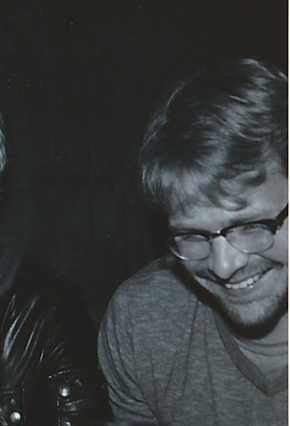 Colin Marshall sits down in Atwater Village with comedy writer and music video director Scott Jacobson, who has written for programs like The Daily Show, Squidbillies, and Bob’s Burgers, and made videos for artists like Nick Lowe, Superchunk, and The National. They discuss the comedic style of George Herriman’s Krazy Kat and whether a place exists for it today; expectations, the enemy of comedy; what it means that the likes of Adult Swim and Tim & Eric can thrive in today’s world, or if they indeed thrive in it; The Daily Show‘s rise alongside George W. Bush’s, and the trickiness of presenting its voice as the voice of reason; the feeling of finally getting a foothold in New York, and the sense of personal failing that comes from not loving it; whether anyone else misses the obscure cruelty of Craig Kilborn’s Daily Show; the “journalistic vamp” and other news filler, up to and including Glenn Beck’s moment of popularity; the “trash compactor of reality” that is political coverage, and the solace offered by a Squidbillies or a Bob’s Burgers; his childhood love of the divisive Dr. Katz, Professional Therapist; the way critical opinion eventually came to elevate Carl Barks’ Scrooge McDuck Comics, and the joy of bringing something in “low art,” like Hospitality’s “Friends of Friends,” to the public’s attention; using ridiculous contexts to smuggle genuine content; New York’s manic energy that insistently pushes you forward; and the phenomenon of “really smart people doing really stupid things” that, championed by the David Lettermans and Conan O’Briens of the world, has risen to prominence in modern comedy.
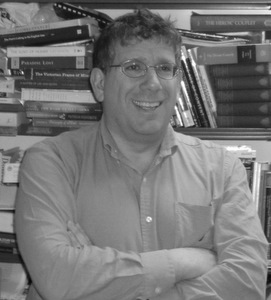 Colin Marshall sits down in Westwood with William Flesch, professor at Brandeis University and author of Comeuppance: Costly Signaling, Altruistic Punishment, and Other Biological Components of Fiction. They discuss José Saramago’s way with obscure Biblical episodes; literary Darwinism and its discontents; why and how we get concerned with what happens to fictional characters at all; the difference between stories we care about versus stories we don’t; how we recommend books, films, and shows to friends, thus caring about how they care about how characters care about one another; Michael Haneke’s scary Funny Games viewed with an audience and Michael Haneke’s ludicrous Funny Games viewed at home; what’s so great about Wittgenstein; the trade-off between humanizing and monsterizing your villains, as with Hitler in Max and The Boys from Brazil; the perfect biological pitching of Onion‘s 9/11 headline “Hijackers Surprised To Find Selves In Hell”; what makes the 19th-century novels of George Eliot, Anthony Trollope, Charles Dickens, and William Makepeace Thackeray so gripping; our desire to feel we’ve misjudged characters; Buffy, Angel, and our bets about liking them; and characterization and reversion to type all the way from Shylock to Stewie Griffin.
 Colin Marshall sits down in Larchmont with comedy writer
 Colin Marshall sits down in Santa Monica with Wade Major, senior film critic at
  Colin Marshall sits down in Los Feliz with comedy writer, baseball reporter, and
  Colin Marshall sits down in the Los Angeles Central Library’s courtyard with John Rabe, host of
  Colin Marshall sits down in North Hollywood with film and television critic David Bax, co-host of the podcasts
