My series of menswear-related book reviews for Put This On (see also my Marketplace of Ideas interview about PTO with Jesse Thorn and Adam Lisagor) debuts today with a writeup of Alan Flusser’s Dressing the Man:
If I didn’t know the name Alan Flusser, I’d still trust Dressing the Man by virtue of heft alone. Its size, shape, and weight could deal serious damage, although those cumbersome qualities keep me from carrying it around to test in a street fight, and even if I could easily carry it around, would I? I don’t mind learning how to dress in public — we always have to, in some sense — but it feels somehow inappropriate to reading a big, shiny book on how to dress in public. Then gain, if you’re going to learn how to dress that way, make it with a big, shiny book by a guy like Flusser, who dressed Michael Douglas for Wall Street and, more importantly, appeared in the sixth episode of Put This On’s first season (as well as an interview minisode).
But does this one rise above its closest-looking relative in publishing, the coffee-table book? All the lush, often page-filling photography of the Fred Astaire, the Duke of Windsor, and Luciano Barbera, not to mention the jaunty vintage illustrations, makes you wonder. After so many school years of bloated, distraction-laden textbooks, my alarms sound at the sight of splashy chapter-opening spreads, fonts a little too large, lines set a little too far apart, or boxes which may or may not enclose information. The aesthetics of Dressing the Man outshine most educational publishers’ strongest design efforts, but a confusion of purpose remains: is this an analysis of the best men have worn, or a primer for those who need to know how a shirt works? Reaching for both audiences, the book generates a certain friction: experienced dressers will wonder why they’re opening fold-out sections showing which fabrics are which, while learners like myself will, buoyed by how nifty they find those fold-outs, proceed to mire themselves in a discussion of dinner jacket trousers versus full-dress trousers. (Something to do with stripes.) Flusser includes a glossary to help us find our way home, deepen the feeling of textbookishness though it may.
Hence my suggestion that the next edition be titled something like Permanent Fashion: Theory and Practice. Flusser introduces this concept, which should ring familiar to longtime Put This On followers, with an explanation born of a paradox. “Menswear has enjoyed three decades of unprecedented growth and freedom to configure and reconfigure the sartorial tastes of several generations,” he writes, “yet there are fewer genuinely well-dressed men now than before. There has been nothing permanent about recent fashion.” He roots his proposed alternative as deeply as possible in the era between the World Wars, noting that, despite the “considerable economic tumult for America,” this time produced, regardless of wealth or class, “the best-dressed generation in the twentieth century.” This opens the door to 21st-century man’s standard objection: he fears looking like an octogenarian on his way to a costume party. But the book’s images seem curated to dispel just these reservations; who, even today, would laugh a Douglas Fairbanks, Jr. or a Leslie Howard out of the room? (Even the Howard wearing an unflatteringly narrow collar in a photo Flusser uses as a negative example commands respect.)
Read the whole thing at putthison.com.
(And hey, do any of you Tumblr people know how to add HSPACE and/or VSPACE to an image you upload into a Tumblr post? I’ve tried inserting the code directly into the HTML, but it doesn’t take.)
 Colin Marshall sits down in North Hollywood at midnight with film critic Tyler Smith, co-host of the podcast
 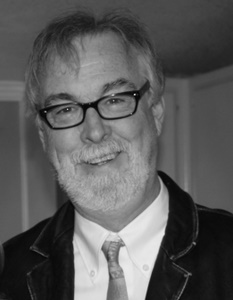 Colin Marshall sits down at the Los Angeles Central Library downtown with Map Librarian Glen Creason, author of Los Angeles in Maps. They discuss the point at which Los Angeles becomes not just a place to live but a subject; riding the old Pacific Electric streetcars that prompted the city to grow so large in the firs place; using maps to see the influence of trains, water, the movies, and oil on the city’s spread, growing up in the “Leave it to Beaver territory” of South Gate; early Los Angeles-boosters selling the city by employing mapmakers’ sleight of hand; downtown’s death in the sixties and seventies, and its more recent revival; learning little but having a lot of fun at UCLA during the Summer of Love; when the city “took a breath and reinvented itself,” Los Angeles’ uniquely dramatic geographical setting; how multiculturalism took hold from the very beginning; what it took to build the Third Street Tunnel; how miracles of civic engineering turned into freeway frustration; the non-disaster of “Carmageddon”; where the water in the Los Angeles River went, and how it remains useful as a navigational aid; the American notion of creating an Eden; whether Los Angeles is, as the posters say, “a world in itself”; former Italian and German communities, and current Indian and Chinese ones; the city’s surprising new walkability; whether the “driver’s paradise” days of twenty minutes to everywhere really happened at all; becoming the Map Librarian serendipitously; Los Angeles’ past of rabbits, gambling ships, and Central Avenue jazz clubs; what happened in Chavez Ravine; how good intentions in Los Angeles’ development have often led to reconsideration; how even longtime Angelenos learn from the ways the constant influx of new Angelenos approach the city; and the endless last rites given to Los Angeles that it never quite needs.

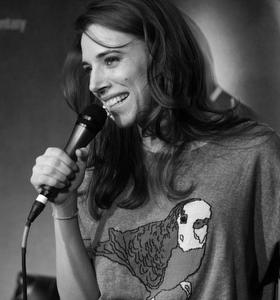 Colin Marshall sits down at Bourgeois Pig in Hollywood with
  Colin Marshall sits down at Fat Dog in West Hollywood with comedian and actor Jordan Morris, co-host of the comedy podcast
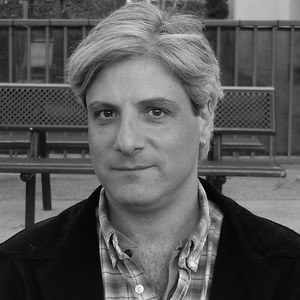 Colin Marshall sits down at the La Brea Tar Pits with David L. Ulin, Los Angeles Times book critic, editor of the anthologies Writing Los Angeles, Another City, and Cape Cod Noir, and author of The Myth of Solid Ground, The Lost Art of Reading, and the upcoming novella Labyrinth. They talk about his attitude as a young New Yorker moving to Los Angeles; his approach to everything in life through the filter of books; his “graduate education” writing for the mythologized oasis of writerly cool that was the Los Angeles Reader; the importance of competition in print journalism; criticism as the search for the most important questions; how to talk about a city that doesn’t know how to talk about itself; how to have a coherent conversation about a city that resists coherent conversation; the “sacred ordinariness” of Los Angeles; how literature of exile became literature of place; ersatz public and protected pseudo-urban space; whether the city will feel the same ten years from now; whether we’ll still have what architectural critic Reyner Banham described as an “autopia” ten years from now; how narrative offers our only hope of meaning, yet only offers meaning up to a point; and what happens when our narratives go bad, assuming we notice.