Sunday, December 30, 2012

Vital stats:
Format: on-location segments all over the world about “the people and ideas shaping our urban lives”
Episode duration: ~50m
Frequency: weekly
I know very few people without a conflicted relationship to Monocle magazine. My own began some five years ago, when I happened upon an early issue on a Barnes & Noble rack. Designed to the hilt, as interested in clothes as in coups, almost unnaturally calm but aggressively internationalist, taking full advantage (rather than desperately clinging to the legacy of) the print medium: here was a publication geared toward me, if almost too precisely. “Is This the Family of the Future? Meet Japan’s New Demographic,” “The Ascent of Brasília,” “Rebranding Britain,” “Generation Lusophonia”: all real Monocle cover stories, beyond which you’ll also find pieces on vintage bicycles, Swedish spas, cinemagoing in Bangkok, and the choicest brands of sneaker cleaner. Unable to bring myself to dislike any of this, l nevertheless sense that enjoying it too openly somehow exposes me, though to what I don’t know. Some disparage the magazine as “aspirational,” but no sooner do I agree than I wonder where, exactly, lies the problem with aspiring, especially if you harbor aspirations of such aesthetic immaculateness.
Seemingly always expanding beyond the core product, Monocle has founded an internet radio station, Monocle 24. As the host and producer of a podcast on “cultural creators, internationalists, and observers of the urban scene,” I now find myself dead center in another set of the operation’s crosshairs. In no possible universe could I resist The Urbanist [iTunes], its program on “the people and ideas shaping our urban lives.” I plundered the archive just as greedily as I devoured the pages of my first issue of the magazine: slick fifty-minute episodes on late-night neighborhoods, on pedestrianization, on train stations, on “great shopping experiences,” on Auguststraße. I heard pieces on the metropolises that intrigue me or have given me lasting memories: Vancouver, Tel Aviv, San Francisco, Hong Kong, Wellington. Yet I heard little about the metropolis that fascinates me more than any other in America, and the one I have for that reason made my home: Los Angeles.
Read the whole thing at Maximum Fun.
Thursday, December 20, 2012
 We’ve got 266 more dollars to raise and so little time to raise it in — less than twelve hours, to be somewhat more precise. The Kickstarter fund drive for Notebook on Cities and Culture‘s third season runs until 5 a.m. Pacific time on December 21st. If by that moment we haven’t raised the full $4000 goal, none of the backers will have to pay anything, but the season won’t happen: no Kyoto, no Osaka, no Mexico City, no Vancouver, no elsewhere. (Especially no elsewhere.)
If you know others who have backed previous seasons and/or would be interested in backing this one, they can find out how to help the show deliver in-depth interviews with cultural creators, internationalists, and observers of the urban scene on a fully international scale at its Kickstarter page. (They’ll also find out how to therefore get mentioned on the show, or to get their project or message talked up on one or all of season three’s episodes.) The conversations may be long, but the time to make them possible has run short indeed. Thanks.
Wednesday, December 19, 2012
 The third season of Notebook on Cities and Culture goes to Kyoto, Osaka, Mexico City, Vancouver, and elsewhere, giving you more in-depth conversations with cultural creators, internationalists, and observers of the urban scene, but only if we raise its $4000 budget on Kickstarter. That Kickstarter drive is going on right now, until December 21st, and has entered its final two days. At the moment, the season’s only 63 percent funded: we’ve got $2545 and need $1455. Kickstarter being Kickstarter, none of the funds actually come in — and the season doesn’t happen — unless we cross that $4000 threshold. But when we do, each $200 raised above the goal means another episode added to the season.
If you’ve already backed the next season of Notebook on Cities and Culture, thanks very much indeed. If you haven’t, find out how you can help the show go fully international at its Kickstarter page.
Tuesday, December 18, 2012
 I relish the menswear enthusiast’s life for a number of reasons, the first and foremost being that we get less homework than women’s wear enthusiasts do. This very idea may strike you as ridiculous, especially if you keep up with Put This On and countless other sites like it, but remember: they strive, often frantically, to keep up with an ever expanding breadth of garments, accessories, lines, and designers. One lady’s wardrobe may well include dozens, or even hundreds, of each. The menswear enthusiast plunges into something much narrower and deeper. We go down, you might say, a historical hole, digging our way toward the origins of the fifteen or twenty items we wear with the utmost regularity. Chinos, tweed jackets, button-down shirts, aviator sunglasses, Chuck Taylors: the versions we own today have undergone minor changes since the models’ invention, whereas women’s clothing, by comparison, endures regular and thoroughgoing revolutions. But boy, how much you can learn about those minor changes, let alone about the inventions themselves. “A minute to learn… a lifetime to master,” went the old Othello slogan, and the same applies to the game of men’s dress.
Much of our early menswear education comes from popular culture, often in minute-long flashes. Josh Sims’ Icons of Men’s Style takes some time, if not a lifetime, to offer a bit more mastery on 52 particularly timeless, universally recognized items, most of which got their break from twentieth-century American popular culture. Gregory Peck appears on the cover wearing aviators; Tom Cruise, encased in Top Gun gear, occupies a full page doing the same. An image of Jimmy Stewart dominates the chapter on tweed, as one of Ronald Reagan dominates the chapter on the sweatshirt. A shot of Michael Jackson shooting Thriller illustrates the wearing of loafers. The text cites Steve McQueen nine times, four of them with pictures. Magnum P.I., you’ll feel relieved to hear, makes an appearance as well. Sims writes up a scattering of items now rarely seen in the United States — the Barbour jacket, the Breton top — but tends to stick with what we’ve seen on the bodies and in the hands of American film stars, musicians, athletes, and politicians. Yet given the considerable influence of midcentury Americana on the rest of the world, a certain internationalism remains.
Read the whole thing at Put This On.
Monday, December 17, 2012
Notebook on Cities and Culture‘s upcoming third season will take it to Japan, Mexico City, Vancouver, and elsewhere — if, and only if, we raise $4000 to fund it. For details on how you can help the show go fully international, visit its Kickstarter page, where the fund drive runs now to December 21st.
 Colin Marshall sits down in Silver Lake with Tom Lutz, founding editor of the Los Angeles Review of Books, professor of creative writing at the University of California, Riverside, and author of the books Crying, American Nervousness, 1903, Cosmopolitan Vistas, and Doing Nothing. They discuss whether the internet has brought about a new golden age of the essay; giving writers the word count they need to write about the subjects they want to, such as the literature of Romania; “publish what you want to read” as a guiding editing principle as “write what you want to read” is a guiding writing principle; the team of specialized editors that help him sift through a hundred pitches per day; why on Earth the name Los Angeles Review of Books was still available in the 21st century, and the seat of its “steampunk” appeal; the curiously “doubled relationship” non-New Yorkers have to New York publishing; how his readership turned immediately global, and whether coming from as international a city as Los Angeles necessarily entails that; the internationalism of “taco trucks and Korean spas,” and the attendant indifference of distinction between “high” and “low” culture; connection as the very purpose of essays, and cosmopolitanism and debate as the essence of literary culture; the possible corrupting influences of the review form itself; the surprising pieces he has run, such as Ben Ehrenreich’s consideration of the “death of the book” which became a consideration of Bruno Schulz; what’s to be done about the divide between popular writing and “professionally deformed” academic writing; the value of clarity, honesty, curiosity, and a little bit of obscurity; whether to rule out the parts of Los Angeles by now written into the ground, such as the freeways, the beach, and the entertainment business; his early wanderings through Los Angeles and how they placed him in the city the way books couldn’t; and literature’s inability to catch up with the expansiveness of Los Angeles, the way he couldn’t read everything printed in the year 1903, and the way even Herbert Spencer couldn’t capture his entire life in his three-volume autobiography.
Download the interview from Notebook on Cities and Culture’s feed or on iTunes.
Sunday, December 16, 2012

Vital stats:
Format: Danny Baker, his co-host, his callers, and a bunch of (mostly British) celebrities talk football — but mostly go on tangents therefrom
Episode duration: ~1h30m
Frequency: erratic
“Because all of the subjects are British, there are qualities that leap out for an American viewer,” Roger Ebert once wrote about Michael Apted’s Up documentaries. “One is how articulate the subjects are [ .. ] they speak with precision, and often with grace and humor. One ponders the inarticulate murkiness, self-help cliches, sports metaphors and management truisms that clutter American speech.” As an American all too eager to run down his less fortunate countrymen, I certainly ponder those things. Yet I also ponder something I heard Lewis Black say years ago: the Brits need those accents to mask a stupidity even deeper than ours. Best, I think, to see each side of the pond as expressing its dimwittedness in different ways. Here in the States, we compulsively elevate the least thoughtful and (therefore) least articulate among us to the highest planes of media exposure. We consequently become colonials again, genuflecting to almost every Englishman sitting before a microphone. This goes for their workaday non-celebrities like those in the Ups as well as their craggiest, most donnish and experience-curmudgeonified broadcast hosts — or, as they call themselves, “presenters.”
Danny Baker may qualify as one such genuflection-worthy presenter, though you wouldn’t call him craggy or donnish. (As for the state of his curmudgeonification, it varies with the topics.) “It’s almost inconceivable that Colin would be interested in covering this particular podcast,” a certain Alistair Johnson wrote on the Maximum Fun Forum, “but I’d love to see him take on BBC’s The Danny Baker Show [RSS] [iTunes].” He went so far as to make a list of the reasons for my probable disinterest, including its being “an edit of a radio show,” “a phone-in show,” one whose “subject is (supposed to be) football,” and on top of all that, one that’s “British, and deals with British topics.” Though no Anglophile, I like to think I relish the opportunity to step outside my own culture in any medium possible, and Alistair added that “Danny Baker is considered a genius of radio by many in the U.K.,” and that his show is “not really about sport.” His personal testimony: “I have no interest in football, but listen every week.” Holding fast to my principle that few behaviors make one lamer than only taking interest in one’s interests, I began listening immediately.
Read the whole thing at Maximumfun.org.
Friday, December 14, 2012
It’s on! We now have a week to raise for $4000 needed for the third season of Notebook on Cities and Culture, which will take us to Kyoto, Osaka, Mexico City, Vancouver, and beyond in search of more in-depth conversation with cultural creators, internationalists, and observers of the urban scene. If you’d like to back it, go right to its Kickstarter page.
Incentives for backing season three include:
- For a pledge of $25 or more, I’ll thank you by name in all of season three’s episodes.
- For a pledge of $75 or more, I’ll thank you by name in all of season three’s episodes and send you postcards from the cities the show visits during it. (Except, for scheduling reasons, the Japanese ones.)
- For a pledge of $150 or more, I’ll mention your own project or message at the top of one of season’s three’s episodes, in addition to everything you’d get at the $25 and $75 levels.
- For a pledge of $400 or more, I’ll mention your own project or message at the top of all of season three’s episodes, in addition to everything you’d get at the $25, $75, and $150 levels.
- For a pledge of $1000 or more, you’ll be the guest in one of season three’s episodes: I’ll come to you (within North America only, for now) and we’ll record a conversation about the culture you create and the city you create it in, in addition to everything you’d get at the $25, $75, $150, and $400 levels.
If we pass our $4000 goal, season three will run for one additional episode per each additional $200. (If we raise $5,000, for example, it will run for 29 episodes instead of the normal 24.) As always on Kickstarter, if we don’t reach our $4000 goal, nobody pays anything — but then the show won’t have a chance to go fully international. What a bummer that would be, since I’ve already done a substantial amount of international recording in preparation!
Wednesday, December 12, 2012
 Colin Marshall sits down in Los Angeles’ Sunset Triangle with Jay Caspian Kang, editor at sports and pop culture site Grantland and author of the novel The Dead Do Not Improve. They discuss his youthful Midnight in Paris dream of drinking in red leather bars with dead authors; the racy science fiction of L. Ron Hubbard; the current or former importance of New York City as a destination for a youngster with literary ambitions; his avoidance of the role of “tribal writer,” tacitly assigned with explaining his culture to outsiders; growing up imprinted by the last “dangerous,” pre-pop hip-hop, which he used as a tool to deal with otherness in his North Carolina high school; filling his main character Philip Kim’s head with that and other preoccupations of the era in which he grew up, such as The Simpsons; the thirty-ish generation’s combination of high ambition with almost patternlessly scattered efforts, as exemplified by Lena Dunham; slightly younger creators’ instinctive consciousness of themselves as a “brand” based on their volume of output; his desire to write a hyper-real novel of San Francisco that would skewer — sometimes by actually killing — that city’s more self-satisfied sort of residents; the divide between old and new San Franciscans, and those who fell in between by growing up there in the eighties, when the utopian dreams had fallen through and the town needed an identity; how Chris Isaak turned up in his book; the Virginia Tech shooting, and how he and other Korean-Americans knew immediately that an Asian school shooter had to be Korean; the comparative racial situations of San Francisco and Los Angeles, and what makes Crash “one of the worst movies ever”; coming out of a “hoity-toity MFA program” and writing a genre novel versus one that uses the elements of genre; Troy McClure quotes providing the book with a “funny unreal superstructure,” and other aspects of The Simpsons‘ “large intrusion” into the text; and Los Angeles as a writer’s escape from the writerly life which doesn’t demand that you be as young, old, rich, or poor as New York does.
Download the interview from Notebook on Cities and Culture’s feed or on iTunes.
Monday, December 10, 2012
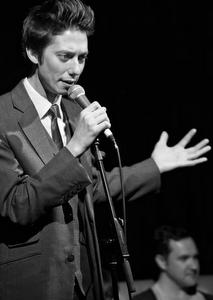 Colin Marshall sits down at Hugo’s Tacos in Los Angeles’ Atwater Village with Adrian Todd Zuniga, founding editor of Opium magazine and impresario behind the international reading series Literary Death Match. They discuss what might make Los Angeles “the new Berlin”; his aim to make the city the literary center of the world by 2022; the hatred that flows into Los Angeles, but not out of it; Literary Death Match TV, the project that moved him here, and his battle against the idea of its being “too smart for television”; December 12th’s live pilot shoot at Hollywood’s Florentine Gardens; his experiences putting on Literary Death Matches in cities like Tulsa, Helsinki, Amsterdam, and Beijing; his love of his collaboration, whether or not it comes from growing up as the last of eight kids and always wanting to hang out with the most interesting people; how to “explode what literature is in the current pop culture landscape”; his frequent travel, his use of flights as a writing environment, and the thousand-page novel his travel memoir has become; turning your own experiences into fiction, and which rules that changes (especially the sexual ones); his transferring to 23 different schools in childhood due to the workplace conduct of his “tactless genius” father”; his current search for a “quieter sense of what life is” and the conflict between wanting to change book culture forever and wanting to go to sleep; and how he taps into the universal desire to feel literary.
Download the interview from Notebook on Cities and Culture’s feed or on iTunes.