Skip to content

Korea Blog: The March of Fools, a College Comedy Darkened by Dictatorship

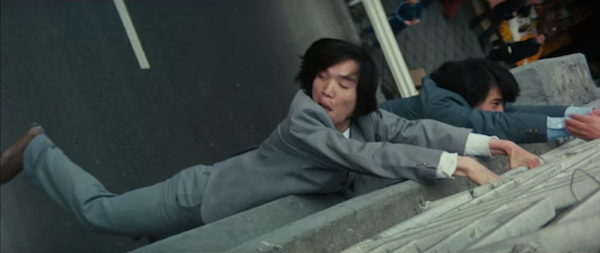
Mixers, sports matches, drinking contests, brushes with the law, anxiety about the future — Western audiences have come to expect all these elements from college comedies over the past half-century, and they’ll recognize them all in The March of Fools (바보들의 행진), a movie that belongs to essentially the same tradition. But it renders its college-comedy tropes a few shades darker to better reflect the reality of mid-1970s South Korea, a time and place caught between the demands of a very old social culture and the equally rigorous ones of the relatively new dictatorship intent on developing the country’s economy and keeping its people in line. Its hapless freshmen protagonists may get into as much trouble as the denizens of Delta House, but those guys never had to look into quite so deep an abyss.

At first glance, the Korean college life of the 1970s portrayed here seems to combine several conditions that never simultaneously obtained in America. Though The March of Fools‘ protagonists, a couple of casually philosophy-studying freshmen named Byeong-tae and Yeong-cheol, seem to lead pretty freewheeling lives, they also complain of having gone completely dateless up to the beginning of the story. “I’ve never chatted up a woman other than my mother,” says Yeong-cheol, in a line that at once underscores his misfit nature: he also tirelessly insists that his bicycle is a car and dreams, after retiring on the fortune to be made from selling miniature umbrellas to facilitate cigarette-smoking in the rain, of going out to sea to catch one particular, probably imagined, “beautiful whale.” But it also underscores the traditional, sometimes suffocating closeness of family relationships, especially with mothers, that can give rise to complications down the line.

Potential relief from their lifelong dry spells appears to Byeong-tae and Yeong-cheol in the form of a large-scale double date (an activity known, then as now, by the Konglish term 미팅, miting) between the men of their philosophy department and the much-coveted women of Ewha Womans University’s French literature department. After managing to scrape together the small entry fee, the two friends thrill to the prospect that “we could meet our future wives” on this, their very first date. But on the day of the event, after they’ve put on their finest suits — or rather their only suits, and ones a little stylistically outdated at that — they run afoul of an officer from the “hair squad,” one of the policemen then charged with dragging just such shaggy college boys as our heroes back to the station for sensible haircuts.

Read the whole thing at the Los Angeles Review of Books.
From my interview archive: disgraced science writer Jonah Lehrer (2008 and 2009)

This year, I’m listening again to selections from the archive of long-form interviews I conducted on the public radio program The Marketplace of Ideas and podcast Notebook on Cities and Culture between 2007 and 2015.

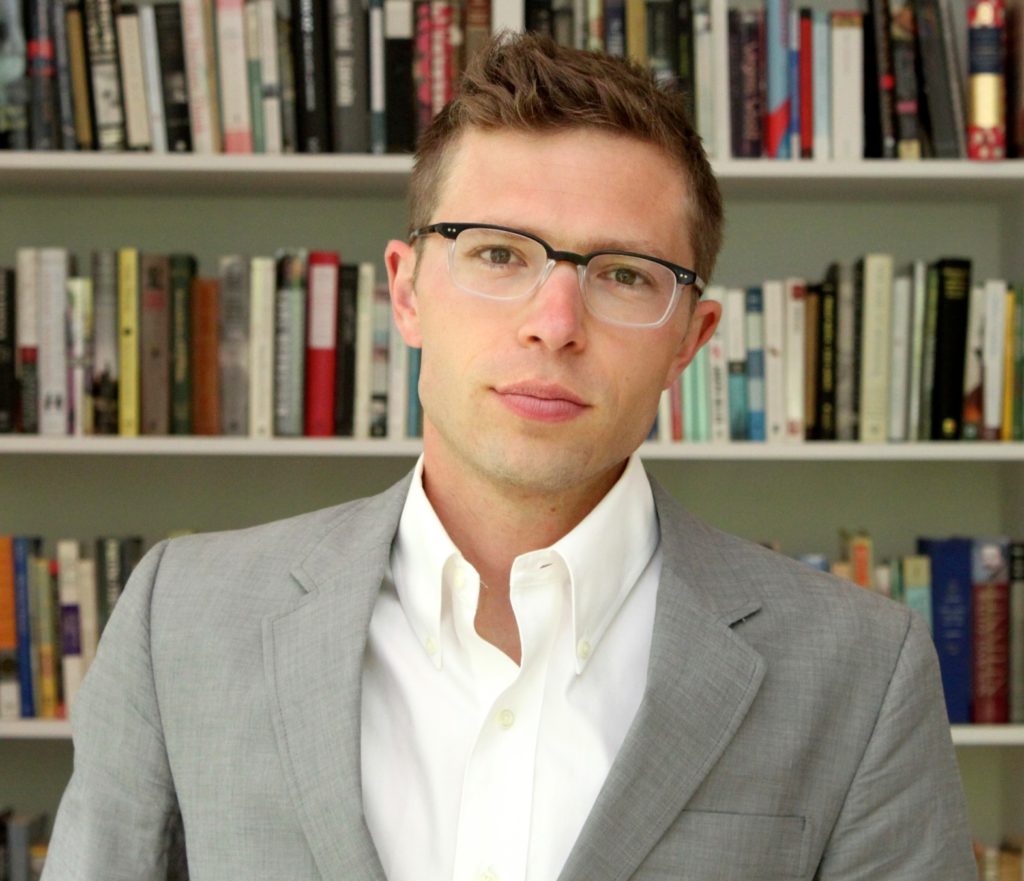
About a decade ago I came across an ad for a book called Proust Was a Neuroscientist. Intrigued, I looked it up and found that it dealt with the pre-modern-neuroscience neuroscientific revelations made by not just In Search of Lost Time but the paintings of Paul Cézanne, the writing of Virginia Woolf, the music of Igor Stravinsky, and the cooking of Auguste Escoffier. It struck me as the perfect kind of two-cultures material to discuss on The Marketplace of Ideas, which I’d just launched, so I asked for a press copy of the book and scheduled an interview with its author, a 26-year-old science writer by the name of Jonah Lehrer.

Six or so years later, Lehrer made what remains his most recent tweet, saying, “I’m deeply sorry for what I’ve done.” What did he do? I still don’t quite understand it myself, but it involved changing the occasional quoted word, lifting someone’s blog post, making up facts about Bob Dylan, acts of something called “self-plagiarism” — the sort of thing that shakes one’s confidence in a writer’s work, no doubt, but in this case it made Lehrer a pariah. He got in trouble for his book about “how creativity works” in 2012, by which time I’d ended The Marketplace of Ideas but also interviewed him twice already: about Proust (later judged as “without significant problems” and spared) and then about his next book How We Decide (judged as tainted by the revelations, and thus recalled and pulped along with the principally offending new book) the next year.

I’m not going to front like, in the grand total of two hours we talked, I could sense something “off” about Lehrer, an intangible tip of the iceberg of deceit below. In fact, I liked the guy and I liked his books — or at least I liked his first one and can’t remember much about the second. (He also once wrote a blog post comparing the structure of Los Angeles to the structure of the brain, which over a few years of my own early attempts to explain the city I sent around to more than a few people.) That doesn’t mean I don’t believe he deserved what he got, although I don’t really believe in desert at all. In a way, I can’t help but see the whole situation, this making an example of one sloppy writer by knocking him off the pedestal we put him on at such a young age, as a paroxysm of bad conscience in popular science writing as a whole.

Lehrer has long tended to attract the adjective “Gladwellian,” very seldom as a compliment. I suspect that he and Malcolm Gladwell’s circles of haters — those who champion hard, inconvenient facts over pat stories, or at least those who like to see themselves as doing so — overlap significantly, and it doesn’t surprise me that Gladwell has mildly defended Lehrer now and again since the latter’s fall. At least Lehrer doesn’t seem to have had it as bad as his fellow Angeleno Stephen Glass, who as an equally young journalistic star made up whole articles at The New Republic. That scandal even became a major motion picture, Billy Ray’s Shattered Glass, though I think far more often of Anthony Lane’s review than the movie itself:

Glass may be a rotten apple in the barrel, but the contention of Ray’s film is that the barrel itself, the noble calling of the reporter, is as sturdy and as polished as ever. Give me a break. On second thought, give me “His Girl Friday.” Five minutes of Howard Hawks’s speedy and cynical view of hacks in sharp suits, as they themselves bend the world to fit the shape of their own cynicism, is a more bracing sight than ninety-four minutes of Stephen Glass and his tragic slide from grace.

From my interview archive: economist and Marginal Revolutionary Tyler Cowen (2008 and 2009)

This year, I’m listening again to selections from the archive of long-form interviews I conducted on the public radio program The Marketplace of Ideas and podcast Notebook on Cities and Culture between 2007 and 2015.

I don’t remember exactly how I first found Marginal Revolution, but I’ve read it longer than nearly any blog in existence. Part of that owes to the fact that, unlike many if not most of the blogs I used to read, it actually remains in existence. More of it owes to my unflagging interest in the distinctive mind of one of Marginal Revolution’s two founding bloggers, George Mason University economist Tyler Cowen.

As you might expect, Cowen writes primarily about economics, and I discovered his work just as I started getting into that subject myself, but you don’t really need to care about economics to get a return on keeping up with his blogging: over this past month alone, he’s also posted about George Steiner, new Italian fiction, artificial intelligence, tennis, grip strength (unrelated to tennis), spiders, the appeal of Ireland, robot stage actors, empiricism, emotions, how to give a talk, Indian curry stain removal devices, American sexual frequency estimation, satellite-radio payola, Monteverdi’s madrigals, a rising chess star, and the political effects of self-deception.

That list might make Marginal Revolution sound like one of those projects “about everything” that you’re not even supposed to think about launching in the 21st century’s hyperspecialized #content landscape. Usually that kind of generalism indicates a fatal lack of focus by its very nature, but Cowen has somehow always matched breadth of subject with clarity of thought, which creates its own kind of high consistency. That may owe to his tendency to see the world thorough an economic lens, especially in his signature “Markets in Everything” posts, and it comes in for especially good use in his writing about food, whether on his Washington, D.C.-area Ethnic Dining Guide or in a book like An Economist Gets Lunch.

That one came out a bit too late to record an interview about on The Marketplace of Ideas, but by that point I’d already talked to Cowen, who now hosts an interview podcast of his very own, twice on the show. Both conversations got into his methods for consuming and thinking about culture, in edible form or any other. Not long after the second, I borrowed another of Cowen’s signature post formats, the recommendation-soliciting “bleg” (blogbeg), to prepare for a visit to New Zealand, my first trip — and really, really not my last — off the American continent. One of the comments in reply came from the Marginal Revolutionary himself:

Eat fusion cuisine in Auckland and Wellington, Malaysian and Burmese food, fish and chips (of course), lamb, forget the beef and chicken 100 percent. Don’t order them once.

I very much like Napier. Do “quaint” things, like shopping for tea cozies. Try to rent a cabin for a day or two away from a city. Drink their wacky fruit juices. Go for walks. Don’t expect too much culture or good art to look at. The Pacific materials in the Auckland museum are superb, however.

Good advice, it turned out!

Though I haven’t had another chance to interview Cowen since (Notebook on Cities and Culture never having made it to a D.C. Season), I’ve done my best to adapt his habits of mind when traveling, eating, watching, and reading elsewhere. Anyone who has come to the conclusion that Los Angeles is his “favorite city in the whole world” and that Apichatpong Weerasethakul is “the most enduring director of our time” will, at least for my purposes, come to other highly relevant conclusions as well. He’s only written a little about Korea (“There are so many coffee shops here.  But why?” he asked in 2012), though he has undertaken a longstanding quest for the ideal bibimbap. Next time he gets here, I’d be glad to introduce an additional data point or two.

Seoul Urbanism on TBS eFM’s Koreascape: The Destruction of Bamgol Village

Each month I join Kurt Achin, host of Koreascape on Seoul’s English-language radio station TBS eFM, for an exploration of one of Seoul’s urban spaces. This month we join urban explorer Jon Dunbar of Daehanmindecline for a walk through an old neighborhood called Bamgol Village — or what’s left of it. Urban redevelopment never stops in Seoul, and when it happens it scrapes whole communities off the map, usually in order to replace clusters of low-rise buildings with another set of the high-rise tower blocks that have increasingly characterized the city since the 1970s. Bamgol Village’s bid to save itself with by filling its walls with colorful murals didn’t pan out, and as in all such condemned neighborhoods, some residents haven’t had an easy time leaving: amid the heaps of rubble stand half-demolished houses still strewn with possessions, and at least one may even remain occupied.

Stay tuned for further explorations of Seoul’s architecture, infrastructure, and other parts of the built environment. You can hear our previous segments here.

KCET Movies: Alfred Hitchcock’s (Non-Existent) Los Angeles

The defining quality of Alfred Hitchcock’s Los Angeles is that he didn’t have one. Or rather, he had a Los Angeles in his life, but not in his work. By the time he passed away in his Bel-Air home in 1980, the Leytonstone-born director’s filmography had grown to include more than 50 features across a career spanning six decades. He made roughly half of them in Britain and half in America, the latter period accounting for the bulk of his reputation as the 20th century’s undisputed master of cinematic suspense. And though he embraced well-known American locations with the bravado of a thrilled new arrival – even those who’ve never seen “North by Northwest” know it features Cary Grant and Eva Marie Saint hanging off Mount Rushmore – he set not one of his films in the American city where he lived.

“Movies aren’t about places, they’re about stories,” says Thom Andersen’s narrator in an early passage of his documentary “Los Angeles Plays Itself.” “If we notice the location, we are not really watching the movie. It’s what’s up front that counts. Movies bury their traces, choosing for us what to watch, then moving on to something else. They do the work of our voluntary attention, and so we must suppress that faculty as we watch,” allowing the filmmakers to do their emotional work on us. But “what if suspense is just another alienation effect? Isn’t that what Hitchcock taught? For him, suspense was a means of enlivening his touristy travelogues,” though Andersen names him as the greatest of the “low tourist” directors, a group who “generally disdain Los Angeles. They prefer San Francisco and the coastline of northern California. More picturesque.”

And indeed, with 1958’s “Vertigo,” Hitchcock made what the latest Sight & Sound critics’ poll named the greatest motion picture of all time, and therefore the greatest San Francisco movie of all time as well. Sixteen years earlier, Hitchcock did set the first ten minutes of the less well-regarded “Saboteur,” the story of a framed airplane-builder on the run, in Glendale and elsewhere in greater Los Angeles, but as Andersen writes, “it could be anywhere in America where there is an aircraft factory. The scenes were shot in the studio, and there is nothing distinctive to the region in the sets.” At that time, the director had lived in America for only about three years, but according to Hitchcock scholar Dan Auiler, he felt the film failed to re-create “the real America he had been discovering on weekends.”

Read the whole thing at KCET.

From my interview archive: Charles Murray (2008), Jay Caspian Kang (2012), and “the Great Liberal Freakout of 2017”

This year, I’m listening again to selections from the archive of long-form interviews I conducted on the public radio program The Marketplace of Ideas and podcast Notebook on Cities and Culture between 2007 and 2015.

This week I enjoyed an essay called “The Great Liberal Freakout of 2017,” and while reading it I realized I’d interviewed both its author, journalist and novelist Jay Caspian Kang, and one of its subjects, political scientist Charles Murray. (If ever I need an example of my range as an interlocutor, I guess I know what to point to.) In the piece, Kang deals with the fallout of a recent incident in which Murray’s very presence at Middlebury College, where he’d been invited by the school’s conservative American Enterprise Institute Club, caused such a fuss that the scheduled on-stage debate, for the safety of all involved, had to be relocated to a closed room and live-streamed instead.

The clash drew incensed responses, incensed responses to the incensed responses, and incensed responses to the incensed responses to the incensed responses (with the next layer surely coming soon). Me, I just feel relieved that when I conducted my own interview with Murray on a college campus, I did it at a radio station over the phone rather than in front of an implacable chanting mob. He shows a sense of humor about the reactions he gets (Twitter bio: “Husband, father, social scientist, writer, libertarian. Or maybe right-wing ideologue, pseudoscientist, evil. Opinions differ”), but to this day I do wonder whether it wrong-footed him to take a call from someone at a university-based public radio station in California who didn’t proceed to attack him.

We talked about his then-new book Real Education, a critique of what Murray sees as the dominant form of less-than-real — or anyway less-than-realistic — education in America. I don’t remember particularly disagreeing with anything he wrote in it, and I often complain myself about the American (and increasingly international) practice of ramming as many students as possible through college and hoping for the best. We only talked a little bit about The Bell Curve, the book he co-authored in 1994 that his critics frame as a kind of jerry-rigged pseudoscientific justification for treating some races better than others due alleged differences in their innate intelligence level. How many of those critics, I wonder, read the book? And as Kang asks, does it even matter whether they did or not?

I, incidentally, did read the book. It’s pretty long and dry, all the controversy turned out to have centered on one chapter in particular, or at least the various floating interpretations thereof, and I can’t say I came out much changed by it. (If you’re looking for a fun reading experience, I recommend Kang’s novel The Dead Do Not Improve instead.) The conclusion that people of different races get significantly different scores on IQ tests — and I’m not sure to what extent it’s even true — would mean more to me if I gave a rat’s ass about IQ test scores. The charge of racism made against those who make such claims seems to me premised on a sort of “IQ-ism,” the unspoken assumption than someone with a higher IQ test score is better than someone with a lower IQ test score, and that, therefore, to ascribe a comparatively low average IQ test score to a race is to malign that race.

Personally, I’d rather submit to the rule of William F. Buckley’s first two thousand names in the Boston telephone book than that of the highest standardized test-scorers (known, in some quarters, as “meritocracy”), but that’s just me. Some of my fellow liberals disagree. And whether or not Murray’s own research holds up, I do think that Paul Graham had it right when he recently tweeted that “the people saying ‘Eppur si muove’ in our time are those studying the effect of biology on human behavior” (though sufficiently advanced research of that kind might not even have any use for the concept of “race”). Some of my fellow liberals disagree with that as well.

And though the Middlebury incident doesn’t strike me as any special threat to free speech in itself, I do believe that we have a problem with the concept overall, one deep enough that we may lack the tools even to acknowledge it. As David Bromwich put it in “What Are We Allowed to Say?”, for my money the most important essay of the past decade (the previous decade’s most important essay being Graham’s “What You Can’t Say”),

The heroic picture of the individual heretic standing against the church, the dissenter against the state, the artist against the mass culture, has been fading for a while and we have not yet found anything to put in its place. Asked in a late interview how he fell away from his belief in Catholic doctrine, Graham Greene said he had been converted by arguments and he had forgotten the arguments. Something like this has happened to left liberals where freedom of speech is concerned. The last two generations were brought to see its value by arguments, and they have forgotten the arguments.

Still, none of my fellow liberals have started a brawl with me over any of this. Civil discourse lives, I guess!

I talk about Seoul’s Ikseon-dong Hanok Village on Monocle 24’s The Urbanist podcast

Not long ago I sat down with reporter Jason Strother at a tea house in Ikseon-dong, a hanok village in downtown Seoul, for a conversation about the neighborhood’s development, revival, and future. He used it for a segment on Monocle magazine’s podcast The Urbanist which they describe as follows: “This week we head to Seoul to visit a neighbourhood that’s beaten the odds. Ikseon-dong was the country’s first real-estate development project back in the early 1930s – but there’s not much left in the city from that period.”

This follows up, in a sense, on the Ikseon-dong segment I did on TBS eFM’s Koreascape last year. Back in 2013, I made my first appearance on The Urbanist to discuss Los Angeles with host Andrew Tuck, and the year after that, I went to London and interviewed him for Notebook on Cities and CultureGiven that Monocle played an instrumental role in raising my own professional interest in cities in the first place, I suppose it makes sense that I’d subsequently have these encounters with it over over years in a different one each time. Where, I wonder, will the next one happen?

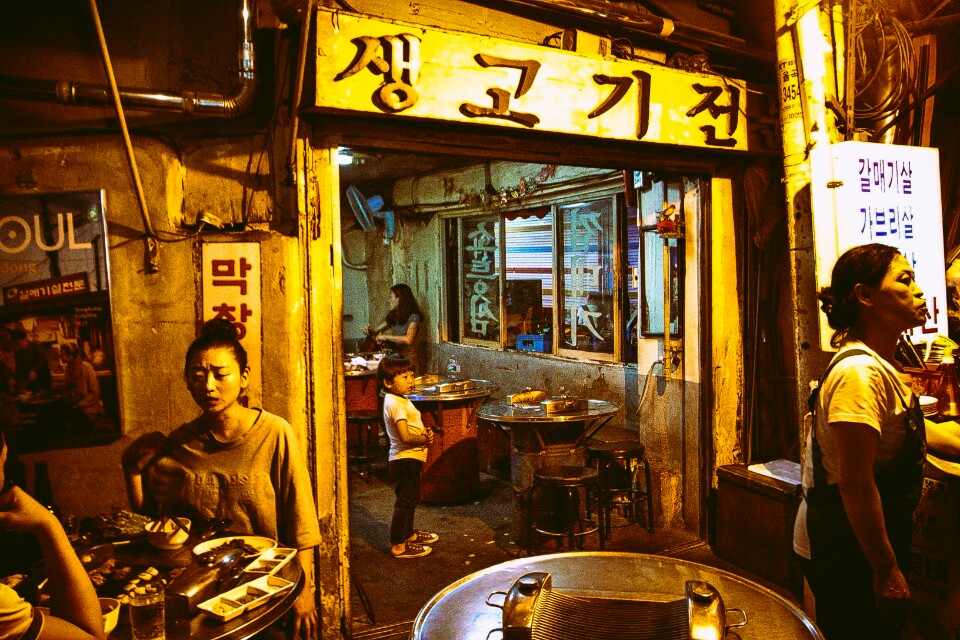
Korea Blog: Eating Korea, a Search for the Culinary Soul of an Ever-Changing Country

Koreans I meet for the first time tend to draw all their questions from the same well. What they ask starts out basic — why I came to Korea, what kind of work I do, how did I become interested in Korea in the first place — and then gets more culturally revealing. Having asked how long I’ve lived here, for instance, they often follow up with, “Until when will you live here?”, I question I wouldn’t even imagine asking a recent arrival in America. When the subject turns to matters of the table, as in this food-centric society it always does, they almost invariably ask not “Do you like Korean food?” but “Can you eat Korean food?” — a matter not of taste, they imply, but ability.

If Korean food is indeed a challenge, Graham Holliday can certainly rise to it, as extensively demonstrated in the new Eating Korea: Reports on a Culinary Renaissance. This eating-driven travelogue, which comes branded as “an Anthony Bourdain book,” has something of the swagger (a word now associated with that wisecracking, peripatetic celebrity chef with an admittedly wearying frequency) that name suggests. Holliday likens eating Korean soups to “entering a boxing ring. Red pepper arrived as a right hook, garlic a blow to the torso.” The stir-fried chicken dish dak galbk is “a violence, a mess, a mistake that works.” A soup, “thick, fiery,” and “bood-red,” drips “delicious violence.”  He observes his order of live hagfish as they “convulsed violently as they sizzled on the grill.”

Of his most gruesome dinner he writes that “ovaries, intestines, blood, cartilage, guts, and stomach smiled up at me like Carrie on prom night,” but elsewhere Korean food proves equally suited to metaphors of concupiscence as to those of carnage: a strong tofu dish is a “nuns and whores slutty swingers’ night,” a famous version of the rice-and-vegetable dish bibimbap a “nipple-tassle-wearing, cigarette-holder-flicking glamour puss.” After all that, a “hangover stew with clotted cow’s blood” strikes him as “an attractive-sounding proposition.” This language brings to mind Korea’s explosion onto the international cinema scene around the turn of the century, when Western distributors pitched Korean film, not quite accurately, as the next big source of the sex- and violence-saturated Asian “extreme.”

Read the whole thing at the Los Angeles Review of Books.

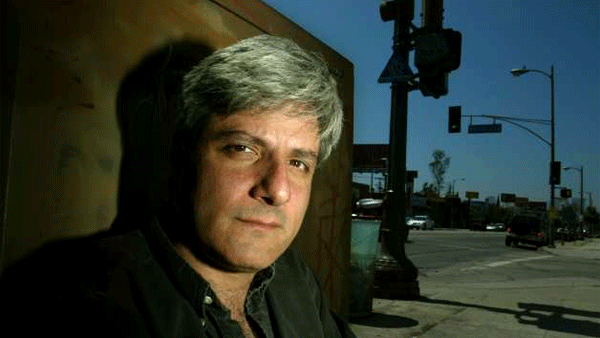
From my interview archive: consummate Los Angeles man of letters David L. Ulin (2008, 2011, 2012, 2015)

This year, I’m listening again to selections from the archive of long-form interviews I conducted on the public radio program The Marketplace of Ideas and podcast Notebook on Cities and Culture between 2007 and 2015.

I took the path I took, such as it is, in large part because of book reviews — not articles that review books, but the standalone newspaper book-review sections containing them. Remember those? The New York Times Book Review still exists, of course, and I’ve even subscribed specifically to it now and again, but I drew more formative influence from the Los Angeles Times Book Review.

Something about the combination of a smartly curated selection of book-related articles unified by tasteful graphic and layout design fired me up, especially from a paper based in a city that so fascinated me, and the content introduced me to a fair few of the topics I’ve pursued ever since. It first caught my attention under the editorship of Steve Wasserman, who got the boot (or he gave it the boot, or he gave himself the boot, I don’t really know) in 2005 and a couple years later published a 10,000-word Columbia Journalism Review essay about the decline of book reviewing that I printed out (like most book review-lovers, I wasn’t an early adopter of the smartphone) and obsessively read and re-read.

Shortly thereafter I launched The Marketplace of Ideas on KCSB-FM, an interview show but also a forum for talk on some of the topics I’d started to get interested in through book reviews: economics, philosophy, evolutionary psychology, wine, Los Angeles, even book reviewing itself. At that point I had more experience writing than interviewing, so in order to keep my hand in that game I sent some samples out to Wasserman’s replacement, a certain David L. Ulin. If memory serves, I bugged him more directly a few times afterward until he shut me right down, which wasn’t as bad as it sounds but almost always results in my declaring the shutter-down, however influential, officially dead to me on principle.

But I didn’t do that this time, possibly because I sensed something of a kindred spirit behind the rejection. Instead I invited him on my new show for a talk about books, book reviewing, book-review editing, Los Angeles (David had at that point edited a couple anthologies of the city’s writing and written a book on the highly Angelenous topic of earthquake prediction), and so on. The Times shut down the Book Review the very next year, which might explain some of my lack of success in writing for it. (The positive spin held that it would make the paper’s book coverage more relevant by bringing it out of its pull-out isolation, but I don’t know anyone who didn’t consider it a loss.)

Even post-Book Review, I found reasons to keep interviewing David: not only did we record a couple of conversations before I moved from Santa Barbara to Los Angeles, we talked again on my podcast Notebook on Cities and Culture right after I moved, and again on the Los Angeles Review of Books podcast (about Sidewalking, his Los Angeles book we’d all been waiting for) right before I took off for Seoul. He now stands as the individual I’ve interviewed the most times, unlikely to be surpassed any time soon. And though I live on the other side of the Pacific Ocean at the moment, I’m not done with Los Angeles — I’ve barely even started with Los Angeles — and so, even from this distance, I keep as close an eye on David’s work as ever.

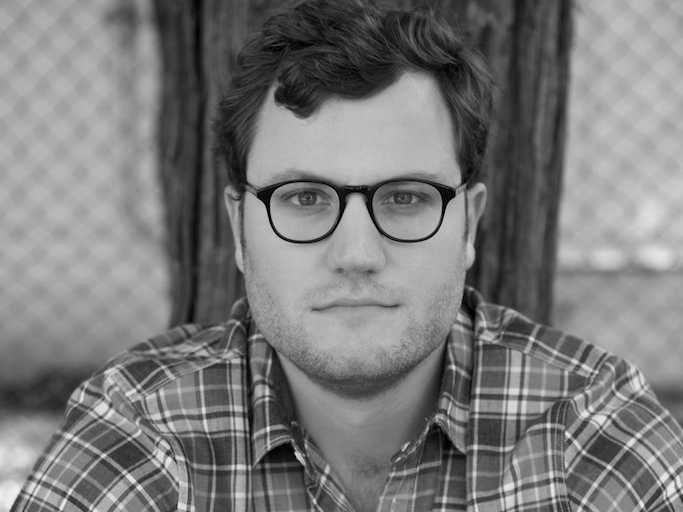
From my interview archive: writer and entrepreneur Ben Casnocha (2007 and 2012)

This year, I’m listening again to selections from the archive of long-form interviews I conducted on the public radio program The Marketplace of Ideas and podcast Notebook on Cities and Culture between 2007 and 2015.

More than a decade ago, I read a post by economist Tyler Cowen on Marginal Revolution — still one of my favorite blogs, and indeed one of my few favorite blogs now left standing — called “Hire Ben Casnocha.” Cowen described this eighteen-year-old entrepreneur as “a living test of whether college education signals the dedication of students to hard work. If Ben does not get or indeed even start his degree, does it mean he is undisciplined?”

Despite having only, at that point, spent three minutes with Ben, Cowen declared that “I will bet my reputation as a judge of talent that Ben will be a future star of some kind. He is already a star. And someday he will own you.” Intrigued, I immediately caught up on Ben’s blog. As luck would have it, his first book My Start-Up Life came out the same year I launched my first interview show The Marketplace of Ideas, so I invited him on for a chat. We talked over the phone, with me in the KCSB-FM studio in Santa Barbara and him at Claremont McKenna College, a school he would soon leave behind for less conventional pursuits.

Having at first envisioned the show as a balance between cultural types and entrepreneurs, hence the name, I soon found out that many of the latter lack the willingness, and often the ability, to engage in the sort of talks I want to have. Not Ben, though — very much not Ben, who has always displayed an impatience with standard thinking practices, be they laid down by academia, Silicon Valley, or any other cathedral, of which I heartily approve.

Since that first interview, we’ve found times and places to meet up for intensive exchanges of ideas every few years: in Mendocino, in Burbank, in San Francisco (where we recorded an early episode of Notebook on Cities and Culture), and most recently here in Seoul. I look forward to our next conversation, podcastable or otherwise, but until then I’ll keep any eye on his blog — which, like Cowen, still maintains, and on which he writes more intriguingly than ever. (It’s probably too late to hire him now, though.)