 I don’t know — I just feel like the most authoritative guide to gentlemanism must come translated from the German. Despite, or maybe thanks to, four credited translators, Bernhard Roetzel’s Gentleman’s Guide to Grooming and Style (known in other editions as Gentleman: A Timeless Fashion) retains a certain steely yet askew exactitude. When the translated Roetzel pronounces that, putting on a pair of genuinely good shoes for the first time, “as a consequence the need for a good suit arises almost out of necessity,” or that “creative professional groups wear the black polo-neck sweater almost exclusively,” or that a gentleman “will not profane his frugal but perfect breakfast by consuming it in a baggy T-shirt, boxer shorts, and rubber bathroom slippers,” I unquestioningly believe him.
In this language, the Gentleman’s Guide explains everything from suits to shaving to sunglasses to sheep, how they get the wool from. Even accounting for the general textual barrenness of the field we might call “men’s style books,” this men’s style book takes its explanatory mission seriously; Roetzel gets his hands so deep into the nuts and bolts of the male appearance that I at times forget I’m holding such a glossy, photo-laden production. (In my edition, the same Teutonic-looking fellow poses for each sub-chapter’s for lavish introductory shots. As with so many volumes on menswear, the distant observer will lack the evidence to decide whether I’m looking at sartorial examples or niche gay pin-ups.) No man will need every section of the book at once; only a freakishly quick study could, in one sitting, blow through all Roetzel has to say on shirt cottons, open lacing versus closed lacing, and how to tie a necktie, then feel crisp-minded and ready for his history of English sporting dress and his details on the august outfitters of Jermyn Street.
Throughout the book, Roetzel oscillates between two audiences: the aspirational menswear neophyte, and the reasonably established dresser who might like a little more information on the knobs of JP Tods driving shoes or the proper selection criteria for hip flasks. So if the stylistically awakening fellow in your life needs a gift, this one will keep on giving through the years. But as much utility as the Gentleman’s Guide’s ground-level instructions offer — the longer you go without knowing when to iron a shirt, why not to let your sleeve cover your cuff, or how to fold a jacket, the more harrowing the inevitable revelation of your ignorance — they leave a certain bitter aftertaste. What on Earth has reduced us to learning these simple things, these elements of self-presentation so fundamental to life, from a book?
The age when a young man went off to college in gilt-buttoned blazer and gleaming Oxfords has gone, I realize, and we surely delude ourselves about the extent to which it once obtained. (But like every semi-trad, complexly Japanophilic menswear enthusiast on the internet, I sometimes catch myself yearning for Take Ivy’s particular point on the space-time continuum.) I myself washed up on UC Santa Barbara’s campus without so much as a single collared shirt. Doesn’t the specter of a grown man — biologically grown, anyway — with a dresser full of graphic tees and white sweatsocks make you reflect on whether we and the last couple of generations, no matter how much progress our revisions otherwise brought about, perhaps ditched one tradition too many?
Almost everyone I know under the age of sixty (and several above) began their adult lives in a Stylistic Year Zero, thrust into the world in a brittle armor of jeans, sweatshirts, and shoes engineered for sports would never play. In their closets hung a sole suit, if they were lucky, but usually solid black and hence damned to uselessness outside funerals. We’ve had little choice but to approach the problem of dress — when, indeed, we realize we have the problem of dress — in entrepreneurial, autodidactic ways, becoming “self-made men” in an unusually literal sense. Roetzel seems to understand this full well. For every condemnation of a potential faux pas, he includes an assurance that the reader isn’t alone in his struggle: “It is a process which usually takes several years, and it is better that way. A wardrobe must grow like the decoration of an apartment. This is a highly individual process, which can, and should, lead each of us to a unique style.”
Roetzel frames the way of the gentleman with what I tremble, slightly, to call a holistic approach. He writes not just about what you choose to wear, but about a mindset. In his introduction, Nick Yapp invokes “an old proverb that defines genius as ‘an infinite capacity for taking pains,’ and the same description would serve to define a gentleman.” The Gentleman’s Guide, on some level, offers a primer on painstaking, one that just happens to express itself in the particulars of “grooming and style.” But then, such are the clearest, most apparent indicators to immediately separate those who take pains in life from those who don’t. Though you can’t always know how many hours a man puts into his craft, you can’t help but absorb and react to the overall aesthetic impact of his person.
The true mastery can begin, according to Roetzel, only when the outward unites with the inward. “Style is revealed in little things,” he writes, “like how you dress when there’s nobody to see you. A gentleman’s clothing is not a costume. He wears what he wears because he likes it. And not in order to impress anybody.” This book’s definition of gentlemanliness comes at the intersection of discernment and integrity, where the aspirant must abandon any ideas they have about compartmentalizing their life. As in suits, shoes, socks, shaving, and shampooing, if you go by the Gentleman’s Guide, so in social conduct, work, recreation, and breakfast. Care in anything follows primarily from care in everything else.
I actually have picked up worthwhile pointers on breakfasting and shampooing from this book, but to focus on them would be to cast it in the same light you’d shine on much more disposable handbooks — the Queer Eye for the Straight Guy companion, say. Roetzel’s manner has an increasingly rare — and, in our moment, refreshing — unreconstructedness about it, a spirit of disciplined decadence (or decadent discipline) that discusses the barber shop as “a paradise for men,” that insists that a real gentleman’s “doctor, his tailor, and, indeed, his hairdresser, must be male,” that the wearing of substandard shoes means “an otherwise perfect appearance is destroyed, irreparably and at a stroke,” and that, of a choice like the Dalí mustache, remarks only that “a real eccentric will rarely be satisfied with copying someone else’s trademark.”
The most revealing example of this sensibility comes near the end of the book, somewhere after the material on wristwatches but before the discussions of canes and lap robes. The Gentleman’s Guide features a substantial section on the proper enjoyment of cigarettes, pipes, and cigars, citing no less an authority than Thomas Mann, who “describes the pure bliss of dabbling in tobacco at many points in his works.” Roetzel himself approaches his own kind of translated near-breathlessness on the subject, asking, “Who can forget the excitement of the purchase of the first packet of your own cigarettes — for many the first step towards many years or a lifetime of this habit and passion?” Whatever your own opinions about smoking, can you resist exhilaration at his sheer lack of shame? Many would feel repulsed even by the earlier chapters on lapel widths or the comparative thicknesses of knitwear, dismissing such attention as fetishistic. But to apply the label of fetishism says more about the labeler than the labeled. Roetzel shows us that it’s the attention itself that matters.
 Colin Marshall sits down at the Los Angeles Central Library downtown with Map Librarian Glen Creason, author of Los Angeles in Maps. They discuss the point at which Los Angeles becomes not just a place to live but a subject; riding the old Pacific Electric streetcars that prompted the city to grow so large in the firs place; using maps to see the influence of trains, water, the movies, and oil on the city’s spread, growing up in the “Leave it to Beaver territory” of South Gate; early Los Angeles-boosters selling the city by employing mapmakers’ sleight of hand; downtown’s death in the sixties and seventies, and its more recent revival; learning little but having a lot of fun at UCLA during the Summer of Love; when the city “took a breath and reinvented itself,” Los Angeles’ uniquely dramatic geographical setting; how multiculturalism took hold from the very beginning; what it took to build the Third Street Tunnel; how miracles of civic engineering turned into freeway frustration; the non-disaster of “Carmageddon”; where the water in the Los Angeles River went, and how it remains useful as a navigational aid; the American notion of creating an Eden; whether Los Angeles is, as the posters say, “a world in itself”; former Italian and German communities, and current Indian and Chinese ones; the city’s surprising new walkability; whether the “driver’s paradise” days of twenty minutes to everywhere really happened at all; becoming the Map Librarian serendipitously; Los Angeles’ past of rabbits, gambling ships, and Central Avenue jazz clubs; what happened in Chavez Ravine; how good intentions in Los Angeles’ development have often led to reconsideration; how even longtime Angelenos learn from the ways the constant influx of new Angelenos approach the city; and the endless last rites given to Los Angeles that it never quite needs.

 Colin Marshall sits down at Bourgeois Pig in Hollywood with
  Colin Marshall sits down at Fat Dog in West Hollywood with comedian and actor Jordan Morris, co-host of the comedy podcast
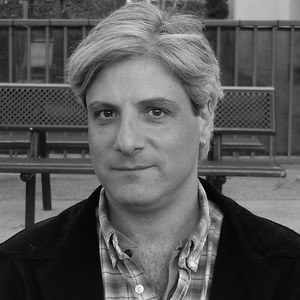 Colin Marshall sits down at the La Brea Tar Pits with David L. Ulin, Los Angeles Times book critic, editor of the anthologies Writing Los Angeles, Another City, and Cape Cod Noir, and author of The Myth of Solid Ground, The Lost Art of Reading, and the upcoming novella Labyrinth. They talk about his attitude as a young New Yorker moving to Los Angeles; his approach to everything in life through the filter of books; his “graduate education” writing for the mythologized oasis of writerly cool that was the Los Angeles Reader; the importance of competition in print journalism; criticism as the search for the most important questions; how to talk about a city that doesn’t know how to talk about itself; how to have a coherent conversation about a city that resists coherent conversation; the “sacred ordinariness” of Los Angeles; how literature of exile became literature of place; ersatz public and protected pseudo-urban space; whether the city will feel the same ten years from now; whether we’ll still have what architectural critic Reyner Banham described as an “autopia” ten years from now; how narrative offers our only hope of meaning, yet only offers meaning up to a point; and what happens when our narratives go bad, assuming we notice.
 Colin Marshall sits down in Hollywood with comedian, actor, and novelist