Monday, September 2, 2013
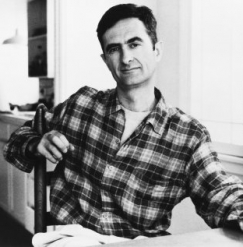 Colin Marshall sits down at the University of Southern California with Richard Rayner, author of the novels Los Angeles Without a Map, The Elephant, Murder Room, The Cloud Sketcher, and The Devil’s Wind as well as the non-fiction books The Blue Suits, Drake’s Fortune, The Associates, and A Bright and Guilty Place. They discuss the three or four Los Angeleses in which he’s lived since arriving in the city from England in the early eighties; the “up-for-it-ness” of the Los Angeles he first discovered; the reporting he later did from the 1992 riots, and the “geographical apartheid” he saw; his lack of a driver’s license, and how he addresses the question of where the buses go; his observations of how the city once flung itself outward from downtown, and now flings itself back inward; Los Angeles’ simultaneously unsurpassed optimism and pessimism; USC’s Doheny Library as a metaphor for blunt capitalism in action; why we crave stories about Los Angeles’ foundation on wrongdoing; how Los Angeles gets liked more in deed than word; how the current wave of interest in local history began; Los Angeles’ era of booster books against anti-booster books; his escape from English history only to plunge into Los Angeles history; what his unfinished novel of a man who loses his memory in Wales revealed to him about his own life in America; how his English hometown diversified, and how Los Angeles did the same; his cycle through “dustbins of jaded cynicism,” and the different sensibility his students (one of whom has written “the gay Korean Los Angeles novel”) bring to bear; his favorite bus lines to take notes on overheard conversations; and how his enjoyment of the riots, in a sense, got him writing about his own criminal past.
Download the interview from Notebook on Cities and Culture’s feed or on iTunes.

Downtown’s skyline appears to rise suddenly, due in part to contrast with the many low-rise miles surrounding it. But a handful of these skyscrapers look even taller, as I explain to visiting friends already vaguely familiar with them from countless establishing shots, for the simple reason that they stand on a hill. Sometimes I get into the background of Bunker Hill, the hill in question, and sometimes I don’t. Certain cultural touchstones assist in the narrative: if they’ve read “Ask the Dust,” John Fante’s acclaimed novel of 1930s Los Angeles, they’ll remember it as the formerly grand neighborhood in which its protagonist, hapless and near-penniless young writer Arturo Bandini, made his uncomfortable home in a residential hotel. Or if they’ve seen the largely forgotten mid-nineties techno-thriller “Virtuosity,” they may recognize it as a “virtual reality” city through which Denzel Washington’s vigilante ex-cop chased Russell Crowe’s computer-generated serial killer. These two of Bunker Hill’s many appearances as settings, only 56 years apart, tell a story by themselves.
Or rather, they raise a question: how did the place turn from a crumbling neighborhood for struggling artists, old folks, and pure eccentrics into a stand of gleaming towers suitable to, as it were, simulate a simulation? If I don’t feel like talking about Bunker Hill, I can simply refer these friends to the literature; few transformations of Los Angeles’ built environment have produced so much documentation, discussion, and modern attempts at urban archaeology. (See also Nathan Masters’ post “Rediscovering Downtown L.A.’s Lost Neighborhood of Bunker Hill“.) The Victorian homes of the old Bunker Hill, developed as a swank neighborhood-with-a-view in the late nineteenth century and already a low-rent but reportedly dignified shambles in the twenties, have now passed into Los Angeles lore as symbolic of all we lost as the heavy hand of mid-century development swept across the city.
Read the whole thing at KCET Departures.

Vital stats:
Format: interviews (and at best, unedited interviews) concerned with religion or systems of belief and/or perception more generally
Episode duration: ~50m (produced shows) or up to 2h (unedited podcasts)
Frequency: ~8-10 total per month
I recall hearing years ago on Jordan, Jesse, Go! how much Jordan enjoys listening to On Being[RSS] [iTunes] with Krista Tippett, which constituted endorsement enough to get me tuning in as well. I also recall hearing years ago on Jordan, Jesse, Go! that Jordan enjoys hearing discussions about the consistency, or lack thereof, of the fictional “universes” in which movies, television shows, books, and video games take place. Those Jordanian enthusiasms might seem to have nothing to do with one another, but the more On Being I hear, the less they strike me as unrelated. Formerly known as Speaking of Faith, the show aims to “draw out the intellectual and spiritual content of religion that should nourish our common life” — or, as I think of it, to talk as clearly and non-judgmentally as possible about religions, broadly defined. Most shows about religion, I would think, come the perspective of the One True Faith — whichever of the One True Faiths to which its creators happen to subscribe — and therefore must reject outright the term “religion” in the plural. On Being, should it need a third title, might as well call itself Religions, Plural.
No one comes off as a believer in religions, plural as much as Tippett herself. She doesn’t sound like she actually follows all religions, or even several of them — she identifies, I gather, as some type of Christian — and indeed, the incompatibilities of their tenets would make that quite a difficult life. But you might say that the believes in their compatibilities, to the extent those exist. Or she believes in the potential for such compatibilities. To go back to the show’s about page, she operates on the premise that “there are basic questions of meaning that pertain to the entire human experience,” and often conducts interviews with religious or religion-oriented guests in pursuit of those questions. Tippett’s conversations thus make for valuable resources when you need to understand “the deal” with a certain faith: Brigham Young University professor Robert Millet on Mormonism, rabbi David Hartman (recorded in Israel, no less) on Judaism; nine different Muslims on Islam. If you like this kind of thing, make sure you don’t miss Tippett’s live conversation with not only a Muslim scholar, and not only a chief chief rabbi, and not only a presiding bishop, but the Dalai Lama too.
Read the whole thing at Maximum Fun.
 Colin Marshall sits down in Silver Lake with Besha Rodell, who has written about food in New York and Atlanta, and last year came to Los Angeles to become the Weekly‘s restaurant critic. They discuss the secret appeal and non-Australian origins of the Outback Steakhouse’s Bloomin’ Onion; her Australian youth, and the friends who insisted she join them at Koala Blue after she came to the States; what counts as authentic Australian cuisine, and the tortured question of “authenticity” in Los Angeles; her concerns with what people really eat; her predecessor Jonathan Gold’s influence on the city’s food culture; the appeal of putting yourself utterly at a restaurant’s mercy; “ego-driven” versus “devotional” cuisine; the strange modern prevalence of kale salads; her preference for odd and uneven dishes versus perfect and derivative ones; how she got to know Los Angeles in the three weeks she had before moving here and then assembling the Weekly‘s 99 Essential Restaurants list; the paradox of more money on the west side and less food there; how far you have to go before a restaurant doesn’t count as “in Los Angeles” anymore — or whether such a distance exists; the spread of this city’s culinary interestingness, and how it compares, culturally, to Atlanta’s divide between “Inside the Perimeter” and “Outside the Perimeter”; how ideally, a restaurant critic would move to a new Los Angeles neighborhood every two months; the advantages of the “bogus” system of star ratings, and why chefs want their stars; the current blowup in food interest, and what the internet has to do with it; how she came up through restaurant culture, and came to appreciate how you can’t be “kind of a cook”; how you can’t understand Los Angeles if you don’t eat much here, and how best to understand it when you do go eating.
Download the interview from Notebook on Cities and Culture’s feed or on iTunes.
Thursday, August 22, 2013

On the latest Los Angeles Review of Books podcast, I have a conversation with three New York poets as they visit Los Angeles: Adam Fitzgerald, editor of Maggy and author of The Late Parade; Tom Healy, chairman of the Fulbright Foreign Scholarship Board and author of Animal Spirits; and Robert Polito, newly appointed president of The Poetry Foundation and author of Hollywood and God. You can listen to the conversation on the LARB’s site, or download it on iTunes.

“You could always live in Venice,” a friend suggested as I considered both an employment prospect in Santa Monica and my own unwillingness to live someplace so seemingly distant and expensive. Venice, the next beach city south (albeit one incorporated into Los Angeles proper since 1926), has long reveled in the reputation of offering a cheaper, less controlled, more bohemian alternative to its neighbor. Though I didn’t come away with the Santa Monica job, I did come away fascinated by this other, storied place in which, under different circumstances, I may or may not have lived. I still occasionally make the westward ride over there, never quite believing that just over an hour’s pedaling from downtown brings you to what feels like a separate reality: Venice’s abundance of cheerful, alternately slick and decrepit seaside architecture; its retail areas that range between highly curated and seemingly lawless; its European-filled beach; its famously freakish boardwalk.
Yet I hear the boardwalk doesn’t host as many freaks as it used to, the newer shops only vaguely reflect neighborhood history and identity, those crumbling apartments cost a pretty penny, and as for those live-work spaces with their planes of light wood and glass and surfboards resting on steel balconies, you might as well not even ask. Venice still feels, on the ground, like a distinct, and distinctively more relaxed, realm from the city to its east. Such realms, of course, inevitably make you wonder if they felt even more different before, in a time on which you’ve missed out. Decades ago, Jan Morris described Venice as “a struggling enclave of unorthodoxy,” “a forlorn kind of suburb” built upon “the remains of a fin de siècle attempt to recreate the original Venice, ‘Venice Italy,’ upon the Pacific coast. A few Renaissance arcades remain, a Ruskinian window here and there, and there is a hangdog system of canals which, with their low-built bridges, their loitering ducks, and their dog-messed paths, their smells of silt and dust and their air of stagnant hush, really do contrive to preserve a truly Venetian suggestion of decay.”
Read the whole thing at KCET Departures.
Wednesday, August 14, 2013

First came the movies, then came the road-builders, then came the criminals, and now come the hipsters: people tell this same basic story about several Los Angeles neighborhoods, but half the time I hear it, I hear it with Echo Park as the subject. Charlie Chaplin and the Keystone Kops anointed the place with the glamor of classic film comedy; then the freeways walled it off, if for the most part psychologically, from the wider city; then the neighborhood came to host the troubled young Latino culture in which Allison Anders set “Mi Vida Loca,” still the accepted cinematic text of modern Echo Park. But that movie came out in 1993, and the intervening twenty years have rendered much of its setting almost as unfamiliar as the one Chaplin’s Tramp stumbled gracefully through nearly eight decades before. Maybe Anders shot scenes of Mousie and Sad Girl ordering craft beer and kale salads and left them on the cutting room floor, but I doubt it.
You can eat such salads at Echo Park Lake, where a well-known Hollywood brunch joint just opened a café to feed those made hungry by pedal-boating. In the time I’ve spent in Echo Park, I’ve sensed nothing more threatening in the offing than the prospect of falling out of one of those boats, a spill that, while gross, wouldn’t threaten your life. Besides, if you’d taken it years ago, when the lake counted as just one more of Los Angeles’ characteristically forlorn bodies of water, you’d have found it even grosser. As far as the neighborhood surrounding it has come in the past couple of decades, the newly re-engineered, re-landscaped, rehabilitated lake strikes even me, who never really experienced the bad old Echo Park, as incongruously pleasant. The same goes for media-savvy evangelist and noted Los Angeles historical character Aimee Semple McPherson’s Angelus Temple, which for ninety years has exuded its impression of vast white sweep right there on the other side of Park Avenue. If a day of water-pedaling, worship, or both, puts you in the mood for one of those aforementioned specialty ales, you won’t have to go far down Sunset to find them.
Read the whole thing at KCET Departures.
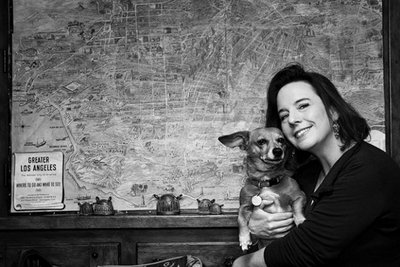 Colin Marshall sits down at the top of the Hotel Wilshire with Lynn Garrett, proprietor of popular online community Hidden Los Angeles and fifth-generation Angeleno. They discuss how best to prepare Germans for their Los Angeles vacation, since their guidebooks have failed; which human needs the many persistent myths about this city fulfill; how here, you are your own salvation; the revitalization of the Los Angeles River, as against the notion that “all it is is dead bodies and gang members”; Los Angeles as reflector of the observer’s own particular hatreds; getting to know the city not as a city, but as a constellation of villages; her art-school exploration of the city back when she “didn’t know not to”; who hangs out and talks on Hidden Los Angeles, and which topics get them most fired up; the human tendency to get upset about change of any kind, whether positive or negative, and to adjust perceptions accordingly; what happened when Hidden Los Angeles went viral, attracting 250,000 followers; Caine’s Arcade, Skid Row charities, and all the other ways she’s found the community can help (when not arguing); what the followers teach her about Los Angeles, the city no one person can possibly know; and what she learns from leaving the city, as well as how she makes herself an outsider when in it.
Download the interview from Notebook on Cities and Culture’s feed or on iTunes.
(Photo: James Acomb)

Vital stats:
Format: interviews with the movers and shakers of an archipelago you probably haven’t heard of
Episode duration: 15-45m
Frequency: 2-5 per month
When I first heard of The Faroe Islands Podcast [RSS] [iTunes], I heard it as a sort of punchline. “Oh man, this archipelago off of Europe? That only has 50,000 people? The Faroe Islands? There’s an entire podcast about it.” But really, how far does this separate it from so many other podcasts? This show covers all aspects of life on the Faroe Islands, and going by its episodes on Faroese broadcasting, any media pertaining to the place manages near-automatically to draw the attention of a sizable chunk of the population. A reasonably successful podcast about, say, one particular Doctor Who Doctor might attract five or ten thousand listeners. But a Faroe Islands news broadcast pulls in an astonishing fifty percent of the viewership. More than a few of those 25,000 — or of the English-speaking fraction of that 25,000, anyway — would, I wager, want to take a listen to The Faroe Islands Podcast, a production about a niche country in a niche-friendly medium, even if only out of curiosity.
This narrow focus has another advantage. Listening the show’s 182-and-counting episodes, I kept thinking back to, of all books, Robert Pirsig’s Zen and the Art of Motorcycle Maintenance. In it, Pirsig relates a story from his alter ego Phaedrus’ teaching days at Montana State College. One of his students wants to write “a 500-word essay on America” but can think of nothing to say. When Phaedrus suggests she write about just the city of Bozeman instead, she still comes back empty-handed. He then tells her to write just about Bozeman’s main street, but she again comes back without a paper. He finally suggests she write only about the front of Bozeman’s opera house, beginning with its upper-leftmost brick.
Read the whole thing at Maximum Fun.

On the latest Los Angeles Review of Books podcast, I have a conversation with writer, publisher, and actor Ken Baumann, who currently plays Ben Boykewich on The Secret Life of the American Teenager and just published his first novel Solip. He’s now at work on a book on the classic Super Nintendo role-playing game Earthbound. You can listen to the conversation on the LARB’s site, or download it on iTunes.