West Hollywood came into official being on November 29, 1984, 25 days after I did. But which of us wears our years with greater dignity? I strain to look timeless, but timelessness, improperly cultivated, slides easily into blandness; West Hollywood can rest assured, at least, that it runs little risk of that. A mixture of the uneasily dated and the insistently progressive, the tiny municipality — an “r” shape containing less than two square miles, surrounded on most of its edges by Los Angeles proper — would seem now to punch above its weight in most of the important modern rankings: food, no doubt; culture, in certain senses, yes; street life, seemingly so; homosexuality, most definitely.
Urban theorist Richard Florida gives the homosexual population serious weight when gauging a city’s vitality, having gone so far as to order the metropolises on something called a “Gay Index.” This goes especially for cities driven by what he calls the “creative class” — engineers, scientists, designers, artists, media-makers — and thus it looks like no coincidence that West Hollywood labels itself “The Creative City.” A walk down its stretch of Santa Monica Boulevard, surely some kind of Gay Index in and of itself, presents rainbow-striped crosswalks at intersections, rainbow-striped city logos on police cars, and a variety of specialized bars and sex shops. But unlike, say, San Francisco’s Castro, the neighborhood doesn’t feel like a solemn monument to lost hedonism. By late 1984, Castro-style hedonism had taken its last rites anyway; West Hollywood, at least on certain streets, keeps living, keeps breathing, keeps chatting itself up. (Though not in a way everyone necessarily finds palatable. “The term ‘WeHo boy,'” as a friend and longtime resident of the neighborhood patiently explained to me, “is not meant as a compliment.”)

Read the whole thing at KCET Departures.
 Colin Marshall sits down in Mexico City’s Colonia Condesa with Juan Carlos Cano and Paloma Vera, founders of the architecture and urbanism practice

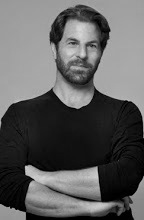 Colin Marshall sits down in Mexico City’s Colonia Roma with artist-turned-food writer Nicholas Gilman, author of the book and blog
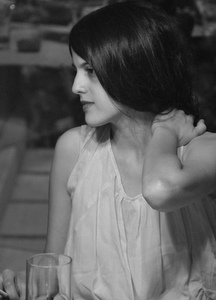 Colin Marshall sits down in Mexico City’s Colonia Roma with novelist and essayist Brenda Lozano, author of the Todo Nada and
 Whether in its original 1964 Newnes edition or its handsome 2007 Abrams reissue, ABC of Men’s Fashion strikes an elegant balance between authority and personality. Despite taking a more compact shape than an encyclopedia (128 small-format pages, to be precise), it does take an encyclopedic form. Beginning with a brief explanation of “Accessories”, Amies ends, several hundred elements of male dress later, with a plea for acceptance of the newly popular “Zip fasteners”. 21st-century Americans will recognize these, assuming their universality hasn’t yet turned them effectively invisible, as zippers. “Few people know how they work,” Amies notes, “and many are still therefore wrongly suspicious of them.” There we have a very late hint that this book may not exactly hold a flat, clear mirror to modern sartorial thought. Its neatly arranged entries and sober illustrations suggest unimpeachable objectivity; its text delivers one man’s opinion, and it does so without shame.