Skip to content

Podthoughts: The SHeD Show with Andy Dick

Vital stats:
Format: conversations (and occasional songs) between Andy Dick and his friends and colleagues
Episode duration: 1h-1h30m
Frequency: erratic

I know who Andy Dick is, and yet I don’t know who Andy Dick is. He entered my awareness as a guest on Loveline, the nightly radio program that occupied one of the larger, more edifying chunks of my time between the ages of thirteen and twenty. He had a specific reason for being famous back then, which I believe had something to do with a role on the ABC sitcom NewsRadio. I remain more or less ignorant of that show, despite its retroactive receipt of a great deal of comedy-nerd credibility, at least by the standard of ABC sitcoms. I know just as much about Less Than Perfect, the other sitcom, this time about an office, which carried his mainstream recognition into the 2000s. My curiosity has long had a place for his band, the Bitches of the Century, but mostly because of its name. I can’t get enough of that name.

Somehow, this thin experience has provided reason enough for me to download Dick’s every guest appearance on today’s interview-ish comedy podcasts and comedy-ish interview podcasts: Marc Maron’s, say, or Adam Carolla’s. As far back as I can remember, and in whichever sonic medium I can remember, a conversation with Andy Dick has always meant a conversation about drugs and alcohol, either the benefits thereof, the indignities thereof, or the vagaries of quitting them. Given his once apparently constant struggles with substance abuse and tendency toward bizarre public behavior, Dick became something of a dead man walking in the eyes of the media. Yet, like a high-personality Zelig wandering through a very specific and strikingly grim circle of show business, he displayed a hardy survival instinct while his significantly less doomed-seeming associates — actors Phil Hartman and David Strickland come to mind — met their ends.

Read the whole thing at Maximum Fun.

Me 11 Points Countdown: how to stop worrying and love high gas prices


Above, please enjoy my appearance on the new 11 Points Countdown video. Host Sam Greenspan puts me, “podcasting superstar Colin Marshall,” in the hot seat for eight minutes to discuss the audience-voted good things about high gas prices. As a carless Angeleno, a cycling enthusiast, and an all-around fan of “multimodal transportation,” I found this topic almost spookily suitable. And speaking of, I am not actually wearing a suit, though some viewers seem to assume that. Other viewers are calling me “Niles Crane.” Tell me who that is and why they’re calling me that. I wonder if this Niles Crane is someone who drinks a full glass of Boddington’s at ten in the morning and doesn’t feel the thin end of a bad wedge. If so, how incisive!

Some other recent media appearances:

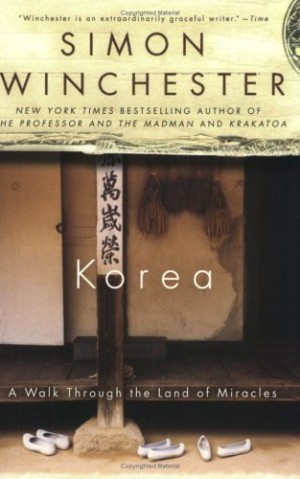
Simon Winchester: Korea: A Walk Through the Land of Miracles

Los Angeles’ Korean Cultural Center put on a quiz on Korea, and I picked this book up ostensibly as study material. Frankly, though, I’ve wanted to read it for years. The tradition of the traveling English writer — as distinct from the English travel writer — draws me in without fail, although I tend to go for those still living with consciousnesses shaped by a fallen empire, rather than the dead who freely roamed a thriving one. The British-born, English- and Californian-raised, and Indian heritage’d (Marketplace of Ideas and Notebook on Cities and Culture guest) Pico Iyer has become my key reference point there. Though technically Swiss, the English-in-tone-and-manner (Marketplace of Ideas guest) Alain de Botton performs the sort of philosophical explorations that take him all over the place, whether he likes it or not. Then we have (Marketplace of Ideas guest) Clive James, the Australian who, while more of a critic than a writer of place, writes essays underlain by a similarly extensive internationalism. Though he recently took U.S. citizenship, I suspect Simon Winchester may fit somewhere within this triangle. If a book takes him to a country that not only fascinates me but whose culture has, with astonishing speed, become an important part of my life, count me aboard.

Why is Simon Winchester so popular?” Nathan Heller asked in Slate, accusing him of writing in a breezy, no-questions-askable style that leads readers into lazy “historical tourism.” Though he periodically goes to the history shelves to provide context in Korea, Winchester mainly writes the book as a straight travelogue of his walking journey as far across the titular peninsula as politics allows. In the late eighties, when the main text takes place, he gets right up to the Demilitarized Zone that separates South from North, but steps no farther. (A dingy limousine and a pair of black-suited agents await him on the other side; a loudspeaker blares hastily whipped-up propaganda about the solitary westerner who, too poor to buy a car, has walked all the way to the Democratic People’s Republic in search of a better life.) The second edition offers a new introduction where Winchester recounts his later trip past the 38th parallel, goaded on by some Irish priest who needled him about his “half complete” journey. Here you’ll find the book’s most harrowing moment, when at the Pyongyang airport café he drinks what you might call a cargo cult cappuccino: “The foam on top turned out to be egg white, beaten and cooked into a sort of greyish omelette.”

I live for lines like that, as I live for paragraphs like this:

Korean women, I am bound to think, present a most bewildering and complicated mixture of emotions and attitudes. One woman can at the same moment be delightfully shy and yet alarmingly forward, liberated and yet coquettishly deferential, sexually ignorant and yet wantonly promiscuous, aggressive and argumentative and yet strangely sulky and passive. So very different from the Japanese — so friendly, so curious, so studiously attentive. The baser side of me would often think that for stimulation and curiosity value alone there could probably be no greater woman than the Korean, but life could at the same time perhaps be pretty hellish, I have no doubt.

Ah, the soothing feeling of meeting someone, even in text, almost as unreconstructed as oneself. Winchester mentions narrowly avoiding encounters with an dutiful prostitute or four — purely disease-related concerns, he insists — but either never beds down with a woman of this Land of Miracles or shies away from mentioning having done so. Without knowing Winchester, I put my money on the latter. “Travellers almost by definition screw more (or want to screw more) than other people,” I remember Donald Richie writing in his Japan Journals, and even that book alludes to more of that than it describes (though I hear much description remains in his unpublished Vita Sexualis). No traveling writer wants to come off like a sex tourist, but the apparent omission, as if he hadn’t mentioned eating any food the whole time, unsteadies me as a reader. Talk about a half complete journey.

It seems the title alludes primarily to industrial miracles. In an elegiac opening chapter, Winchester, a onetime resident of Newcastle upon Tyne, tells of witnessing the death throes of British shipbuilding. He later travels to Korea to size up its suspected murderer: the unfathomably large, futuristically equipped, and unrelentingly efficient shipyards operated by Hyundai. “You know,” remarks a Swedish shipowner come to inspect his order, “I think that Europe is quite finished.” Having lately read a great many books on Asia written by westerners in the seventies and eighties, I can assure you that such nervous resignation in the face of apparent discipline and hyperproductivity came with the zeitgeist. Usually the terror emanates from that mercilessly buzzing economic hive known as Japan, Korea’s image as whose poor, undistinguished country cousin Winchester attempts to counterbalance. At thrift stores, I still see barrels full of dollar hardbacks warning of America’s imminent (or accomplished) reduction to a commercial colony of the Rising Sun. You may want to hold off on reading all those China pundits.

Certainly it counts as some sort of Miracle that Winchester could walk all the way across Jeju island, then all the way across South Korea, without dying of bunions or something. I have no doubt that the country offers all the amenities needed to accomplish this, like comfortable small towns and a helpful, outgoing populace. The book itself proves that, and such a trip has probably gotten even easier over the past 25 years. I just can’t imagine walking across any American state, let alone my entire country, without things going terribly awry. The vast United States grew so wealthy so early, and has stayed wealthy so long, that it seems to have paradoxically avoided building much of an apparatus for the curious visitor, let alone the curious pedestrian visitor. Maybe I’ve simply fallen victim to the allure of the foreign, but every city in which Winchester spends the night — even the allegedly unremarkable hamlets he all but skips over — strikes me as well worth exploration. I myself just made a Korean friend from Bucheon, known as “the cultural centre of the Seoul Metropolitan Area.” Bucheon’s official sister city is Bakersfield.

(Having now taken that quiz on Korea, I realize I should have spent the time I spent reading this book memorizing the assigned semi-propagandistic pamphlet. But I regret nothing.)

Notebook on Cities and Culture S1E27: Spoiled By San Francisco with Jesse Thorn

Colin Marshall sits down nine stories above Westlake with Jesse Thorn, host of Public Radio International’s Bullseye, proprietor of the Maximum Fun radio and podcast empire, and host of the men’s style web series Put This On. They discuss what it takes for GQ to introduce you as a guy who hates Los Angeles; the points of starkest division between northern and southern California, including burritos and new-aginess; his time growing up in San Francisco’s inner Mission district, where he was spoiled by the ease of getting around and much else besides; coming of age amid the city’s crack epidemic, nearly witnessing shootings, and dodging batteries thrown from rooftops; neighborhoods as extensions of your home into the outside world; the vast distances one must traverse in Los Angeles, and the toll they takes on one’s ability to “pop on over” anywhere; Put This On‘s exploration of the great men’s style cities, including New York, London, and Milan (“the Los Angeles of Italy”); the utilitarianism of dress in America, and the prevalence of surfer and skater traditions in southern California; the twin tendencies of white Angelenos to expensively project the image of not caring about clothes and to nevertheless pay close, anxious attention to their physical attractiveness; and the knowledge that neither he nor anyone else can never go home again to the old now-gentrified San Francisco neighborhood.

Download the interview from Notebook on Cities and Culture’s feed here or on iTunes here.

Podthoughts: The Portland Adventure Hour

Vital stats:
Format: Portland-related gab sessions and interviews
Episode duration: 30-38m
Frequency: weekly

As soon as my feet touch Portland soil, in flood the good vibes. Every time I emerge from a car, plane, or MAX train into the fresh, cool, only slightly moist Portland air, I echo the words of Brigham Young reaching Salt Lake City: “This is the place.” These feelings only intensify when I’ve sat myself down in the nearest McMenamin’s with something locally brewed in hand. Yet I live not in Portland but Los Angeles, a city whose neighborhoods Portlanders either denounce as Portland’s moral and aesthetic enemies or deride as mere brittle simulacra of Portland. In search of convenient shots of Essence of Portland when I can’t fit in an actual trip north, I discovered a new, highly suitable-sounding podcast called The Portland Adventure Hour [RSS] [iTunes].

At first listen, the show sounds like a typical three-man gab session where you can’t tell which voice belongs to whom and don’t bother because it will peter out in eighteen months anyway. But, being Portland residents, these three men make occasional reference to the things they see and do in their fair city, which immediately ups the interest level. (Usually, this sort of production emanates from spare rooms fifteen or twenty miles outside my own fair city, not that that stops the hosts from griping about “living in Los Angeles.”) The format quickly takes on an unusual hybridity: some episodes go with the gab, while others present one-on-one interviews with Portland-resident creators and businessmen, like a comedian [MP3], a wildlife photographer [MP3], a ski-builder [MP3], and the proprietor of something called a bouldering gym [MP3].

Read the whole thing at Maximum Fun.

Notebook on Cities and Culture S1E26: Multiplicity with David C. Sloane

Colin Marshall sits down in Del Rey with David C. Sloane, professor and director of undergraduate programs at the University of California’s Price School of Public Policy and editor of Planning Los Angeles. They discuss the book’s obvious contrarian marketing angle against the widely held idea of Los Angeles as the most chaotic, least planned U.S. city; how people assume Los Angeles to be both older and newer than it really is; the city’s much-discussed “polycentricity” coming from trains, not cars; freeways as conduits, Berlin Walls, psychological shortcuts, and Brasília-style monuments; the fears surrounding the non-disaster of “Carmageddon” and what they say about the increasing difficulty of the midcentury Los Angeles lifestyle; the transition to a world of multimodal transportation, where bicycles, cars, and trains coexist; his move to Los Angeles during the inauspicious year of 1992, though one that paradoxically saw several highly auspicious urban developments on the way; the changes in thinking that led to the changes in American cities from their nadir in the late seventies and early eighties; whether Los Angeles, having spread to its geographical limits, has now run out of excuses for not looking inward; and the city’s anxiety about which places are “real” and which “fake.”

Download the interview from Notebook on Cities and Culture’s feed here or on iTunes here.

Podthoughts: Other People

Vital stats:
Format: the literary WTF
Episode duration: 1h-1h30m
Frequency: weekly

Damn, are ever there a lot of novels to read. I get this mixed rush of excitement, gratitude, incredulity, and hopelessness whenever I plug into an outlet of contemporary literary culture. In one hour, I’ll hear of dozens of authors and hundreds of books I might want but will never have the lifespan to read. How did this Jenga tower rise? When will it fall? Imagine what a comparable situation in the auto industry: respectable, productive new car companies appear every week; comfortable, well-built new models enter the market every day; lots teem with more vehicles than the entire driving population could reasonably buy and use, let alone fit onto the roads at once; time-tested old cars, some of the finest ever produced, remain abundant and far cheaper than their curiously pricey modern counterparts. Yet automotive design and engineering schools continue pumping out waves of expectant graduates each year, and everyone else seems less and less eager to drive.

From Other People [iTunes] [RSS], a literary version of Marc Maron’s WTF, I get vibrations of this same psychodrama. Host Brad Listi, a novelist-interviewer/novelist interviewer to Maron’s comedian-interviewer/comedian interviewer, sits down with the very people who write all these worthy recent novels to compare notes about growing up, pulling a writing career together, and physically doing the work, in sessions spiced with various opinions and anxieties. After having heard a sizable chunk of the archive, I can assure you that these episodes all have much of interest to offer: rich stories, sudden laughs, ponder-worthy observations, memorable strategies for living. The show’s conversations deliver just what I confidently imagine their participants’ actual books do. But where to start listening?

Read the whole thing at Maximum Fun.

Notebook on Cities and Culture S1E25: Paradise of the Ordinary with D.J. Waldie

Colin Marshall sits down in Lakewood City Hall with D.J. Waldie, author of books like Holy Land: A Suburban Memoir and Where We Are Now: Notes from Los Angeles, collaborator on books like Real City with photographer Marissa Roth, and a 34-year employee of the City of Lakewood as Public Information Officer and Deputy City Manager. They discuss the importance of Wallace Stevens’ “work and walking” to his own writing; his advice to the latest wave of Los Angeles newcomers looking for solutions to the problem of how to live here; what it means to lead a “redemptive” suburban life, and whether “suburban” means the same thing to every writer; Lakewood and other rapidly built postwar tract-home communities as exciting, frightening experiments in living from which new democratic vistas could well; the meaning of Lakewood’s motto that “Times Change, Values Don’t”; how considerable variation can arise from built uniformity; his premise that there are no “good” places, and his ongoing interest in the question of what would happen if you fell in love with the place where you are; how knowledge of a place, if not quite love for it, can enrich the experience of that place; how the newest Angelenos seem to long to connect to and invest in their place; and how Los Angeles’ resistance to its own history has contributed to bad choices over the years, leading to frustrations financial, racial, and otherwise.

Download the interview from Notebook on Cities and Culture’s feed here or on iTunes here.

(Photo: Tom Johnson)

Podthoughts: The Bike Show


Vital stats:
Format: talk about all aspects of cycling and cycling culture
Episode duration: typically ~30m, with occasional longer specials
Frequency: weekly

London’s Resonance FM broadcasts not what we would think of as straightforward talk programming, and not what we would think of as straightforward music programming, but something called “radio art.” This broad label turns out to cover a badly underutilized patch of radio’s philosophical spectrum, one safely distant from both bland jukeboxing and tiresome politicking. Eschew traditional news, sports, hits, and complaints, and you open up the creative space for shows a thinking listener might actually enjoy. This I realized when I Podthought about the podcast of every Resonance FM broadcast available in that form. I’d previously written up The Wire magazine’s Adventures in Modern Music, the most straightforward music show I’ve heard on Resonance (and The Wire has R. Stevie Moore on its cover this month). Now I’ve cycled back around, as it were, to listen hard to a program no other station has produced, or possibly could produce: The Bike Show [RSS] [iTunes].

When first I heard The Bike Show, host/producer Jack Thurston impressed me not only with his professionalism and stealthy production skill — qualities not immediately associated, alas, with freeform radio — but a dedication that had him not only chatting in the studio but recording out in the field, on long trips, and even while riding. (These signature “rolling interviews” have their own page on the show’s site.) But back then I lived in Santa Barbara, where cycling meant only an idyllic way to commute. Now that I’ve dropped myself into the vast complexity of Los Angeles with my old brown Nishiki as primary means of transport, cycling has taken a rather more essential place. An encounter with David Byrne’s Bicycle Diaries made me consciously grasp a fact my lifestyle had already incorporated: no more efficient, absorbing, and intellectually or aesthetically connected form of urban transportation exists. I had much to learn; I had to catch up on The Bike Show immediately.

Read the whole thing at Maximum Fun.

I take on A Clockwork Orange on The Auteurcast

Rudie Obias and West Anthony invited me on their podcast The Auteurcast, a show which picks out fascinating directors and discusses all their films one-by-one. I joined them during a Stanley Kubrick cycle. They would have had no way of knowing this — except due to sheer film-geek likelihood — but Kubrick counts among the first three or four directors I actually recognized as directors. (Now that I think about it, “directors you actually recognize as directors,” makes for as concisely accurate a definition of “auteur” as I’ve heard.) Going to screening after screening of Dr. Strangelove with my dad no doubt encouraged that.

But I didn’t discuss Dr. Strangelove, my most-viewed Kubrick film, with Rudie and West. Nor did we discuss Barry Lyndon, the Kubrick film I think about most often these days. We discussed A Clockwork Orange, of which I just so happened to catch a screening with Malcolm McDowell in attendance. (To name just one of the reasons I moved to Los Angeles.) We got into the distance between the film’s reality and that of 1960s England and the surprisingly enduring impact of non-explicit violence. You can listen to the show here. I remember taking a girlfriend, at age fifteen, to a double-bill of A Clockwork Orange and The Shining at Seattle’s Varsity Theater. I wonder where she is now. Well, not really.

Other recent press and guest appearances: