
On the latest Los Angeles Review of Books podcast, I have a conversation Nathaniel Rich, fellow cityphile and author of San Francisco Noir, The Mayor’s Tongue, and the new Odds Against Tomorrow. You can listen to the conversation on the LARB’s site, or download it on iTunes.
 DESPITE EXPORTING FOOD, film, advanced gadgetry, and dance music with unprecedented fervor and pride, South Korea has still produced curiously little in the way of an international literature. As Japan rose from the aftermath of the Second World War, so did vital men of letters like Kobo Abe, Oe Kenzaburo, and Yukio Mishima — names discussed in the West to this day. Japanese women of letters, a thread of unusual strength and length for an East Asian culture, running from Lady Murasaki and The Tale of Genji in the 11th century, continues through Yoko Ogawa and Banana Yoshimoto today. Haruki Murakami rose from the 1980s — the bubble era when fear of the Rising Sun’s apparent wealth and drive reached its apex — and would become the most globally appealing novelist alive, which he remains even today, when observers describe his country as well over a decade on the skids.
Now turned outward as far as Japan has often turned inward, South Korea draws enthusiasts from all over the world. But pity the literarily inclined Koreaphile, filled with high hopes and accustomed by Western fiction to at least a thin layer of allegorical padding, for he usually winds up mired in nakedly melodramatic, discomfitingly direct meditations on national suffering in general, and the separation of North from South in particular. One period of national suffering stands out: the years 1910 to 1945, when the Korean Peninsula endured, at the hands of the Japanese military, something between a suppression and an erasure of its cultural identity. Generations of South Korean writers look past that era of occupation with difficulty, and they struggle harder still to find subjects beyond their land’s subsequent split into two.
Read the whole thing at the Los Angeles Review of Books.
 Colin Marshall sits down in Santa Monica with Leslie Helm, former Tokyo correspondent for Business Week and the Los Angeles Times, editor of Seattle Business, and author of Yokohama Yankee: My Family’s Five Generations as Outsiders in Japan. They discuss the Asia connections of Los Angeles and Seattle; Japan’s changing place in the zeitgeist since when he covered their economic bubble; how he observed the West’s acceptance of Japan from his vantage as a quarter-Japanese yet Japanese-born “outsider”; how much of his family drama turns on the issue of how Japanese each member looks; the point of foreigner’s entry Yokohama was before it became considered an extension of Tokyo; how firm identities as foreigners helped members of his family’s older generations thrive in Japan; the new coolness of part-Japaneseness in this internationalist era; his frustration with the myth of Japanese difference and purity; what actually happened to Japan the economic powerhouse; the weakness of Japan’s craft-based strengths in a software-based economy; what the low level of English in Japan reveals about the country’s educational system; the fame his family accrued in the shipping business, and the bad reputation the company ultimately developed once sold; his kids, who look Japanese but grew up Western; the upside to the Japanese burden of obligations; to what extent Japan has realized it needs outsiders to keep the country going; what it means that Japan can burn through so many Prime Ministers in such a short time with no social disruption; the Shinto religion as Boy Scouts; how this book of family history became a painstakingly designed volume for the world to read; what America has, still, to learn from Japan; and which country seems more likely to overcome its worst tendencies.
Download the interview from Notebook on Cities and Culture’s feed or on iTunes.

Los Angeles once had a Seibu. Those who delve into the city’s history tend to obsess over some obscure happening from the past decade, the past century, the past two centuries. My own transfixing blip appeared just over half a century ago and disappeared soon after. “Even in Los Angeles — the city of gala premières for everything from Hollywood spectaculars to hamburger stands — the ‘grand opening’ last week of the U.S.’s first big Japanese-owned department store created quite a splash,” reported Time magazine on March 23, 1962. “Within 15 minutes after Seibu of Los Angeles unlocked its door, 5,000 shoppers were inside, women were fainting, policemen had to bar all entrances to slow down the rush and traffic was backed up for four blocks along Wilshire Boulevard.” But just two years later, America’s only Seibu, purveyor of the “oishii seikatsu” — “sweet life,” as I’d translate it — gave way to the probably more practical but crushingly less exotic Ohrbach’s. It shut down twenty years before I was born, but I still find myself thinking about the old Seibu whenever I walk by its location at the end of the Miracle Mile.
Though it gives me time and space to reflect on Japanese department stores of bygone days, traversing this stretch of Wilshire Boulevard on foot does perhaps snub its historic spirit. First developed in the twenties by A.W. Ross, a bust of whom still stands at 5800 Wilshire, these blocks between Highland and Fairfax Avenue (which actually add up to a mile and a half) offered prewar shoppers an automobile-friendly alternative to downtown crowding. Ross’ idea, the improbable success of which qualified as the “Miracle,” enjoyed a few good decades of eating downtown’s lunch, as they say. But by the time Seibu set up shop, decline had already set in, and the Miracle Mile’s own lunch got eaten in turn by postwar America’s signature far-flung suburban malls. (You can read more about this process in Nathan Masters’ “How the Miracle Mile Got its Name“.) Today, as city-center shopping and living undergoes a renaissance, many of those distant commercial behemoths look depressingly worse for wear; how long before we see a country-wide wave of mall demolitions? And where does that leave a place like the Miracle Mile, optimized neither for motorists nor pedestrians?
Read the whole thing at KCET Departures.
Vital stats:
Format: Q&As, often post-screening, with directors, writers, writer-directors, and other filmmakers
Episode duration: 40m-2h30m
Frequency: often weekly, though it varies
I moved to Los Angeles for the filmgoing, sure — how many other cities offer the chance to experience all eras of cinema, theatrically, pretty much every week? — but also for the post-film-Q&A-watching. Enough filmmakers and filmmakers’ collaborators live in or regularly pass through town that theater programmers don’t have to strain to add an enticing liveness to a screening: “Director in person!” “A conversation between the writer and cinematographer to follow!” “Three of the supporting cast will probably turn up!” Some become regulars: the guy who wrote Electra Glide in Blue’s screenplay seems happy to appear whenever and wherever the movie gets projected, for instance, and Los Angeles Plays Itself director Thom Andersen fields an hour of audience questions every time I catch his documentary. And sometimes you hit a surprise jackpot, as when not just Quentin Tarantino but Robert Forster and Pam Grier took the stage after the Los Angeles County Museum of Art played Jackie Brown. That Q&A fired on all cylinders, which not all of them do. But this very element of suspense keeps them interesting, as does the fact that you can never quite know in advance which ones will, to mix the metaphor, give off sparks.
Having held no particular expectations for a conversation between Looper director Rian Johnson and someone named Jeff Goldsmith, I in the event found them far exceeded. Were I inclined to listen again and scrutinize what, exactly, so impressed me, I could do so by downloading the very same Q&A as an episode of the podcast The Q&A [iTunes], Goldsmith’s own. Instead, I listened to a whole range of his other Q&As, one-on-one and sometimes one-on-two sessions with a variety of directors and writers, writer-directors, and occasionally producers and actors working today, creators as rooted in the mainstream as the writing team behind Horrible Bosses and The Incredible Burt Wonderstone and ones as strictly independent as Man Push Cart and At Any Price auteur Ramin Bahrani. Most often, Goldsmith engages people like Johnson, established filmmakers entrenched in neither Hollywood nor the arthouse. I saw him do so at Cinefamily, a theater on Fairfax Avenue that, before I actually moved to town, displayed such acumen screening rarities and bringing in guests (and especially bringing in guests who had a hand in these rarities) as to force me to pull the trigger and rent a U-Haul. “This reminds me of the sixties,” a well-known broadcaster friend who lives in the neighborhood said of Cinefamily during their potluck showing of Béla Tarr’s Sátántangó, “the last time life was unquestionably good.”
Read the whole thing at Maximum Fun.

On the latest Los Angeles Review of Books podcast, I have a conversation with traveler and writer Anna Stothard, author of the new non-driving-Brit-in-Los-Angeles novel The Pink Hotel. You can listen to the conversation on the LARB’s site, or download it on iTunes.
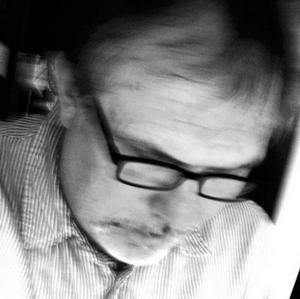 Colin Marshall sits down in Los Feliz, Los Angeles with Joseph Mailander, who since 1981 has written fiction and poetry as well as political and cultural analysis in the city. His new collection is Days Change at Night: Notes from Los Angeles’ Decade of Decline, 2003-2013. They discuss his long relationship with Argonaut Street; the unique changelessness of Playa del Rey; how Los Angeles became the first recognizably great city built on a mechanical scale; the pronunciation of “Playa del Rey”, “Los Feliz”, and even “Los Angeles”, and his impatience with our sanctimoniousness in our rectitude and insistence on our errors; the fact that nobody comes to the city looking to see rules enforced; how contrarian a position he takes in naming 2003-2013 as the “decade of decline,” and what New York looked like in its own, more severe one; the counterintuitive way political, economic, and social decline bring with them a flowering of arts and culture; Los Angeles’ tendency to punish the very people who have fun in it, and whether they actually feel punished; how the renter-heavy housing market reflects political decline; young people who just want to make enough money to move out of town, and why they often don’t do it after all; his repeated crossings of the Shakespeare Bridge to get to the theater district; what Disney Concert Hall, with its faulty fire alarms and lack of meeting places, means to him; conductor Gustavo Dudamel’s hair as the Los Angeles Philharmonic’s value proposition; how Los Angeles seems to have missed the arc of its own musical narrative; the expensive development of Grand Avenue, “the official street of Los Angeles ego,” as a signal of out-of-touchness; Ye Rustic Inn, its Myrtleburger, and its promise of anonymity; and which administrators just don’t understand the character of the city.
Download the interview from Notebook on Cities and Culture’s feed or on iTunes.
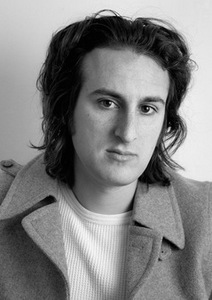 Colin Marshall sits down in Los Angeles’ Franklin Hills with Jeff Weiss, music writer for the LA Weekly and many other publications, editor of The Passion of the Weiss, co-host of the podcast Shots Fired, and co-author of the book 2pac vs. Biggie. They discuss the total time of his life spent waiting for rappers to show up to interviews; Tyler the Creator and Odd Future as today’s representatives of Los Angeles, and what the collective has to do with West Coast experimentalism and the city as a magnet for eccentrics; how he fights his personal war against cliché; kids today, and their tendency to listen to music of all eras, including golden ones, several of which we live in at any given time; Dam-Funk, Matthewdavid, Flying Lotus, and the new, highly Los Angeles-y genre they have created; the genesis of modern instrumental hip-hop; the un-irony of Los Angeles, and your need to carve out your own world within the city if you live in it; his journey from jock to writer, and his novel about a real tragedy on his baseball team; his childhood growing up in a culture-free household; how he one day found himself “hate-watching” Girls; how the Low End Theory helped him stop hating Los Angeles, and how the city concurrently “opened its gates” more generally; which albums can mentally prepare you for the city, and especially for its absurdity; his mentorship by Herbert Gold, the alleged rival of Jack Kerouac; and the only two prices that have come down in the past decade: that of cocaine, and that of writing.
Download the interview from Notebook on Cities and Culture’s feed or on iTunes.
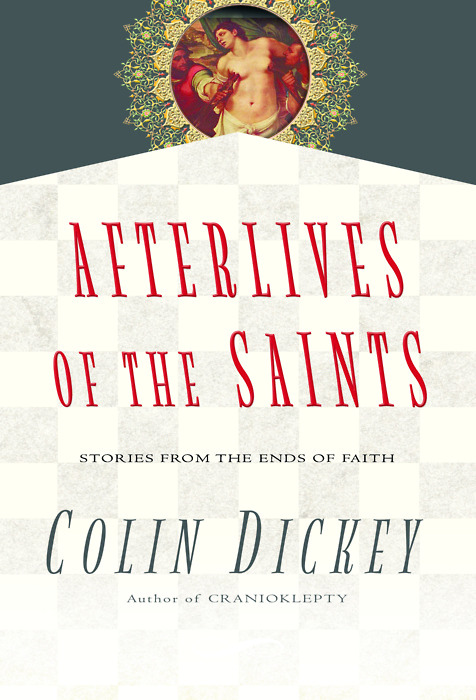
On the latest Los Angeles Review of Books podcast, I have a conversation with Colin Dickey, author of Cranioklepty: Grave Robbing and the Search for Genius, and Afterlives of the Saints: Stories from the Ends of Faith, frequent patron of the Museum of Jurassic Technology, and a man who knows his skulls, his obsessives, his haunted hotels, and his Stephen Kings. You can listen to the conversation on the LARB’s site, or download it on iTunes.
