Skip to content

Podthoughts: The Danny Baker Show


Vital stats:
Format: Danny Baker, his co-host, his callers, and a bunch of (mostly British) celebrities talk football — but mostly go on tangents therefrom
Episode duration: ~1h30m
Frequency: erratic

“Because all of the subjects are British, there are qualities that leap out for an American viewer,” Roger Ebert once wrote about Michael Apted’s Up documentaries. “One is how articulate the subjects are [ .. ] they speak with precision, and often with grace and humor. One ponders the inarticulate murkiness, self-help cliches, sports metaphors and management truisms that clutter American speech.” As an American all too eager to run down his less fortunate countrymen, I certainly ponder those things. Yet I also ponder something I heard Lewis Black say years ago: the Brits need those accents to mask a stupidity even deeper than ours. Best, I think, to see each side of the pond as expressing its dimwittedness in different ways. Here in the States, we compulsively elevate the least thoughtful and (therefore) least articulate among us to the highest planes of media exposure. We consequently become colonials again, genuflecting to almost every Englishman sitting before a microphone. This goes for their workaday non-celebrities like those in the Ups as well as their craggiest, most donnish and experience-curmudgeonified broadcast hosts — or, as they call themselves, “presenters.”

Danny Baker may qualify as one such genuflection-worthy presenter, though you wouldn’t call him craggy or donnish. (As for the state of his curmudgeonification, it varies with the topics.) “It’s almost inconceivable that Colin would be interested in covering this particular podcast,” a certain Alistair Johnson wrote on the Maximum Fun Forum, “but I’d love to see him take on BBC’s The Danny Baker Show [RSS] [iTunes].” He went so far as to make a list of the reasons for my probable disinterest, including its being “an edit of a radio show,” “a phone-in show,” one whose “subject is (supposed to be) football,” and on top of all that, one that’s “British, and deals with British topics.” Though no Anglophile, I like to think I relish the opportunity to step outside my own culture in any medium possible, and Alistair added that “Danny Baker is considered a genius of radio by many in the U.K.,” and that his show is “not really about sport.” His personal testimony: “I have no interest in football, but listen every week.” Holding fast to my principle that few behaviors make one lamer than only taking interest in one’s interests, I began listening immediately.

Read the whole thing at Maximumfun.org.


Notebook on Cities and Culture’s season three Kickstarter drive begins now

It’s on! We now have a week to raise for $4000 needed for the third season of Notebook on Cities and Culture, which will take us to Kyoto, Osaka, Mexico City, Vancouver, and beyond in search of more in-depth conversation with cultural creators, internationalists, and observers of the urban scene. If you’d like to back it, go right to its Kickstarter page.

Incentives for backing season three include:

  • For a pledge of $25 or more, I’ll thank you by name in all of season three’s episodes.
  • For a pledge of $75 or more, I’ll thank you by name in all of season three’s episodes and send you postcards from the cities the show visits during it. (Except, for scheduling reasons, the Japanese ones.)
  • For a pledge of $150 or more, I’ll mention your own project or message at the top of one of season’s three’s episodes, in addition to everything you’d get at the $25 and $75 levels.
  • For a pledge of $400 or more, I’ll mention your own project or message at the top of all of season three’s episodes, in addition to everything you’d get at the $25, $75, and $150 levels.
  • For a pledge of $1000 or more, you’ll be the guest in one of season three’s episodes: I’ll come to you (within North America only, for now) and we’ll record a conversation about the culture you create and the city you create it in, in addition to everything you’d get at the $25, $75, $150, and $400 levels.

If we pass our $4000 goal, season three will run for one additional episode per each additional $200. (If we raise $5,000, for example, it will run for 29 episodes instead of the normal 24.) As always on Kickstarter, if we don’t reach our $4000 goal, nobody pays anything — but then the show won’t have a chance to go fully international. What a bummer that would be, since I’ve already done a substantial amount of international recording in preparation!

Notebook on Cities and Culture S2E26: Dial M for Murderousness with Jay Caspian Kang

Colin Marshall sits down in Los Angeles’ Sunset Triangle with Jay Caspian Kang, editor at sports and pop culture site Grantland and author of the novel The Dead Do Not Improve. They discuss his youthful Midnight in Paris dream of drinking in red leather bars with dead authors; the racy science fiction of L. Ron Hubbard; the current or former importance of New York City as a destination for a youngster with literary ambitions; his avoidance of the role of “tribal writer,” tacitly assigned with explaining his culture to outsiders; growing up imprinted by the last “dangerous,” pre-pop hip-hop, which he used as a tool to deal with otherness in his North Carolina high school; filling his main character Philip Kim’s head with that and other preoccupations of the era in which he grew up, such as The Simpsons; the thirty-ish generation’s combination of high ambition with almost patternlessly scattered efforts, as exemplified by Lena Dunham; slightly younger creators’ instinctive consciousness of themselves as a “brand” based on their volume of output; his desire to write a hyper-real novel of San Francisco that would skewer — sometimes by actually killing — that city’s more self-satisfied sort of residents; the divide between old and new San Franciscans, and those who fell in between by growing up there in the eighties, when the utopian dreams had fallen through and the town needed an identity; how Chris Isaak turned up in his book; the Virginia Tech shooting, and how he and other Korean-Americans knew immediately that an Asian school shooter had to be Korean; the comparative racial situations of San Francisco and Los Angeles, and what makes Crash “one of the worst movies ever”; coming out of a “hoity-toity MFA program” and writing a genre novel versus one that uses the elements of genre; Troy McClure quotes providing the book with a “funny unreal superstructure,” and other aspects of The Simpsons‘ “large intrusion” into the text; and Los Angeles as a writer’s escape from the writerly life which doesn’t demand that you be as young, old, rich, or poor as New York does.
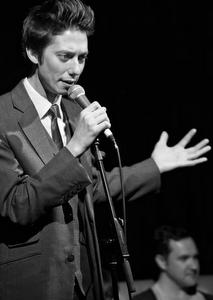
Download the interview from Notebook on Cities and Culture’s feed or on iTunes.

Notebook on Cities and Culture S2E25: Feel Literary with Adrian Todd Zuniga

Colin Marshall sits down at Hugo’s Tacos in Los Angeles’ Atwater Village with Adrian Todd Zuniga, founding editor of Opium magazine and impresario behind the international reading series Literary Death Match. They discuss what might make Los Angeles “the new Berlin”; his aim to make the city the literary center of the world by 2022; the hatred that flows into Los Angeles, but not out of it; Literary Death Match TV, the project that moved him here, and his battle against the idea of its being “too smart for television”; December 12th’s live pilot shoot at Hollywood’s Florentine Gardens; his experiences putting on Literary Death Matches in cities like Tulsa, Helsinki, Amsterdam, and Beijing; his love of his collaboration, whether or not it comes from growing up as the last of eight kids and always wanting to hang out with the most interesting people; how to “explode what literature is in the current pop culture landscape”; his frequent travel, his use of flights as a writing environment, and the thousand-page novel his travel memoir has become; turning your own experiences into fiction, and which rules that changes (especially the sexual ones); his transferring to 23 different schools in childhood due to the workplace conduct of his “tactless genius” father”; his current search for a “quieter sense of what life is” and the conflict between wanting to change book culture forever and wanting to go to sleep; and how he taps into the universal desire to feel literary.
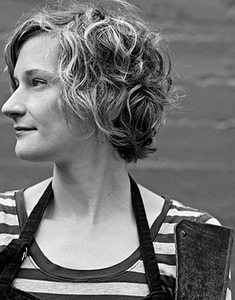
Download the interview from Notebook on Cities and Culture’s feed or on iTunes.

Notebook on Cities and Culture in Kyoto, Osaka, Vancouver, Mexico City and beyond — Kickstarting December 14th

This season, Notebook on Cities and Culture has brought you in-depth conversation with cultural creators, internationalists, and observers of the urban scene in Los Angeles, San Francisco, and Portland. Next season, we’re going fully international, to Kyoto, Osaka, Nara, Kobe, Vancouver, Mexico City, and maybe even beyond — on top, naturally, of your usual dose of Los Angeles.

Season three will run for 24 episodes. However, if we raise funds beyond the $4,000 goal, it will run for one additional episode per each additional $200. (If we raise $5,000, for example, season three will run for 29 episodes.) The Kickstarter fund drive launches in one week, on Friday, December 14th. Watch this space!

Notebook on Cities and Culture S2E24: Every Part of the Pig with Camas Davis

Colin Marshall sits down in Portland’s Pearl District with Camas Davis, food writer and founder of the Portland Meat Collective. They discuss why bacon has hit the zeitgeist so hard; her interest in fostering an “alternative economy of meat”; her former career writing travel pieces, which invariably and instinctively became food pieces; her education in the “meta-meta theoretical” exploration of food; how meat became cool again, after industrialization made it uncool (and not particularly tasty); her agreement with even the hardest-core animal-rights vegan about the horrors of industrial meat production; growing up in Eugene, where if you weren’t vegetarian, you weren’t cool; her return from vegetarianism to the meat-eating fold with a bacon meal while teaching in a women’s prison; how American got itself into an entitlement mentality about cheap meat thrice a day; the importance of killing animals we eat ourselves, and how she finds some people are better at it than others; her time studying in southwestern France, what exactly separates French eating culture from American, and how the French are just getting into some of what has made American food unpalatable in recent decades; all the surprising things you can do with a pig’s head; Portland’s food consciousness and food renaissance, and how they might serve as a bellwether for a countrywide shift in attitudes about eating; Portland’s suspicion of eateries that get “too big for their britches,” which results in a certain elevated-comfort-food trademark cuisine; her butchery classes, in which she’s found far fewer obnoxious hipster foodies enrolling than she’d expected; our rightful fear of most meat, and the meat we need not be scared of; and whether America has many small food movements, or one big food movement.

Download the interview from Notebook on Cities and Culture’s feed or on iTunes.

Our Curious Man in Japan: Chris Marker, Sans Soleil, and the Films that Stand for Us

Name your favorite film. Now define favorite. Is it the one you admire the most? The one you watch most often? The one that keeps surfacing in your thoughts with the least prompting? Or simply the one you name when asked, hoping to project an affiliated identity in so doing? Your definition of the term, and even your answer to the prompt, may shift with the circumstances. Mine certainly do, though most of the time I find myself well-served in these discussions, for all those purposes, by Chris Marker’s Sans Soleil. Object of my cinematic genuflection, ruminative touchstone, go-to piece of viewing material, cultural signifier: an unsurprising range, I suppose, for what Clive James calls a “brave attempt at the synthetic work that gets everything in.” But despite what the movie tells me about Japan—and ultimately, that doesn’t amount to much—it tells me more about myself.

My latest viewing of Sans Soleil found me on the eve of my own first trip to Japan. Glimpsing the country once more through Chris Marker’s eyes seemed like essential preparation. Had I the time for a double feature, I’d have also re-watched Wim Wenders’ Tokyo-Ga, which documents the German filmmaker’s search for traces of the essence of Yasujiro Ozu. But Tokyo-Ga fits comfortably in the documentary section; Sans Soleil has simply occupied a place of its own. An assembly of material Marker shot, found, and gathered from collaborators, the film offers a globe-spanning epistolary travelogue as told to an apparently fictional narrator by, we suspect, a practically nonfictional protagonist. The movie’s fans usually treat this peripatetic letter-writer, a certain Sandor Krasna, as Marker’s barely altered ego. (See also Peter Greenaway’s avatar Tulse Luper, who stands at the center of Greenaway’s international, intertemporal, and nearly indecipherable early-2000s multimedia project The Tulse Luper Suitcases.) Krasna, no less impulsive a wanderer than Luper, reports from points around the world. He frequents Guinea-Bissau and Cape Verde, but draws his most frequent and most striking observations from Japan.

Read the whole thing at The Quarterly Conversation.

Notebook on Cities and Culture S2E23: Stumptown Shaolin with Dan Halsted

Colin Marshall sits down in the basement of Portland’s Hollywood Theatre with Dan Halsted, head programmer there and founder of the 35mm Shaolin Archive. They discuss fake Bruce Lee films; his adventure of rescuing classic kung-fu film prints, including gems like The Eight Diagram Pole Fighter and The Boxer’s Omen from a shuttered, junkie-surrounded theater in Vancouver; his youth in a distant Oregon town with 600 people, his move to Portland, and his discovery of kung-fu cinema; how much more kung-fu movies offer than the fighting; the advantageous openmindedness of Portland filmgoing culture; exploitation films and Quentin Tarantino’s high-profile love thereof; how different cities react to kung-fu movies, like the robust Chinese turnout in San Francisco or the disappointing attendance in St. Louis; kung-fu movies as a gateway to Chinese culture; 36 Chamber of Shaolin as a gateway to kung-fu movies; the evaporation of celluloid film, and the apparently dramatic shift in the way those under age twenty experience cinema; the various meanings of terms like “exploitation” and “grindhouse,” and how the attendant concepts cannot be separated from the seventies, a time when Hollywood acted serious and independent film acted frivolous; what Portland’s smallness affords a film programmer; why audiences sometimes prefer watching a beaten-up print to a pristine one; how Portland has successfully integrated food and alcohol with filmgoing; his experience getting tased, and how the Portland police force, known for its own aggression, tried to use kung-fu movies against him in court; and his never-ending task of pushing outward the limits of local film taste.

Download the interview from Notebook on Cities and Culture’s feed or on iTunes.

Podthoughts: SMoviemakers

Vital stats:
Format: Kevin Smith interviews the makers of films he likes
Episode duration: 50m-2h30m
Frequency: erratic

Finally, someone has given Richard Kelly a chance to explain himself. Actually, wait a second — he had a chance to explain himself, back on the Donnie Darko DVD commentary track. Or at least he had a chance to explain the movie — and to my great dismay, he did, with a sweaty, near-schizophrenic detail and consistency. But Kelly’s appearance on SMoviemakers [RSS] [iTunes] happened years later, after the world had already sneered his follow-up, the chaotically paranoid Southland Tales, into an early grave. Say what you will about the coherence of Kelly’s movies; they’re something, or at least they aspire to that state. My memories of Donnie Darko remain as hauntingly askew as the film itself, and as for Southland Tales, well, J. Hoberman and Manohla Dargis don’t win themselves over. I never would have expected a guy like Kevin Smith to lend Kelly a sympathetic ear, but so he does on the debut episode of this, his filmmaker-on-filmmaker interview podcast. And in a certain maligned-auteur-on-maligned-auteur way, the invitation makes perfect sense.

Whenever I bring up the maligning of Kevin Smith, I ask myself whether I’ve done my share of that maligning. Alongside many cinephiles of my generation, I thrilled to Clerks and everything it revealed about the potential of micro-budget independent filmmaking in the nineties. But like several other of the subsequent movement’s leading lights, Smith has arguably proven damp cinematic powder. Even a picture like Chasing Amy, regarded as one of his strongest efforts, falls victim to both a half-hearted interest in craft and an unpalatably thorough seediness. Smith himself admits, as a born writer and talker, to never finding film a particularly good fit. With the advent of podcasting, which made possible his flagship program SModcast and its countless spin-offs, he may at last have found his medium. SMoviemakers goes up a level by sitting him down with other directors, and ones he admires, thus harnessing his considerable drive as a film fan and his experience (even if he disclaims real skill) as a filmmaker.

Read the whole thing at Maximum Fun.

A Los Angeles Primer

“Los Angeles does not get the attention it deserves — it gets attention, but it’s the attention that Sodom and Gomorrah have received, primarily a reflection of other people’s bad consciences.”

Reyner Banham, Los Angeles: The Architecture of Four Ecologies

“Prejudices are useless. Call Los Angeles any dirty name you like — Six Suburbs in Search of a City, Paradise with a Lobotomy, anything — but the fact remains that you are already living in it before you get there.”

Clive James, “Postcard from Los Angeles”


In 1967, Dennis Hopper and David Hemmings had an idea. Hopper you already know all about; Hemmings you may remember as the troubled young photographer in Michelangelo Antonioni’s Blow-Up. Together they schemed to introduce Los Angeles to the world. “London is supposed to be the swinging city,” a 25-year-old Hemmings told Roger Ebert, fresh off shooting there with the Italian auteur. “But Los Angeles has the opportunity to become the next great city of the world. What Dennis Hopper and I are going to show in our Los Angeles Primer is, we hope, an exhibition of what is happening in Los Angeles. Some of the artifacts that make the city a work of art. Cheap restaurant glasses that, in a century, will be collector’s items. Street signs. Buildings. And the people.”

“Will he and hopper use photographs?” Ebert wrote.

“Yes, where they are appropriate.”

“And the actual objects?”

“Yes, the actual objects in some cases. And the people, too, who are the real artwork of this city.”

“But surely you aren’t going to put people in an art gallery?

Ebert notes Hemmings’ enigmatic smile. “Just you wait and see.”

Conceived in the realm of the conceptual, the exhibition, alas, most likely remained there. 35 years later, Hemmings reminisced to Stuart Jeffries of The Age: “Once, Dennis Hopper and I proposed this wonderful exhibition called A Los Angeles Primer. We took two coaches of dignitaries from the Ferris-Pace gallery in La Cienega to Malibu and back. On the way, Dennis got out of the front coach and signed the Beverly Hilton and the Beverly Hills Hotel. At Malibu, he went into the water and signed a wave. And then the coaches were driven back to the gallery where, behind a huge screen, the Mamas and Papas played ‘California Dreamin’’ constantly. Cards were given to the dignitaries saying, ‘You are the art of Los Angeles. Look at each other carefully.’ Blank walls all around the gallery, of course, just music playing. That was the exhibition. And that was the swinging ’60s.”

“Did that really happen?” asked Jeffries, understandably.

“If you wanted to report that we did, Dennis would back me up.”

Both Hemmings and Hopper have gone, as has the Los Angeles on which they meant to prime us. Some saw the city of the late nineteen-sixties, that moment in which it may — may — have made sense to sign the ocean and play the Mamas and the Papas on loop, as a Los Angeles already gone sour. But then, every period strikes someone as prelapsarian. Many a current or former Angeleno has lamented their last great Los Angeles: sun-bleached twenty-minute beachward drives in the early sixties; paradisical quasi-suburban childhoods in the mid-fifties; punk rock and junk food in the early eighties. This holds especially true for Los Angeleses never actually experienced.

For all its qualities of art, Hemmings and Hopper’s Los Angeles surely bears little resemblance to the one I live in. Neither look much like the city Clive James alternately marveled at and ridiculed in his 1979 postcards for the Observer, or the one whose built environment Reyner Banham famously defended eight years earlier in The Architecture of Four Ecologies. And how much do any of them have to do with the setting of novels like like John Fante’s Ask the Dust, Christopher Isherwood’s A Single Man, and Richard Rayner’s Los Angeles Without a Map? Or wherever it is David Hockney and Ed Ruscha have painted? Yet all these past or imaginary Los Angeleses have done their part to draw me to the current, real one. What’s more, each still bears its own peculiar relevance to existence here. A forty-year-old story, image, analysis, or exhibition by definition cannot depict Los Angeles as it is, but nor can it help speaking to whatever might constitute Los Angeles as it has always been.

No two people live, or have ever lived, in exactly the same Los Angeles. Sheer size has something to do with it, not to mention practical boundaries. Enclosing roughly 500 square miles and four million inhabitants within its wonkily delineated borders, the effective city expands grotesquely when you include everywhere someone might live when they say they live in “Los Angeles.” This far-flung dilution of residency results in a certain worsening of the city’s already checkered reputation. Ask someone who claims to hate living in Los Angeles where exactly they call home, and half the time it lays as far from downtown as Parsippany, New Jersey does from Manhattan.

You could argue, the way cinephiles do about Hemmings himself, that Los Angeles failed to deliver on its complexly youthful promise. How many modern, developed-world destination cities have been so often described not like hell but as hell? A decade before creating The Simpsons, Matt Groening put out a comic book called Life in Hell. He meant, as Hemmings and Hopper optimistically did in the late sixties, to introduce Los Angeles to outsiders — albeit reflecting the very different level of optimism of the late seventies. “I got here on a Friday night in August,” he once told Playboy. “It was about a hundred and two degrees; my car broke down in the fast lane of the Hollywood Freeway while I was listening to a drunken deejay who was giving his last program on a local rock station and bitterly denouncing the station’s management. And then I had a series of lousy jobs.”

Like nearly all my peers, I grew up watching The Simpsons with near-religious devotion, but I like to think my Life in Hell readership set me apart. Growing up, as Groening himself did, in the Pacific Northwest, I couldn’t follow the strip as it appeared weekly in the Los Angeles Reader, but I could pore over its collections published in book form. I did so in the Seattle of the nineties, a city then dosing the national zeitgeist with equal parts Nirvana, Microsoft, and Starbucks. The town had turned high-profile, in the process becoming “young,” “high-tech,” “edgy,” “hip,” and “livable.” Los Angeles was, well… hell.  Yet as much ire as Californians raised by making fashionable pilgrimage to the Emerald City, the waves of voluntary transplantation to Los Angeles from every other city in America — from nearly every city in the world — never seemed to slow. A place so openly loathed yet so obviously attractive had to have something going for it, and something highly unusual indeed.

New Yorkers famously complain about their town, but with a proud masochism that recalls Churchill on democracy: sure, New York is the worst city, except for all those others. Angeleno gripes, by contrast, intrigued me with their lack of pugnacity. In its place I heard a strangely promising resignation. Tales of the city’s infuriating traffic, semi-breathable air, and mindlessly grasping population, no matter how despairingly told, invariably arrived at the same unspoken conclusion: but it’s not like we’re going anywhere. Rattle off, bemoan in detail, and even exaggerate the depredations of Los Angeles life if you must; they all turn instantaneously trivial in the glaring light of a complete absence of apparent intention to escape or even avoid them.

Many craft their own private hells here, to be sure, an opportunity the city unhesitatingly allows. You can see this in the eyes of anyone making three hours of daily commute to and from one of the Sisyphean lower tiers of the entertainment industry. I think of James M. Cain, in “Paradise,” his harshly optimistic 1933 judgment of Southern California, indicting “the piddling occupations to which the people dedicate their lives.” Less depressingly, this same void of expectations made possible the architectural mulligan stew that triggered the gag reflex of so many East Coast and foreign observers over the twentieth century. “There is no reward for aesthetic virtue here, no punishment for aesthetic crime,” wrote Cain. “Nothing but a vast cosmic indifference.” Making best use of Los Angeles requires first making peace with this indifference, and I would submit that the city offers no comfortable place to anyone who can take seriously the concept of “aesthetic crime.”

But for every Angeleno living in hell, it seems to me that many more live in, if not heaven, then at least somewhere considerably more interesting than a pit of fire, brimstone, and torment. Even the world of that poor sub-Hollywood gofer has its pleasures, and for me personally, it has the fascination of foreignness. He lives not only in a socially, industrially, stylistically, psychologically, and even linguistically different Los Angeles than I do, but a geographically different one. They simply don’t overlap. Despite our both holding driver’s licenses that read “Los Angeles,” I may set foot in the coastal and northerly realms his city comprises as rarely as he does in the dense central ones that comprise mine. Even my immediate neighbors, for the most part permanent or temporary immigrants of varying documentation status from Korea, Mexico, and Central America, experience a different city than I do. To the extent that we bear an unwillingness or inability to visit each others’, so much the worse for all of us.

These countless and multiplying subjective Los Angeleses, mine as well as everyone else’s, make for an infinitely richer subject than could any single, objective place. It certainly compensates for the city’s tendency, in every dimension one can easily describe, to move the target. Best of all, it legitimizes my own compulsion to write about Los Angeles. A San Franciscan friend told me that, if I tried to say anything about his city after only a year there, the backlash would come swiftly: a tide of locals of thirty, forty, fifty years’ standing, rising to demand to know where a Johnny-come-lately like myself gets off making so much an observation about their hometown. Yet in this city, the words of a disoriented arriviste and a native hardened by decades of sun and hundreds of thousands of  freeway miles stand on disconcertingly equal footing. They each have their own Los Angeles, as I have mine, and as you have, or will have, yours. If any piece of understanding makes the foundation of a Los Angeles primer, there it is.