Wednesday, January 9, 2013
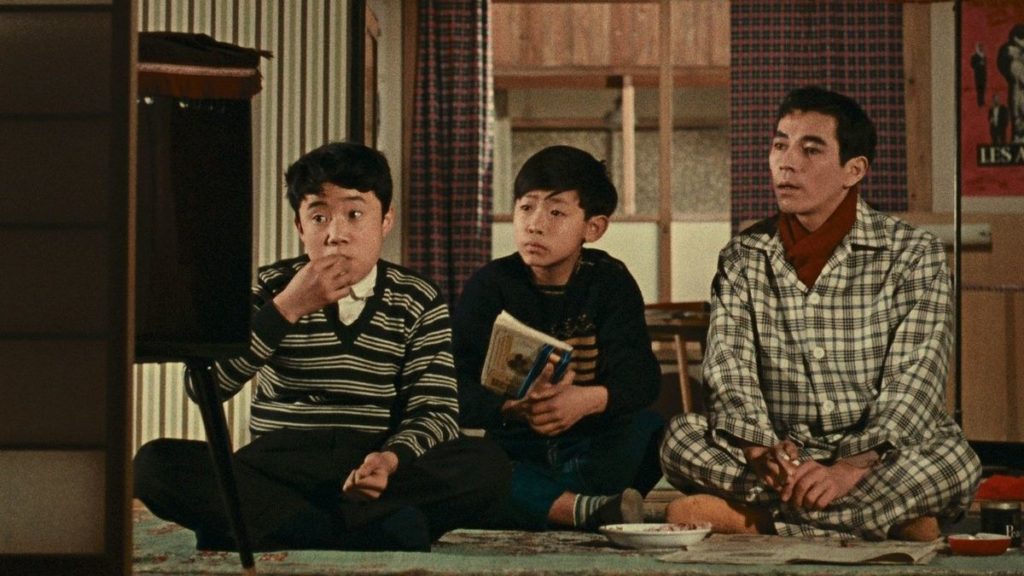
 Boy, I want to go to college. Alas, I’ve already gone, and even if I hadn’t, being that I’m nearing thirty years old, “leading a college life in one’s thirties would be way too late.” That observation comes from a no less authoritative a study of university life and style than Take Ivy, but still, we must make certain allowances for temporal and cultural distance. First, the book deals exclusively with life and style at the “Ivy League” schools of America’s East Coast. Second, it originally came out in 1965. Third, the men who wrote it, Teruyoshi Hayashida, Shosuke Ishizu, Toshiyuki Kurosu, and Hajime “Paul” Hasegawa, all come from Japan. These may seem like considerable stumbling blocks for many in the market for this sort of book — I myself actually have more experience with Japan than with anything on the East Coast, let alone with the year 1965 — but the final product nonetheless raises a burning desire within me to grab my penny loafers, lacrosse stick, and sweatshirt emblazoned with my graduation year and confab with my chums on the quad.
“I spent my high school years picturing myself on the campus of an Ivy League university, where my wealthy roommate Colgate would leave me notes reading, ‘Meet me on the quad at five,’” wrote David Sedaris. “I wasn’t sure what a quad was, but I knew that I wanted one desperately.” The quartet of trad enthusiasts who put together Take Ivy presumably felt a similar, if better-informed, quad-related longing. When my time came to file college applications, I couldn’t have told you which schools made up the Ivy league beyond Harvard and Yale, and anyway, articles had reported for years that undergraduate education at those two wasn’t what it used to be. Having grown up on the West Coast cultivating a fear of what I assumed to be the Ivy League’s formidable wealth, daunting application standards, and harsh social judgment, I swallowed that line whole. While Take Ivy’s candid, idyllic shots of the then-distinctively garbed students of Harvard, Yale, Princeton, Pennsylvania, Columbia, Dartmouth, Brown, and Cornell don’t make me wish I had applied to those schools back in 2002, they do make me wish I had applied to those schools back in 1965.
Read the whole thing at Put This On.
Saturday, January 5, 2013
 Colin Marshall sits down in Kobe, Japan with guitarist, improviser, and sound artist Tim Olive, whose latest album is 33 Bays with Alfredo Costa Monteiro. They discuss Japan’s importance to global experimental music culture; his own swerve toward experimentation after a western Canadian childhood spent listening to Black Sabbath’s Paranoid; his early exploration of Javanese music in a Saskatchewan record library; how a Québécois girlfriend took him from Montreal to Osaka, where he lost “the rage”; how struck he felt by the sea of black hair Japan first presented to him; Osaka’s “glorious ugliness,” Nara’s deer, and Kobe’s wild pigs (just one of the signs of its close proximity to nature); his lack of a computer until last year, his longstanding ambivalence toward digital technology, and the double-edged sword of the internet’s power to open up everything all at once; his workshop full of guitars in various states of dismantlement, and the importance of instrument modification to the physicality and sense of touch in music, both of which he prizes; Japan’s distinctive combination of the highest new technology and the oldest traditions, as seen in the zoning collage of Osaka where venerable temples meet up with glossy love hotels; the fluid senses of time and space one must cultivate when moving between the West and the East, or even between Asian countries; his “under the table”-style freedom in Japan, and the other kinds of freedom the country affords, such as to one particular naked salaryman before the cops caught up with him; 845 Audio, the label he founded to release 33 Bays without delay; and his recommendations for getting tapped into the Kansai experimental music scene.
Download the interview from Notebook on Cities and Culture’s feed or on iTunes.
 Andrew Johnstone of Podcast Squared — a podcast of podcasts, you see — recently had me on his show for an expansive conversation about the craft. (The “podcraft”?) On another episode, he also took the time to review Notebook on Cities and Culture. Thanks very much indeed, Andrew, and listeners, if ever you feel like disseminating your own opinion about the show, don’t forget that iTunes offers you a way. The more reviews we get, the higher a profile we have in the iTunes directory… or something like that. Nobody really understands how it works.
My other recent appearances:
Wednesday, January 2, 2013
 Colin Marshall sits down in Nara, Japan’s Nara Hotel with writer of place Pico Iyer, author of such books as Video Night in Kathmandu, The Lady and the Monk, The Global Soul, and most recently The Man Within My Head. They discuss the discovery that Japan looks exactly like Japan, and the “piercing sense of familiarity” the enthusiast feels upon visiting for the first time; autumn in Japan, and its place at the core of The Lady and the Monk, his second book and still his favorite; Japan’s distinctive combination of buoyancy and poignancy, which leads to the pre-savoring of wistfulness to come; the culture’s dissolution of mind, heart, and soul all in the same place, and his efforts to build an intellectual infrastructure around his Japan-related intuitions; his recent reading of John Cage, an unexpected master of the Japanese virtues of not knowing and not saying; the necessity, when you want to write about something, to write about something else, and of writing about a passion in order to write about yourself; the Californian question of “being yourself,” and its inadmissability to the Japanese mindset; his relief at not having to be Japanese within Japanese society, and what being a Japanese in Japanese society has done to visit a female brain drain upon the country; what it takes to best remain an outsider in Japan, enjoying its peculiar kind of diplomatic immunity, and how Donald Richie mastered that exchange of belonging for freedom; street vending machines and train-station bathrooms as outgrowths of both Japanese thoughtfulness and the nation’s tendency to regard itself as a family; his visit to West Point, where the cadets received The Lady and the Monk as required reading; the danger of Japan’s getting left behind by the increasingly interconnected world, what with its bad public relations and low level of spoken English; the enduring “vitality” of the seemingly less civilized places outside Japan; and how Japanese literature expresses nothing happening because Japanese life values nothing happening.
Download the interview from Notebook on Cities and Culture’s feed or on iTunes.
Sunday, December 30, 2012

Vital stats:
Format: on-location segments all over the world about “the people and ideas shaping our urban lives”
Episode duration: ~50m
Frequency: weekly
I know very few people without a conflicted relationship to Monocle magazine. My own began some five years ago, when I happened upon an early issue on a Barnes & Noble rack. Designed to the hilt, as interested in clothes as in coups, almost unnaturally calm but aggressively internationalist, taking full advantage (rather than desperately clinging to the legacy of) the print medium: here was a publication geared toward me, if almost too precisely. “Is This the Family of the Future? Meet Japan’s New Demographic,” “The Ascent of Brasília,” “Rebranding Britain,” “Generation Lusophonia”: all real Monocle cover stories, beyond which you’ll also find pieces on vintage bicycles, Swedish spas, cinemagoing in Bangkok, and the choicest brands of sneaker cleaner. Unable to bring myself to dislike any of this, l nevertheless sense that enjoying it too openly somehow exposes me, though to what I don’t know. Some disparage the magazine as “aspirational,” but no sooner do I agree than I wonder where, exactly, lies the problem with aspiring, especially if you harbor aspirations of such aesthetic immaculateness.
Seemingly always expanding beyond the core product, Monocle has founded an internet radio station, Monocle 24. As the host and producer of a podcast on “cultural creators, internationalists, and observers of the urban scene,” I now find myself dead center in another set of the operation’s crosshairs. In no possible universe could I resist The Urbanist [iTunes], its program on “the people and ideas shaping our urban lives.” I plundered the archive just as greedily as I devoured the pages of my first issue of the magazine: slick fifty-minute episodes on late-night neighborhoods, on pedestrianization, on train stations, on “great shopping experiences,” on Auguststraße. I heard pieces on the metropolises that intrigue me or have given me lasting memories: Vancouver, Tel Aviv, San Francisco, Hong Kong, Wellington. Yet I heard little about the metropolis that fascinates me more than any other in America, and the one I have for that reason made my home: Los Angeles.
Read the whole thing at Maximum Fun.
Thursday, December 20, 2012
 We’ve got 266 more dollars to raise and so little time to raise it in — less than twelve hours, to be somewhat more precise. The Kickstarter fund drive for Notebook on Cities and Culture‘s third season runs until 5 a.m. Pacific time on December 21st. If by that moment we haven’t raised the full $4000 goal, none of the backers will have to pay anything, but the season won’t happen: no Kyoto, no Osaka, no Mexico City, no Vancouver, no elsewhere. (Especially no elsewhere.)
If you know others who have backed previous seasons and/or would be interested in backing this one, they can find out how to help the show deliver in-depth interviews with cultural creators, internationalists, and observers of the urban scene on a fully international scale at its Kickstarter page. (They’ll also find out how to therefore get mentioned on the show, or to get their project or message talked up on one or all of season three’s episodes.) The conversations may be long, but the time to make them possible has run short indeed. Thanks.
Wednesday, December 19, 2012
 The third season of Notebook on Cities and Culture goes to Kyoto, Osaka, Mexico City, Vancouver, and elsewhere, giving you more in-depth conversations with cultural creators, internationalists, and observers of the urban scene, but only if we raise its $4000 budget on Kickstarter. That Kickstarter drive is going on right now, until December 21st, and has entered its final two days. At the moment, the season’s only 63 percent funded: we’ve got $2545 and need $1455. Kickstarter being Kickstarter, none of the funds actually come in — and the season doesn’t happen — unless we cross that $4000 threshold. But when we do, each $200 raised above the goal means another episode added to the season.
If you’ve already backed the next season of Notebook on Cities and Culture, thanks very much indeed. If you haven’t, find out how you can help the show go fully international at its Kickstarter page.
Tuesday, December 18, 2012
 I relish the menswear enthusiast’s life for a number of reasons, the first and foremost being that we get less homework than women’s wear enthusiasts do. This very idea may strike you as ridiculous, especially if you keep up with Put This On and countless other sites like it, but remember: they strive, often frantically, to keep up with an ever expanding breadth of garments, accessories, lines, and designers. One lady’s wardrobe may well include dozens, or even hundreds, of each. The menswear enthusiast plunges into something much narrower and deeper. We go down, you might say, a historical hole, digging our way toward the origins of the fifteen or twenty items we wear with the utmost regularity. Chinos, tweed jackets, button-down shirts, aviator sunglasses, Chuck Taylors: the versions we own today have undergone minor changes since the models’ invention, whereas women’s clothing, by comparison, endures regular and thoroughgoing revolutions. But boy, how much you can learn about those minor changes, let alone about the inventions themselves. “A minute to learn… a lifetime to master,” went the old Othello slogan, and the same applies to the game of men’s dress.
Much of our early menswear education comes from popular culture, often in minute-long flashes. Josh Sims’ Icons of Men’s Style takes some time, if not a lifetime, to offer a bit more mastery on 52 particularly timeless, universally recognized items, most of which got their break from twentieth-century American popular culture. Gregory Peck appears on the cover wearing aviators; Tom Cruise, encased in Top Gun gear, occupies a full page doing the same. An image of Jimmy Stewart dominates the chapter on tweed, as one of Ronald Reagan dominates the chapter on the sweatshirt. A shot of Michael Jackson shooting Thriller illustrates the wearing of loafers. The text cites Steve McQueen nine times, four of them with pictures. Magnum P.I., you’ll feel relieved to hear, makes an appearance as well. Sims writes up a scattering of items now rarely seen in the United States — the Barbour jacket, the Breton top — but tends to stick with what we’ve seen on the bodies and in the hands of American film stars, musicians, athletes, and politicians. Yet given the considerable influence of midcentury Americana on the rest of the world, a certain internationalism remains.
Read the whole thing at Put This On.
Monday, December 17, 2012
Notebook on Cities and Culture‘s upcoming third season will take it to Japan, Mexico City, Vancouver, and elsewhere — if, and only if, we raise $4000 to fund it. For details on how you can help the show go fully international, visit its Kickstarter page, where the fund drive runs now to December 21st.
 Colin Marshall sits down in Silver Lake with Tom Lutz, founding editor of the Los Angeles Review of Books, professor of creative writing at the University of California, Riverside, and author of the books Crying, American Nervousness, 1903, Cosmopolitan Vistas, and Doing Nothing. They discuss whether the internet has brought about a new golden age of the essay; giving writers the word count they need to write about the subjects they want to, such as the literature of Romania; “publish what you want to read” as a guiding editing principle as “write what you want to read” is a guiding writing principle; the team of specialized editors that help him sift through a hundred pitches per day; why on Earth the name Los Angeles Review of Books was still available in the 21st century, and the seat of its “steampunk” appeal; the curiously “doubled relationship” non-New Yorkers have to New York publishing; how his readership turned immediately global, and whether coming from as international a city as Los Angeles necessarily entails that; the internationalism of “taco trucks and Korean spas,” and the attendant indifference of distinction between “high” and “low” culture; connection as the very purpose of essays, and cosmopolitanism and debate as the essence of literary culture; the possible corrupting influences of the review form itself; the surprising pieces he has run, such as Ben Ehrenreich’s consideration of the “death of the book” which became a consideration of Bruno Schulz; what’s to be done about the divide between popular writing and “professionally deformed” academic writing; the value of clarity, honesty, curiosity, and a little bit of obscurity; whether to rule out the parts of Los Angeles by now written into the ground, such as the freeways, the beach, and the entertainment business; his early wanderings through Los Angeles and how they placed him in the city the way books couldn’t; and literature’s inability to catch up with the expansiveness of Los Angeles, the way he couldn’t read everything printed in the year 1903, and the way even Herbert Spencer couldn’t capture his entire life in his three-volume autobiography.
Download the interview from Notebook on Cities and Culture’s feed or on iTunes.