Skip to content

Los Angeles Review of Books Podcast: Michelle Huneven

I talk with Michelle Huneven, author of Round RockJamesland, and Blame. In her latest novel Off Course, set in the early 1980s, a 28-year-old economics graduate student from Pasadena sequesters herself in dissertation-writing exile up in the Sierras — with no small amount of romantic intrigue. You can listen to the conversation on the LARB’s site, or download it on iTunes.

Notebook on Cities and Culture S4E41: Born Worn Down with Geoff Dyer

Geoff Dyer, Notting Hill. Feb 2011Colin Marshall sits down in Venice with Geoff Dyer, author of books all across the spectrum between fiction and non-fiction on such subjects as jazz, photography, travel, World War I, and Andrei Tarkovsky’s film Stalker. His newest book Another Great Day at Sea follows his two weeks aboard the aircraft carrier the U.S.S. George H.W. Bush, and his first two novels The Color of Memory and The Search have just received their very first American editions. They discuss why America needs to land planes on boats; the call he received from Alain de Botton asking what institution he’d like to visit as a writer in residence; place as the nexus of interests on which his diverse body of work converges; his specific desire to write and reside on an American military ship, a place not full of Englishmen already “born worn down”; The Color of Memory‘s late-1980s London, “oily, dark, and full of harm”; the idyllic Brixton life he once led amid the city’s near-total brokenness; how many “Geoff in Venice” jokes he’s heard since moving from London to Los Angeles; the contrast between his Venice life and his last extended American experience, which offered “blissful months in Iowa city”; the comparability of Venice and Brixton’s ramshackle countercultural years; when, exactly, the personnel on the aircraft carrier started talking about Jesus; what Effra Road feels like today; his uncanny knack for living in the right place at the wrong time; how he would write The Color of Memory today, and whether he would feel quite so afflicted with a need for “ideological soundness”; the system of discipline he forced upon himself in his twenties, and the system the soldiers on the U.S.S. George H.W. Bush sign up to have forced upon them; when Another Great Day at sea “became a Geoff Dyer Book”; and what comes of the collision between his sensibility and that place, including the ability to ask. at the right moment, if the whole enterprise means anything at all.

Download the interview here as an MP3 or on iTunes.

Notebook on Cities and Culture S4E40: Eyes on the Streets with Damien Newton

Damien NewtonColin Marshall sits down in Mar Vista with Streetsblog Los Angeles founder Damien Newton (and his young daughter). They discuss what Los Angeles transportation culture looked like from a distance before he came here (nonexistent); how he found himself covering the city’s “turning point”; the advantages to getting around from just where chose to make his home, and the disadvantages that include having to take “the bus to the bus to the train to the train to the train” to Pasadena; the Expo Line’s approach to his neighborhood, and what it has made him think about the ways communities can take advantage of new transit; Santa Monica as “basically paradise” (despite the rumors floating around there of  coming “soul-crushing traffic”); the relative prevalence of “kind-of car-freeness” in Los Angeles, and what makes the difference between it and other cities allowing absolute car-freeness; the city’s early attempt at a bicycle network, like the time it put down “twenty miles of weird sharrows” over a weekend; the benefits of stoking a pretend infrastructure rivalry between Santa Monica and Long Beach; why Los Angeles simultaneously produces complaints about “being forced to drive” and “being forced out of our cars”; the importance to no longer building based on the effects on cars, but the effects on actual people; the generational change that has led some commentators to label young people unmotivated for their lack of driver’s licenses; what has made bikes so much cooler today; Los Angeles’ first Ciclavia, the initial dread that nobody would show up to it, and the instantaneous dispersal of that dread; the questions of how many times you can just report “This is awesome!” about an event like Ciclavia, and whether its future routes can “give South Los Angeles its due”; the difficulty of every firmly saying “this is Los Angeles,” and the non-existence of most Los Angeleses seen in popular culture up to now; and the availability of something culturally new to learn every day in the city, even just on its surface.

Download the interview here as an MP3 or on iTunes.

Notebook on Cities and Culture S4E39: The LAleph with Edward Soja

edwardsojaColin Marshall sits down in Mar Vista with Edward Soja, Distinguished Professor Emeritus of Urban Planning at UCLA and author of such books as Postmodern Geographies: The Reassertion of Space in Critical Social TheoryThirdspace: Journeys to Los Angeles and Other Real-and-Imagined Places, and now the new My Los Angeles: From Urban Restructuring to Regional Urbanization. They discuss downtown’s Bonaventure Hotel back when he sat for a BBC documentary on it and now; how all of us may only ever talk about “my Los Angeles” when we talk about the city; why he no longer even answers the question, “Do you like living in Los Angeles?”; why it surprises people to find Los Angeles has become the densest urbanized are in America; how the “metropolitan model of the city” became so deeply ingrained in our culture, and how that model itself now undergoes changes; how Los Angeles missed out in the 19th’s century’s phase of centralized urbanization, and what that means for the city today; what he’s noticed by keeping an eye on the cross-streets; the “hot-bedding” going on at all those small motels nobody seems to use, and how that fits in to the wider scheme of survival techniques used by informal urban populations; how he discovered in Los Angeles the “largest industrial manufacturing center in the United States,” and indeed “the largest job machine in the world”; why observers outside and the inside the city suffer so many blind spots regarding it; Los Angeles as “a kind of laboratory for understanding urban dynamics all over the world”; Jorge Luis Borges’ “El Aleph“, and how that story’s central concept of a point that contains all points helps us understand Los Angeles; seeing the spatial aspect of all things as of equal interest to the historical aspect of all things; his current “weird book,” neither quite a novel nor an academic work, dealing with the ultra-spatially just first city in civilization; when people began noticing that “something is happening in suburbia”; and what it means that greater Los Angeles has developed a suburban Chinatown — especially to those with adventurous palates.

Download the interview here as an MP3 or on iTunes.

Los Angeles Review of Books Podcast: David Grand

I talk with David Grand, author of LouseThe Disappearing Body, and now Mount Terminusa novel eleven years in the making whose mythic prose tells a story at the intersection of two births: the birth of cinema, and the birth of modern Los Angeles. You can listen to the conversation on the LARB’s site, or download it on iTunes.

Men’s style books: Adolf Loos, Why a Man Should Be Well-Dressed

Here we have a book that, to Put This On readers, may at first seem both perfectly relevant and perfectly irrelevant. Much of the relevance comes expressed, of course, in the title itself: notions of Why a Man Should Be Well-Dressed would make for a fine companion to instructions about how a man can dress well, or, in other words, how a man goes about “dressing like a grownup.” Items on the table of contents such as “Men’s Fashion,” “Footwear/Shoes,” and “Underwear/Undergarments” make the book seem like an almost dully straightforward treatise on dress. But others – “The Woman and the Home,” “About Thriftiness,” “(Thoughts) About Adding Salt” – suggest another, far less straightforward project entirely. And what would you expect if I told you that all the material in it originally ran in Viennese publications between 1989 and 1928?

Though the author, Adolf Loos, made his name as an influential early Modernist architect, his interests extended, and thus this book’s purview extends, to a wide range of aesthetic matters, as wide a range as one would expect a reasonably well-off citizen of fin de siècle Western Europe to care about. But will an aesthetically concerned citizen of 21st-century internet-unified Anywhere, much less one of Millennial means, care too? After all, none of us (with the obvious exception of certain dandies) would want to go around looking like even the most tasteful Viennese of a hundred years ago. Yet for an explanation of why we wouldn’t, we can actually look to Loos himself, who rhetorically asks, “Well dressed, what does that actually mean? It means to be correctly dressed.” And what does that actually mean? “Words like lovely, chic, elegant, fetching and snappy are but vain attempts to provide explanatory terms for fashion. But this is not at all the point. It is all about being dressed in an inconspicuous manner.”

Read the whole thing at Put This On.

Notebook on Cities and Culture S4E38: East- and West-Coastification with Madeleine Brand

madeleinebrandColin Marshall sits down under the cafeteria at Santa Monica College with beloved Los Angeles radio personality Madeleine Brand, now host of Press Play on KCRW, formerly of NPR’s Morning EditionAll Things Considered, and Day to Day, KPCC’s The Madeleine Brand Show, and KCET’s SoCal Connected. They discuss how much easier she has it waking up for noon radio nowadays instead of morning radio; what to call her format, a popular one in Los Angeles, where one host talks to a series of people, each with their own thing going on in the news; the distinctive difficulty of finding subjects that interest a large percentage of Los Angeles; her first decade in Southern California, and her later college years in Northern California as KALX’s “Madame Bomb”; Los Angeles’ unusually close relationship with the radio; the east-coastification she experienced in her years amid the “visceral humanity” of New York; how the heightening, densifying Los Angeles we see on the way (and imagined in Her) strikes her inner New Yorker; her lingering nostalgia for the sense of “peace, openness, and quiet” that formerly characterized this city; how we might allow Los Angeles to both define itself and not define itself, retaining its borderlessness with the rest of the world; how she’s solved part of the hours-in-the-day problem (and the traffic problem) by hiring a driver; the asshole each and every one of us turns into when we get behind the wheel ourselves; what, exactly, makes for a “news story”; her task of making a subject meaningful beyond the first thirty seconds; the grim public radio listener’s moment of realization that they’re trying to guess what interests you; the mechanics of a five-minute interview (featuring an actual, table-turning five-minute interview); how often complaints come from a legitimate argument, and how often they come from a bad life; how easy Los Angeles makes it to live a bad life; the missing types of public discourse she’d like to hear in Los Angeles; the sorts of problems that public discourse can help to solve, such as school segregation; and whether to call him “Smokey Bear” or “Smokey the Bear.”

Download the interview here as an MP3 or on iTunes.

Guardian Cities: Visiting South Lake Union, the Seattle Downtown Amazon Built

I often told myself in adolescence that, even though I’d had to grow up in a none-too-exciting Seattle suburb, at least my particular none-too-exciting Seattle suburb boasted the headquarters of both Microsoft and Nintendo of America. Though I had to ride my bike for the better part of an hour to reach so much as a grocery store, at least I could feel, or imagine I felt, the buzz of thrilling new computer and entertainment technologies in development not far away.

Nintendo established its Redmond, Washington campus in 1982; Microsoft moved its headquarters there in 1986. Both years fall squarely within the late stage of America’s long period of suburbanisation, when people and corporations alike pulled their stakes up from the country’s once-robust city centres and put them down in far-flung suburbs like Redmond, which back in the 1980s turned nearly rural at its edges. Taking my thrills where I could find them in such an environment, I seized every opportunity to visit their leafy compounds.

I still remember the awe I felt upon entering these tightly secured, painstakingly landscaped worlds-unto-themselves. They looked intent on addressing their employees’ every need, thereby absolving them of the obligation to stray from campus. Many a story circulated of life at Microsoft headquarters, where programmers would supposedly keep themselves awake and coding on deadline for days at a stretch with endless company-supplied cafeteria meals and bottles of Jolt Cola. (Douglas Coupland would satirise this cutting-edge-yet-womblike environment of dependency in his 1995 novel, Microserfs.)

Microsoft and Nintendo’s decision to base themselves 15 miles east and across a lake from the city, to say nothing of aerospace giant Boeing’s presence more than 20 miles to the north, did little to benefit Seattle proper. With the region’s economic powers so far out on the periphery, the downtown area fell to what looked like a subservient position before its own suburbs: in parts strangely underdeveloped, in others almost forgotten.

The city’s now-fearsome internet retail pioneer, Amazon.com , might well have continued this saga of corporations key to Seattle’s identity maintaining a distance, and detachment, from the city itself, had it stayed in the even wealthier suburb of Bellevue where the company began (in chief executive Jeff Bezos’s converted garage). Instead, the decision to consolidate much of its headquarters right up against Seattle’s downtown, in a former car-dealer-and-warehouse district called South Lake Union (the lake separates the city’s north and south halves), has engendered a fascinating case study, still very much in progress, of what happens when a powerful company goes about ambitiously building an environment not away and sealed off from the nearest urban centre, but right there in it – and even, to an extent, integrated with it.

Read the whole thing at The Guardian Cities.

Los Angeles Review of Books Podcast: Leslie Jamison

Screen-Shot-2014-05-13-at-8.48.32-PM-243x348-2

I talk with Leslie Jamison, author of the novel The Gin Closet and the new essay collection The Empathy Exams, which features pieces on her experiences acting out disease symptoms for medical students to diagnose, watching the Paradise Lost documentaries, assembling a “grand unified theory of female pain,” and getting mugged in Nicaragua. You can listen to the conversation on the LARB’s site, or download it on iTunes.

The Consummate Writer of Place: Christopher Rand in Los Angeles, China, and Beyond, 1943-1968

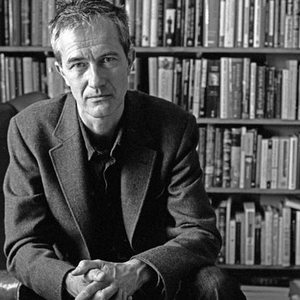
“LOS ANGELES may be the ultimate city of our age.” So begins the 20th century’s most unjustly forgotten book on Los Angeles, written by one of its most unjustly forgotten writers of place. Christopher Rand’s Los Angeles: The Ultimate City appeared in 1967, published by Oxford University Press and built upon a trilogy of articles TheNew Yorker ran in October 1966. Rand began writing for that magazine in 1947, with a piece on the Americans, including himself, who spent World War II nearly unsupervised in Japanese-surrounded southeast China. His last piece for them appeared in 1968, the year he died — observations on the run-up to Mexico City’s Olympics. For those 20 years, in his capacity as TheNew Yorker’s “far-flung correspondent,” he strove to understand what seems, given such a truncated life and career, an unprecedented variety of places, including Hong Kong, Greece, Puerto Rico, Bethlehem, Cambridge, and again and again over the years his own hometown of Salisbury, Connecticut.

“He was a great walker and a far wanderer,” writes Wallace White in Rand’s October 1968 New Yorker obituary.

Over more than 30 years, he traveled to almost every part of the world, doing most of his traveling on foot, in an attempt to learn and know that transcended any effort at mere reporting, and when he died, he was still involved in the search that had occupied most of his life.

In Grecian Calendar, his 1962 book on a year’s exploration of Greece (often conducted on its dusty roads and rocky trails), Rand himself illuminates this method:

I have walked a good deal for years now. I have theories about why one should do it — that it is good for the health, is conducive to thought, makes one able to observe things close at hand, etc. — and I think all these arguments are sound, but the main point is simply that I enjoy walking; I feel calm and happy while doing it.

A few pages later, Rand extends his theory further: “I claim that if one walks with any gusto one is respected by other walkers, and I even boast that it is a good thing, nationalistically, to have a few Americans walking about in far countries. It explodes the generalization that we have forgotten how.” Still, he seems never to have fully identified with his homeland, not least because he spent so much of his career outside it: he left a reporting job at the San Francisco Chronicle in 1943, in his early 30s, for a post in China as a US Office of War Information correspondent. After the war, he continued reporting on China for the New York Herald Tribune until 1951, by which point he had already begun his stretch at TheNew Yorker, where he contributed 64 detailed, long-form essays — detailed and long-form even by The New Yorker’s midcentury standard — each of them revealing, to him and to us, a new place, or a new aspect of a familiar one.

Read the whole thing at the Los Angeles Review of Books.