 Colin Marshall sits down in Los Angeles’ Miracle Mile district with photographer Mark Edward Harris, author of such books as Inside North Korea, Inside Iran, The Art of the Japanese Bath, and Faces of the Twentieth Century. They discuss filmmaker Abbas Kiarostami’s introduction to his Iran book, and his rule about always excluding people from his own photographs; the importance of children in images of Iran and countries like it; how Bruce Lee may or may not have started his interest in Asia back in his San Francisco childhood; how his job on The Merv Griffin Show came to an end, leaving him free to travel the world and build up his first real portfolio; how he once processed film while traveling, and the lasting thrill he got from first seeing an image appear in the developer; when and how digital cameras first became acceptable; what he learned from Stanley Kubrick’s early journalistic work with Look magazine (not to mention from Dr. Strangelove); the countries, of the 90 he has visited, that he finds himself returning to again and again; the restrictions he has to work under when shooting in North Korea; whether the two Koreas still feel in any way connected to him; his interest in revealing the realities of the nations once named as members of the “Axis of Evil”; why Iranian men tend to look like they stepped out of the 1970s; his relationship with the “discipline and quiet fortitude” of Japan; how he managed to get into Japanese baths with a camera; whether America’s center of Asia gravity has shifted to Los Angeles, a city friendly to the internationalist; how little work he thinks he’s done here, and how much he actually has; and late May’s Fotofund campaign for his new Iran project.
Download the interview here as an MP3 or on iTunes.
 Colin Marshall sits down at the University of California, Los Angeles School of Law with Ethan Elkind, an attorney who researches and writes on environmental law and the author of Railtown: The Fight for the Los Angeles Metro Rail System and the Future of the City. They discuss the reason visitors and even some Angelenos express surprise at the very existence of the city’s subway; the roots of the assumption that Los Angeles would always have a 1950s-style “car culture”; why something as essential as a rail system has required a “fight”; the persistent Roger Rabbit conspiracy theory about the dismantling of Los Angeles’ first rail transit network; why so may, for so long, failed to consider the city’s inevitably dense and increasingly less car-compatible future; Los Angeles’ long-standing anxiety about joining the ranks of “world-class” cities, and how the absence of a subway fueled it; how Californian rail systems, Los Angeles’ especially but the San Francisco’s Bay Area’s BART as well, physically embody the compromises of consensus-based politics; what some Angelenos mean when they talk about “Manhattanization”; the similarity between a city’s expectation that its citizens all own their own cars and an expectation that they all own their own power generators; how much the conversation about rail in Los Angeles has to do with, simply, density in Los Angeles; why Metro pretends not to know about its own problems and resorts to “corporate PR-speak”; whether those who lament the limitations of Los Angeles rail can blame individuals (such as Henry Waxman); whether anyone can change the minds of Angelenos who want the city to return to 1962; the demoralizing effects of such far-flung completion dates as 2036 for the Purple Line subway to UCLA; and how every voter can come to consider the Los Angeles Metro rail system “a precious thing.”
Download the interview here as an MP3 or on iTunes.
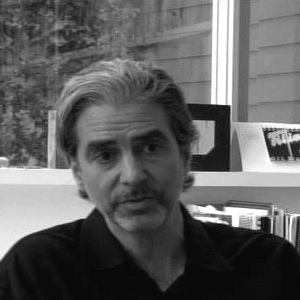 Colin Marshall sits down in Santa Monica with architect and urban designer Doug Suisman, author of Los Angeles Boulevard: Eight X-Rays of the Body Public, soon out in a new 25th anniversary edition. They discuss the difference in cycling to his office on Wilshire Boulevard versus Venice Boulevard; the conceptual importance of “path” and “place” in any urbanism-related discussion he gets into; his arrival in Los Angeles in 1983, after years spent in Paris and New York, and the mixture of disappointment and fascination he first felt on the boulevards here; what it meant that he sensed movement as well as abandonment; how Los Angeles wound up with the its destructive-car-culture rap, and how its freeways have less to do with that than the way its boulevards also became a kind of freeway system; the mistaken notion that the city “doesn’t have transit,” and what specific kinds of transit it actually does still lack; his work with the design of the Metro Rapid buses, and why they’ve struggled so long just to get a dedicated lane; the combined optimism and complacency of Los Angeles in the 1980s, before any rapid transit had appeared; the excitement he first felt at the the city’s private architectural boom, despite its seeming lack of a public realm; how Los Angeles has begun to overcome its “enclave instinct” and find an “urban public language” as Amsterdam did in the 1930s; the importance of the Olympics, MOCA, LACMA’s Anderson Wing, and now the Ace Hotel’s opening in downtown, that “50-year overnight sensation”; what caused Wilshire’s “wig district”; what his childhood trips from his suburban home to downtown Hartford, Connecticut taught him about city life; coffee shops as harbingers of human connectedness; the basic differences between “apartment cultures” and “house cultures,” and how a city moves from one to the other; and the way the boulevards fit into the psychological framework of Los Angeles alongside the mountains and the ocean.
Download the interview here as an MP3 or on iTunes.
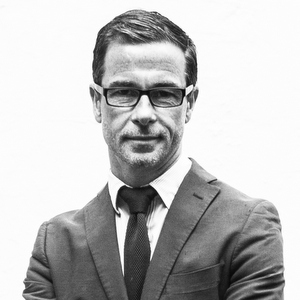 Colin Marshall sits down at Monocle magazine’s offices in Marylebone, London with Andrew Tuck, editor of the magazine, host of its podcast The Urbanist, and editor of its book The Monocle Guide to Better Living. They discuss how the London experience for a Monocle reader differs from that of others; how the magazine came to view the world through the framework of cities, and what they look for in a good city experience; the importance of aesthetics in all things, when aesthetics means stripped-down, timeless vitality rather than whatever more and more money can buy; the importance of slowness in everything Monocle touches; the magazine’s launch in 2007, the global economic crash that happened soon thereafter, and why it began to matter even more that they covered “tangible things”; his notion that every Monocle reader has a business in them; what he found when he first came to live in London at eighteen; what he sees on his 40-minute walk to work each day, always on a different route; the city’s internationalism, and what it affords an outfit like Monocle; how the prediction that the internet age would render it no longer necessary to meet people has turned into “nonsense”; the origin of the Urbanist podcast, and the episode of that show which reversed interviewer and interviewee; the “terrible trend of thinking all cities are kind of the same”; why the likes of Copenhagen, Melbourne, and Zurich rank so high on Monocle‘s quality of life survey; urban “wildcards” like Naples, Beirut, and Buenos Aires, which have the advantage of the “intangible”; what, exactly, the magazine has always seen in Japan; the cities that continue to generate questions, such as New York (and not “the New York people pretend they loved in the seventies”); the charge against Monocle‘s “aspirational” nature, and why anyone would think that a liability; the more established media companies who have stopped doing journalism in favor of “navigating the downward spiral of their titles”; the organic, human-like nature of London that still surprises; and how he wants to see whether the city grows old with him.
Download the interview here as an MP3 or on iTunes.
Wednesday, April 30, 2014

On the latest Los Angeles Review of Books podcast, I talk with comic artist Mimi Pond, author of a variety of books from The Valley Girl’s Guide to Life to the new Over Easy, a graphic novel based on her waitressing days in late-1970s Oakland. You can listen to the conversation on the LARB’s site, or download it on iTunes.
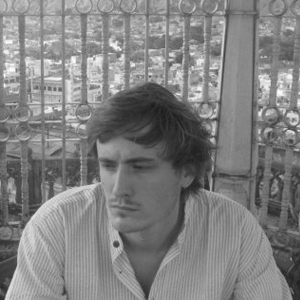 Colin Marshall sits down in Knightsbridge, London with Jacques Testard, founding editor of the quarterly arts journal The White Review. They discuss the re-issue of Nairn’s Towns featuring past guest Owen Hatherley; London’s surprisingly small literary culture and what, before founding The White Review, he didn’t see getting published; the “deeply stereotypical Williamsburg existence” he once lived in New York (in an apartment called “Magicland”, no less); his path from his hometown of Paris to London, and what those cities throw into contrast about each other; the conversations he’s had with his also-bilingual brother about the differences between reading and speaking English and French, and the fact that they can take both languages “on their own terms”; the lack of genre distinctions in the French literary market; the amount of material The White Review publishes in translation; how a 21st-century magazine must, above all else, avoid disposability; the interviews they run, with Will Self and others; a “good writer’s” ability to transcend subject matter; the engagement and/or existence strategies that apply in New York versus those that apply in London; class in Britain as tied to education, and class in America as tied to money; his experience at the Jaipur Literary Festival; and what to expect in The White Review‘s current issue.
Download the interview here as an MP3 or on iTunes.
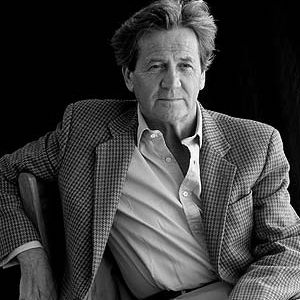 Colin Marshall sits down in London’s West End with Melvyn Bragg, Lord Bragg of Wigton, host of Sky Arts 1’s The South Bank Show and BBC Radio 4’s In Our Time as well as the writer of many works of fiction and nonfiction including, most recently, The Book of Books: The Radical Impact of the King James Bible and his latest novel Grace and Mary. They discuss when he began seeing culture as a whole, unstratified entity; what he learned in his working-class northern upbringing; his brief days with his own pop group; his first getting an arts program on BB2 “almost by accident,” and the opportunities he realized it gave him to showcase a “rainbow” of arts, rather than a “pyramid” with opera, no matter how lousy, ever at the top; when he began as a writer at Oxford, the institution that gave him his first “proper free time”; his enjoyment of not just the act but the discipline of putting pen to paper; how he gives In Our Time an edge by doing it live, with a minimum of beforehand interaction with his invited experts on the topic of the week; how his writing feeds ideas into his radio work; why, despite losing belief in “the finer points of Christianity,” he felt nonetheless compelled to write a study of the importance of the King James Bible; his love of television and radio as “scatter media,” offering an education at the push of a button; how he realized culture seemed to have displaced class as a means of identification; the benefits of not worrying about what you personally like or dislike, believe in or don’t believe in, but the “why” of it, understanding making for a much more interesting experience than condemnation; what he found in the stratified London in which he first arrived in the early 1960s making thirteen pounds a week; how, subsequently, “people became the culture” there; and how London, in its current cultural moment, retains its status as “quite a city.”
Download the interview here as an MP3 or on iTunes.
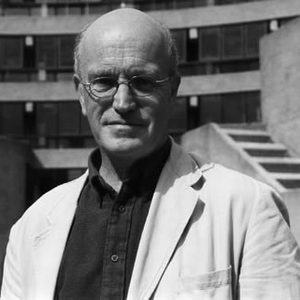 Colin Marshall sits down in Hackney, London with Iain Sinclair, author of numerous books, all rooted in London and all operating across the spectrum of fiction to nonfiction, including Downriver, Lights Out for the Territory, London Orbital, and most recently American Smoke: Journeys to the End of the Light. They discuss the momentarily impossible-to-define issue of Hackney’s identity; the need to walk the neighborhood to know it — but to then do it your whole life; the re-making of the landscape in Hackney as elsewhere in London; the surprisingly functional London Overground’s only partial integration into the city’s transport consciousness; the way commemorative plaques “fix history,” which forces you to find the reality for yourself; the operation of London hierarchies as he witnessed it in his book-dealing days, and how he then came to see uniformity set in; why students today never seem to get all the way through his books, drawing instead “a series of cultural cartoons” from excerpts and immediately applying them to their own project; why he’s never had the sense of writing about London, per se, a subject to which he’d never expected the public to connect; the way the city’s irrationality tends to drive those who write about into the realms of fiction; the criticism he takes for including “too may references” in his books, and his readers’ freedom to pursue those references or not; the involved pub conversation that ensued when a Frenchman walked up to him and asked, “Is this London?”; what might have counted as the center of London in the seventies, and what might now; what results from asking, “What is this the center of?”; Geoff Dyer’s years on Effra Road, and the associations its very name brings to mind; how he knows when one of his books (or the latest continuation of his “one big book” of a career) has come to an end; taking on another country in American Smoke, and discovering the disappointing London in the mind of the Beats; and his notion the he has only ever “articulated aspects of place,” still the most robust nexus of interests and influences available.
Download the interview here as an MP3 or on iTunes.
 Colin Marshall sits down in Winchester, England with PD Smith, author of books on science, literature, superweapons, and, most recently, City: A Guidebook for the Urban Age. They discuss whether London has all the elements of the archetypally ideal city; the essential quality of “a place where you meet strangers”; the need to avoid writing only about buildings; the recent moment when half the world’s population found itself living in cities; the factors that have made city life more possible today than ever before; what on Earth Prince Charles talks about when he talks about architecture and urbanism; the enduring impulse to knock cities down and start them over; the un-knocked-down city as a palimpsest-like store of knowledge, perhaps with its own “latent consciousness”; Tokyo and the metaphor of city as body; whether, in experiencing cities or writing about them, to focus on one element at a time or to try to take them whole; what Germans get right about city-building; when and where Starbucks starts to seem like the most foreign place you could go; the globe-spanning “cities” of the airport, the high street, or any other non-place; what it takes to make London strange again; the detective as a quintessentially urban figure exhibiting a mastery of his sensationalistically grim, dark, troubled environment; and the challenge any interesting city issues its resident: “Figure out how to live in me.”
Download the interview here as an MP3 or on iTunes.
(Photo: Susan Ng)

On the latest Los Angeles Review of Books podcast, I talk with Sandra Tsing Loh, author of books of Southern California satire like Depth Takes a Holiday, If You Lived Here, You’d Be Home By Now, and A Year in Van Nuys, and now the memoir The Madwoman in the Volvo: My Year of Raging Hormones. You can listen to the conversation on the LARB’s site, or download it on iTunes.