
On the latest Los Angeles Review of Books podcast, a special on the debut issue of its new quarterly print journal, I have a conversation about race and the craft thereof in Los Angeles, America, and the world with critic Maria Bustillos and Gawker West Coast editor Cord Jefferson. Then, Ander Monson reads from his piece in the issue about the Arizona Renaissance Festival. You can listen to the conversation on the LARB’s site, or download it on iTunes.
Wednesday, October 16, 2013
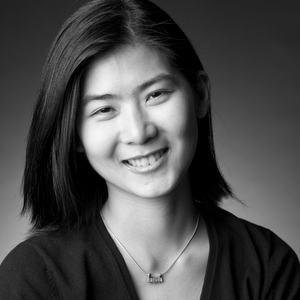 Colin Marshall sits down in North Hollywood with Carren Jao, Manila- and Los Angeles-based writer on architecture, art, and design. They discuss what rain does to the aesthetic of Los Angeles; the role of the river here as the connection people don’t realize they have; the difference between the floods Los Angeles used to routinely endure and the ones Manila routinely endures now; how, growing up in the Philippines, she got interested in the shape and form of cities; Manila’s “improvisational” nature not centered around always having functioning systems; the Filipino inclination to make guests’ lives easier in any way possible; her entry into the United States, but not the one that “everyone knows”; public transit as amusement-park ride; the important role of the Jeepney in Manila’s transportation; her life in the San Fernando Valley, very much a place distinct from Los Angeles itself; how writing has forced her to explore this city and its environs, including still-developing ones like Pacoima’s “mural mile”; how to get the wide-openness of the Los Angeles experience across to friends, family, and readers; the “third-world” contrasts of nice homes next to squatters’ villages in Manila and the Arts District next to Skid Row in Los Angeles; the boom in interest related to architecture, design, and space-making, and the importance of leaving openings for people to construct their own environments; what she’d look at first after five years away from Los Angeles, and from Manila; this city’s long-confused relationship with its water; what the Philippines have learned from other countries; what America could learn from the Asian sense of accommodation; what she learns from having to attend neighborhood council meetings; how fast word and social knowledge travel in Manila, how slow they can travel in Los Angeles, and how both have their advantages.
Download the interview from Notebook on Cities and Culture’s feed or on iTunes.
(Photo: Janna Dotschkal)
Wednesday, October 16, 2013

When I arrived in Los Angeles, I conducted my daily exploration of the city on a bicycle, which remains, as a result, my primary mode of transportation. (The trains rank second, then, when it comes down to it, the buses.) Many an Angeleno, so I’ve gathered since first setting out on two wheels, would have expected me to say that I still insist on riding a bike despite having tried it, or that, after one harrowing attempt, I locked the thing up at home, never to free it again. Even when I tell someone outside the city that I get around by bike, they express disbelief at the very notion. Somewhere along the line, whether due its size, the varying quality of its roads, its high-profile car culture — they may imagine me pedaling desperately on the thin shoulder of a raging freeway — or some combination thereof, Los Angeles gained a reputation as a uniquely un-bikeable place. This may explain the harsh, defensive posture of certain local cyclists I encounter — “Hey man, I just happen to prefer getting around Los Angeles on a bicycle, okay?” — and it can, at times, make cycling here feel like an inherently contrarian act.
Even on Slate, with its own penchant for contrarianism, Andy Bowers calls Los Angeles, where he lives and rides, “an almost pathologically bike-unfriendly city.” Then again, he does so in the context of a piece on the joys of cycling after he began commuting that way. “I cycled quiet back streets — the kind that infuriate me in a car because of all the stop signs and the impossibility of crossing major streets without a signal,” he writes. “I soon started looking for other short trips I could make on the bike — picking up a few groceries, going to the gym, returning library books — then longer ones. I plotted new stealth routes no driver would ever take.” The daily Los Angeles cyclist gains a command of these quiet back streets, and a host of quiet-enough medium-sized streets as well, which together constitute a parallel road network, shadowing the wide arterials — Wilshire, La Brea, Olympic, Western — that form the grid in every driver’s geographical mind. When getting into or out of downtown, for instance, use the more lightly commercialized Seventh Street; riding through Beverly Hills, go with Charleville Boulevard, and just glide past all the cars that stack up on it; through Hollywood, take Yucca, the city’s first politically official “Bicycle Friendly Street.”
Read the whole thing at KCET Departures.
 Conversations about menswear writing kept coming to the same book: Anne Hollander’s Sex and Suits: The Evolution of Modern Dress. Though led by a promising title, the content comes as something of a surprise. While enlightened enough to realize that a woman can, possessed of inherently fresh perspective, put together a men’s style book, I wouldn’t expect it to take this form. Sex and Suits has less in common with Cally Blackman’s highly visual 100 Years of Menswear, which primarily shows, than with Nicholas Antongiavanni’s thoroughly textual The Suit, which (in the male manner) primarily tells. Yet like fashion historian Blackman, art historian Hollander has an interest in the evolution of dress, and like Antongiavanni, she centers her analysis around what we today call the men’s suit: how it came about, how we wear it now, and what may become of it in the future.
We live in that future, since Sex and Suits came out in 1994. A curious age: the suit hardly enjoyed a heyday in mid-nineties America, nor do we look back to that era for high watermarks in other areas of men’s dress. But Hollander acknowledges writing at the suit’s low ebb, seizing the moment for Gauguin-ish reflection: where do we come from? What are we? Where are we going? She asks not just on behalf of male dressers, but for females as well, dealing with both sex and suits by tracing the relationship of men’s and women’s fashion from the seventeenth century to the then-present, a tale of separation, envy, imitation, and, finally, a new exchange. She establishes early on her sense of “something perpetually more modern about male dress that has always made it inherently more desirable than female dress.” She cares not about its supposed status or power, but “a certain fundamental esthetic superiority, a more advanced seriousness of visual form.”
Read the whole thing at Put This On.
Wednesday, October 9, 2013

On the latest Los Angeles Review of Books podcast, I have a conversation about revenge, sexual jealousy, and screenwriting with novelist Nick Antosca, author of Fires, Midnight Picnic, The Obese, the new short-story collection The Girlfriend Game, and the upcoming The Hangman’s Ritual. You can listen to the conversation on the LARB’s site, or download it on iTunes.

“So many people wanna cruise on Crenshaw on Sunday,” raps Skee-Lo on his 1995 hit “I Wish”. “Well then, I’mma have to get in my car and go.” He even gives directions: “You know I take the 110 until the 105” — from the relatively venerable Harbor Freeway to the then-brand-new Century Freeway — “get off at Crenshaw, tell my homies, ‘Look alive.'” You can still follow Skee-Lo’s route, but don’t expect to emerge into the very same neighborhood you saw in the music video for “I Wish”. Head north on Crenshaw for about six more miles, though, and there you’ll arrive: Leimert Park, just over one square mile of late-1920s planned community which would become, as LA Weekly music critic Jeff Weiss puts it in a profile of Skee-Lo (who still resides nearby), “the Left Bank of early-90s underground hip-hop.” I’d recommend against doing much cruising, though; since Skee-Lo’s summer days on the charts, sternly official signs have appeared: “NO CRUISING,” they read. Then, in case of ambiguity: “2 TIMES PAST THE SAME POINT WITHIN 6 HOURS IS CRUISING.” Last I went down to Leimert Park on a Sunday, I couldn’t resist passing the same points repeatedly, daring each time not to let six hours elapse. My defiance raised little in the way of police attention.
Then again, I did it on a bicycle, not in the 1964 Impala of Skee-Lo’s underdog longings. But even in a car, I’d find the neighborhood too intriguing to move simply through rather than around, and besides, cycling has precedent there. I seem to recall that Jody, Tyrese Gibson’s feckless 20-year-old father at the center of the Leimert Park-set “Baby Boy”, relied on a bike to get around. Its director, John Singleton, has called Leimert Park “the black Greenwich Village.” He also made “Boyz N the Hood”, a better-known, more heightened cinematic tale of the perils of life in south Los Angeles, but this particular area feels more or less free of the air of menace movies and television have, imitating all the wrong aspects of work like Singleton’s, liberally applied to so much of Los Angeles below Interstate 10. (When Tom Cruise’s visiting assassin has to take out a jazz club owner with a shadowy past in “Collateral”, he does go straight to Leimert Park. That film, however, found its 21st-century noir sensibility by looking back, past the thug years, to what fueled the city’s first wave of noir: the Leimert Park-connected Black Dahlia murder, for instance.) But given both the Left Bank and Greenwich Village comparisons, it makes sense that people almost instinctively use the word “vibrant” to describe the place. I get the sense that when Angelenos who live far from Leimert Park come to it, they come in search of that elusive vibrancy, manifest as it may in music, murals, literature, or shops filled with African collectibles.
Read the whole thing at KCET Departures.
 Colin Marshall sits down in the Los Angeles Central Library’s Maguire Gardens with Nathan Masters, writer interested in all things Los Angeles, especially the history of the city, about which he writes as a representative of L.A. as Subject, hosted by the USC Libraries, for KCET and Los Angeles Magazine. They discuss how he regarded the distant downtown Los Angeles skyline while growing up in the Orange County town of Anaheim; the changing ways the county of his youth has regarded itself relative to Los Angeles; how far back you can go into the history of southern California and still have it bolster your understanding of the place, even to the era of allegedly “sleepy little village” of Mexican Los Angeles; why observers have insisted that this city has had little interest its own history; how he didn’t need to spend time away from Los Angeles to appreciate it; the debate over whether actual orange groves inspired the “Orange” in Orange County, and his grandfather’s home-movie footage of the uprooting of said groves; why observers have insisted that this city stands atop a desert; the competing boosting and demythologizing narratives; where he finds the greatest historical surprises, especially in the “old, weird” American 19th century; why knowing your history might get you driving more safely down the Arroyo Seco Parkway; how each foreign culture engages with Los Angeles in a different way, and how Los Angeles has no one way of accepting, absorbing, or digesting these influences; the seeming impossibility, given all this, of writing an overarching narrative of the city; the eternal struggle here between optimism and nostalgia; readers’ love of stories of “lost geography”; the creek bed hidden in Koreatown; his own love of stories about trees; and the elusive stories of history’s ordinary Angelenos.
Download the interview from Notebook on Cities and Culture’s feed or on iTunes.
Thursday, October 3, 2013

On the latest Los Angeles Review of Books podcast, I have a conversation with Leslie Cockburn, a reporter-documentarian-novelist, most recently the author of Baghdad Solitaire, who has entered more war zones than any of us have entered bars. You can listen to the conversation on the LARB‘s site, or download it on iTunes.
Wednesday, October 2, 2013

We must make peace with the fact that some people arrive in Los Angeles expecting to spot celebrities. Nine times out of ten, though, they board the plane home disappointed; this city fosters a secretive, detached celebrity culture, the uppermost sector of which somehow walls itself off completely from open society. Public figures of slightly less renown make their way through Los Angeles as any other resident would, but this everyday conspicuousness renders them, in many cases, inconspicuous; I sense they take pains to avoid places “celebrities would go.” Visitors from other states, other countries, and other continents alike, thus roam the likes of Hollywood Boulevard and the Sunset Strip in vain, encountering only the occasional reality television star, a class of performer whose very existence owes to their readiness for the spotlight. If you wish to bask in the aura of proper celebrities — the kind who don’t want you to notice them — go somewhere like the Farmers Market, which for nearly eighty years now, at the corner of Third Street and Fairfax Avenue, has offered a collection of produce dealers, food stalls, larger eateries, coffee shops, and souvenir stands.
Perhaps this already sounds like a tourist trap, and I haven’t yet mentioned its abundance of palm tree-filled postcards and its vintage gas pump, enshrined and gleaming just as it must have back when the Gilmore Oil Company kept a functioning station there. Yet the whole operation has, over time, settled into the kind of hybrid appeal enjoyed by Seattle’s Pike Place Market (the kind that has, in recent decades, eluded San Francisco’s Fisherman’s Wharf): it draws locals and outsiders in seemingly equal measure, inspiring in them seemingly equal enthusiasm. Seated at one of the many tables scattered around the Farmers Market, practicing the ancient art of people-watching, I’ve seen day-long waves of obvious regulars making beelines for long-preferred seats, politics-arguing old-timers, Los Angeles-unsavvy new arrivals wondering if they’ve stumbled upon the city’s center, hungry employees of nearby CBS Televison City, and foreign nationals with cameras in hand. One day at the Farmers Market, two such tourists, young girls from Japan, approached me very slowly. “Take a picture with me?” one asked, gesturing toward her friend who stood ready to capture an image of her traveling companion and this specimen of the elusive Homo americanus.
Read the whole thing at KCET Departures.
Sunday, September 29, 2013
Vital stats:
Format: Jeff Garlin talking before a live audience with people he respects and/or people who interest him
Episode duration: 1-2h
Frequency: 2-3 per month
I suppose we must live in the Age of Conversation. Podcasts gave me that impression, and podcasts — the ones I listen to, at least — have given me no reason to deny it. Despite having rejoiced at the seemingly limitless formal possibilities newly opened up by the medium, especially against the seemingly numberless limitations under which many radio programs still labor, I notice that my most memorable podcast listening experiences come from nothing more innovative than people talking to one another. Then again, the least memorable podcasts I’ve heard (to the extent, of course, that I can recall them) also featured nothing more than people talking to one another. Indeed, most podcasts, the enjoyable and the less so, need nothing more than a few microphones and enough people to speak into them. Out of this easiest of all configurations comes, it seems, podcasting’s both highest and lowest moments. Into this peaceable ring of extremity Jeff Garlin dares to throw his hat with his very own conversation podcast, By the Way, in Conversation with Jeff Garlin [RSS] [iTunes].
We must here define a subgenre: within the bounds of the conversation podcast, we have the more specialized celebrity conversation podcast, in which a certain celebrity, presumably feeling they can hold, in their own personae, conversations of interest to audiences wider than those actually at their dinner parties, hold them and turn them into MP3 files. Sometimes this assumption works out; sometimes it doesn’t. Alec Baldwin’s Here’s the Thing stands out in my mind as a particularly successful example of recent years, though he takes the strategy (with assistance from WNYC) of making the proceedings sound as public radio-y as possible. Conan O’Brien’s Charlie Rose homage Serious Jibber-Jabber strikes me as ranking in a similar league, despite appearing only as videos, and sporadically at that. Garlin goes the route of maximum rawness, recording in front of a live audience at Los Angeles’ Largo — a place I tend inexplicably to conflate with Los Angeles’ Spago — and cutting out, apparently, only what absolutely needs currently out. But he has taken this on as a mission: a mission, he says, set against the highly produced, thoroughly pre-interviewed, rigorously edited interview programs so prevalent today. I can sign on to that.
Read the whole thing at Maximum Fun.