 You may remember my Podthought on Monocle magazine’s podcast The Urbanist. For their most recent episode on hometowns, they invited me on for a conversation about Los Angeles, my “adopted hometown,” with Monocle‘s editor Andrew Tuck. We talk about why Los Angeles doesn’t tend to rank on livability charts, why Europeans have trouble interfacing with the city, what that slogan about Los Angeles being “a world in itself” gets right, and whether people still tend to turn “L.A.” upon moving here. The segment begins at 22:27.
My other recent appearances:
Thursday, January 24, 2013
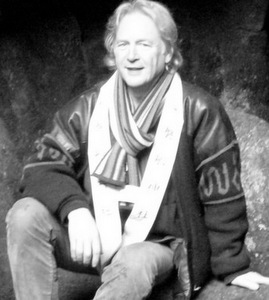 Colin Marshall sits down seven stories above Kawaramachi, Kyoto, Japan with John Dougill, professor of British culture at Ryukoku University, blogger at Green Shinto, and author of books including Kyoto: A Cultural History, In Search of Japan’s Hidden Christians, and Oxford in English Literature. They discuss the commonalities between the Kyoto geisha and the English gentleman, who practice their respective cultures’ ritual, regulation, and repression; form’s dominance over function in Japan, as exemplified by one young fellow in a Union Jack t-shirt; how he got a handle on Japan by writing a book on Kyoto, and how in the process the scales fell from his eyes, revealing the “magical paradise” he lives in; his ambivalence toward the “sprawling urban mess” that has built up around modern Kyoto; Oxford, the other city in his life, and the formula of “old buildings and young people” that makes it ideal; his early feelings of isolation and anger toward Japan, and how he overcame them; coming to represent British culture in Japan, using Marmite and other traditional tools; his attractions to “earth religions,” particularly Shinto, which he considers to be the true essence of Japanese culture; the Japanese tendency to contextually follow a variety of religious traditions and honor a variety of “equally valid” though sometimes opposing truths; how Japan’s “hidden Christians” created and protected their own mixed folk religion; his current project, a book on Japan’s UNESCO World Heritage Sites, and the problems inherent in a place becoming one; how Kyoto’s younger generation has preserved and repurposed traditional machiya buildings; and the process by which he has come to see his own country through Japanese eyes, which means he sees a great deal of “rudeness, dirtiness, and lack of efficiency” — a different Britain, in other words, than the one he grew up in.
Download the interview from Notebook on Cities and Culture’s feed or on iTunes.
Saturday, January 19, 2013
 Colin Marshall sits down in Nakatsu, Osaka, Japan with guitarmaker Josh Parkin proprietor of Josh Parkin Guitars. They discuss how the intensity of Japanese enthusiasm extends to guitar-playing; how Japanese friends in London urged him not to set up shop in Tokyo, but in Osaka; his early life in Yorkshire, “the English Kansai,” where he made his first attempts to build and modify guitars; the importance of finding the best handmade pickups and of learning to see the difference between .2 and .3 millimeters; the excellence of Japanese manufacturing, and its somewhat less impressive mastery of anthropometrics; his working life on Denmark Street, the center of London guitarmaking, and why he decided not to open his own business there; his travels through Asia before moving to Japan, which began in India and eventually found him homeless in Beijing; what it takes for a foreigner to open a business in Osaka (besides a few years off that foreigner’s life); the impossibility of finding a decent banger in Japan; his dissatisfaction with the usual foreigner’s job of teaching English, because it wasn’t making guitars; his work with Tim Olive and experience of the Japanese noise scene, which seems to spring from within the culture rather than interpreting traditions outside it; the way everything in Japan gets easier after six months, except perhaps dealing with the ward office; Japanese-style obsessive drive as a necessity of guitarmaking, no matter where you do it; and his dream job of building a guitar according only to the player’s musical style.
Download the interview from Notebook on Cities and Culture’s feed or on iTunes.
 Colin Marshall sits down in Osaka, Japan’s Senri-Chūō with Brian Ashcraft, Senior Contributing Editor for video game site Kotaku, contributor at Wired, and author of the books Arcade Mania! and Japanese Schoolgirl Confidential. They discuss the kind of arcade gaming best (and now only) seen in Japan; the Expo 70-developed north of Osaka versus the city’s “real” south; Osaka’s reputation across Japan for brash un-gentility; where best to do one’s gaming in Osaka, the the overall continuing robustness of Japanese arcades; the tradition of North American arcade gaming growing up around alcohol, and the tradition of Asian arcade gaming growing up around coffee, cigarettes, and milk tea; the Nintendo Entertainment System, known in Japan as the Famicom, and how it shaped both a decade and a generation on either side of the Pacific; the inevitable proximity of Japanese celebrities to gaming culture, whether through commercials or some stronger connection, in stark contrast to their game-averse American counterparts; his Dallas-Tokyo flight attendant childhood neighbor, and the strange but alluring cans of Coca-Cola she’d bring back from work; his first Japanese friend, whose family introduced him to their country’s gift-giving culture; Tokyo’s feeling of a “city of strangers,” versus the more personable Osaka; his trying early years of Japan, and how he recognized his own sprachgefühl while watching Battle Royale; his time in Japan’s having made him interested in his own Texas background; how he has made sure his sons learn about American culture, and how he laments their limited linguistic interaction with their American grandparents; the importance of raising children in Japan without giving them “the strange-last-name complex”; Japan’s lack of weirdness, or at least the lack of weirdness you perceive if you take the time to ground your observations of it, including observations of or relating to arcade machines and schoolgirls, with as much non-oversimplified historical and cultural knowledge as possible.
Download the interview from Notebook on Cities and Culture’s feed or on iTunes.
Saturday, January 12, 2013

Vital stats:
Format: independently produced documentaries, mostly from Los Angeles and the U.K.
Episode duration: ~30m
Frequency: weekly
It’s not easy to title a show, granted, but avoiding fiction strikes me as a mark of no particular distinction in public radio. Indeed, in more judgmental moments I pin the blame for the creative malaise afflicting the industry on its upper ranks dominated by people who began in (or have spent a little too much time in) newsrooms. This produces a number of deforming forces, from flamboyantly pious J-school convictions about the truth all the way down to simple stodginess. What a pleasant surprise, then, to hear in UnFictional [RSS] [iTunes] very little stodge at all. Why, airing stories about colossally powerful car stereos, self-immolation, blind baseball, and the U.K. roller derby, it almost makes us describe it as stodge’s opposite — but let’s not go crazy. We’re talking about public radio standards here. In fact, I suspect I’ve already implied more radicalism than the show can realistically offer.
Despite no doubt having rattled a few cages here and there over the past three years, UnFictional comprises, for the most part, radio documentaries of the same basic type we’ve been hearing for three decades. (This tradition tends these days to favor things like “sound-rich” portraits of barrio life, which explains why I find so little support for my own projects, most of which are multi-hour conversations about Graham Greene.) The whole production comes as one of the newish offerings from KCRW, long the “cool” public radio station in Los Angeles. Don’t read those air quotes as sarcasm; KCRW really does have the coolest programming, in part due to shows like this one, though it also trades on “cool” as a vibe — again, public radio standards, mind. Yet as a listener, I’ve in recent years begun to glimpse a frown of deep discomfort behind the station’s Wayfarers. With its schedule split between music, news, and cultural talk — not to mention Tuesday night’s unmissable Santa Monica City Council meetings — KCRW probably fears the simultaneous eating of its lunch by predominantly newsy KPCC and music-oriented KCSN. An understandable fear, but one born, I would argue, of a framing mistake.
Read the whole thing at Maximum Fun.
Thursday, January 10, 2013
 Colin Marshall sits down in Kyoto, Japan’s efish café with Michael Lambe, Deep Kyoto blogger, teacher, and Public Relations Representative for the Kyoto Journal. They discuss the city’s flummoxing preponderance of Irish pubs and the “celebrated infamy” of one in particular; the rich cultural heritage that brings foreigners to Kyoto, the modernization that foreigners bewail, and the preservation efforts that certain Japanese now make; his arrival in Japan on the JET program and original intent to go to the “wild snowswept north” of Hokkaido, though he wound up going from the northeast of England to the northeast of Japan instead; the Beatles-in-1963 treatment he received as the only foreigner in town; his time in Fukushima, then known as an unusually safe place, and one famous for its fruit; disasters, such as the 2011 one in Fukushima, as facts of life in Japan, and the necessity to rebuilt efficiently as another fact of life; his own adoption of that spirit when he volunteered to build houses in the Miyagi prefecture; the times he found himself bowing on the phone, leaving taxi doors open in England, and having lived over a decade in Japan; the difficulties of living vegetarian in Japan, even when you allow yourself fish; missing British television amid the “appalling” morass of cheap Japanese variety shows; evasion of the British television license men versus Japan’s (as seen in Haruki Murakami’s “Town of Cats“), and how he once got an NHK collection agent to think him a madman; how his four-year stint in Tokyo came up against his small-town sensibility, and how he disappointedly discovered the capital’s absolute lack of demand that he speak (and thus learn) Japanese; his move to Kyoto, where visiting a rock bar he began making “real” non-Anglophone Japanese friends; the role of “the foreign guy” in Japan as comparable to Norm’s on Cheers; Sons music bar, one place he discovered in the project that is Deep Kyoto (and Tadg’s, which he recommends wholeheartedly); the history of the Kyoto Journal and its latest special issue on energy; Japan’s odd reliance on nuclear power (not to mention squat toilets); and how blogging has connected him with foreigners, opposed to his original mission as that is.
(Correction: Minamata sickness was caused by mercury, not lead pollution.)
Download the interview from Notebook on Cities and Culture’s feed or on iTunes.
(Photo: Stewart Wachs)
Wednesday, January 9, 2013
 Boy, I want to go to college. Alas, I’ve already gone, and even if I hadn’t, being that I’m nearing thirty years old, “leading a college life in one’s thirties would be way too late.” That observation comes from a no less authoritative a study of university life and style than Take Ivy, but still, we must make certain allowances for temporal and cultural distance. First, the book deals exclusively with life and style at the “Ivy League” schools of America’s East Coast. Second, it originally came out in 1965. Third, the men who wrote it, Teruyoshi Hayashida, Shosuke Ishizu, Toshiyuki Kurosu, and Hajime “Paul” Hasegawa, all come from Japan. These may seem like considerable stumbling blocks for many in the market for this sort of book — I myself actually have more experience with Japan than with anything on the East Coast, let alone with the year 1965 — but the final product nonetheless raises a burning desire within me to grab my penny loafers, lacrosse stick, and sweatshirt emblazoned with my graduation year and confab with my chums on the quad.
“I spent my high school years picturing myself on the campus of an Ivy League university, where my wealthy roommate Colgate would leave me notes reading, ‘Meet me on the quad at five,’” wrote David Sedaris. “I wasn’t sure what a quad was, but I knew that I wanted one desperately.” The quartet of trad enthusiasts who put together Take Ivy presumably felt a similar, if better-informed, quad-related longing. When my time came to file college applications, I couldn’t have told you which schools made up the Ivy league beyond Harvard and Yale, and anyway, articles had reported for years that undergraduate education at those two wasn’t what it used to be. Having grown up on the West Coast cultivating a fear of what I assumed to be the Ivy League’s formidable wealth, daunting application standards, and harsh social judgment, I swallowed that line whole. While Take Ivy’s candid, idyllic shots of the then-distinctively garbed students of Harvard, Yale, Princeton, Pennsylvania, Columbia, Dartmouth, Brown, and Cornell don’t make me wish I had applied to those schools back in 2002, they do make me wish I had applied to those schools back in 1965.
Read the whole thing at Put This On.
Saturday, January 5, 2013
 Colin Marshall sits down in Kobe, Japan with guitarist, improviser, and sound artist Tim Olive, whose latest album is 33 Bays with Alfredo Costa Monteiro. They discuss Japan’s importance to global experimental music culture; his own swerve toward experimentation after a western Canadian childhood spent listening to Black Sabbath’s Paranoid; his early exploration of Javanese music in a Saskatchewan record library; how a Québécois girlfriend took him from Montreal to Osaka, where he lost “the rage”; how struck he felt by the sea of black hair Japan first presented to him; Osaka’s “glorious ugliness,” Nara’s deer, and Kobe’s wild pigs (just one of the signs of its close proximity to nature); his lack of a computer until last year, his longstanding ambivalence toward digital technology, and the double-edged sword of the internet’s power to open up everything all at once; his workshop full of guitars in various states of dismantlement, and the importance of instrument modification to the physicality and sense of touch in music, both of which he prizes; Japan’s distinctive combination of the highest new technology and the oldest traditions, as seen in the zoning collage of Osaka where venerable temples meet up with glossy love hotels; the fluid senses of time and space one must cultivate when moving between the West and the East, or even between Asian countries; his “under the table”-style freedom in Japan, and the other kinds of freedom the country affords, such as to one particular naked salaryman before the cops caught up with him; 845 Audio, the label he founded to release 33 Bays without delay; and his recommendations for getting tapped into the Kansai experimental music scene.
Download the interview from Notebook on Cities and Culture’s feed or on iTunes.
 Andrew Johnstone of Podcast Squared — a podcast of podcasts, you see — recently had me on his show for an expansive conversation about the craft. (The “podcraft”?) On another episode, he also took the time to review Notebook on Cities and Culture. Thanks very much indeed, Andrew, and listeners, if ever you feel like disseminating your own opinion about the show, don’t forget that iTunes offers you a way. The more reviews we get, the higher a profile we have in the iTunes directory… or something like that. Nobody really understands how it works.
My other recent appearances:
Wednesday, January 2, 2013
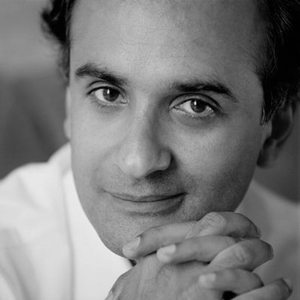 Colin Marshall sits down in Nara, Japan’s Nara Hotel with writer of place Pico Iyer, author of such books as Video Night in Kathmandu, The Lady and the Monk, The Global Soul, and most recently The Man Within My Head. They discuss the discovery that Japan looks exactly like Japan, and the “piercing sense of familiarity” the enthusiast feels upon visiting for the first time; autumn in Japan, and its place at the core of The Lady and the Monk, his second book and still his favorite; Japan’s distinctive combination of buoyancy and poignancy, which leads to the pre-savoring of wistfulness to come; the culture’s dissolution of mind, heart, and soul all in the same place, and his efforts to build an intellectual infrastructure around his Japan-related intuitions; his recent reading of John Cage, an unexpected master of the Japanese virtues of not knowing and not saying; the necessity, when you want to write about something, to write about something else, and of writing about a passion in order to write about yourself; the Californian question of “being yourself,” and its inadmissability to the Japanese mindset; his relief at not having to be Japanese within Japanese society, and what being a Japanese in Japanese society has done to visit a female brain drain upon the country; what it takes to best remain an outsider in Japan, enjoying its peculiar kind of diplomatic immunity, and how Donald Richie mastered that exchange of belonging for freedom; street vending machines and train-station bathrooms as outgrowths of both Japanese thoughtfulness and the nation’s tendency to regard itself as a family; his visit to West Point, where the cadets received The Lady and the Monk as required reading; the danger of Japan’s getting left behind by the increasingly interconnected world, what with its bad public relations and low level of spoken English; the enduring “vitality” of the seemingly less civilized places outside Japan; and how Japanese literature expresses nothing happening because Japanese life values nothing happening.
Download the interview from Notebook on Cities and Culture’s feed or on iTunes.