Skip to content

Los Angeles in Buildings #6: the Biltmore Hotel

The Biltmore Hotel stands as one of the many answers Los Angeles has proposed, throughout nearly its entire history, to the question of what, exactly, it needs to finally become a “real city.” The list of required elements has expanded, and occasionally contracted, over time, but even putting aside all those strangely persistent Baudrillardian anxieties about whether it rates as a genuine place or some kind of postmodern accretion of simulacra, Angelenos seem never to have a definitive answer about whether Los Angeles has, quite literally, the right stuff.

At the moment, the city’s deficiencies in public transit and public space in general look like the ones to address; back in the second half of the century, it strove for real-city status primarily by building art museums, concert halls, and other high-profile cultural venues. But during and after Los Angeles’ initial population boom at the end of the 19th century and the beginning of the 20th, the city needed to worry less about reality than capacity, a need that demanded the construction of hotels. After the opening of the Pico House in 1870, an extravagant hostelry by the standards of the time and place, the importance of capacity gave way to that of luxury. By the 1920s, anyone looking across the continent to New York for a model of the real city (as many did, and quite a few still do) would have believed that Los Angeles couldn’t possibly enter the world class without a grand downtown hotel: not just a place for high-status visitors, but a reassuringly opulent icon for Angelenos themselves.

Unsurprisingly, as David Rieff writes in “Los Angeles: Capital of the Third World,” the job of designing the Biltmore went to a New York office, Schultze and Weaver, “a firm noted for its uncanny ability to ape the style of the great Spanish colonial architects like Churriguera while at the same time modifying them to suit the requirements of the Jazz Age.” The money, some $10 million of it, came arranged by banker Joseph Sartori, who, according to California historian Kevin Starr, “organized the six-hundred-stockholder syndicate behind the Biltmore whose leadership — Harry Chandler, Marco Hellman, Henry M. Robinson, Lee Phillips — proceeded from the same social groupings which had secured water from Owens Valley in 1913 and were about to improve the port.” Rieff describes projects of this kind as “less the work of individual entrepreneurs than the collective undertakings of the business establishment, and the amorphous Mediterraneanism of their design was an integral part of the selling of Los Angeles.”

Read the whole thing at KCET.

This week’s city reading: Apple’s sucky campus, Seoul’s “Neo-Brutalism,” what happens at SCI-ARC, the hotel theory of Los Angeles

If You Care About Cities, Apple’s New Campus Sucks (Adam Rogers, Wired) “Apple’s new HQ is a retrograde, literally inward-looking building with contempt for the city where it lives and cities in general. People rightly credit Apple for defining the look and feel of the future; its computers and phones seem like science fiction. But by building a mega-headquarters straight out of the middle of the last century, Apple has exacerbated the already serious problems endemic to 21st-century suburbs like Cupertino—transportation, housing, and economics. Apple Park is an anachronism wrapped in glass, tucked into a neighborhood.”

How not to create traffic jams, pollution and urban sprawl (The Economist) “Many cities try to make themselves more appealing by building cycle paths and tram lines or by erecting swaggering buildings by famous architects. If they do not also change their parking policies, such efforts amount to little more than window-dressing. There is a one-word answer to why the streets of Los Angeles look so different from those of London, and why neither city resembles Tokyo: parking.” (See also my Notebook on Cities and Culture interview with parking theorist Donald Shoup.)

Korean Curiosity: Is Seoul Experiencing a “Neo-Brutalist Revival”? (Isabella Baranyk, Archdaily) “During his frequent travels to Seoul, Hong Kong- and Singapore-based photographer Raphael Olivier noticed a new trend taking the South Korean capital: a crop of geometric, concrete buildings of all genres. He calls the new style Neo-Brutalism, after the modernist movement that proliferated in the late 1950s to 1970s, in which raw concrete was meant to express a truth and honesty.”

Sci-Arc: for People that Already Know How to Design a Bathroom (Alexandra Sivtsova. Strelka) “The school also teaches you to detach yourself from existing ideas and make up your own. This is similar to Malevich’s theory of the black square, where the square is an absolute zero: the point from which everything begins. As Malevich used to say, when a person paints a landscape, he or she tries to copy what’s already there. That’s a lifeless depiction of life. The philosophy of suprematism showed that one should think from the perspective of pure shapes and color. That philosophy is close to SCI-Arc.”

And finally, from the oldie-but-goodie three-part-roundtable department:

Hotel Theory: The History of the Los Angeles Hotel (Erik Morse, Norman Klein, D.J. Waldie, Mark Z. Danielewski, Sid Krofft, Edward Soja, Thom Andersen, the Los Angeles Review of Books) “If the consummation of this cosmophagic impulse can be found in the kaleidoscopic — if not psychedelic — theme park resorts of Las Vegas, its historical and architectural roots are no doubt exhibited in L.A. landmarks like the Beverly Hills Hotel, the Biltmore, the Ambassador, the Roosevelt, the Bonaventure, and numerous other meccas of West coast hospitality, the model of which is to provide the tourist the Ur-experience of Los Angeles-as-environment — to bring them closer to its paradisal climates and ubiquitous sunlight and, simultaneously, to capture the sun inside a prism, reproducing its light as the simulated glow of celebrity.” (See also my Notebook on Cities and Culture interviews with Waldie, Soja, and Andersen.)

콜린의 한국 팟캐스트: 도시에 대해 생각하시는 그래픽 디자이너 이예연 (이응셋)

이응셋으로 알려져 계신 그래픽 디자이너 이예연 씨는 이혜림 씨와 함께 <생각버스>라는 서울 버스에 대한 인쇄물 프로젝트를 하셨고 <더 버스>와 <버스로 서울 여행>이라는 책들을 쓰셨다. 요즘에는 다양한 지도, 도시, 동내, 책방과 여행에 관렬된 그래픽 디자인 일을 하고 계신다.  여기나 아이튠즈를 통해 다운받을 수 있다.

From my interview archive: public radio interviewer and podcast impresario Jesse Thorn

This year, I’m listening again to selections from the archive of long-form interviews I conducted on the public radio program The Marketplace of Ideas and podcast Notebook on Cities and Culture between 2007 and 2015.

There are the people who’ve had an outsized influence on your life, and within that group there are the people who, when you think about it, have had an even more outsized influence on your life than you’d realized. As I write this, I see that, for me, public radio host Jesse Thorn belongs in the latter group. I’ve long described him as the man who inspired me to get into the interviewing game, or at least my proximate inspiration, but now I wonder how many elements of my current life and career on the other side of the Pacific can’t, in some way, be traced back to him.

Still, Charlie Rose must also bear some of the responsibility. I watched him interview the Brian Grazers and Bill Bufords of the world almost every night during a long, strange winter break in college when UC Santa Barbara’s between-quarter dorm closure forced me to rent a room off campus. I’d found a small, wood-paneled one in a less than perfectly maintained house, with neither cable nor internet, way out in not the outskirts of Santa Barbara, but the outskirts of the town next to Santa Barbara. Getting there required a ten-minute walk through the pitch darkness (they don’t go in for streetlights out there, or even sidewalks) after getting off at the bus stop at the very end of the line — though, as usually the only rider aboard at that point, I could often persuade the driver to drop me off a little closer.

I got back so late every night because I worked an an evening announcer at a radio station — namely “Smooth Jazz Magic 106.3, the Sound of Santa Barbara,” which I had to say, in a “sir yes sir” fashion, at both the beginning and end of my every announcement. The job came my way because of the artist overlap between its playlist and the music show I’d been doing on KCSB, the public radio station based on my college campus: I never spun any Kenny G or anything (no Kenny G without Kashif, anyway), but I was and remain an enthusiast of, say, Acoustic Alchemy, the Rippingtons, Hiroshima, Steely Dan, and so on.

But despite hardly being a stranger to radio, I couldn’t figure out how to make the move into interviewing. I passed a year or two wondering before the fateful night I arrived at the Magic 106.3 studio, started scrolling through my Livejournal friends list (this being the final days of Livejournal’s popularity, at least in my non-Cyrillic-user circles), and saw that one of those friends had made a post recommending a handful of shows from the still-new medium of podcasting. The most enthusiastic of those recommendations was for an interview program called The Sound of Young America, hosted by a fellow twentysomething by the name of Jesse Thorn who’d initially created it as a radio show on KZSC, the campus station up at UC Santa Cruz, where he’d gone to college.

The very next day I began binging on The Sound of Young America, and from then on knew what I had to do: go back to KCSB, start an interview show of my own, and podcast it right away. At first I modeled The Marketplace of Ideas pretty closely on Jesse’s example, at least formally, arranging long-form interviews but doing them with economists and Japanologists instead of comedians and cartoonists. Only when I thought the show had found something like its own sensibility did I feel ready to invite Jesse himself on for an interview, a studio-to-studio tape sync between me at KCSB and him in his then-makeshift apartment recording facilities in what I called “Los Angeles’ beautiful Koreatown.”

Jesse, no fan of Los Angeles (although his hatred cooled over time to tolerance and has now seems to have become some feeling even milder still), already had a correction for me: “Koreatown is not beautiful.” (He preferred the descriptor “soiled.”) But Koreatown was beautiful to me, or at least exciting: having just a couple years before begun my self-study of the Korean language, I made a point of going there on my every trip down to Los Angeles in order to practice sounding out its many signs advertising body shops, barbecued meats, and acupuncturists. I would later move to Koreatown myself, and even, on Jesse’s advice, to the very same couple of blocks he recommended as “the only place in Los Angeles that feels like, you know, a city.” (Indeed, I happened to move into the same set of buildings he’d lived in when he made his own first move to Los Angeles.)

Before moving, though, I brought Jesse back on to The Marketplace of Ideas for a second remote interview, that time with filmmaker Adam Lisagor (then better known, for some reason, as “Lonely Sandwich”), his collaborator in a new venture called Put This On, a blog and video series “about dressing like a grownup.” That project also aligned well with my own interests, and for a time I would later write about men’s style books on its site. By then I was also writing Podthoughts, a weekly podcast review column which ran from 2008 until I asked for money, on Maximumfun.org, the site of Jesse’s rapidly growing podcast empire.

I came to know Jesse as an interviewer and still think of him primarily as an interviewer (and he has spoken lately of starting an interview podcast about interviewing), but that label doesn’t really capture the man in full. Though officially a public radio personality, he also presides over a kind of podcast-based media empire, a highly 21st-century operation that also puts on a variety of real-life events, the flagship being the twice-yearly MaxFunCon. When he announced the very first one, warning of the tickets’ probable priciness, I got so excited that I immediately posted to the Maximum Fun forums that money would be no object to my attendance, thinking it might set me back something like $150, $200 at the outside.

Then I found out that it would cost more like $900, and so have never attended a MaxFunCon. The people I know who do go tell me it might be too late: the cliques, though each is maximally open and welcoming (a part of the Maximum Fun ethos), have long since solidified, and the gathering’s history has coalesced into myth. In any case, I live in Seoul now, and though there’s a MaxFunCon West and a MaxFunCon East, MaxFunCon Asia has yet to materialize. I found the train similarly gone from the station when I arrived in Los Angeles hoping for the chance to hang out more with Jesse himself. Though I did manage to do the occasional bit of work for him, by that time he already had a wife, a tastefully decorated house, a couple of cars, the first of his kids, insurance, and many other elements of a life I can barely imagine, let alone relate to.

Even The Sound of Young America had undergone a rebranding into Bullseye, a change that alienated a few fans (just another chapter in the sometimes-contentious relationship Jesse has with that group), but never caused me to turn my back in the way that TheAuteurs.com became dead to me when it changed its name to MUBI. In the form of Bullseye, the show has risen to the status of a genuine National Public Radio program, which seemed like the goal even back when it aired as The Sound of America in only Santa Cruz and Hattiesburg, Mississippi. Now that Jesse appears to have hit it big, I do take some pride in having been a listener back when he spoke openly about struggling to keep the lights on.

For my part, I, a decade after first listening to The Sound of Young America, have just launched my latest podcast after a couple of years out of the game, a Korean-language interview show called 콜린의 한국, or Colin’s Korea. It may look as if I’ve swerved wildly off my initial path, but think of it this way: without Jesse’s example, I might not be interviewing, nor might I ever have lived in Los Angeles’ Koreatown, and so might not have felt prepared to live in Korea proper. Without the connections made by my own venture into podcasting, and through the writing I did for Maximum Fun, I might never have developed the kind of career that enables me to move to another country in the first place.

On the way to a wedding just weeks before crossing the ocean, I heard Jesse’s familiar voice come on the radio, Bullseye having finally clawed its way into the strangely difficult Los Angeles public radio market. (Nothing to do, I assume, with my confrontations of various Los Angeles public radio professionals at parties with unsatisfiable demands to know why they didn’t carry it yet.) He was delivering an “outshot,” a segment at the end of the show that features a personal cultural recommendation, on the late, lamented Free & Easy, one of the Japanese men’s style magazines I now make sure to pick up on my frequent trips to that country.

Free & Easy focused on three different styles: “Rugged Style,” “Trad Style,” and “Dad’s Style,” the last of which was the object of Jesse’s tribute. “Dad’s Style means the man who has his own style, who spends his days immersed in his interests with full intellectual curiosity,” he said, quoting Free & Easy‘s editor Minoru Onozato. “He also should do his best for his professional career. This is the style we idealize.” As much sense as it makes to hear an endorsement of Dad’s Style from someone who has attained dad status himself, the point, as I took it, was that anyone could develop such a life, no mater the details of that style, those interests, and that curiosity. The most useful examples need not be the ones that most closely resemble you.

Seoul Urbanism on TBS eFM’s Koreascape: Noryangjin fish Market, old and new

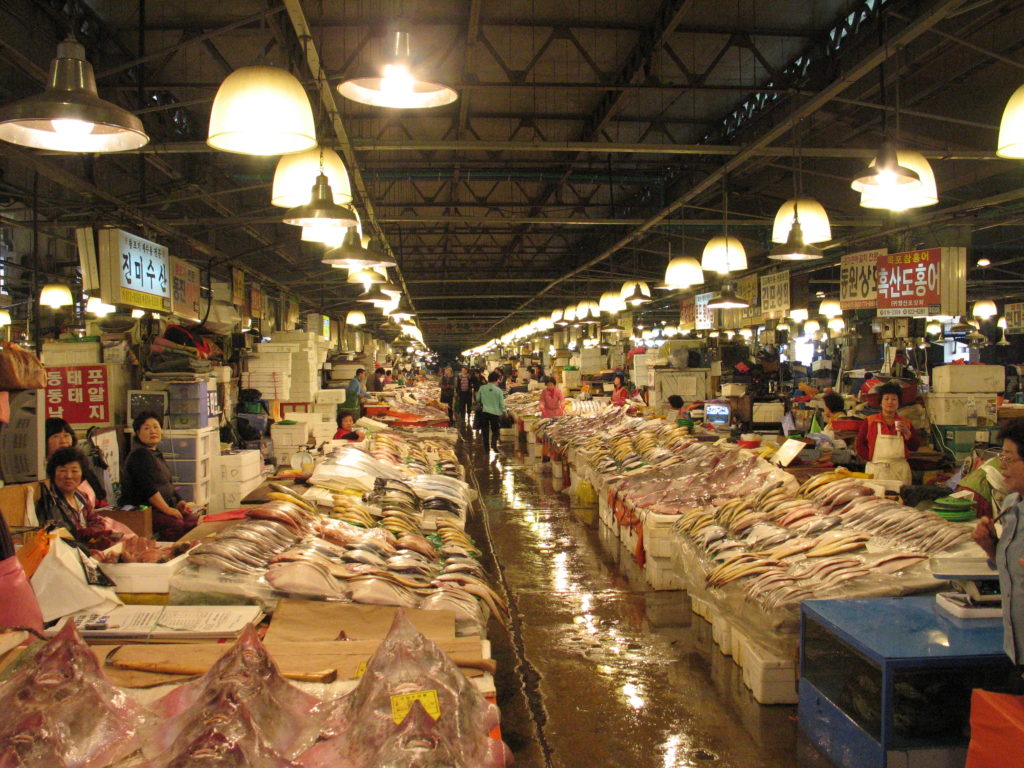
Each month I join Kurt Achin, host of Koreascape on Seoul’s English-language radio station TBS eFM, for an exploration of one of Seoul’s urban spaces. This month, along with Koreascape producer Jamie Lee, we pay a visit to the well-known institution of the Noryangjin fish market — or rather, to both of them. After beginning near downtown Seoul in the early 1920s, Noryangjin moved in the early 1970s into a  larger concrete complex just south of the Han River, and there became both a thriving commercial center as well as a popular tourist spot. In more recent years, as the old structure has shown its age, a government body built a shiny new building, albeit a more expensive one, for Noryangjin’s many fish merchants to move into, but not all of them have done so — and not all have wanted to. We ask those who’ve moved why they’ve moved, ask those who’ve stayed why they’ve stayed, and make sure to get one of them to slice up a fish right before our eyes (and for our enjoyable consumption).

Stay tuned for further explorations of Seoul’s architecture, infrastructure, and other parts of the built environment. You can hear our previous segments here.

An English interview about my new Korean podcast on Busan eFM

You may have noticed that I’ve started a new podcast in Korean. Called 콜린의 한국, or Colin’s Korea, it follows very much in the vein of my previous English-language podcast Notebook on Cities and Culture and its public-radio predecessor The Marketplace of Ideas. Each week I sit down somewhere in Seoul (and probably other cities in the future) for about an hour of conversation with a different guest, either a Korean or a Korean-speaking foreigner. We talk about the work they do, the place they do it in, and the various subjects to which those lead.

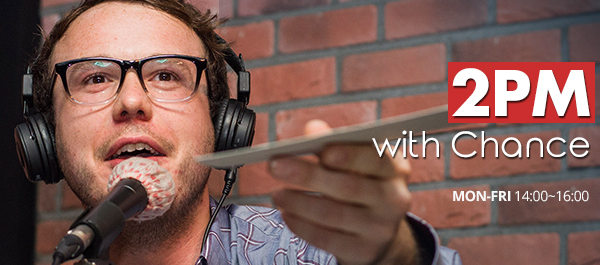
Korean-speakers can subscribe to 콜린의 한국 on iTunes, and if you want to know more about the project, have a listen to this fifteen-minute interview of me about it on Busan eFM 90.5, conducted by past Notebook on Cities and Culture guest Chance Dorland. We get into why I started it, who I’ve talked to so far, what I intend to accomplish with it, and whether I’ve incurred any harshness for being a non-fluent American getting into the Korean-language interviewing game:

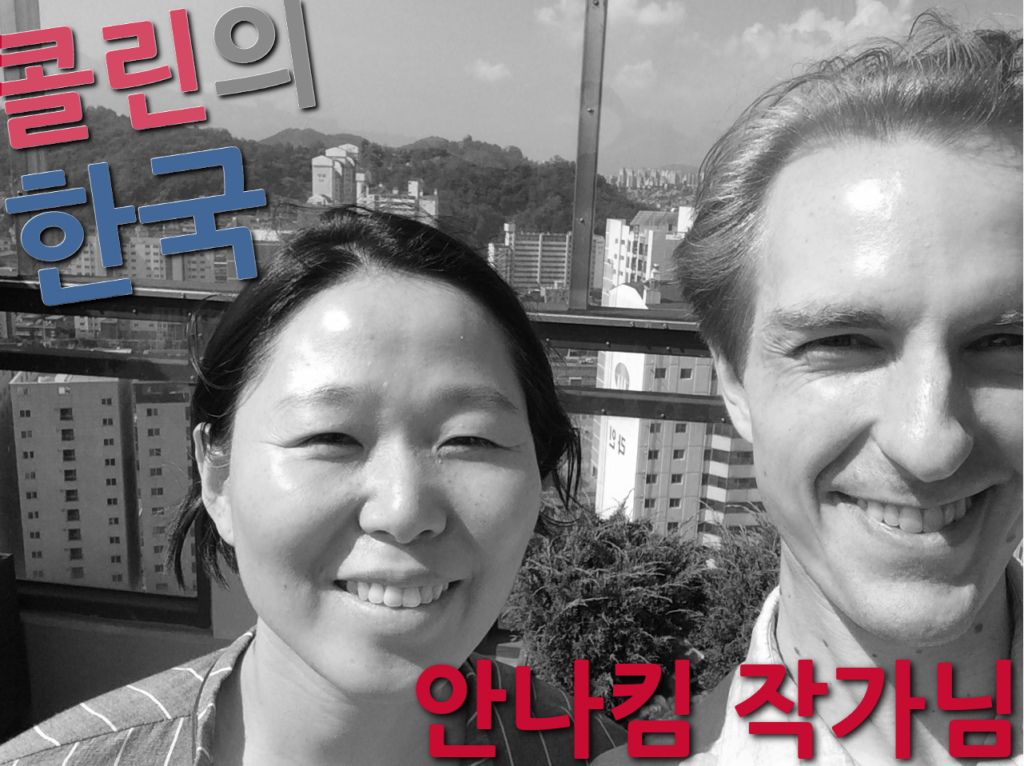
콜린의 한국 팟캐스트: 미국 대도시에 대한 책들을 쓰시는 안나킴 작가님

안나킴 작가님은 <뉴요커도 모르는 뉴욕>과 <LA 도시 산책>의 저자이다. 여기나 아이튠즈를 통해 다운받을 수 있다.

From my interview archive: critics Clive James and James Wood

This year, I’m listening again to selections from the archive of long-form interviews I conducted on the public radio program The Marketplace of Ideas and podcast Notebook on Cities and Culture between 2007 and 2015.

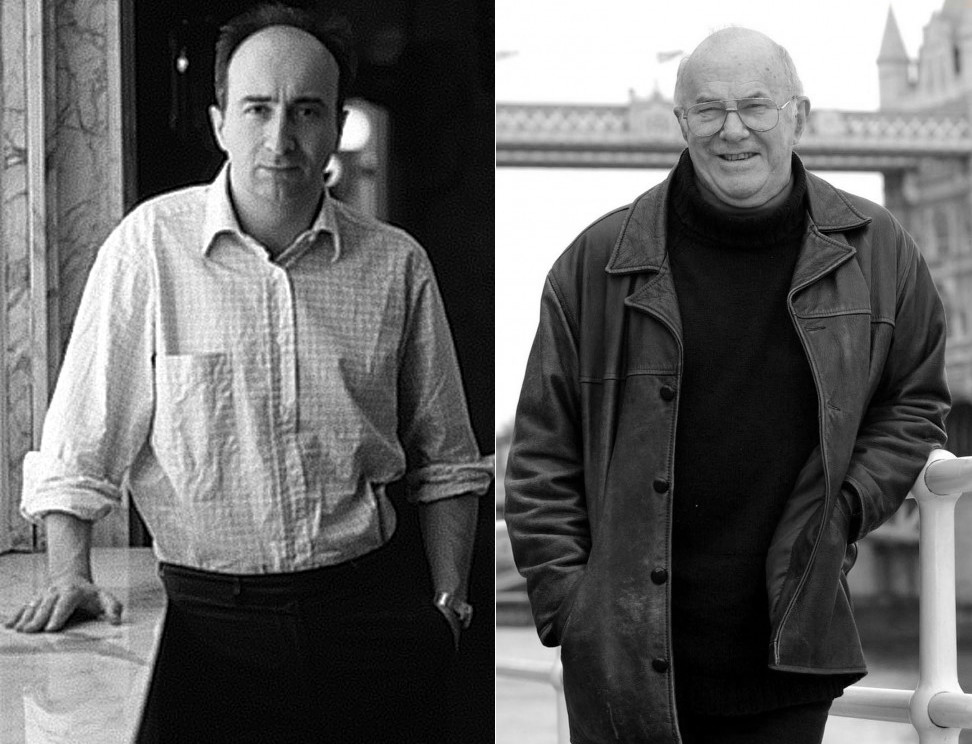
Clive James called his first book The Metropolitan Critic, which always struck me as a decent job title, if a vague one. But only a vague title could capture the expansiveness of the man’s professional interests, which ranks high on the list of qualities I respect about him. James’ bibliography includes not just criticism but cultural essays, fiction, poetry, “unreliable memoir,” travel writing (to go along with his travel television), and more recently a series of columns in the Guardian called “Reports of My Death.” In that last, he writes on varying subjects in varying relation to one theme: his own passage from this mortal coil, which looked imminent on his cancer diagnosis seven years ago but now, thanks to an “experimental drug,” seems, at least to his readers, to recede further back into improbability with each passing year.

“I’m not terribly interested in originality,” James said once, or probably more than once. “Vitality is all I care about.” Though an offhand remark in an interview rather than one of his phrases wrought with famous care and delivered for laughs (such as his immortal description of Arnold Schwarzenegger as a “brown condom stuffed with walnuts”), it’s stuck with me: the word vitality may well sum up much or all of what I seek out in any given work myself. I suspect, though, that on average I go in for a more controlled, less exuberant variety of the stuff  than James does: I’ve never read or heard him express any enthusiasm for, say, J.M. Coetzee, though Coetzee did blurb James’ essay collection Cultural Amnesia — a favorite book of mine, and not just because it revealed our shared fascination with Chris Marker — as “a crash course in civilization,” I think approvingly.

And of course I also admire the vitality of James himself, which now manifests as a faintly embarrassed but robust instinct for survival, but which has also driven him to write so prolifically over such a wide range of cultural territory, to learn French, German, Italian, Spanish, Russian and Japanese, and to dance the tango now and again. It may have also played a part in the unsavory scandal that came to light in 2012, but you’ve got to take your yin with your yang. Not that I’d have suspected it in the least back when I interviewed him on The Marketplace of Ideas in 2009, ostensibly about his then-new poetry collection Opal Sunset but really about all the things I could possibly ask him about — and more to the point, all the things I could learn from him — in a mere hour.

But not everyone I know, and that includes other writers whose work I enjoy, think James deserves the time of day as a critic. As near as I can tell, they find him too frivolous, too unserious, too jokey, too concerned with his own writing style and too unconcerned with serious evaluative labor — the same charges often leveled at film critic Anthony Lane, one of the New Yorker writers whose work I never, ever miss. (When I heard another film critic I respect write Lane off for having “no theory of cinema,” I realized that was one of the main reasons I do read him.) While I never did get the chance to interview Lane, and not for lack of un-replied-to e-mails to his employer, I did get to interview another of my personal New Yorker A-listers: literary critic and occasional novelist James Wood.

“I sleep very poorly these days,” Wood wrote in a 2013 piece on his parents. “I lie awake, full of apprehensions. All kinds of them, starting with the small stuff, and rising. How absurd that I should be paid to write book reviews! How long is that likely to last?” Indeed, both he and James bear the mark of another time, one in which critics enjoyed a higher cultural profile, or at least could engage with a single book for three or four thousand words instead of having to crank out image-intensive clickbait on the problematic casting choices of the latest superhero blockbuster franchise at sixty bucks a pop. (Intriguingly, critics do seem to have retained their importance to the common reader and viewer, or more recently gained it, here in Korea, where they still go round and round the circuit of media and public appearances.)

But then, I’ve never really longed to become a full-time critic: my interest lies in the essay form itself, and throughout their careers writers like Wood, James, and in critic mode even Coetzee, have done their part to maintain that form into the 21st century. You could even argue, as no less a desired but never landed interviewee as Paul Graham did in 2004, that we’ve entered the Age of the Essay. Whatever their commercial viability, essays, critical and otherwise, have an appealing potential not just as treatments of single subjects but nexuses of a variety subjects — as, in a different way, do interviews, at least when done right. Wood, and even more so the still-vigorous James, covered a great deal of intellectual ground during our conversations. “Thank you for reading my book,” said the latter after we finished recording, and I told him any interviewer would’ve done the same. His reply: “That’s the first naive thing you’ve said all hour.”

This week’s city reading: Seoullo 7017 (“Seoul’s High Line”) edition

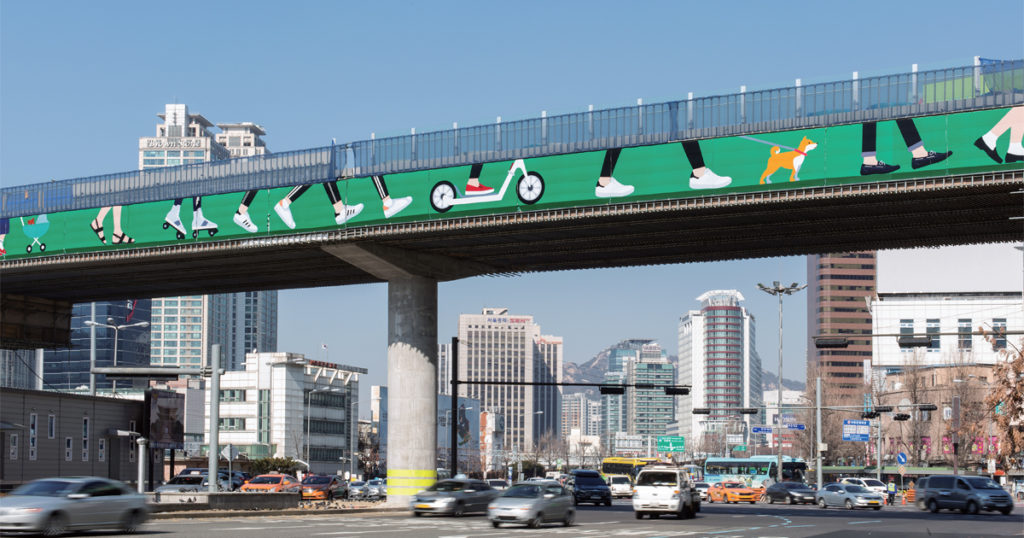
Seoul, a city ‘with no soul,’ builds its own High Line on an old overpass (Anna Fifield, The Washington Post) “Unlike the High Line, built on an old rail line on Manhattan’s Lower West Side, the walkway will connect with buildings — there are already bridges into an office tower and a hotel — and will have cafes and performance areas. There are even trampolines for kids — with fences to make sure they don’t bounce over the edge.”

Seoullo 7017, Mayor Park’s Cheonggye Stream? (Jon Dunbar, Korea Times) “The finished Seoullo 7017 will certainly breathe new life into the whole area, connecting Namdaemun and Malli-dong to Seoul Station and bringing in more foot traffic. But property values will inevitably go up, and we will likely see future ill-advised urban renewal projects in the area in an attempt to beautify or monetize the land and its buildings.”

A garden bridge that works: how Seoul succeeded where London failed (Rowan Moore, The Guardian) “Where the Garden Bridge would have been a cherry on the already rich cake that is the centre of London, the Skygarden aims to regenerate and connect places near the main railway station that have been fragmented by roads and railway tracks. The Skygarden, which will be open to all 24 hours a day, re-uses an existing structure – like the High Line – in the form of a 1970 motorway flyover that was no longer deemed safe for its original purpose. It is also part of a bigger set of ideas about taking a big, dense – sometimes ugly – city, one which was created without a great deal of concern for public space and pedestrian movement, and giving it qualities of walkability, neighbourliness, human scale and shared enjoyment of its places.”

Seoullo 7017: Urban Asset or Vanity Project? (Ben Jackson, Korea Exposé) “Mayor Park’s new elevated landmark tries so hard to tick all the boxes – natural oasis in the heart of the city, pedestrian route to promote walking, cultural venue, place of education – that it risks actually filling none of them. When the current lack of a traffic alternative or substantial measures to protect local residents and businesses are added to the equation, it’s hard not to conclude that the city government has misjudged the project.”

Seoullo 7017 – A Seoul Overpass Turned Pedestrian Sky Garden (Spooky, Oddity Central) “The name Seoullo 7017 is a nod to the two most important years in the structure’s existence – 1970, the year that the overpass was constructed, and 2017, the year of its transformation. It also features 17 walkways that pedestrian can use to access it from various areas of the city. Seoullo 7017 features 645 giant concrete pots, some of which are taller than an average-height person, containing 228 species of trees and flowers. It is also designed to be an “urban nursery” for trees, many of which will eventually be transplanted to other areas of the city.”

Man plunges to death from Seoul overpass-turned-park (Byun Hee-jin, The Korea Herald) “According to police, a 32-year-old man from Kazakhstan threw himself from Seoullo 7017, near Cheongpa-ro, west of Seoul Station. The elevated park, which opened May 20, has 1.4-meter high safety walls erected on both sides. According to police, the park had other visitors at the time of the incident. Citizens and the police sought to dissuade the man from jumping, but to no avail.”

See also (hear also?) my Seoullo 7017 sneak-preview urbanism segment on TBS eFM’s Koreascape.

콜린의 한국 팟캐스트: 로버트 파우저 교수님

아시아의 언어와 건축에 관심이 많으신 로버트 파우저 교수님은 <미래 시민의 조건>과 <서촌홀릭>의 저자이다. 인터뷰를 여기나 아이튠즈를 통해 다운받을 수 있다.