 Colin Marshall sits down above Gastown, Vancouver, British Columbia with novelist Timothy Taylor, author of Stanley Park, Story House, and The Blue Light Project, as well as the short story collection Silent Cruise. They discuss what, exactly, Vancouver is; what, exactly, CanLit is; his being born into a nomadic lifestyle; his inadvertent prediction of the modern locavore movement; whether one can live in Vancouver without developing an interest in architecture; his fascination with creative and toxic “dyadic relationships,” as well as the place of emulation and envy in human affairs; how he discovered René Girard’s ideas about “mimetic desire” and came up with a critique of consumerism contra his countrywoman Naomi Klein; the visible desires of Vancouver and its murky, independent-minded past; our quasi-sacrificial system of celebrity; what he learned from watching reaction videos on YouTube; his moves from the navy to banking to consulting to writing; how he grew fascinated with entrepreneurs; why we haven’t eaten so well, historically, in North America; Canada’s potential as the New-Worldiest place in the New World; his search for where people gather when he visits a new city, and where he would say Vancouverites go to be Vancouverites; his disputation of tradition in Canadian literature; his next project picking up on the lives of the characters from Stanley Park; and what to open yourself up to when you come to Vancouver.
Download the interview from Notebook on Cities and Culture’s feed or on iTunes.

I’ve just appeared as a co-host on an episode of Andrew Jonhstone’s Podcast Squared. Under the banner of “Serious Podcast Talk”, we get into topics such as whether podcasting represents not the 21st-century evolution of the radio, as commonly assumed, but the 12st-century evolution of the telephone. “If you’ve ever wondered what the ideal Podcast Squared episode for new comers to listen to,” writes Andrew, ” this might just be it.”
See also my Podthought on Podcast Squared, my previous appearance on Podcast Squared, and Podcast Squared‘s review of Notebook on Cities and Culture.

On the latest Los Angeles Review of Books podcast, I have a conversation about New York, Los Angeles, and rap with Jeff Weiss and Evan McGarvey, co-authors of 2pac vs. Biggie: an Illustrated History of Rap’s Greatest Battle. You can listen to the conversation on the LARB’s site, or download it on iTunes.
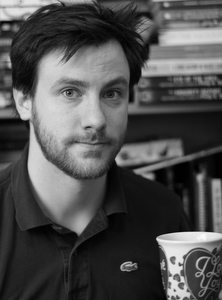 Colin Marshall sits down in Mount Pleasant, Vancouver, British Columbia with comedian and podcaster Dave Shumka, co-host with Graham Clark of Stop Podcasting Yourself. They discuss what everyone in Vancouver is, a little bit; the city’s much-touted “livability”; becoming that icon of fun that is a comedian in “No Funcouver”; the origin of Stop Podcasting Yourself; the newly classic Vancouver lifestyle up in downtown condos versus the classic classic Vancouver lifestyle in his hundred-year-old house; waking up in adulthood to find himself in a reasonably cool city; the pull, for comedians and media people, of both Toronto and the United States; his job overseeing international music at the CBC, and to what extent it puts his finger on the pulse of the Canadian musical consciousness; whether music will always out-cool comedy; the quaintness of the Canadian media experience; whether Vancouver has stories to tell, and how he’d like to see them told; the scarred hookers of the less-scary-than-sad Hastings Street; how many Torontonians it takes to screw in a lightbulb; the struggle for comedic visas; the descent of the stretchpant; Vancouverites’ tendency to luxuriate in the idea that they could, theoretically, ski and windsurf in a single day; how he heard the call of comedy at a Salvadoran restaurant; his strategic conversational use of mundane topics; Vancouver’s stinkiest buses; and the most fruitful sources of ridiculousness he has, including dumbness and his own simulation thereof.
Download the interview from Notebook on Cities and Culture’s feed or on iTunes.
Los Angeles, San Francisco, Portland, Vancouver, Mexico City, Osaka, Kyoto, Nara: Notebook on Cities and Culture has visited all these places for in-depth conversations with cultural creators, internationalists, and observers of the urban scene. Last season, we planned on 24 episodes but will put out 31, because hey, underpromise, overdeliver. The podcast’s next season, its fourth and most ambitious yet, will see 60 full-length Notebook on Cities and Culture conversations recorded all around not just Los Angeles, but Toronto, Copenhagen, and London, three world cities meriting a great deal of conversational exploration indeed.
And for every $200 raised above the $8000 goal, we’ll add another episode to season four’s total episode count. So if we raise $9000, for example, season four will have 65 episodes, if we raise $10000, it will have 70 episodes, and so on. Backing rewards will include:
- $15 or more: I’ll thank you by name in all of season four’s episodes.
- $30 or more: I’ll thank you by name in all of season four’s episodes and send you postcards from the cities the show visits during it.
- $50 or more: I’ll mention your own project or message at the top of one of season’s four’s episodes, in addition to everything you’d get at the previous levels.
- $300 or more: I’ll mention your own project or message at the top of all of season four’s episodes, in addition to everything you’d get at the previous levels.
- $800 or more: You’ll be the guest in one of season four’s episodes: I’ll come to you (recording locations in North America, greater London, or greater Copenhagen only) and we’ll record a conversation about the culture you create and the city you create it in, in addition to everything you’d get at the previous levels.
The drive begins on Monday, June 17. I’ll keep you posted right here. Thanks.

“Hey, I didn’t know that they had food in Ethiopia. This will be a quick meal. I’ll order two empty plates and we can leave.” This particularly well-known line from “When Harry Met Sally” touches on both the conceptual novelty of Ethiopian restaurants as well as the country itself having become a byword for modern African woe. But that movie came out in 1989, before Los Angeles’ Little Ethiopia had even made a name for itself; surely American eating habits would have come around since then, raising the then-little-known cuisine if not to the omnipresence of Chinese, then at least to the stolid reliability of Thai. Yet when a 2011 episode of “The Simpsons” took the titular family to a neighborhood very much like Little Ethiopia, their meal still surprised them, albeit favorably. In the words of the high-minded, high-achieving Lisa Simpson, “Exotic. Vegetarian. I can mention it in a college essay.” As satire goes, this has an edge on the groaner about empty plates, which even in this century I’ve heard Angelenos deliver as their own. Then again, they say the old jokes are best.
Not long after “When Harry Met Sally,” in the mid-nineties, Little Ethiopia did make a name for itself, albeit informally, as “Little Addis.” This early appellation referenced the Ethiopian capital of Addis Ababa, which Pico Iyer, in his essay from that era “Prayers in the Wilderness,” described as “a sleepy, eerie, rather bedraggled town — less tranquil than torpid, and less a town, indeed, than a collection of grand monuments set against shacks and vacant lots and open ditches. [ … ] Addis — like much of Ethiopia — has the air of an exiled prince, long accustomed to grandeur and full of pride, but fallen now on very hard times.” Little Ethiopia hasn’t had long to get accustomed to grandeur and, like many of Los Angeles’ specifically ethnic zones, didn’t have much grandeur to work with in the first place. A count from those days found a total of four Ethiopian eateries on the neighborhood’s single city block. The density of available Ethiopian experiences, culinary and otherwise, has since increased, though aside from a well-respected outlier or two, they’ve still spread no farther than Fairfax Avenue between Olympic and Whitworth: true to its current name, Little Ethiopia may grow more Ethiopian, but little it remains.
Read the whole thing at KCET Departures.

Say you watch Korean movies. Often, outside the peninsula itself, this means you’ve gotten into the murderous grotesquerie of Chan-wook Park’s “Vengeance Trilogy,” or Joon-ho Bong’s simultaneously goofy and solemn political allegory of a monster mashThe Host, or any amount of Ki-duk Kim’s vast, high-profile (and as some fans admit, uneven) output. But mention the name of Sangsoo Hong to cinephiles themselves from Korea, and they’ll react like you’ve uttered the secret codeword of Korean film enthusiasm. “How have you seen Sangsoo Hong’s movies?” they might ask, expressing more than faint disbelief. “You really like them?” I’ve made friends instantly by dropping Hong’s name, and won free semesters of Korean language classes by writing about him for essay contests. Even the Koreans ambivalent to Hong’s work I’ve met still seem at least casually conversant in it, only one of several reasons critics so often describe the director as South Korea’s Woody Allen.
Interviewed by a reporter for a Korean-language newspaper here in Los Angeles, I cited Hong’s movies as my entrée into Korean culture. The published article portrayed me as having followed my fascination down such a cinematic, literary, and culinary rabbit hole that I have, at this point, attained “quasi-Koreanness.” I should consider this an honor, and in terms of my interests not a wholly inaccurate one, but then my mind returns to the actual it’s at odds with the content of Hong’s movies. Read any book on the Korean people by a Western writer, and it will underscore, boldly and in metaphorical red, the centrality of racial and national pride to the experience of both the South Korean, (and, to strikingly different effect, the North Korean,) state and individual. But then why is the prolific Hong so popular among Koreans? From his 1996 debut The Day the Pig Fell Into the Well up to this year’s Nobody’s Daughter Haewon, the Hong’s large filmography—his Allen-like pace of production also partially accounting for the comparison—he hardly stands as an advertisement for Koreanness.
Read the whole thing at The Quarterly Conversation.

On the latest Los Angeles Review of Books podcast, I have a conversation about self-avoidance, political anger, and stealing from Whole Foods with Marc Maron, comedian, podcaster behind WTF, author of Attempting Normal, and star of the Independent Film Channel’s Maron. You can listen to the conversation on the LARB’s site, or download it on iTunes.
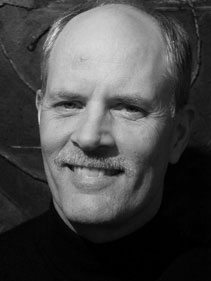 Colin Marshall sits above Hastings Street in Vancouver, British Columbia with Gordon Price, Director of the City Program at Simon Fraser University, former Councillor for the City of Vancouver, and creator of the electronic magazine Price Tags. They discuss his personal definition of “Vancouverism”; his city as a mid-20th-century version of 19th-century city-building; the balance of trying to maintain the place’s Edenic qualities while shipping out its natural resources; the D-word of density, and whether Vancouver’s West End ever really had the highest density in North America; how built environments age in place, passing from horror to heritage; how building for the car worked, until it didn’t; “stroads,” like Los Angeles’ La Cienega, which combine the worst of streets with the worst of roads; budgets as the sincerest form of rhetoric; the role technology plays in our newfound adoption of transit; whether Los Angeles could become “the Vancouver of 2020” — or maybe 2030; how New York came from the brink, and what he saw during its decline; whether the Utopian question of how to prevent dullness matters to Vancouver; the erotic power of the surreptitious, the illegal, and whatever you can’t regulate; the element of his personal life that got him interested in cities, where he used to find them emblems of what had gone wrong in society; gay men as urban pioneers; and how cities can do better with whatever they’ve already got.
Download the interview from Notebook on Cities and Culture’s feed or on iTunes.

Walking the length of Spring Street one morning, I counted 22 surface parking lots. I do this not out of a “Rain Man”-style numerical compulsion, but a no less distracting desire to feel out the progress of a city’s urbanism. The surface parking lot test gives you a sense of density, for one thing — obviously, the denser a neighborhood, the less of itself it can devote to idle cars — but it also lets you gauge its state of flux. “This’ll be a great town,” New Yorkers have for over a century said of their home and its constant construction, “as soon as they get it finished.” Manhattan’s perpetual unfinishedness, of course, defines it as a “great town,” and its developers know they can always and everywhere put up or tear down something more ambitious than a square of paint-lined concrete. Spring Street, which still boasts a formidable collection of architectural monuments to Los Angeles’ grandly aspirant early twentieth century, now offers a window onto downtown’s modern revival, and the view from it often looks exciting indeed.
Still, enthusiast though I am, a snarkier sentiment roils within me: if your downtown still has surface parking lots, then you, my friend, do not have a downtown. Yet they have nowhere to go but away. I make bets with downtown-dwelling friends about when the last surface parking lot will have vanished. Twenty years from now, certainly. Ten years, maybe. Five years — dare we hope? Out-of-downtowners, or at least those who live far enough away from downtown, tend to respond with an interestingly point-missing question: “But then where will people park?” An absence of parking indicates not just a demand for actual buildings but no need to stash vehicles in the first place: you’ll either live downtown already, or in a place connected by rapid transit. Granted, this all sounds a tad implausible to Angelenos of thirty, forty, fifty years’ standing who came to know downtown Los Angeles as the locus classicus of the sad postwar fate of the American inner city. Recall “A Note on Downtown”, Reyner Banham’s brief chapter in “Los Angeles: The Architecture of Four Ecologies”, which opens with the words, ” …because that is all downtown Los Angeles deserves.”
Read the whole thing at KCET Departures.