Skip to content

KCET Movies: How Los Angeles Made Johnny Cash — After Nearly Destroying Him

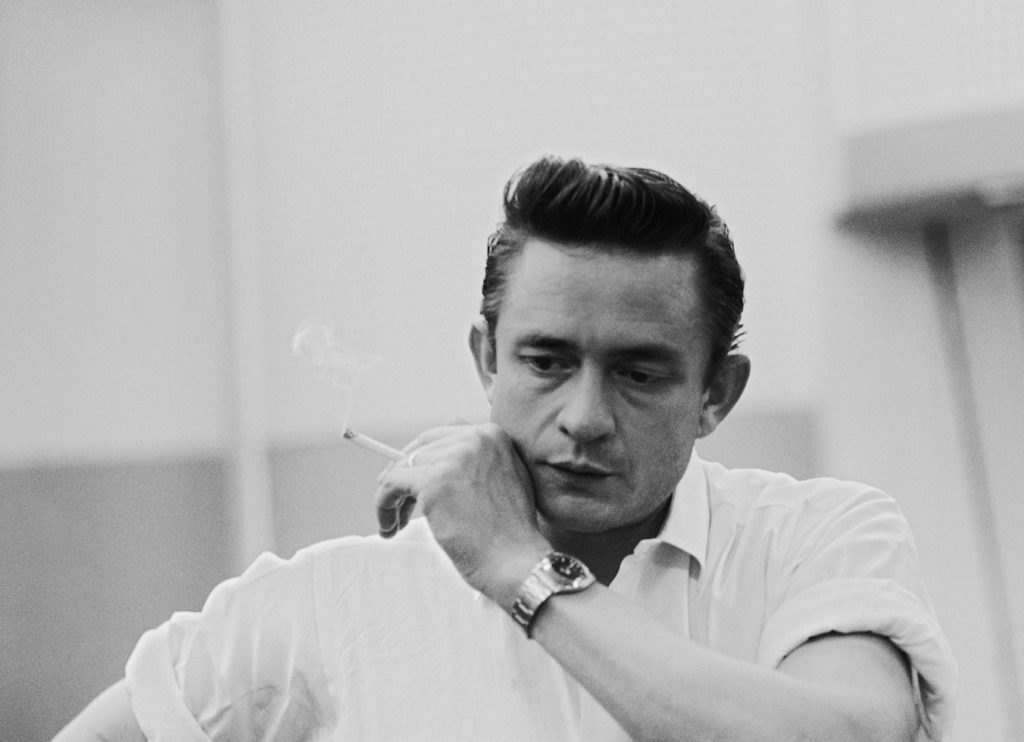
Johnny Cash, the iconic outlaw of country and western music, may have come straight out of Arkansas, and he may have launched his career in Memphis, but in his story, unlike those of many other legends in his musical tradition, the Golden State also plays a major role. Even his casual fans understand that, many of them having come to his vast discography through his breakout late-1960s live albums “At Folsom Prison” and “At San Quentin,” both recorded in the titular California correctional facilities. But as much as the Man in Black appreciated California’s remote spaces of desperation and isolation, he also spent, at different times, quite a few important years of his life in Los Angeles, a city that witnessed his rise into popular culture, his years of drug-addled chaos, and his professional rebirth.

Cash first moved to California in the summer of 1958, along with his first wife Vivian Liberto and their first three daughters (including Rosanne, who would grow up to become a famous singer-songwriter in her own right). Just 26 years old, he’d already scored hits with “I Walk the Line,” from which the 2005 biopic “Walk the Line” would take its title, and “Folsom Prison Blues,” which would become his standard show-opener. He’d recorded them at Memphis’ Sun Studios, the musical launching pad of such stars in the rock and roll, country, and rockabilly sphere as Jerry Lee Lewis, Carl Perkins, Roy Orbison, and Elvis Presley, though only Cash had the distinction of recording Sun’s first long-playing album. When an offer too good to refuse came in from Columbia Records, Cash took it and used the money to buy a house formerly owned by Johnny Carson on Hayvenhurst Avenue in Encino.

To Cash, as to so many of the new arrivals in the city, Los Angeles promised a different kind of freedom than he’d enjoyed elsewhere in America. He saw the city, according to “Johnny Cash: The Biography” author Michael Streissguth, as “musically and culturally a new world, far removed from Nashville’s parochialism and Memphis’ isolation. Though home to thriving jazz and rhythm-and-blues scenes and world-class orchestral music, the city unflinchingly welcomed rockabilly, western-swing, honky-tonk and cowboy styles.” (It also provided new collaborators, such as Cash’s co-writer on the prison song “I Got Stripes,” local disc jockey Charlie Williams.) It turned out that “a country-and-western singer scarcely needed Nashville in Los Angeles. There was a host of recording and publishing companies, high-energy disc jockeys, and a growing movie and television industry which promised bit parts, movie-soundtrack work, and the hope of Gene Autry fame.”

Read the whole thing at KCET.
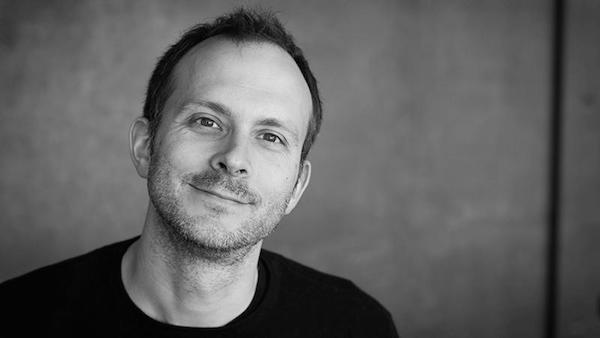
From my interview archive: “Undercover Economist” Tim Harford

This year, I’m listening again to selections from the archive of long-form interviews I conducted on the public radio program The Marketplace of Ideas and podcast Notebook on Cities and Culture between 2007 and 2015.

People get deep into things in college: music, movies, drugs, their previously unacknowledged sexual orientation, take your pick. I got deep into economics. And though I don’t remember what initially sparked my interest (though Tyler Cowen may have had something to do with it), for a few years there I could think of little else. Seldom have I anticipated as any book as much as I anticipated The Undercover Economist, the solo debut from a fellow named Tim Harford that promised to reveal and explain the hidden economic workings behind the transactions in everyday life, whether they involved a Starbucks coffee or a used car or the People’s Republic of China. It came out in my junior year, but I made sure to have it pre-ordered on Amazon so as to receive it in time to power through it on the first day of Thanksgiving break.

Knowing more about the publishing industry now than I did then, I can see that The Undercover Economist came out early in a wider popular-economics book boom, set off perhaps by Steven Levitt and Stephen Dubner’s Freakonomics, which a few months earlier had revealed and explained the hidden economic workings behind slightly less everyday transactions involving drug dealers, Israeli day-care centers, and cheating sumo wrestlers. That boom still had some life left in it when I started The Marketplace of Ideas a couple years later, so I seized the alignment of a trend and my own obsession to record interviews with authors of popular economics books, economists and otherwise, including Cowen, Steven Landsburg (whose The Armchair Economist had come out more than a decade ahead of the curve), David Friedman, Michael Shermer, and of course Harford as well.

Harford and I first talked on the show about his second popular economics book, The Logic of Life, in March of 2008 — six months before the collapse of Lehman Brothers, the defining event of what we now consider that year and the previous year’s global financial crisis. Not long after, I started to hear it trumpeted in many quarters that those troubles had disproven all the pat, just-so conclusions of traditional economics — passed straight down unaltered, presumably, from the time and place of Adam Smith — a pronouncement that seemed to overlook the criminal and regulatory issues at the heart of the crisis in favor of indulging a pre-existing resentment of the markets economics accurately described. In other words, it sounded to me like a too-late execution of the messenger, and its driving impulse underscores why I tend to describe myself as a “liberal-bashing liberal”: you may not like the conditions in this world, but refusing to examine or even acknowledge their causes won’t change them.

Still, Harford, an Oxford-trained economist, actually agreed with the chorus declaring economics disproven when we had our second interview in 2011 — or at least he agreed with them to an unexpected extent. By that point he’d already retooled his professional profile somewhat (“pivoted,” if you like, in the language of Silicon Valley) and written a book called Adapt: Why Success Always Starts with Failure. His more recent titles have seen him both make a return to the “Undercover Economist” persona and to follow the Gladwellian path further — keeping a safe distance, one hopes, from the terrible Lehererian edge — with last year’s Messy: The Power of Disorder to Transform Our Lives, which no less a reader than Cowen himself described as “Tim’s best and deepest book.”

My own interest in economics has pulled through more or less intact, though lately I haven’t seen published many of the kinds of economics books I used to enjoy reading. That’s a bit of a shame, since I would submit that economics, for all its blunt edges, still goes farther to account for How the Word Works than any other single subject, and yet it remains just as poorly understood, and willfully so, by the general public as ever. Yes, economics doesn’t explain absolutely everything, but in many situations it gets you about 90 percent of the way there. Great danger, of course, lies in mistaking a 90-percent understanding for 100-percent understanding, but frankly, it beats the hell out of the alternative.

Los Angeles in Buildings: the Angelus Temple

The phenomenon of the megachurch, though now associated with the geographical and cultural flatlands of suburban and exurban “middle America,” began in no less coastal and cosmopolitan a city than Los Angeles. Standing at the corner of Glendale Boulevard and Park Avenue in the currently fashionable neighborhood of Echo Park, right across the street from the recently rehabilitated Echo Park Lake, the Angelus Temple comes with not just greater architectural interest than its big-box descendants, but a compelling personality behind it as well. The newly built – and, for the time, extravagantly scaled – house of worship opened its doors on New Year’s Day 1923, owing to the tireless efforts of rural Ontario-born celebrity preacher Aimee Semple McPherson, not just a towering figure in the history of Pentecostal evangelism, but one of the most unlikely urbanists in the history of Los Angeles.

Some might regard the Los Angeles of the 1920s, and even more so the Los Angeles of the 1910s in which McPherson first arrived, as decidedly pre-cosmopolitan. Though booming, the city still had a great deal of growing and diversifying to do, and a considerable segment of its population then consisted of recent arrivals from elsewhere in the country – from that vast, staid “middle America” especially – and invalids in search of cures, climatic, spiritual, or otherwise, for whatever ailed them. McPherson knew what it meant to hope against hope for recovery: she’d lost her first husband, an Irish Pentecostal missionary, to disease on an evangelistic tour of China, and when their only daughter Roberta later fell ill in New Rochelle, McPherson claimed to have received a vision of the California dream, “a little home in Los Angeles,” as she prayed by her bedside.

Roberta returned to health, and the two, along with McPherson’s mother and business manager Minnie, soon moved into that envisioned little home in Los Angeles, or something close enough to it. Having picked up on the East Coast where her late husband left off to become increasingly well known as a traveling evangelist in her own right, Sister Aimee (as her followers knew her) found herself working under an expanded mandate from above on the West: not just to find a house for herself, but to “build a house unto the Lord” unlike any other in this city unlike any other. She delivered the first of the ecstatic sermons that made her famous in Los Angeles in rented spaces around the city, soon filling even the Temple Auditorium (later known as the Philharmonic Auditorium) across from Pershing Square, but in time she became enough of a phenomenon to need a permanent space of her own.

Read the whole thing at KCET, and see the previous installments of Los Angeles in Buildings here.

This week’s city reading: Habitat 67’s concrete, MacArthur Park’s non-gentrification, and the 2nd Ave. Subway’s Comfiness

Growing Up in a Concrete Masterpiece (Blake Gopnik, New York Times) “‘How do you live with all that cement,’ my schoolmates would ask. ‘With delight’ was the only answer. They understood once they visited.” This provides as good an opportunity any to quote (past Notebook on Cities and Culture guest) Jonathan Meades:

The destruction of Brutalist buildings is more than the destruction of a particular mode of architecture. It is like burning books. It’s a form of censorship of the past, a discomfiting past, by the present. It’s the revenge of a mediocre age on an age of epic grandeur. It’s the cutting down to size of a culture which committed the cardinal sin of getting above its station, of pushing God aside and challenging nature. It’s the destruction, too, of the embarrassing evidence of a determined optimism that made us more potent than we have become. We don’t measure up against those who took risks, who flew and plunged to find new ways of doing things, who were not scared to experiment, who lived lives of perpetual inquiry. Here was mankind at its mightiest. Brutalism has to go. For it is the built evidence of the fact that once upon a time, we were not scared to address the Earth in the knowledge that the Earth would not respond, could not respond.

Joining eastward march, Berggruen Institute plans second location in MacArthur Park (Christopher Hawthorne, Los Angeles Times) “Asked if he anticipated the sort of backlash from longtime residents that has greeted new galleries and cultural centers in Boyle Heights and other gentrifying areas of the city, Berggruen replied: ‘MacArthur Park is an area that will transform with us or without us. You might as well do it in a way that is productive and dignified.’” As it happens, Nicolas Berggruen, formerly known as the “homeless billionaire,” also invested a big chunk of money in Byline, where I’m gearing up to continue writing about Los Angeles myself soon.

Why doesn’t MacArthur Park gentrify? (Marissa Clifford, Curbed) “Because of its Metro station, park, and proximity to a rapidly gentrifying Downtown LA, MacArthur Park remains, in many ways, perfectly poised for gentrification. But despite increased interest in the area from people like my old landlord, the realities of everyday life in Westlake—overcrowded or poorly maintained housing and little to no functional access to the internet—stand in stark opposition to those advantages.” See also my own Los Angeles Primer excerpt on the neighborhood, one I always enjoyed visiting when I lived in the city.

Step into the Comfiness of NYC’s 2nd Ave. Subway (Sam Lubell, Wired) “Wide platforms, expansive views from the broad mezzanines, and arched ceilings create a sense of spaciousness and order. None of the stations have supporting columns, which presented a big engineering challenge but proved essential for keeping people moving efficiently.” But still no glass doors on the platforms, curiously.

John Mack Faragher’s Eternity Street traces the history of Los Angeles like no other book has (Emmett Rensin, Vox)  “These are encouraging signs for Los Angeles in the 21st century. But to wash out the stain of the past 50 years, the city must do more than make sense of its future. It must make new sense of its past. Like all California schoolchildren, I was taught a history of my state and city that began with the missions and skipped to the gold rush, with a brief mention of some war in between. We visited the old pueblo, sure, but without any sense of how a thousand square miles of city grew around it.” (Incidentally, I highly recommend this same writer’s piece on “the smug style in American liberalism.”)

From my interview archive: Arts & Letters Daily founder Denis Dutton

This year, I’m listening again to selections from the archive of long-form interviews I conducted on the public radio program The Marketplace of Ideas and podcast Notebook on Cities and Culture between 2007 and 2015.

My favorite college class won that designation not just by delivering me my sole A, but by introducing me to Arts & Letters Daily. It lasted the entire quarter but had only one assignment, the same for all fifteen or so students enrolled: write an essay on globalization. On the first day, the professor had us pull up a site that he promised us would offer a fount of engaging and clearly written pieces on a variety of subjects, globalization and otherwise, and so I took my first look at the same three columns, unchanging in format but always ever-changing in content, that I’ve checked every day since: Articles of Note, New Books, and Essays & Opinons (with the less regular Nota Bene on the side). Arts & Letters Daily, in other words, immediately joined the short list of outlets I couldn’t do without.

Pull up the Arts & Letters Daily front page today and you get links to writing on such subjects as the relevance of Alain Badiou, the algorithmic manipulation of human emotions, the optimism of Thomas de Quincey, and the failure of “cool” — all worth reading, and as a mixture more or less what I would have expected when I began following the site over a decade ago. Still, I can’t help but feel that its sensibility has shifted somewhat over the past six years since the death of its founder Denis Dutton. Whatever sensibility it had under him (which had its detractors, one of whom labeled the site “Farts & Fetters Daily”) did enough to shape my thinking that, when I launched my radio show The Marketplace of Ideas, I took the site a a kind of intellectual template for my interviews. And what better tribute could I pay, I eventually thought, than to invite Dutton himself on for one?

When I e-mailed asking if he’d like to have a conversation, I knew nothing about him except that he founded Arts & Letters Daily and that he lived in New Zealand, but when he replied he gave me quite a start: not only had he gone to UC Santa Barbara, the very same university I had (and the one where I took that globalization essay class), he’d been the manager of KCSB, the station where I recorded and broadcast The Marketplace of Ideas, back in the early 1960s when it switched from AM to FM. We talked not just about his work with Arts & Letters Daily but with the Bad Writing Contest, memorably “won” with this 94-word monstrosity by Judith Butler:

The move from a structuralist account in which capital is understood to structure social relations in relatively homologous ways to a view of hegemony in which power relations are subject to repetition, convergence, and rearticulation brought the question of temporality into the thinking of structure, and marked a shift from a form of Althusserian theory that takes structural totalities as theoretical objects to one in which the insights into the contingent possibility of structure inaugurate a renewed conception of hegemony as bound up with the contingent sites and strategies of the rearticulation of power.

“To ask what this means is to miss the point,” wrote Dutton. “This sentence beats readers into submission and instructs them that they are in the presence of a great and deep mind.”

I didn’t know at the time that Dutton, a philosophy professor by day, was at work on a book of his own on aesthetics and evolution. When The Art Instinct came out, I naturally brought him right back on the show to talk about it (thought not before Stephen Colbert did). Later that year, on a trip through New Zealand, I wondered if I should ask if he had any time to meet up, but in the event passed by Christchurch, where he lived, maybe figuring I’d catch him and the city the next time around. He died, of course, the very next year (I actually wrote his obituary in the Santa Barbara Independent), and the year after that an earthquake destroyed enough of central Christchurch that people tell me it’s never really been the same since. I don’t suppose there’s some kind of lesson in all this.

Seoul Urbanism on TBS eFM’s Koreascape: Seoullo 7017 sneak preview

Each month I join Kurt Achin, host of Koreascape on Seoul’s English-language radio station TBS eFM, for an exploration of one of Seoul’s urban spaces. This month, along with Yoon Il Gyu of the Seoul Metropolitan Government’s Regeneration Planning Division, we get up above Seoul Station and onto quite possibly the city’s most anticipated urban development of the decade: Seoullo 7017. Previously known as the Seoul Skygarden, the project has permanently shut down a freeway overpass and turned it into a walkway park featuring not just a variety of Korea’s plants and trees, but snack shops, foot baths, trampolines, and more besides. Given its repurposing of elevated space for cars as elevated space for people, some have called it Seoul’s own version of New York’s High Line, but the two projects have their differences as well. We talk about them as we walk Seoullo 7017, which opens to the public on May 20th, and also about the challenges of building such a space, the hopes for its future as it settles into a sometimes neglected part of Seoul’s urban landscape, and how it could show freeway-filled Western cities the way forward.

Stay tuned for further explorations of Seoul’s architecture, infrastructure, and other parts of the built environment. You can hear our previous segments here.

From my interview archive: Japanologist and Yukio Mishima, Kenzaburō Ōe translator John Nathan

This year, I’m listening again to selections from the archive of long-form interviews I conducted on the public radio program The Marketplace of Ideas and podcast Notebook on Cities and Culture between 2007 and 2015.

A few years before I ever set foot in Asia, I read John Nathan’s memoir Living Carelessly in Tokyo and Elsewhere, the story of his growing up as a Jewish New Yorker in Arizona, studying the Japanese language in college, moving to Japan soon after graduation in the early 1960s, and quickly falling in with such Japanese literary and cinema luminaries as Mishima Yukio, Ōe Kenzaburō, Abe Kobo, and Teshigahara Hiroshi. The book contains many more stories from subsequent chapters of Nathan’s career on both sides of the Pacific, but the sections on Japan inspired me to seek out the memoirs of other Westerners who’d lived there as well: Donald Keene’s On Familiar Terms, Donald Richie’s The Japan Journals, Edwin Seidensticker’s Tokyo Central, or more obscure — but to me, no less fascinating — volumes like Peregrine Hodson’s A Circle Round the Sun.

Originally, though, I’d simply read Nathan’s book as preparation for an interview with him on The Marketplace of Ideas. He then held, and I believe still holds, the title of Takashima Professor of Japanese Cultural Studies at University of California, Santa Barbara, where I went to college and at whose campus radio station I started the show after graduating. I’d up to that point recorded all the show’s conversations over the phone, so talking to this professor about his just-published memoir provided me the opportunity to get some face-to-face interviewing experience. It also, so I may not have realized at the time, provided me the opportunity to exhume my own long-buried interest in not just Japan but Japan’s part of the world, and not just that of a distant observer.

Nathan, by the time of my own undergraduate years at UCSB, had become something of a celebrity among that school’s students of Japanese: a highly entertaining orator full of stories about the Japan of bygone decades (many of them involving first-hand encounters with the writers and other artists whose work stoked the students’ own interest in Japan), but who could also come off — if I recall the RateMyProfessor comments correctly — as brash and lordly. I suspect I would have taken that attitude as an invigorating antidote to the simpering inoffensiveness found elsewhere in the humanities, but regrettably, I never took any of Nathan’s classes in college myself because I didn’t want to know about Japan in college: after having taught myself some basic written Japanese in middle school, I came to regard an interest in the language and the culture as the province, at least in my generation, of the sloppy, socially inept nerd, and only later, through gradual re-introduction to its less animation- and video-game-oriented fruits — such as the dark, surreal novels of Nathan’s friend Abe — could I kindle it again.

I even began studying Japanese properly, though I came to it through my interest in the Korean language, which I’d started teaching myself not long before launching The Marketplace of Ideas. With no Korean classes easily available to take around Santa Barbara (and with my having been sternly told to graduate after accruing too many credits at UCSB already), I enrolled in a Japanese class at Santa Barbara City College, having heard about the two languages’ (somewhat overstated) similarity of grammar and vocabulary and hoping to meet a Korean classmate or two with whom to practice the Asian language I really wanted to learn. That did happen, but in the process I also realized that I’d never really killed my desire to immerse myself in more things Japanese, and the example of Nathan — and Keene and Richie and Seidensticker and Hodson and many other East-going Westerners besides — led me to the realization that I could actually go to Japan, too.

My interview with Nathan, in addition to being the first I ever recorded in person, also turned out to be the first I had to air in two parts. I’d brought several question-filled notebook pages into the studio (this being so early in my interviewing career that I still felt I needed the crutch of notes), but in the event got so caught up in the conversation that I could simply let it flow naturally, and at length. Nathan, a true storyteller with his life experiences presumably fresh in his mind from having just written the book, happily obliged me with detailed answers that steered the conversation in a host of unexpected directions. I took great satisfaction from the pleasure Nathan expressed at the interview after (and even while) we recorded it, but looking back — from my current life, living in Korea, frequently visiting Japan, and writing, reading, and thinking more than ever about both of them — I wonder whether he could sense what the encounter would, a decade later, inspire me to do.

Korea Blog: “Western Avenue”, Korean Cinema’s Response to the Los Angeles Riots

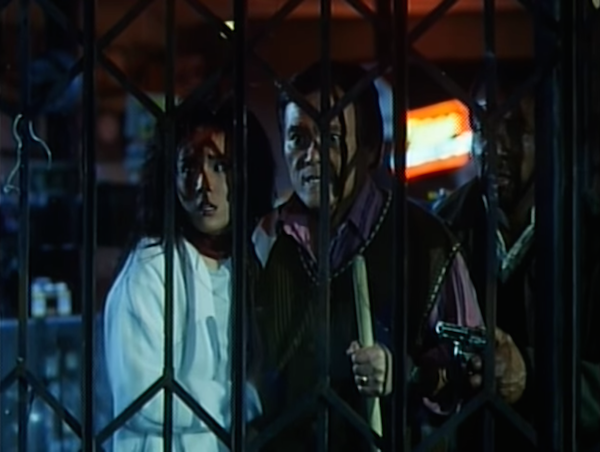
The Korean name of the 1992 Los Angeles riots, sa-i-gu (사이구), means “four, two, nine” — or rather 4/29, the first of the six days they tore through streets after the the Rodney King verdict came out. Given Los Angeles’ large Korean population, the highest of any city outside the Korean Peninsula itself, and the fact that its Korean-owned stores took so much of the damage, the Korean media granted this unrest on the other side of the Pacific the importance of a domestic disaster, flying at least 30 journalists straight over to interpret the chaos for the dismayed and bewildered audience back home. The very next year, Korean cinema, enjoying a 1990s resurgence after a couple decades spent losing out to foreign (and especially Hollywood) imports, came out with its first and still only statement on the riots: Western Avenue.

Directed by Chang Kil-soo, a filmmaker already known for telling stories of countrymen crushed in pursuit of the American Dream, the movie (which you can watch, albeit without subtitles, on Youtube) sees the riots through the eyes of a representative Korean immigrant family: Kim and his wife, who arrive in Los Angeles in the 1970s and work hard to save up for their own convenience store in which to work harder still, and their three Korean-American children, saddled with the “English names” of Frank, Bobby, and Marian. Just before the riots break out, the film carefully gathers the entire Kim family, along with the store’s sole black employee and his grown son, into their blast radius with only a single handgun for defense. But its last-act depiction of Korean suffering at the hands of black rioters comes after much more time spent depicting Koreans suffering at the hands of unsympathetic whites.

Or rather, its first two acts focus on the suffering of Marian — real name Jee-soo — after she dares to change her college major from medicine to drama, getting temporarily disowned by the enraged Kim as a result. Graduating from Yale, she moves to New York with her fledgling filmmaker boyfriend Steve, a mulleted loudmouth who takes her idea of making a movie about her own immigrant experience and turns it into an psycho-erotic spectacle titled The Exotic. “This film is so sexual,” asks a ponytailed slickster at its debut Q&A. “Did you have a hard time to act, with the Oriental morals?” Chang presents this as the humiliating nadir of Marian’s futile struggle for acceptance in the country she had since childhood regarded as her own. When she justified her disobedience of Kim’s demand that she become a doctor, she’d described herself as not a Korean but an American — only to have Steve describe her as “my little wildflower from the Orient.”

Read the whole thing at the Los Angeles Review of Books.

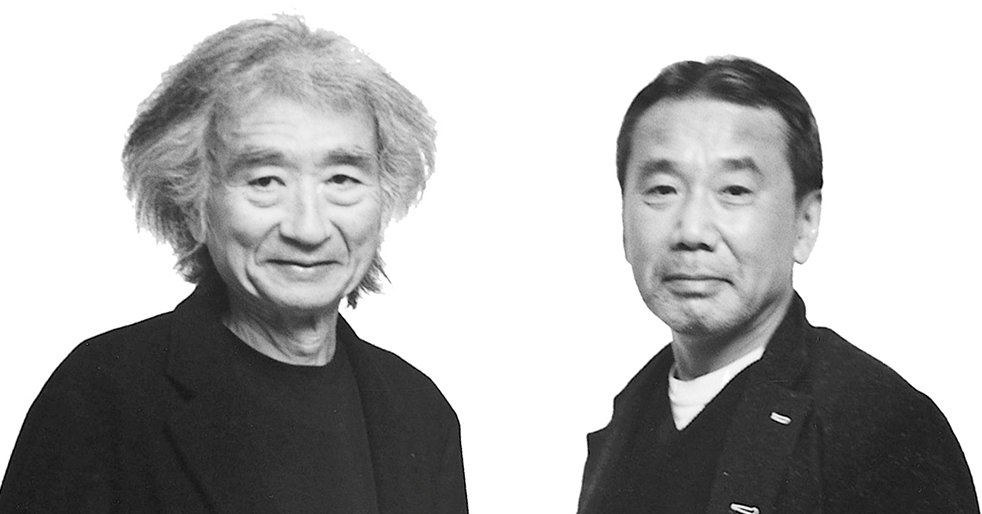
Los Angeles Review of Books: Haruki Murakami, “Absolutely on Music: Conversations with Seiji Ozawa”

Haruki Murakami’s 1Q84 opens in the middle of an unusually scored Tokyo traffic jam: “The taxi’s radio was tuned to a classical FM broadcast. Janáček’s Sinfonietta — probably not the ideal music to hear in a taxi caught in traffic. The middle-aged driver didn’t seem to be listening very closely, either.” His passenger, a young woman named Aomame, turns out to be not just a part-time assassin and one of the 928-page novel’s three main characters, but something of a classical music aficionado as well: “How many people could recognize Janáček’s Sinfonietta after hearing just the first few bars? Probably somewhere between ‘very few’ and ‘almost none.’ But for some reason, Aomame was one of the few who could.”

Not many pages later, Aomame has, at the driver’s suggestion, ditched the immobile cab in favor of an alternate route to her next victim: a set of emergency stairs built into the expressway that takes her not just to ground level but into an alternate reality. (“[P]lease remember,” the driver ominously cautions as she departs on foot, “things are not what they seem.”) Apart from the unrepresentative third-person omniscient narration, a device with which Murakami describes himself as uncomfortable, the scene, with its conspicuous reference to Western culture in an explicitly Japanese setting on one side of the boundary between this world and a mysterious other, neatly showcases some of the most often remarked-upon qualities of Murakami’s fiction.

The narration in Murakami’s earlier novels comes in the voice of protagonists something like himself, or his younger self: Japanese men in their 20s or 30s, individualist urbanites who enjoy cats, cooking, admiring women’s ears, pondering the depth of wells, quoting English-language novels and films, and listening to records. Though 1Q84 offers no obvious authorial surrogate, Aomame shares with Murakami the ability to know a Janáček — and to identify which Janáček — when she hears one. The Sinfonietta’s inclusion in a Murakami novel has ensured that many of the author’s countrymen now also know it when they hear it: world-famous Japanese conductor Seiji Ozawa’s recording of the festive, elaborate, slightly maddening piece turned best seller in Japan not long after the book did.

Read the whole thing at the Los Angeles Review of Books.

From my interview archive: comic artist Peter Bagge, creator of Hate

This year, I’m listening again to selections from the archive of long-form interviews I conducted on the public radio program The Marketplace of Ideas and podcast Notebook on Cities and Culture between 2007 and 2015.

On trips to the library growing up, I’d make right for the comics section — around Dewey Decimal 741, if memory serves. The selection didn’t change often, so I took out the same books over and over again: collections of early 20th-century strips like Krazy Kat and Popeye, which in the bland context of the 1990s seemed almost rebelliously eccentric; The Big Book of Urban Legends; plenty of Zippy the Pinhead anthologies; and more of often than most, The Adventures of Junior and Other Losers by a certain Peter Bagge. It offered everything I wanted at age eleven or twelve: clearly the work of one man alone (then as now, I don’t spent much time on teams), it had a highly distinctive art style, stories and dialogue that seemed “real” (as opposed to the words and deeds of funny animals and superheroes), and — most essential of all — absolutely nothing in it seemed aimed at, or rather down to, kids.

Only later did I find out that Bagge, a longtime resident of the greater Seattle area where I myself lived, was a comic-artist icon — or at least he’d long held iconic status in the field of “alternative comics,” a movement to which Seattle back then represented, or had recently represented, a Mecca. He’d made his name with the series Hate, which throughout the 1990s chronicled the life of a young slacker (to use the zeitgeist word of the time) named Buddy Bradley as he bounced between cities, between scams and quasi-legitimate jobs, and between frightening girlfriends and very frightening girlfriends. I first binged on it with a phonebook-thick collection of Hate‘s first few years purchased on a weeklong school trip to Ashland for the Oregon Shakespeare Festival. The store, More Fun, had a slogan fourteen-year-old me certainly couldn’t resist: “Comic books for grownups.”

And though my own growing up has in few or no ways resembled Buddy’s, episodes of his thoroughly Gen-Xer life — some of which I’ve read through five, ten, fifteen times — still come vividly to my mind on a near-daily basis. On the way down to California, moving before college (not, for better or for worse, a chapter of Buddy’s still-rigorous education), I stopped in on More Fun again to catch up on Hate. Around that same time, Bagge began contributing, in comics form, to the libertarian magazine Reason, a development that delighted me: somehow I felt relieved that he didn’t hold the Standard Pacific Northwest Liberal suite of political views, even though my own might lean slightly closer to those of the SPNL than those of Reason. And Bagge himself has, over these past fourteen years of Reason work, revealed himself as hardly an ideologue — again to my relief.

Given all Hate and the rest of Bagge’s oeuvre has undeniably done to shape my very psyche, I knew I had to find an excuse to talk to him as soon as I got into the interviewing game. The first opportunity came in 2008, when a book about him and his work came out — not a book by him, but close enough for me — and the second came the next year, on the publication of his first bound collection of Reason pieces. The third took over half a decade to line up, but it made perfect sense, since I’d ended The Marketplace of Ideas and started the more place-oriented Notebook on Cities and Culture. Recording another interview with him in Seattle when I next happened to be there, I then used it to promote the Kickstarter fund drive for Notebook on Cities and Culture‘s Seattle-oriented sixth season. In the event, the money came up way short, but I did have what seemed, at least to me, a pretty ideal guest with whom to end the show.

EPILOGUE: I went back to to More Fun on a West Coast road trip taken between ending Notebook on Cities and Culture and before moving to Seoul. Naturally I stocked up again on Bagge material once again, making the transaction with the very same proprietor who’s stood behind the counter on every single one of my five-ish-yearly visits — a little grayer than the first time, sure, but then I don’t exactly look like a teenager anymore myself.