Alien Nation, a film about extraterrestrials who arrive on Earth and struggle to integrate into American life, never won any awards for allegorical subtlety. But this otherwise by-the-book buddy cop picture does capture the texture of a certain highly unglamorous Los Angeles rarely explored on screen to this degree. As you’d expect, it also has observations to make about the historical attitude of east-coast and midwest Anglo transplants to Los Angeles toward more recent Latin American and Asian arrivals. As James M. Cain put it, “trust a foreigner who got here in 1930 to haze a foreigner who got here in 1931.”
The video essays of “Los Angeles, the City in Cinema” examine the variety of Los Angeleses revealed in the films set there, both those new and old, mainstream and obscure, respectable and schlocky, appealing and unappealing — just like the city itself.
Don’t miss Portland and Los Angeles: The Cities in CinemaLive at the Hollywood Theatre in Portland, Oregon on Sunday, January 25, 2015. The Hollywood Theatre’s site has tickets and all the details.
Notebook on Cities and Culture‘s Korea Tour is brought to you by Daniel Murphy, David Hayes, and The Polar Intertia Journal, an outlet for artists and researchers documenting the urban condition.
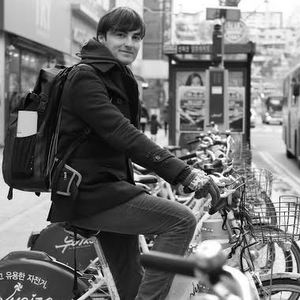
On the Seoul Floating Islands, Colin talks with Nikola Medimorec, co-author of Kojects, an English-language blog on transport, urban planning, and development projects around Korea. They discuss the first Korean city he ever experienced, and what introduction it gave him to both the country’s festival culture and its development culture; what makes the transit different in Asia than in elsewhere; the installation he witnessed of glass panels on the subway platforms, and how that not just prevents suicides but improves the riding experience; the question that got him studying geography in the first place; the success of his posts on KTX stations he wrote in his first, German-language blog, and how that led to Kojects; why he most enjoys writing about Korean bicycle infrastructure, now that it has become possible to bike there; the difference between cycling in Korea and cycling in Germany, where he grew up; how old Korean men all listen to the radio on their bicycles; how he plunged right into his studies at Seoul National University, including a statistics class in Korean; how the Suwon EcoMobility Festival took over his life; the cities that most fascinate him outside of Seoul; his impressions of the new-built “city from scratch” of Songdo and the Dongdaemun Design Plaza, “an alien spaceship landed in the middle of Seoul”; the current Seoul mayor’s aversion to all big projects, especially the “ugly” DDP; the ongoing controversy of the Cheonggyecheon Stream; whether a project like the Yonsei-ro Transit Mall can allow for commerce on the street (and especially street food); his initial surprise at all the people on the streets in Seoul, and the changing reasons they’ve come out to the streets; where to look for a pojangmacha, and why having to search for them is a problem in itself; the domestic culture of Germany versus the urban culture of Korea; what impresses German friends when the come visit Korea; what Korean cities could learn from European ones; whether Korea has any more large-scale projects remaining in the future; how older European buildings have become favored, while even 25-year-old buildings in Korea have badly deteriorated and await redevelopment; what the new “phallus symbol” of the Lotte World Tower (in which he once saw a fire) demonstrates, and why he doesn’t care about that kind of skyscraper; whether Korean 빠리 빠리 culture results in a shoddy built environment; why he couldn’t do a Kojects-style blog in Germany; Kojects’ reliance on Korean sources, and how that separates it from other English-language sites observing Korean cities; how much of his mastery of Korean comes directly from reading about transport and urban development; his preferred methods for first exploring a city; what you notice when you walk in Seoul; and the story behind the Seoul Floating Islands on which they sit.
Every weekday I write a post at Open Culture, usually to do with literature, film, music, art, television, radio, or language. Here are ten of my favorites from the more than 250 I wrote in 2014:
Notebook on Cities and Culture‘s Korea Tour is brought to you by Daniel Murphy, David Hayes, and The Polar Intertia Journal, an outlet for artists and researchers documenting the urban condition.
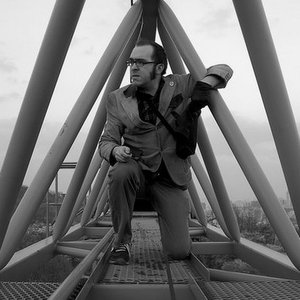
At a bar by the train tracks near Yongsan, Colin talks with Jon Dunbar, urban explorer, editor of long-running Korean punk zine Broke in Korea, and author of Daehanmindecline. They discuss the difference between a Korean abandoned place and a Canadian abandoned place; how Seoul got re-inhabited after the war; the development of poor “moon villages” on the hillsides; how he defines “urban exploring,” and why he dislikes that name; the urban renewal process that causes the abandonment of neighborhoods; the hired goons who harass people to leave areas slated for demolition; how big a city all the abandoned buildings he’s visited would constitute by themselves; his experience in the tunnel from The Host; what it means to explore Korea’s abandoned/disputed/places as a foreigner, and the difficulty of getting Koreans interested in urban exploration; the time he ran into a man collecting scrap metal, and why that man felt embarrassment for his country; the difference between the Korea he came to, which had both grass huts and high-rises, and Korea today; why so many buildings in Seoul have reached such an advanced state of decrepitude so quickly; what he prefers about North Korean architecture to South; what most high-rises in Seoul stand on the ruins of; his discovery of the Korean punk scene, and why he needed to confirm its existence before he came to live; the lower level of violence and higher level of musicianship in Korean punk; how he got to work for an organization like the Korean government; the ominousness of a presidential promise to promote “the happiness of the people”; the meaning of han, why the government now wants to eradicate the concept, and how pansori reggae expresses it; the change in Seoul mayors that brought about a change in major Seoul building projects; the significance of the new Dongdaemun Design Plaza and the politics involved in building it; how, rather than declining, Korea has “improved in every way” since he turned up; his life in Bukcheon hanok village, and how its old-style houses have become more coveted in recent years; whether Korea can shake the idea of “old = bad”; where in Korea he witnessed a funk brawl; and the way to “use your unfamiliarity as a tool” in a place like Korea.
Ridley Scott’s Blade Runner crossed Los Angeles with a grittier, less orderly Tokyo. Just over thirty years later, Spike Jonze’s Her crosses Los Angeles with a sanitized Shanghai, creating a utopian urban setting for surely the mildest cyberpunk story ever told. Instead of menacing android replicants and detective Rick Deckard who hunts them, we have a sentient operating system and the mustachioed, ukulele playing milquetoast Theodore Twombly who, as he lives his lonely life in this future Los Angeles’ skyscrapers and on its high-speed trains (but never in a car), falls in love with it.
The video essays of “Los Angeles, the City in Cinema” examine the variety of Los Angeleses revealed in the films set there, both those new and old, mainstream and obscure, respectable and schlocky, appealing and unappealing — just like the city itself.
Notebook on Cities and Culture‘s Korea Tour is brought to you by Daniel Murphy, David Hayes, and The Polar Intertia Journal, an outlet for artists and researchers documenting the urban condition.
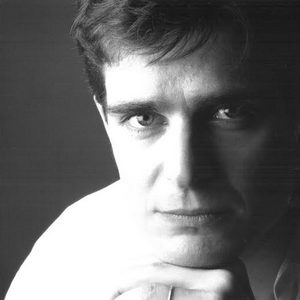
In Seoul’s Sinchon district, Colin talks with Stephane Mot, “conceptor,” writer of fiction, nonfiction, “nonsense,” and author of the blog Seoul Village as well as the collection Dragedies. They discuss Paris as a “recurring hero” of literature and Seoul as a “shapeshifter” glimpsed from different angles in different stories; how he got involved in the early days of internet gaming, surviving three startups in three years; the French embassy job that brought him to Seoul in 1991; why he prefers winter in Seoul to winter in Paris; the difficulty of walking in Seoul when first he got there; the first of the city’s “villages” that convinced him to explore more; what kind of relationship with Paris he has as a ninth-generation Parisian, and what it has gained by his becoming a partial outsider; when he first began writing about Korea; why of the two important subjects of love and death, he sticks to death; his “Borgesian experience” of discovering the internet; the subjects to which he finds himself returning in Seoul over and over again; why he writes in both French and English; his definition of a city as a scar; what he sees happening to the Korean social fabric, and how it works differently in France; the difference between the new-built urban places of Songdo and La Défense; what happens when a city has “no place for storytelling”; why he searches maps for crooked streets; what got the cars out of Sinchon; his “biggest shame,” his relationship with the Korean language, which keeps its learners thinking they’ve never learned enough; his skill with “Korean silence”; the Seoulite’s constant grieving for what has disappeared, or what will soon disappear; why he writes about the “gaps” on the maps; how having one’s own fictional Seoul prevents insanity; how more people now really come from Seoul, resulting in new senses of belonging and identity; the emerging schizophrenia between the “Korean wave” and Korean tradition; what remains unformed in Seoul to keep him awake; the reasons to hope offered by the increasing consciousness of and affection for Seoul; and the possible end of the “lemming race” to the capital.
Blade Runner‘s future noir, proto-cyberpunk vision of a Los Angeles both post-industrial and re-industrial, both first-world and third-world, has remained in the more than 30 years since its unsuccessful first run the definitive image of the city’s future. Using a combination of studio backlots, scale models, matte paintings, and actual Los Angeles architectural landmarks, the film imagines a “retrofitted,” Japanified Babel of a megalopolis that, through the name of the film, still stands for a thoroughly realized dystopia — and, increasingly, a tantalizing one.
The video essays of “Los Angeles, the City in Cinema” examine the variety of Los Angeleses revealed in the films set there, both those new and old, mainstream and obscure, respectable and schlocky, appealing and unappealing — just like the city itself.
Notebook on Cities and Culture‘s Korea Tour is brought to you by Daniel Murphy, David Hayes, and The Polar Intertia Journal, an outlet for artists and researchers documenting the urban condition.
In Seoul’s Garosu-gil, Colin talks with Darcy Paquet, critic of Korean film, founder of koreanfilm.org and the Wildflower Film Awards, author of New Korean Cinema: Breaking the Waves, teacher, and occasional actor. They discuss why movies have a hard time capturing Seoul; the unusual way the Park brothers’ Bitter, Sweet, Seoulcaptures the city; how Cold Eyes relocated a Hong Kong story into Seoul; how, after arriving in Korea in 1997, he got to know the city in step with getting to know the cinema; how he knew Seoul would grow dramatically as soon as he got there, but how nobody expected the Korean film industry would grow so much; why, right when Korean culture started going worldwide; Korean filmmakers were ready; which Korean movies Koreans tried to steer foreigners away from, and which they themselves have returned to more recently; what strengths older Korean films whose makers had to “fight the system” have that modern ones don’t; how effectively one can ready oneself for Korean life with Korean film; the size of Korea’s cinematic iceberg beneath the tip of Oldboy, Shiri, Snowpiercer, and the like; the less-defined border between Korea’s mainstream theaters and its “art houses”; what happens when Korean directors go Hollywood to make movies like The Last Stand and Stoker; what part movies (and associated pursuits) have played in helping him master the Korean language; the kind of diversity Korea has as revealed in cinema; the meaning of modernized hanok; why the last twenty minutes of Korean movies are so often just crying; the importance of Chilsu and Mansu, the first film that stepped in after the relaxation of censorship to make a political point; the sort of political criticism expressed in more recent movies like The President’s Last Bang and The Attorney; whether he feels more critical freedom than would a Korean; how Korean producers have done less to “protect directors from the money” these days; the “difference of opinion on objectivity and subjectivity” between Korea and the west as expressed in documentaries and their switch from “we” to “I”; what filmmaking techniques work on him now that wouldn’t have when he first came to Korea (and which still don’t); whether films have yet begun to take him back to his previous years in Seoul; what he sees when he revisits Christmas in August, one of the first Korean films he ever saw; how much of the Korea ahead, the country his sons and their generation of Koreans unlike those the world has known before will grow up in, he can see in the movies.
Notebook on Cities and Culture‘s Korea Tour is brought to you by Daniel Murphy, David Hayes, and The Polar Intertia Journal, an outlet for artists and researchers documenting the urban condition.
In Seoul’s Sinchon district, Colin talks with Danny Crichton, researcher and writer on regional innovation hubs and a contributing writer for TechCrunch. They discuss the hardest thing about being a Korean entrepreneur; what the concentration of Seoul has facilitated about Korean innovation; how he got from an interest in China “because it’s China” to a more fully developed interest in Korea; what happened to Sony, and thus Japan; how he responds to the current Korean of question, “Is this really a developed country?”; how people have stopped putting up with the country’s corruption, perhaps one of the drivers of its astonishing growth; how the ideas of the “heterodox” economist Ha-joon Chang apply to all this; why the concept of the subway-station “virtual grocery store” caught his eye; why Silicon Valley is so much more boring than Seoul; the significance of Kakaotalk and its abundance of purchasable “culturally ambiguous stickers”; why so many things, like playing Starcraft in stadiums, seem only to work in Korea; how Korea got a highway torn down in eight weeks; what thinking led to the new city of Songdo 43 train stops outside Seoul, and what it proves, negatively, about how “people want to live near other people”; why you can’t just “build innovation”; how he found both Hello Kitty Planet and a giant Bible; organic agglomeration versus the deliberate agglomeration the Korean government has tried to incentivize; the country’s distinctive capitalist-socialist “hybrid model”; whether the government can really pick winners; how much advantage hugeness gives a country these days; what he learned from Singaporean entrepreneurs, who have to go straight to the global market, and why the United States hasn’t had to think globally; his early exposure to Silicon Valley culture, and how he got interested in the connections between universities, industries, and government; how the strength of America’s universities, even today, remains the country’s strength; how the idea of “what Korea needs” still has more traction than the equivalent in the U.S., though less than it did in the past; whether Americans have begun to realize that they can find opportunities in other countries; why Americans cling so tightly to the decade or two after the Second World War as if it were the rightful state of things; what comparisons he can make between the challenges facing San Francisco and those facing Seoul; the “pragmatic urban development philosophy” in Seoul versus the “almost religious zealot” one in San Francisco; the difference between cities that think of the future as good, and those that don’t; why he thinks “a little bit about Thailand”; why strategically wrong choices don’t persist in Korea quite as long as in America; whether Korea can cure it’s “education fever” and resultant title culture; and the greater effect Korea’s laws have on its entrepreneurs than its culture does.
Like Walter Hill’s The Driver back in 1978, Nicolas Winding Refn’s Drive opens with a downtown car chase, though it swaps out the Ryan at the wheel: this time it’s Gosling instead of O’Neal, but he still pays the Driver, a getaway man of few words and many strict professional guidelines. This Driver, however, operates in a European vision of 21st-century Los Angeles, working part-time for a garage and part-time for the movies while getting more involved than he should with both the mob (based in the thoroughly criminal San Fernando Valley) and the mom next door in his Westlake apartment building.
The video essays of “Los Angeles, the City in Cinema” examine the variety of Los Angeleses revealed in the films set there, both those new and old, mainstream and obscure, respectable and schlocky, appealing and unappealing — just like the city itself.
 Notebook on Cities and Culture‘s Korea Tour is brought to you by Daniel Murphy, David Hayes, and
 Notebook on Cities and Culture‘s Korea Tour is brought to you by Daniel Murphy, David Hayes, and
  Notebook on Cities and Culture‘s Korea Tour is brought to you by Daniel Murphy, David Hayes, and
  Notebook on Cities and Culture‘s Korea Tour is brought to you by Daniel Murphy, David Hayes, and
  Notebook on Cities and Culture‘s Korea Tour is brought to you by Daniel Murphy, David Hayes, and