Monday, December 15, 2014
 Notebook on Cities and Culture‘s Korea Tour is brought to you by Daniel Murphy, David Hayes, and The Polar Intertia Journal, an outlet for artists and researchers documenting the urban condition.
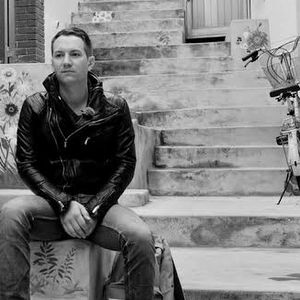
Not far from Seoul’s Anam station, Colin talks to Charlie Usher, author of the blog Seoul Sub→urban and the book 찰리와 리즈의 서울 지하철 여행기 (Charlie and Liz’s Seoul Subway Travelogue). They discuss the first subway stations his life in Korea revolved around; the identity of Liz, the photographer in Charlie and Liz; what makes the Seoul subway system the best framework in which to get to know the city; the impressive integration of the subway with the city itself, meaning that city life doesn’t stop at the station entrance; whether he began with any methods and systems for documenting his subway travel; how the whole project came about through “a sense of guilt”; which stations, in and of themselves, make for cool Seoul places; why the concept of shopping in a stations surprises Americans; where, and whether, urban Seoul ends and suburban Seoul begins; how he came to understand Seoul’s role as the focal point of Korea; when he realized Seoul Sub→urban had taken him where he wouldn’t have gone before, and not into the Seoul repetitive blandness of stereotype; when he realized his work interested Koreans as well; how Korea has made him appreciate the diversity of the United States, even in his home state of Wisconsin, and how he has come to appreciate the “deep sense of community” in Korea; why public transit never took hold in the same way in America as it did in Asia; how much of a longing he can develop for whatever lies beyond the train lines; the different Seoul you see depending on the mode of transportation you use; the lack of any good reason for which he first came to Korea after graduation, except for the teacher-exchange program at his university; how his aunt and uncle preceded him to Korea by coming to the more “brutish” Seoul for the 1988 Olympics; what he’s noticed about which languages subway announcements come in at which stops; the change in ridership demographics and advertisements from line to line; why you see white guys on Line 6; whether he uses subways as the framework for understanding other cities as well; his short but extremely deep experience on the Pyongyang metro; what about Seoul still surprises him after seven years there; how many of greater Seoul’s 500-ish subway stations he’s explored; the newly built lines whose openings he even now anticipates; the distinctive bouquets that appear whenever anything has its ribbon cut; when not exploring Korea through its transit, how he explores it through its food; the recent explosion in Seoul coffee shops, which more than freed him from the need to board a train to get to one; and what it felt like to see the fruit of his labors become a Korean-language book.
Download the interview here as an MP3 or on iTunes.
Monday, December 15, 2014
The Guardian rounds up its city writers’ favorite city books of 2014, including my selection:

The Interior Circuit
Francisco Goldman
It takes bravery, or at least fatalism, to drive in Mexico City. Having developed a bit of both in the years after his young wife’s sudden death, Guatemalan-American writer Francisco Goldman took on the challenge of learning to navigate his adopted hometown by car as a way of extracting himself from the self-destructive lifestyle into which the tragedy plunged him. The Interior Circuit tells of not just his struggle for self- and urban mastery, but of the city’s own – against its political corruption, its student unrest, its stark class divisions and its popular image as a crime-racked, death-obsessed, “surreal” sort of metropolis.
The others’ picks include books on Shanghai “vernacular neighborhoods” and “urban smellscapes” as well as Pico Iyer’s latest.
Friday, December 12, 2014
Notebook on Cities and Culture‘s Korea Tour is brought to you by Daniel Murphy, David Hayes, and The Polar Intertia Journal, an outlet for artists and researchers documenting the urban condition.
Above Seoul’s Itaewon district, Colin talks with Open Books acquiring editor Gregory Limpens. They discuss what kind of foreign literature Koreans like to read, and their loyalty to authors they’ve already enjoyed; how the mission of Open Books fits into shaping that taste; how he got from growing up in Belgium to bringing foreign literature in Korea (and practicing trademark law somewhere in the middle); what about his first, traveling impressions of Seoul stoked his desire to live there; his impression of the future-orientation of Korea versus the historical orientation of Belgium; the nature of “Brusselization”; how he discovered the traditional Korean sensibility of not showing off (and how he sees that changing); whether the multilingualism of his homeland helped him get in the frame of mind to learn Korean; the widening vase as a metaphor for language acquisition; whether Koreans have any particular expectations of Belgians, and where they fit into the apparent hierarchy of foreigners in Korea; what happens at the Seoul International Book Fair, and why Belgium may never get an invitation as its guest nation of honor; what happens when he tries to recommend a browser something at the Open Books booth, and why that can be a discouraging practice in Korean culture; what he knows about translation that makes him always want to read books in the original language; how “l’exception française” has produced a great deal of literature; how often he meets Korean French-speakers; how a Korean Belgian waffle differs from a Belgian Belgian waffle; his sole moment of homesickness in a decade of life in Korea; the changes in his responses to his own periodic assessment, “Why do I like it here?”; what has made him lose confidence in his grasp of Korean literary taste; why Hitler remains a big thematic name in Europe, but probably wouldn’t play in Korea; the success of Korean “fables for adults”; his pride in Open Books bringing out titles like Michel Houellebecq’s Atomized, and the literary aejeong he feels for ones like his countryman Dimitri Verhulst’s The Misfortunates; how writers react to seeing their novels in Korean translation; how much Korean readers care about book design; how Korean bookstores feel different.
Download the interview here as an MP3 or on iTunes.
Thursday, December 11, 2014

When asked for recommendations about their city, Manileños have the irksome habit of insisting that “There’s nothing to do in Manila,” or that “It’s just buildings,” and directing you instead to the nearest beach. But knowing that a city of Manila’s size and vitality is interesting by definition, if you press them, they will usually admit at least one thing: “Well, we do go to malls.”
And do they ever: the malls of metro Manila, 16 of them qualifying as “supermalls” – to say nothing of the various “community malls” and “lifestyle malls” – offer all of life’s necessities, and most of its pleasures. These cities unto themselves descend, in some sense, from Manila’s walled colonial-era “city within the city” of Intramuros.
But today’s largest malls offer not just the usual shops, eateries (usually including at least one branch of a chicken roaster named after the American country singer Kenny Rogers), grocery stores and movie theatres, but bowling alleys, gyms, medical offices and even churches. More importantly, they offer air conditioning, which goes a long way to explaining their success in a city whose temperature seldom falls below 20°C. (Can it be a coincidence that Manila’s first enclosed shopping mall, 1932’s art deco Crystal Arcade, was also the country’s first air-conditioned building?)
Read the whole thing at The Guardian.
Wednesday, December 10, 2014
Englishmen have come to Los Angeles since it first qualified as a city, and another one comes in The Limey. Wilson, a London thief just out of jail, comes to town to investigate and possibly avenge the mysterious death of his daughter. The trail leads Wilson, played by icon of 60s British cinema Terence Stamp, to the heavily cantilevered Hollywood Hills mansion of record producer Terry Valentine, played by icon of 60s American cinema Peter Fonda. The two square off in a post-utopian era of violence through and ultimately well outside a city that allows nothing so comfortable as finality.
The video essays of “Los Angeles, the City in Cinema” examine the variety of Los Angeleses revealed in the films set there, both those new and old, mainstream and obscure, respectable and schlocky, appealing and unappealing — just like the city itself.
Tuesday, December 9, 2014
 Notebook on Cities and Culture‘s Korea Tour is brought to you by Daniel Murphy, David Hayes, and The Polar Intertia Journal, an outlet for artists and researchers documenting the urban condition.
In Seoul’s Itaewon District, Colin talks with Stephen Revere, CEO of 10 Media (producer of Chip’s Maps), co-founder and managing editor of 10 Magazine, author of two Survival Korean books, and for three years the teacher on Arirang television’s Let’s Speak Korean. The Seoul in which he arrived, and which amazed him, in 1995; how quickly he decided to master the Korean language, and the dearth of tools he had back in those days, such as the Korean Through English books; where the Defense Language Institute’s hierarchy of difficulty discouragingly ranks Korean; the frustrations of studying Korean alongside Chinese and Japanese classmates; why students on Let’s Speak Korean had to pretend to speak Korean poorly; his days with the “한외모” speaking group; what he enjoyed most about Korean life that convinced him to learn more and more about it; what got him from subscribing to 3-2-1 Contact as a kid to starting 10 Magazine as an adult; what a foreigner should know to make best use of a city like Seoul, or a country like Korea; what remains “hidden” about Korea in this era of the “Korean wave”; why so many Koreans dismiss their hometowns, if they don’t come from Seoul; what he does when he heads out in to the provinces; the “massive” generational difference between older and younger Koreans; what his life in Korea has taught him about America; what positive aspect of Korea it reflects that you can easily get into shouting matches there; how the size of your vehicle determines your right-of-way on the roads of Seoul; the unique role Itaewon, home of 10 Magazine headquarters as well as “Hooker Hill”, “Homo Hill”, and a mosque, plays in Seoul, and why it inspires a song like “Itaewon Freedom“; whether more Korean teaching lies in his future; when he knew he would’t be going back to America; when he realized he’d attained fluency in Korea, and what it means to be fluent anyway; why you’ve got to join the group for eating in Korea (and possibly turn ex-vegetarian because of that); why the markets provide the purest experience of the culture; and whether he still considers mastering another language.
Download the interview here as an MP3 or on iTunes.
Saturday, December 6, 2014
 Notebook on Cities and Culture‘s Korea Tour is brought to you by Daniel Murphy, David Hayes, and The Polar Intertia Journal, an outlet for artists and researchers documenting the urban condition.
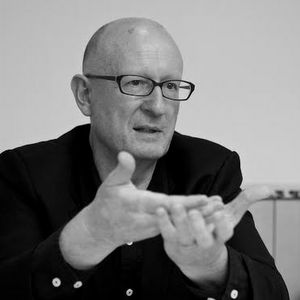
In Seoul’s Insadong district, Colin talks with Michael Breen, author of The Koreans: Who They Are, What They Want, Where Their Future Lies as well as other books on Kim Jong-il and Sun Myung Moon as well as founder and CEO of Insight Communications Consultants. They discuss what you can infer about Korean society from the way Koreans drive versus now versus when he first wrote wrote The Koreans; the difference in the role of the law where it has traditionally oppressed people, as in Korea, and in society like the United States; the permanently red traffic lights in front of the president’s house, and how you get through by “looking at the man”; what effect the sinking of the Sewol and the “third-world accidents” that preceded it had on the country’s psyche as a developed nation; why those from already-developed countries have a hard time advising less-developed nations on matters like corruption; how “the politics lags behind the quality of the the people” in Korea, why the skills of rhetoric matter less there than elsewhere, and what the situation might have in common with Yes Minister; the dictator Park Chung-hee, “son of a bitch, but our son of a bitch” who ordered the country into development; why the South Korean government has no long-term plan for unification with the North; what sort of country he thought he’d got into in 1982, the extent of his ignorance about it at first, and the theoretical frameworks and attitudes he thereby escaped; the moment he found himself taking the side of journalist-beating cops; how Korean dictators, not just “random brutes” who rose to power, got put there by a particular system; why the potential “Seoul Spring” after the fall of Park Chung-hee didn’t immediately lead to democracy, but to conflicts between the citizenry and the police; what he heard (and couldn’t hear) in North Korea; how many branches of Starbucks he could hit with a stone (and how different were the old coffee shops in which dissidents met); what got stamp collectors arrested in the “old” South Korea; what lengths the South Korean government goes to not to allow its citizens their own judgment on North Korea; the lingering sense, in South Korea, that the North may have taken the high road; the issue of how unbroken Korean history really could have remained over the millennia; the Korean lack of an idea of Korean philosophical tradition; what got him interested enough in the Koreans to write The Koreans; the traditionally condescending (if thoughtfully condescending) attitude foreigners had toward Korea; what may change in the next edition in The Koreans, especially its coverage of culture; whether modern Korea remains recognizably the same place he came to in 1982; and what issues might make the most impact on the country soon.
Download the interview here as an MP3 or on iTunes.
Thursday, December 4, 2014
Pitched between comedy, horror, and disaster, those reliable Los Angeles genres,
Night of the Comet manages, in its thoroughly 1980s sensibility, to be at once the parody and the thing parodied. In it, two Valley-girl sisters who happen to survive the passing of a nearly humanity-extincting comet must contend with zombies, thugs, survivalist scientists, and one another — mostly in the already half-apocalyptic setting of downtown Los Angeles thirty years ago.
The video essays of “Los Angeles, the City in Cinema” examine the variety of Los Angeleses revealed in the films set there, both those new and old, mainstream and obscure, respectable and schlocky, appealing and unappealing — just like the city itself.
Wednesday, December 3, 2014
 Notebook on Cities and Culture‘s Korea Tour is brought to you by Daniel Murphy, David Hayes, and The Polar Intertia Journal, an outlet for artists and researchers documenting the urban condition.
In Seoul’s Arirang building, Colin talks with Adrien Lee, host of Arirang TV’s Showbiz Korea and Arirang radio’s Catch the Wave. They discuss how he first reacted to the sight of all the branches of Paris Baguette, Tout les Jours, and Ciel de France in Seoul; how he got from industrial engineering studies in France to television and radio in Korea (and why he isn’t looking back); what Korean culture he could get exposure to growing up in France; how few complications his background introduced into his childhood; how his French mom met, and learned to speak Korean before meeting, his Korean dad; the Korean dream of Paris, France, and Europe; the constant change in Korea, the “exciting hell,” versus the unchanging stability of France, the “boring heaven”; what Koreans ask him when they find out he comes from France; how he grew up speaking a mother tongue, a father tongue, and a school tongue; how he teaches Korean language with Hyunwoo Sun, and why he finds people start studying it; how Korean people make the study of Korean interesting (in slight contrast to the situation with French); how he adapts his behavior to different cultures; the elements of Korean popular culture he personally enjoys, even when he doesn’t have to talk about them for work; the sort of Korean food you get in Paris; the things you wouldn’t expect that Korea, but not France, puts into bread; what has surprised him about the strengths of Korean culture, including the Korean women’s golf performance; the convenience of Seoul’s safety, 24/7 culture, and ease of leaving your laptop out at the coffee shop when you get up to use the bathroom; whether Korea and France can learn from one another’s priorities; whether Seoul has become an international city in the Parisian manner; where he takes visiting friends and relatives in Seoul; what first steps to take toward Korean culture before coming here; and how to keep up with his broadcasts, wherever you may live.
Download the interview here as an MP3 or on iTunes.
Sunday, November 30, 2014
 Notebook on Cities and Culture‘s Korea Tour is brought to you by Daniel Murphy, David Hayes, and The Polar Intertia Journal, an outlet for artists and researchers documenting the urban condition.
On a rainy day in Seoul’s Garosu-gil, Colin Marshall talks with Marc Raymond, film scholar, teacher at Kangwoon University, and author of Hollywood’s New Yorker: The Making of Martin Scorsese. They discuss how much you can learn about Korean life from Hong Sangsoo movies; what Hong has in common with Martin Scorsese; how the two directors relate differently to their “outsider” status; the international code Hong seems to have cracked, and why the rest of Korea covets that; Hong’s probable place in the Criterion Collection (or at least the Eclipse Series); how, exactly, he would describe what a Hong Sangsoo film is; the rarity of the intersection between talky relationship cinema and formally experimental cinema; the importance of drinking, smoking, and improvisation in not just Hong’s method but in Korean culture itself; how he first discovered Hong, and how he discovered Scorsese shared his enthusiasm; how Hong illustrates the breakdown of the social rules Korea doesn’t expect to break down; why his Korean wife laugh at different moments in the movies than he does; whether straight-up critiques of Korean masculinity have remained central to Hong’s work; Hong’s less-discussed critique of Korean femininity; whether he finds, given his experience with Korean life, that Hong’s criticism of Korean society hit the mark; how Hong’s films have become linguistically easier as he has gained larger international audiences; why, between degrees, he came to Korea in the first place; his early impressions of the familial attitude and reliance on authority that penetrated all environments; the reductiveness he dislikes in the scholarship of both Korea and Scorsese; where his native Canada’s lack of popular cinema drove him; whether Koreans expect him to exemplify Canadian virtues; the hockey comedy that outgrossed Titanic in Quebec; what it felt like to go from a huge, thinly populated country to a small, thickly populated one where his first apartment complex had more people than his hometown; the importance of a career that allows you to pick and choose where you go and when in a big city; what films, besides Hong’s, have helped him integrate into Korean culture, like Oasis and Secret Sunshine; the difference between Korean melodrama and other countries’ melodrama; who we can call “the Korean Martin Scorsese”; and whether Canada has, or could use, a Scorsese of its own.
Download the interview here as an MP3 or on iTunes.