Skip to content

The Marketplace of Ideas: in Mexico City with David Lida

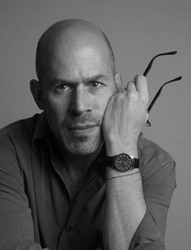
This week on The Marketplace of Ideas, recorded live on location in Mexico City, I talk to David Lida, author of First Stop in the New World, Las llaves de la ciudad, Travel Advisory: Stories of Mexico, and the blog Mostly Mexico City. A native New Yorker, Lida moved to Mexico City in 1990 — a year considered by many to have been the megalopolis’ absolute nadir in terms of crime, crowding, and pollution — and hasn’t looked back, becoming the best-known English-language chronicler of el Distrito Federal in the 21st century.

The way I see it, one can’t help but get fascinated by Mexico City right now. My own fascination boiled to the point that I had no possible choice but to pay a visit to el Distrito Federal myself. You can read about my exploration of the city at colinmarshall.org (specifically under the “Mexico City” category), but you’ll do even better if you pick up the books I read in preparation for the trip: Rubén Gallo’s The Mexico City Reader, Daniel Hernandez’s Down and Delirious in Mexico City (be sure to catch him here on The Marketplace of Ideas too!), John Ross’ El Monstruo, and absolutely everything David Lida has written. Whether he’s using English or Spanish, whether he’s observing grand or minute urban phenomena, or whether he’s discussing something beautiful, frightful, or simply bizarre, he’s looked at Mexico City from the angle you want.

Download the conversation on iTunes here or on the web site here.

Today’s young American aesthetic zeitgeist

Weirdly, I didn’t start drinking coffee until about age 25. I spent my life up to that point in thrall to the fear of turning into either a coffee snob or a coffee masochist; I figured just one sip could trigger the transformation. We’ve all witnessed the ugly spectacle of coffee snobbery — I suspect my habit of spending entire nights drinking the coffee at Denny’s inoculates me against this — but coffee masochism spooked me even more deeply. Maybe you also felt surrounded by it in your teenage years: remember those friends who wouldn’t stop getting into pissing contests about how “sweet,” how “stupidly sweet,” or how “ragingly sweet” the coffee everyone else drank was? Or were you one of them?

(And ironically, I grew up in Seattle — I should’ve become one of them.)

Ultimately, coffee simply proved too rich and varied a drinking experience to resist. Even if I didn’t like the stuff, it remains just about the cheapest hot drink you can buy, and thus the most cost-effective purchase when reading in cafés all day long. If I come to long for anything about Santa Barbara, I’ll long for its abundance of places in which to do this: Coffee Cat on Anacapa, The Daily Grind on De la Vina (I’ll be back for another Gemini sandwich, I can assure you), The French Press on Figueroa, Jitters on State… the list goes on.

Mexico City’s coffee culture I kind of do long to return to, since all those excess employees displayed what seemed like a decent skill at brewing my Americanos right in front of me. Plus they don’t care if you hang out — nobody dreams of bringing you the check there unless you ask, and even then it can take a while — and sometimes, as in the case of “Cafebrería” El Péndulo, you can drink your coffee amid tables piled with editions from Anagrama, Sexto Piso, and Tusquets.

The Los Angeles coffee world I’m still learning, though it seems as essentially ungraspable as the city itself. I’ve made sure to hit several coffee shops of the rolled-up-pants variety that supposedly inhabit the dead center of today’s young American aesthetic zeitgeist — Coffee Commissary in Fairfax Village, Intellegentsia in Silver Lake — and found myself entirely unbothered by them. I’ve known people who would burn these places to the ground as nothing more than a blow to “hipsterism,” but, in the exact same way that I don’t want American Apparel ads to go away, I don’t want these coffee shops to.

But I live in Koreatown, where the coffee shops are… different. Allow me to explain the phenomenon of the Korean coffee shop. From the outside, they look quite a bit slicker, significantly cleaner, and — let’s not mince words — maybe slightly more garish than coffee shops in other part of the city. When you look over their menus, you’ll notice that they tend to offer not just a large selection of drinks but a wide variety of unusual comestibles, from elaborately topped pretzels to elaborately topped ice cream sundaes. You’ll also notice that a coffee costs like four bucks, and an iced tea might well clear five.

What gives? Near as I can figure, Korean coffee shops operate on this premise: offer your clientele a pleasant place to sit and study for hours and hours on end, just enough food that they won’t need to leave for lunch, at least a few (if not infinite) refills on the drinks, and — naturally — a place to smoke, and they won’t mind paying twice as much as they would elsewhere. If I had some money, I certainly wouldn’t mind, but alas. What a piece of good luck that I haven’t yet gotten hooked on the “sweet potato latte,” a beverage I’ve seen at every single Korean coffee shop in L.A., and nowhere else. Given that it tastes like a liquefied sweet potato, the possibilities for addiction are obvious. And all those classmates frontin’ with their complaints about raging sweetness? Man, they’d better prepare for a whole other universe of raging sweetness for these things.

When I don’t feel like rolling up my pants for Intelligentsia or the Commissary or dropping a fiver on a sweet potato latte in Koreatown, I catch a train to Cafe Dulce in Little Tokyo’s Japanese Village Plaza. Of all the Los Angeles coffee shops I’ve visited so far, this one comes the closest to matching the relaxed, lingerer-friendly, yet not particularly expensive sensibility to which I grew accustomed in Santa Barbara. I order one of their Vietnamese iced coffees — “Vietnamese” here seems to mean “brewed for a very long time indeed” — and a spirulina chewy roll — even greener on the inside than the outside! — and park myself at an outdoor table for an afternoon’s reading.

I strongly recommend sitting outside, since it affords a superior vantage point on the comings and goings of all who pass under the bright blue plastic roof tiles of the JVP. You can watch whole groups tentatively gather and sign their names on the waiting list for the shabu shabu place across the way which, even though it doesn’t present itself like anything special, certainly must be. (Not an unusual contrast in this neighborhood, I find.) Other people have fascinating-looking meetings at the Joy Mart Restaurant over in the other direction. And the woman who runs the arts-and-crafts shop between those two certainly seems to keep busy. If any of these sights stops being entertaining, I like to walk through the nearly deserted bottom floor of the nearby Little Tokyo Mall. That tobacco store has really hung in there!

One governing factor on how long you can spend hanging out at Cafe Dulce: no obvious bathroom. I mean, they might have a bathroom, but if they do, I haven’t seen it. I bet if I asked, they would tell me it’s just off-site and hand me a key or something. I don’t think it would be a problem, but for whatever reason I’ve just felt hesitant about asking. Maybe I fear disrupting the delicate balance I’ve got going: an iced coffee, a chewy roll, my books on various cities of the world, the local proprietors and passers-by on display, and, of course, the hotels Miyako and New Otani Kyoto Grand in the background. I take great pleasure in sitting where I can see both of those aging hulks of the near-colonial Japanese prosperity of the seventies and eighties at once. Defocus your eyes a little, and you almost feel like the Bubble never burst.

Now, I don’t mean to come off as a loner. Let me assure you that it’s just as much fun to read at coffee shops with other people. But if you want to go the route of the loner, you could do no better for an example than Thomas, the alienated fashion photographer at the center of Michaelangelo Antonioni’s Blow-Up. I caught a screening of the film right after Mexico City and wanted to find out more about David Hemmings, its then-25-year-old star.

The year after Blow-Up, the (also 25-year-old!) Roger Ebert wrote a profile on Hemmings in which he mentions an intriguing idea for an art show. While Antonioni’s film, set in “swinging” mid-sixties London, went on to emblematize that place and time, I got from it on this viewing a serious and unexplainable L.A. vibe. It so happens that L.A. fascinated Hemmings even then:

“You take Los Angeles, now. London is supposed to be the swinging city, but Los Angeles has the opportunity to become the next great city of the world.

“What Dennis Hopper and I are going to show in our ‘Los Angeles Primer’ is, we hope, an exhibition of what is happening in Los Angeles. Some of the artifacts that make the city a work of art. Cheap restaurant glasses that, in a century, will be collector’s items. Street signs. Buildings. And the people.”

Will he and Hopper use photographs?

“Yes, where they are appropriate.”

And the actual objects?

“Yes, the actual objects in some cases. And the people, too, who are the real artwork of this city.” But surely you aren’t going to put people in an art gallery?

Hemmings smiled enigmatically. “Just you wait and see.”

Over 35 years later and just months before his death, Hemmings spoke again about this idea in a profile for The Age:

“Once, Dennis Hopper and I proposed this wonderful exhibition called A Los Angeles Primer. We took two coaches of dignitaries from the Ferris-Pace gallery in La Cienega to Malibu and back. On the way, Dennis got out of the front coach and signed the Beverly Hilton and the Beverly Hills Hotel. At Malibu, he went into the water and signed a wave. And then the coaches were driven back to the gallery where, behind a huge screen, the Mamas and Papas played California Dreamin’ constantly. Cards were given to the dignitaries saying, ‘You are the art of Los Angeles. Look at each other carefully’. Blank walls all around the gallery, of course, just music playing. That was the exhibition. And that was the swinging ’60s.”

Did that really happen? “If you wanted to report that we did, Dennis would back me up.” The answer to the question seems to be no.
Four views from my rooftop

At Psychanaut (“a portmanteau of “psychonaut” [mind-explorer], “cha” [茶/tea], and “chan” [禪/zen buddhism]”), my friend Nick writes about the adventures he’s having after a recent move to Taipei. He drinks mango juice, studies Chinese, plays guitar at open mics, searches for tea houses, haunts jazz clubs, takes trips to Hong Kong and Seoul, eats turnip cakes, gets creeped out by sculptures, and absorbs the culture by osmosis.

Taipei fascinates me a bit, but most of what I know about the city comes straight from the films of Ming-liang Tsai. Nick tells me that, in his experience, people in Taipei don’t watch much Tsai, just as Germans don’t watch much Werner Herzog, or Americans don’t watch much Jim Jarmusch. Perhaps, though I almost consider film culture a city unto itself, and my explorations of film culture explorations of that virtual city in a grand attempt to find and befriend its most interesting residents.

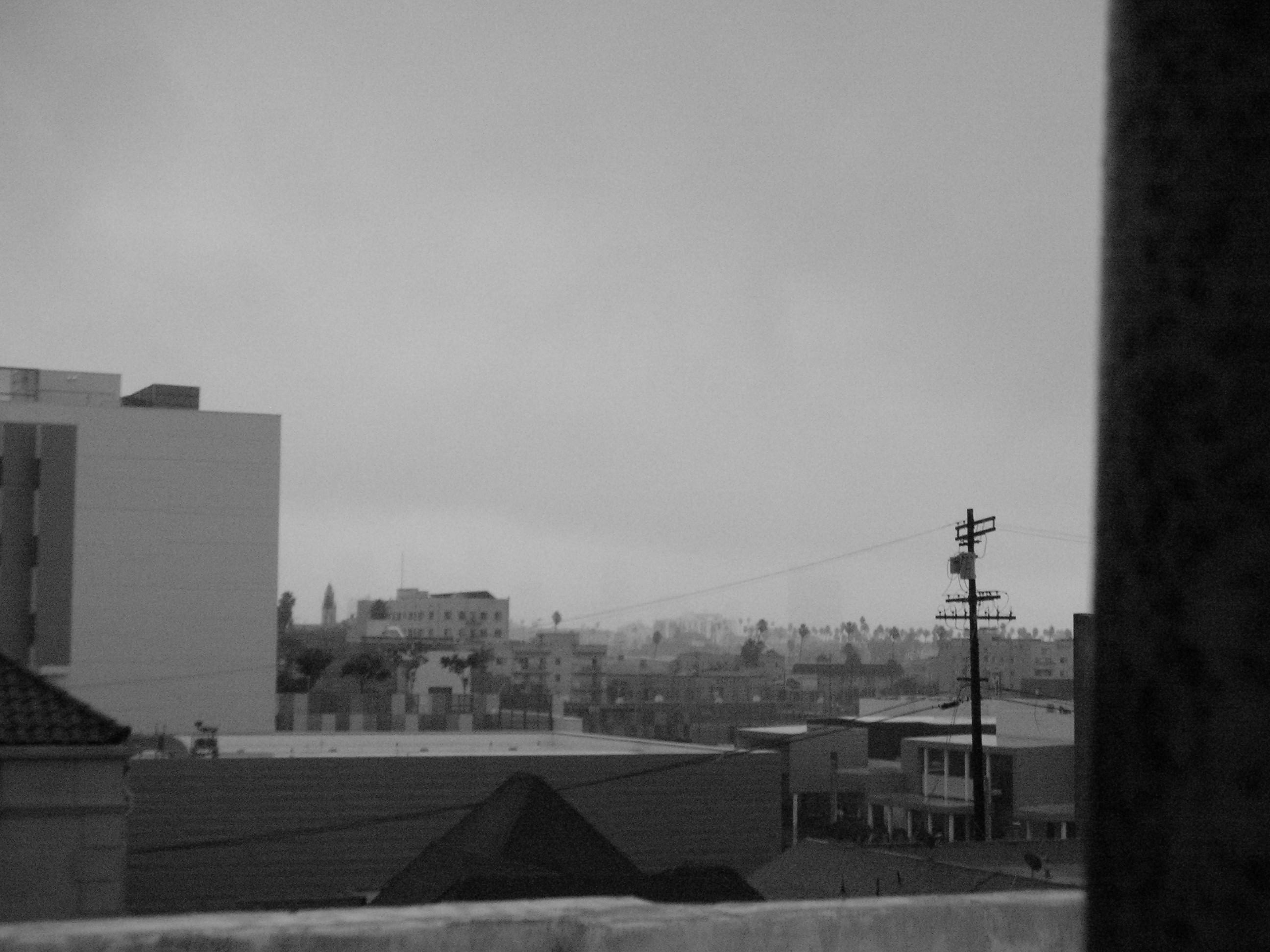
But speaking of capturing cities in images, Nick provides a view of Taipei I haven’t gotten before with his post “Five views from my rooftop“. In response, I went upstairs on this uncharacteristically wet Los Angeles day and snapped four views from mine.

Rainy days in Southern California make me listen to Roy Ayers’ “Everybody Loves the Sunshine“, not out of wishful thinking or (heaven forbid) irony, but because the song feels so suitable, on a sonic-aesthetic level, for times when the clouds roll in.

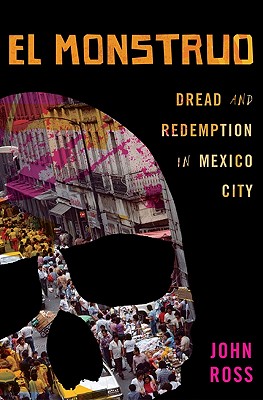
John Ross: El Monstruo

Of all the Mexico City books I brought there, John Ross wrote the biggest, heaviest, and most ambitious. Just as I recorded a Marketplace of Ideas interview with David Lida during the trip, so I would have recorded one with Ross, had he not died in January. Ross’ lifespan, 1938-2011, nearly matches that of my friend Tom, 1937-2011, who passed five months later. Since the dying Ross composed El Monstruo in as much an autobiographical frame of mind as an urban-historical one, I assembled the author’s storied life and persona in my mind as much as I did Mexico City’s.  While my concepts of “Tom” and “Mexico City” remain distant from one another, I now can’t quite make out where my concept of “Tom” ends and my concept of “John Ross” begins.

Neither man, dare I assume, would take offense if called an “old lefty” — or would much hesitate to refer to himself that way. In many an online back-and-forth over political and economic issues that now seem unimportant, I butted my head against certain elements of Tom’s worldview. It seemed to me then that he put too much faith — or assumed too much usefulness — in the notion of heroes and villains, or at least of rightheaded and wrongheaded figures who, when installed in power, could and would steer the world right or wrong. Milton Friedman often came up as his bête noire; the likes of John Kenneth Galbraith and Naomi Klein represented, for him, the team that knew what was up.

Klein tends to conflate Friedman with harsh dictators like Augusto Pinochet, who ruled Chile in the seventies and eighties with very little patience for political opposition. I don’t know if Tom, who had a lot of involvement in Chile over the decades, did the same, though he did tend to bring the subject back to the market reforms advised by economists trained at Friedman’s University of Chicago. Tom had a favorite phrase to use in these conversations: “greed barons.”

By John Ross’ standards, “greed barons” would count as an exceptionally civil way to refer to his own political villains. Though it takes the form of a history of Mexico City from the Big Bang to 2009, El Monstruo devotes the bulk of its pages to a chronicle of wrongs visited upon the city and its precursors by the powerful, be they Conquistadors, traitorous Indians, trespassing gringos, military strongmen, bloated tycoons, misguided intellectuals, or any of thousands of corrupt politicians at every conceivable level of influence. Ross covers natural disasters, too — he makes especially fascinating points about the 1985 earthquake and the subsequent rise of a downtown civil society — but mainly as opportunities to show the rulers, elected or otherwise, failing yet again to meet their obligations to the poor, the very poor, and the sort of poor alike.

Ross’ uncompromising ideological views shape each and every one of El Monstruo’s 453 pages, but he mitigates objections by (a) cramming more raw facts about Mexico City into the book than any other chronicler has and (b) admitting everything. Throughout the text, he delivers an unceasing stream of asides pointing out who in the historical and political life of el D.F. he considers conniving, slimy, devious, sociopathic, solipsistic, black-hearted, or — the best most high-profile Chilangos can do in Ross’ cosmology — well-intentioned but rendered ineffectual by the scheming opposition. He writes as a fount of judgment, but hey, so did Hunter Thompson.

With tendencies similar to those of his Freak-Powered generational (1937-2005) and professional compatriot, Ross includes much of his personal history in this city’s history. One paragraph you’re reading about a president draining Mexico’s coffers or a covered-up student massacre or the formation of a rebel Indian paramilitary unit, and the next you’re reading about John Ross getting hit by a speeding Hummer, John Ross sleeping under the stars in the Zócalo, or John Ross chatting with the waiters, watch-sellers, and street musicians who hang out in his neighborhood, el Centro Historico. Some might consider this contamination of the book’s scholarly value, but smart money says that nobody will write a richer history of Mexico City for a very long time indeed.

Ross’ publisher tends to promote his work with a rare blurb of praise from Thomas Pynchon (b. 1937), the fourth member of the American “Silent Generation” I’ve brought up so far. This is telling; Pynchon, Thompson, and Ross’ writing, from what I can tell, all seems driven by eminently conspiracy-fueled worldviews saturated by the idea that everyone and everything with power is deliberately connected, and the resulting evil web intends, secretly or not-so-secretly, to screw us. I may enjoy these guys’ books, but I just don’t see in humanity, at the top of the hierarchy or the bottom, the kind of competence — or even fully formed intention — needed to successfully pull such a screwing off. But I do see, for good or ill, the pragmatically improvisational spirit many writers celebrate about Mexico City, and which Ross himself ends El Monstruo by placing his faith in. This beloved dump of ours has already taken 500 years of screwing, he believes; it ain’t goin’ nowhere.

That said, despite my ever-increasing cultural fascination with Latin American countries like Mexico and Chile, I’ve never really understood all the excitement so many journalists and artists have drawn from Latin American politics. Maybe this comes down to another generational difference, but fascination is fascination. Next time I visit el D.F. — and there will be a next time — I’ll take a special trip on Line 1, get off at Isabel La Católica, and drink a café con leche for John Ross in front of the Hotel Isabel he called home for 25 years. And I don’t know what Tom drank, but when I finally get to Santiago, I’ll have one of those.

Stop, stop, the New Yorkers will hear

After moving to Los Angeles, I found myself woken up on Saturdays and Sundays by a woman out on the street repeatedly singing, with a faintly surreal rare-bird intonation, the phrase, “Tamales! Y champurado!” In Mexico City, I discovered the filling wonders of a breakfast of tamales and champurado. (We actually drank strawberry atole, but close enough.) Looking for a hit of el D.F. after returning to the States, I woke up on Sunday and rushed downstairs — I’d fallen asleep in all my clothes the night before, making this easy — only to hear the singing cease just as I reached the sidewalk. Desperately wandering, I eventually found her and her tamales y champurado. She’d parked herself on 8th between Normandie and Ardmore, where street-food sellers, their shopping carts converted into kitchens, their propane griddles fired up, ply any number of deliciosities. On that small stretch, at least, I can feel like I’m back in Mexico — and hey, the foodies haven’t discovered it yet!

While I lament the cold, the bouts of sleepiness, and the numbness of lower extremities endemic to the double- and triple-features I attend in L.A., but I wouldn’t have it any other way. The near-total lack of theatrical screenings of films not in current release fueled my engine of disappointment with Santa Barbara; numerous chances to watch movies from the nineties, eighties, seventies, sixties, and earlier on film, in a theater certainly motivated my increasingly frequent L.A. trips toward the end there. While the more specialized of these pictures haven’t had DVD releases, I even go to screenings of ones that have. Audiovisual issues aside, I prefer the theater because it has no play button, no pause button, and no fast-forward button. Anthony Lane put this clearly — how else could he have put it? — in his piece on, of all movies, Tower Heist:

There’s only one problem with home cinema: it doesn’t exist. The very phrase is an oxymoron. As you pause your film to answer the door or fetch a Coke, the experience ceases to be cinema. Even the act of choosing when to watch means you are no longer at the movies. Choice—preferably an exhaustive menu of it—pretty much defines our status as consumers, and has long been an unquestioned tenet of the capitalist feast, but in fact carte blanche is no way to run a cultural life (or any kind of life, for that matter), and one thing that has nourished the theatrical experience, from the Athens of Aeschylus to the multiplex, is the element of compulsion. Someone else decides when the show will start; we may decide whether to attend, but, once we take our seats, we join the ride and surrender our will. The same goes for the folks around us, whom we do not know, and whom we resemble only in our private desire to know more of what will unfold in public, on the stage or screen. We are strangers in communion, and, once that pact of the intimate and the populous is snapped, the charm is gone. Our revels now are ended.

It occurs to me that you could frame the arrival of Papaya King in Hollywood as one more lurch forward in the grand New-Yorkization of Los Angeles. While I have no idea if our town is actually undergoing such a metamorphosis, doesn’t it sound fascinating? I instinctively welcome certain elements of this process (Metro extension in particular) and hope others never come to pass (garbage piles, winter), but I don’t have a clear image of which elements of NYC cuisine to import. Hot dogs and juices seem as suitable as anything, especially when you slot them into the closest side street the main stretch of Hollywood Boulevard has, at night, to a dark alley. The bright “PAPAYAKING” sign might provide the only strong source of outdoor illumination.

They’ve done the Hollywood Papaya King up in amusement-park colors, all the better to evoke its bewildering array of fruit drinks (it occurs to me that I don’t know if they officially qualify as “juices,” or if there exists an such an official qualification) on offer. We ordered one cup of papaya drink, because you have to, and one of lemonade, because who doesn’t enjoy lemonade with their hot dogs? The dogs themselves, just on the small side but much more appealing for it, can potentially come loaded with chili, cheese, and such, but only two topping options struck me as realistic: sauerkraut (“kraut”) or onions (“NY onions,” which look and taste more like marmalade) — plus, naturellement, self-pumped mustard.

We ate and drank standing, leaning on their street-facing counter. “Seems New York-y,” I thought. I partook of a pile of curly fries while fighting a sneaking suspicion that they somehow “impurified” my hot dog experience. I wondered where Papaya King’s hot dogs, which we devoured in the minutes before the screening at the Egyptian of a documentary about Tokyo’s greatest sushi master, place in the eternal struggle between New York and Chicago junk foods. Then I heard a middle-aged woman air her bewilderment about why purists say you should never, ever put ketchup on your hot dog. “But I like ketchup!” the woman insisted. “Stop, stop,” I thought. “The New Yorkers will hear.”

The guy behind the counter kept asking his customers friendly questions in an effort, I think, to alleviate the strain of existing amid Papaya King’s aggressive color scheme all night long. I asked him how he was doing. “Living the dream!” he replied. I started to laugh, but then suddenly didn’t know whether to laugh. Was I supposed to get sad instead? But hey, he actually has a job; I can’t say the same. Which brings me to my point: I remember Papaya King being reasonably cheap.

The tendency of Mexico City businesses that sell similar things to geographically cluster with one another surprised me; I figured you’d never see that in L.A. Yet on the walk from Papaya King to the Egyptian, I felt bout after bout of mini-déjà vu vu. We passed almost a dozen shops with front windows populated entirely by mannequins dressed in whatever you call outfits that fall halfway between lingerie and Halloween costumes. So on Hollywood Boulevard, those businesses cluster. Whatever those businesses are.

Even now that having no income has finally forced me to spend most of my time at home, I still talk to more different people on the average L.A. day than I did in the average Santa Barbara week. Just a big-city thing, perhaps, but it keeps in rigorous practice the lessons about conversation I’ve learned, very slowly, over the past decade. Scott Adams blogged with admirable succinctness about more or less these same lessons last year:

How many times have you been in a restaurant and victimized by the loud guy at the next table dominating the conversation without the benefit of being entertaining? It seems somewhat common that people who are neither alien nor Asperger syndrome types have no conversation skills. Indeed, it appears that many so-called normal people don’t even understand the concept of a conversation.

A conversation, like dancing, has some rules, although I’ve never seen them stated anywhere. The objective of conversation is to entertain or inform the other person while not using up all of the talking time. A big part of how you entertain another person is by listening and giving your attention. Ideally, your own enjoyment from conversation comes from the other person doing his or her job of being interesting. If you are entertaining yourself at the other person’s expense, you’re doing it wrong.

You might think that everyone on earth understands what a conversation is and how to engage in one. My observation is that no more than a quarter of the population has that understanding. Prior to [taking a Dale Carnegie course] I believed that conversation was a process by which I could demonstrate my cleverness, complain about what was bugging me, and argue with people in order to teach them how dumb they were. To me, listening was the same thing as being bored.  I figured it was the other person’s responsibility to find some entertainment in the conversation. That wasn’t my job. Yes, I was that asshole. But I didn’t know it. The good news is that once I learned the rules of conversation, I was socially reborn.

I cut out a couple lines about Dale Carnegie there to save space, but rest assured that I’ve enjoyed reading his book since high school. Anybody know I can pick up an original, non-updated, non-P.C. edition straight from the thirties?

Richard Yates: Young Hearts Crying

A friend who’s big in L.A. book culture once advised me that my literary habits, “bounded on one side by Harry Mathews and on the other by Rikki Ducornet,” might not allow me to connect with the broad reading public I’d like to. While I don’t wall myself off quite like that — I’m only now cracking Mathews, and I have yet to seriously explore Ducornet — my personal novelist pantheon does include types at least as far from the mainstream as Alexander Theroux, Kobo Abe, and Jean-Philippe Toussaint. I responded with the concealed weapon in the arsenal that is my literary life: Richard Yates. Linear! Realistic! Midcentury! Actively hostile to experimentation! Yet I can’t stop returning to his well.

After Revolutionary Road, The Easter Parade, both books of short stories, and now Young Hearts Crying, I hazard the guess that I’ll continue my slow but steady progress through the Yates oeuvre in search of more descriptions of elaborate self-deception, of bitterly semi-private shame, and of the humiliating word salads we spout when we teeter on the edge of the yawning gap between our real and our (long-, loudly, and tiresomely discussed) actual intentions. This strikes me as the core of his craft, especially when he writes them on the part of fellow members of America’s “Greatest” World War II generation who flail against unabating feelings of fraudulence and inadequacy. Every generation fights the same private battles, I suppose, but none of them have used the phrase “son of a bitch” so well (or so often).

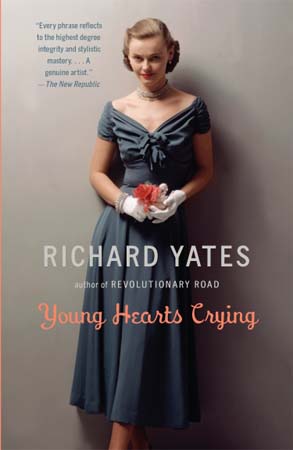
Yates’ second-to-last novel and one even his fans don’t discuss much these days, Young Hearts Crying seems like a bit of an oddity, especially since what little people do write about it nevertheless sounds like great acclaim. It follows the development and consequences of an early marriage, right out of university, between Michael and Lucy Davenport. He an aspiring poet, she a millionaire heiress, their future looks bright until the compromises start piling up. Sensing potential emasculation by Lucy’s fortune, Michael insists upon working by day at a chain store trade journal to support the family while struggling to write his “real” work. Under these circumstances, the couple eventually finds themselves, plus a daughter, living in the misshapen cottage on a private estate way out in upstate New York where their marriage will dissolve.

Unlike Revolutionary Road, this novel doesn’t end with the troubled union it examines. Yates spends most of its chapters covering the next twenty-odd years of Michael and Lucy’s separate lives, and their behavior in this stretch bears one important resemblance to Frank and April Wheeler’s in the earlier novel: they long for “creative” lives, lives lived in “the arts,” lives they seem far too weak and unimaginative — and far too unaware of their weakness and lack of imagination — ever to construct. (“Well, if she’s not a painter, maybe she wasn’t a writer, either, or an actress, either,” a friend says late in the book to the academia-stranded Michael of Lucy’s many wan attempts at creativity, “and look, I know this may sound harsh, but there’s an awful lot of women running around trying things.”) Most of Yates’ protagonists I’ve read about so far suffer from just this condition, which gives Yates ample opportunity to write in luxurious detail that self-delusion I so celebrate.

If forced to pin down Yates’ main psychological theme, I’d call it the unbearable contrast between his characters’ dimly envisioned goals and the punishingly mundane problems that actually dominate their lives. In response, some of his characters turn to booze, some crack up, some fall into the arms of variously unsuitable partners, some lay complicated self-sabotage traps, some attempt at-home abortions — and some, like the former Davenports, run through combinations thereof. (Except no at-home abortions this time out.) Always balancing on the wall of cruelty, Yates dangles before the young Michael and Lucy several couples who appear to be living the artistic dream, only to release them into their own forms of mediocrity decades later. “I thought you were fucking enchanted,” the aged but still damagingly impulsive Michael laments to his former idol of painterly bohemianism, now brought similarly low by a workaday teaching gig.

Young Hearts Crying puts a new wrinkle in the Yates cloth with its direct gaze onto a particularly sad — and, in life, sadly common — tendency in its characters’ lives. Though Michael and Lucy and even several secondary players here might like to think of their struggles in grand artistic terms — to write a poem that captures the experience of a psychotic break, to truly embody the role of Blance DuBois, to atmospherically explore a woman’s consciousness in a novel — their actual struggles, for which Yates starkly accounts on the page, come mostly from the desperate search and attempt to retain one more reasonably suitable man or woman with whom to go to bed. Even when they attain the equanimity to do their “real” work, they find they’ve been chiseled to resigned rubble by all this fruitless romantic turbulence. That’s assuming they had the wherewithal to create anything lasting to begin with, which Yates leaves that very much in doubt.

Diario de Los Angeles

[Might as well stick to the format for a while. Seems to work.]

I have friends here who insist that, despite the surface noise, not much in the way of culture really goes on in Los Angeles. While I suppose I should defer, to some extent, to their seniority in the city, I did fly back from Mexico City and go to an Antonioni double-bill that very night. Then came Terry Gilliam live with Brazil the next night. Then came Wim Wenders live with Wings of Desire and Faraway, So Close! Film culture is indisputably here; I’d say food culture is, too.

Does Wim Wenders live in L.A., at least part-time? I’ve heard people claim that he does, though I can’t find any evidence either way. Whether he does or not, he seemed oddly comfortable in Santa Monica. We ran into him and his entourage on a street corner before his show, and I felt the odd pleasure you feel when you see someone who, in real life, looks exactly like he does in media. He wore a black jacket with bright stripes and splotches of what looked like red and blue paint (or maybe paintlike thread patterns) on the sleeves. Rei Kawakubo? Yohji Yamamoto?

Los Angeles has brought regular double- and triple-bills into my life. Somehow, I’ve sat through the schlocky triple-bills — John Carpenter’s “Apocalypse Trilogy”; Willard, Wild Beasts, Shakma — in greater comfort than the more “respectable” double-bills. At Wenders’ films, as often happens at these events, I simultaneously experienced great cinematic excitement and terribly distracting cold. Did the management shut off the heating for the lesser-known, lesser-regarded picture, or did nearly six hours of near-immobility just stop my blood from circulating?

Scouting out apartments before moving here, I found myself strangely captivated by the slightly older, slightly more run-down area of Koreatown around 7th and Normandie. This had in large part to do with a little shack standing all alone in the parking lot of one of those L-shaped shopping centers (Madelaine’s dad, who’s worked in mall architecture calls them “LaManchas,” after the company that threw them up so feverishly in the seventies) you see everywhere in town. Despite having the shape of a burger or taco joint from days gone by, it advertised “authentic Korean dumpling” in English. My command of Korean didn’t quite rise to the occasion of reading anything else on its sign, except that the place seemed to be called “Yu Ga Ne”.

After actually moving to Koreatown — 7th and Mariposa, to be precise — I so deeply understood the inevitability of eating at Yu Ga Ne that I somehow put it off for a couple of months. Part of this owed to the kind of frugality you only develop by having no income whatsoever, but that eventually broke down. I mean, if I won’t eat at a place with a black-and-white Xerox of its accolades from Los Angeles magazines “100 Cheap Eats” issue, where will I eat? Crossing the threshold, I discovered not the take-your-shite-and-get-out counter I expected, but a full-fledged “sit-down experience.” From a converted burger and/or taco stand? Fascinating.

Yelp reviews and word of mouth pointed to the combination of “king dumplings” and black bean noodles as a gateway. Intellectually, I knew that this would make enough of a meal for two, but, unable to stand the idea of only one king dumpling each, I asked for a full order of black bean noodles, a full order of dumplings, and a full order of “hot tofu.” Naturally, more food than we could put away promptly arrived, but the flavor situation turned out to be such that I very much wanted to cram it all into my unwilling stomach. In the comfort of Yu Ga Ne, after all, I could ease the pain by drinking all the cold corn tea I pleased.

Leaving, nevertheless, with a hearty box of leftovers in hand, I reflected upon the fact of our being the only non-Koreans in the (admittedly tiny) restaurant. This bodes well for language practice; given its proximity to my home and the rich flavors of its food, I’ll prioritize becoming a regular here. (As soon as I get money, that is; we effectively ate a lunch and a dinner for a double sawbuck, total, but still.) I find that two demographic profiles in an eatery signal well about its eating experience: when everyone’s the same nationality as the food, or when everyone’s a completely different nationality. The worst sign? When everyone’s the same nationality, but not the nationality of the food. That bring big trouble. Bad medicine.

The Marketplace of Ideas: to come to terms in L.A.

This week on The Marketplace of Ideas, I talk to Laurie Ochoa and Joe Donnelly, founding editors of the new Los Angeles literary journal Slake. The magazine, which has just released its third issue, combines fiction, poetry, essays, reportage, photography, and several different kinds of visual art into a regular exploration of Los Angeles from every angle — and an exploration of the rest of the world from a Los Angeles angle.

Given the recent relocation of Marketplace of Ideas World Headquarters to Los Angeles, what conversation could be more appropriate than one with the creators of such an engine of fresh explorations of the city? Topics directly related to the city — and thus, in some sense, directly related to human existence — include navigating the world in microcosm, living in a town that couldn’t care less whether you like it, feeling the drive of imagination toward the future rather than the past, realizing what your life really is, and approaching place through various types of art and journalism all at once.

Download the conversation on iTunes here or on the web site here.

Diario de Ciudad de México X

The end of my first stay in Mexico City brought to mind what I’ve come to call the Momus Test:

When I visit a place, fantasies of living there start to tug at the edges of my imagination. How would I survive economically here? Which area would I pick to live in? How would I decorate my new apartment? How much rent would I have to pay? Would I ride a bike? How would I dress? Which cafes and clubs would I begin to haunt? Who would become my new friends?

Since this is a game of fantasy, it would be easy to imagineer oneself into some chintzy turreted mansion in a rich, flashy neighbourhood. Dreaming costs nothing, so why dream small, right? But fantasy doesn’t work like that, for me, anyway. The most evocative fantasy is one with only the thinnest membrane between itself and reality; it gets its power from being eminently possible. From being a plan. So actually, my imagination thrives on rather austere, impoverished scenarios. I like to project myself into rather stark, cheap, working class districts, and imagine some kind of free vie de boheme unfolding in them.

(Past Marketplace of Ideas guest) Momus wrote this post about whether he could live in Osaka. Now he lives in Osaka. I’ll visit Osaka myself almost exactly a year from now, and when I do, I’ll ask myself if I could live in Osaka. But could I live in Mexico City?

I wrote earlier of my impression that, if I couldn’t live in Los Angeles, I would live in Mexico City. This remains true, although bear in mind that I’m choosing only from the major cities I’ve spent real time in. The list doesn’t include New York, and everyone tells me I’d bow down in devotion to New York if only I gave it a try. But for a guy like me, wouldn’t living in New York strike you as somewhat… obvious?

Here, to continue the Momus-blockquoting, is the thing about cities like New York:

Increasingly, my outlook has Berlinified, by which I mean I regard expensive cities like New York, London and Tokyo as unsuited to subculture. They’re essentially uncreative because creative people living there have to put too much of their time and effort into the meaningless hackwork which allows them to meet the city’s high rents and prices. So disciplines like graphic design and television thrive, but more interesting types of art are throttled in the cradle.

For all the wealth of its wealthier neighborhoods, Mexico City still seems quite suited indeed to subculture. (Big, fast, delicious meals for two for the equivalent of five bucks, remember, though whether you can attain big, fast, delicious, and healthy for five bucks I haven’t determined.) I don’t know how much longer this will last — fifteen years? Twenty? — but it ranks high in the roundup of qualities with which el D.F. attracts me. Others include:

  • The “commercial spirit” which causes the city to bristle with businesses of all scales and levels of formality (or, especially, of informality)
  • The near-complete lack of the English language and Anglo-type people in public life (if travel teaches me one important lesson about myself, it teaches me that I prefer being an extranjero)
  • The fast, far-reaching subway (L.A.’s metro system may feel “nicer,” but right now it runs only about half the number trains the city needs, for half the distance they need to go)
  • The bold, triumphalist, slightly futuristic, but still worn and askew aesthetic of the built environment
  • The fascination of an international metropolis as filtered through a very particular Latin American sensibility
  • The all-pervasive food culture, the well-curated reading culture, and the still-scrappy gallery culture

These qualities, I suspect, would wear me down over time:

  • The seeming inability to provide uninterrupted power (not so important) and water (hell of important)
  • The relative lack of Asian cultural influence (you find Korean and Japanese people here, for example, but they seem only to run restaurants, not supermarkets or bookstores)
  • The ceaseless hard sell of ambulatory vendors and the employees of certain eateries (“Amigo? Amigo? Amigo? Amigo? Amigo?“)
  • The unusually fraught act of street-crossing

Realistically, though, I wouldn’t completely give up my footing in L.A. for one in Mexico City — not this decade, anyway. The optimal solution strikes me as living in L.A. for half the year or more, and then spending a decent chunk to half of the rest of the year living in a place like Mexico City. Peter Greenaway’s onetime composer Michael Nyman does this with el D.F. and London; until very recently, Donald Keen did it for a decades with New York and Tokyo. This way of playing it strongly appeals to me, since it allows you to maintain a fresh pair of eyes on your surroundings at all times. Some people react to the idea of living in two places as a real Lifestyles of the Rich and Famous move, but I’m talking about pulling it off in as frugal a manner as possible. Given the money I’ll save by not raising kids — assuming I, uh, start making money at some point — I suspect this lays closer to reach than it seems.

I’ve left plenty of water in the Mexico City pump (when it, ahem, pumps at all) for next time. My tally of places I meant to experience but didn’t manage to this time out include the Cineteca Nacional (shockingly), Vips (a sort of Mexican Denny’s), galleries like Kurimanzutto and OMR, and the yoga classes that have apparently started up in the still-stained-by-fake-Total Recall-blood Chacabano subway station.

But we did get to the Basilica of Our Lady of Guadalupe, and few things, to my mind, represent my impression of Mexico better than this sweeping, audacious statement of mid-seventies cement modernism brimming with the grimly solemn-faced devout who nevertheless dress in the oddest possible clothing: NASCAR jerseys, off-pink track uniforms, revived leisure suits. (If you want a quick shot of Mexico City’s general “vibe,” Carlos Reygadas’ Battle in Heaven delivers it more accurately than anything else I’ve seen.)

But at the Basilica, I found my specific Mexico City envoy of choice: a six-year-old kid in an oversized anime t-shirt, big grin on his face, reflexively imitating the adults around him shuffling on their knees toward the Virgin, holding aloft a churro.


Diario de Ciudad de México IX

I came to Mexico City with many priorities, and Cuban ice cream without the promise to buy ranked high among them. We showed up to Mercado Medellín looking for it, but I nearly broke into a flop sweat upon seeing that that, for whatever reason — too late? Some sort of holiday? — most of its shops had shuttered themselves for the day. (And by “shuttered themselves,” I mean “covered themselves with sheets of burlap.”) But the moment I even suspected I’d come upon the right place, I asked, in what Spanish I could muster, if this was where you eat Cuban ice cream. “It’s not Cuban ice cream,” the fellow responded in, as usual, much better Spanish than mine. Just when the confused disappointment started rising, he added, “It’s ice cream as they eat it in Cuba. To be Cuban ice cream, we would need to be in Cuba, so this is not Cuban ice cream.” I immediately ordered a couple scoops of the flavors whose names I didn’t recognize — my standard dessert-ordering practice in Mexico — and apologized for my bad Spanish. The Cuban ice cream man assured me that he understood, and told me that if you want to learn a language, all you need is space. I told him I’d remember it.

Despite my near-certainty that we wouldn’t do anything as touristy as visiting ruins, a chance encounter presented us with the opportunity to spend a day visiting Teotihuacán, the pre-Aztec city “where men become gods.” Today, it’s the place where men become whistle-sellers. Most of the wandering vendors there (whose trinkets our guide strenuously instructed us not to buy) push a sort of kazoo which, as they repeatedly demonstrate, produces eagle and jaguar noises. Madelaine suspects fraud; she thinks those guys just make the animal sounds with their voices, that the instruments do nothing. Me, I want to interview a couple of ’em to find out exactly what it feels like to blow whistles at blank-faced tourists for ten hours a day.

I met a middle-aged Peruvian couple in the van to Teotihuacan who, sensing my eagerness to practice Spanish, took every opportunity to engage me in conversation. They did a fine job of pitching Lima to me as a destination, although I’d visit any South American city that has such a rich mixture of British, German, French, Jewish, Chinese, and Japanese for a population. Despite struggling at times to understand their somewhat Italianate accent — another common cultural influence there, I take it — I learned much about their suspicion that South America might turn communist. Wondering aloud later about why every South American I meet seems to hate and/or fear both their local and regional political figures, a Chilean girl gave me a stern explanation that I think I mostly pretty much grasped. Kind of.

Checking out the lights at the Templo Mayor at night, we suddenly decided to take a few group pictures. Standard problem: since one of the group always has to take the picture, one of the group’s always missing from the picture. A potential solution presented itself in the form of a vanful of Korean Christians making a prayer stop nearby. While each and every one of my friends around had me out-Spanished, out-Japanesed, or both, only I could claim any knowledge of Korean. But when I tried to summon the words to ask these Koreans if one of them could take our picture, I came up absolutely dry. Engaged in a weeks-long struggle with Spanish and Japanese, I had inadvertently pushed Korean so far to the back of my mind that I could hardly dig out “안녕하세요.” Embarrassing? Oh yes. But ten minutes back in L.A. should set this right.

Looking for an anthology of pieces to get you in the Mexico City mindset? I recommend Rubén Gallo’s The Mexico City Reader, which I should thank right now for introducing me to the invaluable D.F. chroniclers Carlos Monsiváis and Jorge Ibargüengoitia. (I tried to buy a whole volume of Ibargüengoitia’s writings from an alleyway bookseller, but he just wouldn’t budge from 50 pesos, and I wouldn’t sacrifice my manhood by shelling out.) Gallo writes in his introduction:

I decided to select only nonfiction essays and to focus on crónicas — short texts that are a cross between literary essay and urban reportage, and usually read like journal entries about a writer’s experience of the city. Although there are many novels — like Luis Zapata’s El vamprio de la colonia Roma — and poems — like Efraín Huerta’s Circuito interior — about life in post-1968 Mexico City, I focused on crónicas to make the book more original for North American readers: most Mexican poems and works of fiction are eventually translated into English, but crónicas rarely make it across the border, apparently because they constitute a hybrid genre which most publishers are afraid to touch. And it is precisely this hybrid quality that makes crónicas a perfect genre for writing about a city where everything — from architectural styles to social classes — is jumbled, chaotic, and falls in between traditional categories.

Literary essay? Urban reportage? Hybrid genre? Sounds like the form for me. I do wonder what about crónicas I can import and adapt into writing about other cities, but first I’ll need to pump up my Spanish reading level more than a bit. As incentives to do so, I scoured the bookstores of Donceles street and came away with Tiempo mexicano, Carlos Fuentes’ book of crónicas — why not start at the height of the augustness, I say — Cantar de ciegos, one of Fuentes’ short story collections, the non-Mexican Julio Cortázar’s Bestiario, and the D.F.-born, hook-hand-wielding Mario Bellatin’s La jornada de la mona y el paciente. Madelaine picked up a couple by J.M. Servin, an as-yet never translated Mexico City memoirist-novelist whom I sense would make a fine interview indeed for my next podcasting/broadcasting project.

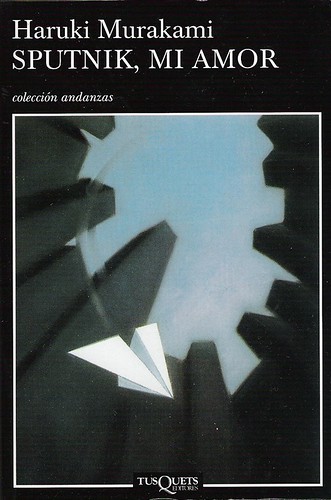
(By way of full disclosure, I also dropped the pesos on a slick new Latin American edition of Haruki Murakami’s Sputnik Sweetheart. As if to balance out that expense, I happened to find a Korean-language guide to Spain laying around, which I choose to interpret as a sign from the universe to get my speaking skills in shape before I run into a Christian van there, too.)