When first learning Korean in Los Angeles, I went to a Koreatown bookstore in search of simple reading material. There I picked up the first volume in a long-running a series of illustrated books for children called Happy World (행복한 세상). Its short, fable-like stories turned out to be united only by what struck me as an often thoroughgoing sadness, their titular world populated mainly by neglected children, impoverished students, downtrodden mothers and fathers, and crippled elders. “Oh, I know exactly what this means,” said a Korean friend to whom I showed the opening of one such tale, which simply introduced its young characters, a young brother and sister living in a mountain village with their maternal grandmother. “Their mother probably died in a factory accident, then their father drank himself to death, then the rest of the family was too ashamed to take them in…”
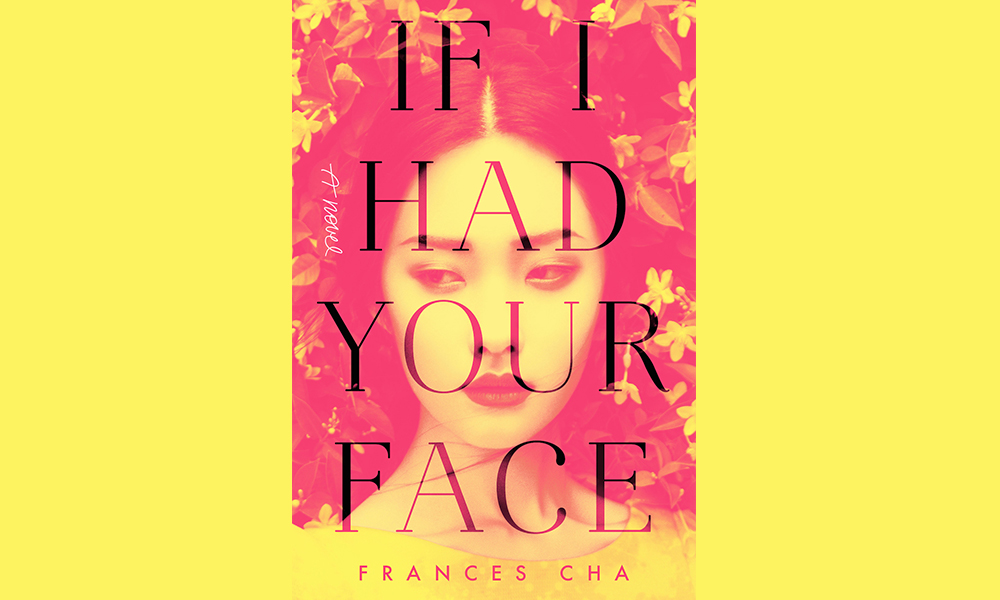
This implied history of misfortune could go on. Even then, film and literature in translation had already shown me that “every Korean story is a tragedy” — which, if not literally true, at times feels practically true. Observers of Korea thus often find themselves tempted to reference the concept of han, the deep-seated set of negative feelings defined as uniquely Korean. So do some Koreans: in Frances Cha’s new novel If I Had Your Face, one character remembers hearing that her grandmother “had choked to death on han — the pent-up rage from all the pillaged generations before her — seeing her parents die before her eyes, having served her mother-in-law as a body slave until she aged long before her time.” Though life has gone rather better for the speaker and the book’s other principals, all young women in 21st-century Seoul, theirs remains an unhappy world.
Narrative duty rotates between four of these women, all of whom live in the same humble apartment building, the gray “Color House.” Ara, rendered mute by incident whose nature Cha holds for the end of the book, spends her days working as a hairdresser and her nights obsessing over a pop singer. Kyuri, having undergone myriad cosmetic-surgery procedures (“the stitches on her double eyelids look naturally faint, while her nose is raised, her cheekbones tapered, and her entire jaw realigned and shaved into a slim v-line”), has worked her way up to employment at a “room salon” that pays her to drink with and fawn over big-spending male clients. Miho, she of the han-choked grandmother, is an artist not long returned from studying abroad in New York. Married and pregnant, the thirty-something Wonna observes the “girls” living on the floor above her with a mixture of concern and envy.
There have surely been better times for city aficionados than the summer of 2020. I write you from Seoul, which as I observed in the New Yorker this past spring has so far managed without serious disruptions to its everyday life. (In fact I just got back from a haircut, albeit a masked one.) But then, for the past year I’d also been planning an urbanist road trip across the United States. Needless to say, I’ve postponed it — the result of a decision process greatly clarified when Detroit and New Orleans, its starting and ending points, became two of the country’s coronavirus hot spots.
The day when we can get out into our own cities and others besides will come again. Until then, there are plenty of books about cities to be read: those published over the past fifty, sixty, seventy years, of course — many of which even the most literate urbanists haven’t got around to — but also those being published even now, as we speak. Predictions of the pandemic-hastened “end of the city,” no matter how confidently made, haven’t yet put an end to what I’ll call the “city book.” This includes no few works of city criticism, a genre I made a start at defining last year in the Guardian and on which I certainly haven’t given up, as either a reader or a writer.
Hence my launch of Books on Cities, a newsletter in which I’ll write long-form essay-reviews of books new and old about cities the world over. Though I’ve been aware of certain writers making a go of it on Substack for quite some time, it didn’t cross my mind to try until the coherence of this particular idea, which struck me as a neat fit of substance and form (and I’m nothing if not a sucker for a neat fit of substance and form). Beginning Friday, September 18th, I’ll post one piece on one city book every two weeks. As seems to be standard operating procedure on Substack, some of them will be free for anyone to read, and others will be accessible to subscribers only.
Since the liberalization of international travel in 1989, Koreans abroad have become a more than occasional subject of Korean cinema. My own favorite example remains Hong Sangsoo’s Night and Day (밤과 낮), from 2008, about a boorish artist in Parisian exile from a drug charge. But then, Hong’s films — modestly budgeted, dialogue-heavy, and improvisatory in construction, celebrated at European festivals (most recently in Berlin this year, where he won the Silver Bear for Best Director) and routinely compared to the work of European auteurs — are in some sense foreign themselves. But they aren’t entirely without precedent: for the Korean movie that first found all of its substance in the dissimulating conversations and abortive sexual encounters of half-formed intellectuals, we must look to Jang Sun-woo’s The Road to the Race Track (경마장 가는 길).
The Road to the Race Track came out in 1991, five years before Hong’s debut feature The Day a Pig Fell Into the Well (돼지가 우물에 빠진 날). What the films have in common begins with their origins in literary source material, once almost a matter of course in Korean cinema. They also both involve journeys from Seoul out to smaller provincial cities and back, and both of them spend time in cafés and motels. But when describing the Korea of the early 1990s, in the capital or elsewhere, the English words for those places don’t suffice: much more evocative, for anyone who knows this country, to say that these movies time in dabang and yeogwan. The two main characters in Jang’s film use those very terms with some frequency, commenting in certain lines on how they seem to go nowhere else.
In fact there are practically no characters but those two, called only R and J. R, a bespectacled, jacketed and necktied academic in his late thirties, exits baggage claim at Gimpo Airport to meet J, a woman in her mid-twenties with a bouncy late-80s perm, set somewhat apart by a faintly Continental style of dress. And indeed, both have spent time on the Continent, specifically France: R has just returned from half a decade earning his doctorate in literature there, a task J herself completed the year before. For three years of their overlapping time abroad they lived together as lovers, yet when J drives R to his yeogwan — like a motel but smaller, cheaper, and somehow both garish and spartan — she makes to leave as soon they arrive, puzzling R with her reluctance to pick up in Korea where they’d left off in France.
Where to start with Korean literature? That question can frustrate Western enthusiasts of modern Korean popular culture — music, television, film — who want to go deeper. When I began seriously watching Korean movies, I realized many of them were adaptations of novels or stories, but soon learned that reading those novels and stories myself wouldn’t be easy. Less Korean literature had been translated than I’d expected, and much of it was hardly distributed outside academia. Most of the Korean books I did find in English seemed obsessively focused on the various traumas of 20th-century history. Their awkward prose wasn’t helped by romanized Korean words whose apostrophes and unfamiliar diacritical marks made them look stranger than the actual Korean alphabet.
Blame for that last goes to the McCune-Reischauer romanization system, in use since the late 1930s. It was co-creator Edwin O. Reischauer, an Asia scholar and the United States Ambassador to Japan under John F. Kennedy, who called the Korean alphabet hangul “perhaps the most scientific system of writing in general use in any language,” a claim still repeated (usually out of context) in Korea today. Hangul is, at any rate, a logical and easy-to-learn system of writing, as I found out when I began self-studying the Korean language soon after my first encounters with Korean literature — having resigned myself to the idea that if I wanted to enjoy Korean books, I’d probably have to do it in Korean.
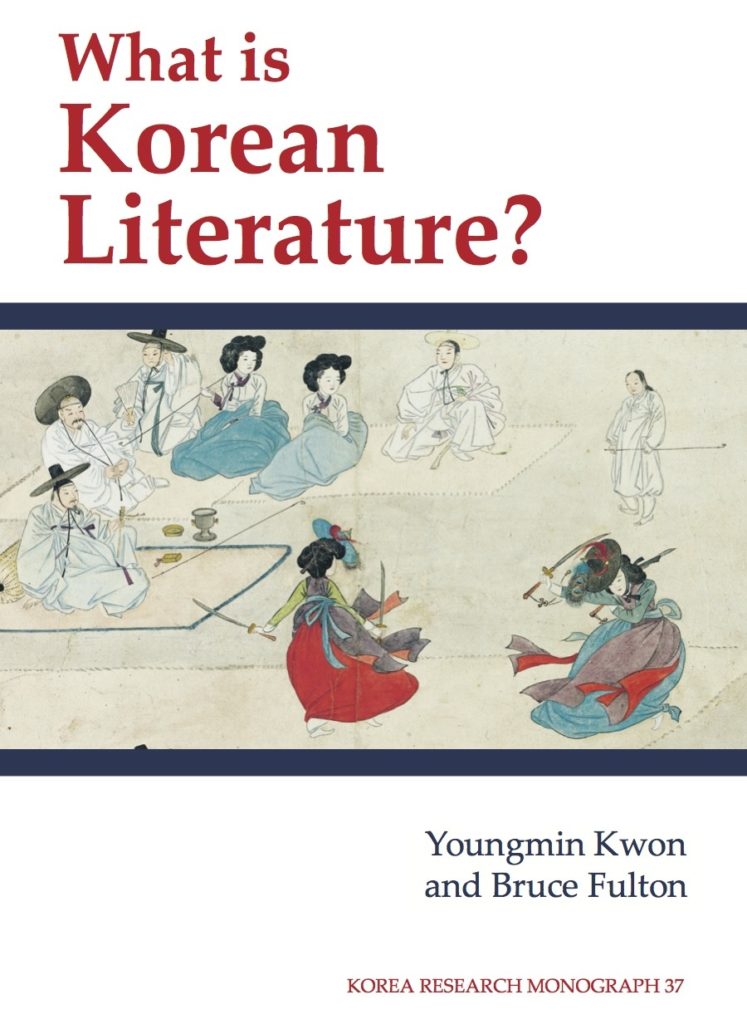
McCune-Reischauer was falling out of favor even then, challenged by a revised system introduced around the turn of the millennium by the National Academy of the Korean Language. Yet some prominent translators have held fast to it, including Bruce Fulton, who with his wife Ju-Chan Fulton has brought into English the work of many of the notable Korean writers of the past half-century. (Their translations of Kim Sagwa’s novel Mina and Yoon Tae-ho’s comic Moss have previously been featured here.) The experience placed him well to work in another Korean-Western partnership: in collaboration with Seoul National University literature professor Youngmin Kwon, he’s written the introductory text What Is Korean Literature?, newly published by UC Berkeley’s Institute of East Asian Studies.
I write these words on the KTX, South Korea’s high-speed train. Though not as iconic as Japan’s Shinkansen, it certainly does the job more efficiently, and for the passenger more comfortably, than any rail service I remember back in the United States. Even those who’ve never been to Korea may be familiar with the look and feel of the KTX experience, especially if they happen to like zombie movies. The standard for Korea’s cinema of the living dead was set in 2016 by Yeon Sang-ho’s Train to Busan (부산행), that train being a KTX on a run from Seoul to the country’s second-largest city, at the other end of the country on its southeastern coast. Faithful to its setting right down to the employee uniforms and seat-pocket travel magazines, the film no doubt pleased train aficionados as much as it did zombie aficionados, and not just Korean ones either.
Train to Busan‘s impact is evidenced by the academic essay collection Rediscovering Korean Cinema, in which the film appears not just as the subject of a chapter but the source of its cover photo. In his consideration of “South Korea’s first zombie blockbuster,” University College London’s Keith B. Wagner describes the film, with its “family-rescue-drama-cum-zombie-survivalist-contamination-anti-neoliberal” sensibilities, as “a polished apocalyptic tale that is unafraid to touch on pressing social issues that matter to Koreans.” This is in keeping with the genre’s capacity as a vehicle for social critique, established at least since 1978 when George Romero’s Dawn of the Dead showed us zombies shambling, with a somehow recognizable mindlessness, through a shopping mall. Jim Jarmusch (who happens to have gathered a robust Korean fan base) took the satire further in last year’s The Dead Don’t Die, whose 21st-century zombies moan for coffee, wi-fi, and Xanax.
The more traditional, wholly non-verbal zombies of Train to Busan have no desires apart from the usual one for human flesh. In this and most other respects they adhere to the standard zombie behavioral model, staggering unthinkingly toward any living being in the vicinity in order to bite it and thus turn it undead as well. As with every entry in the genre, the film has its own take on what Wagner calls “an aesthetics of the undead with the zombie characters displaying whitened irises, veiny and blanched faces covered in mucus, flesh particles and blackened blood spatter, and bodies hunched over and in various stages of decay and decrepitude.” There’s something distinctive in the way Train to Busan‘s zombies move, like contortionists wired up with electrodes placed and firing and random, but to the film’s international audience, one characteristic in particular will stand out: they’re all Korean.
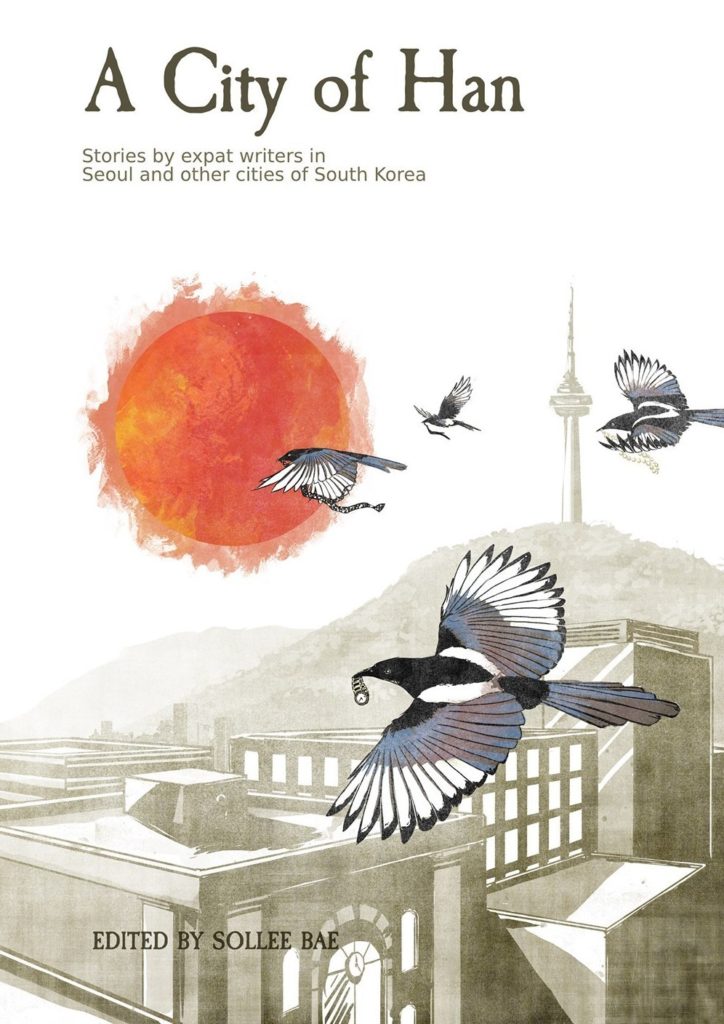
As a cradle of expatriate literature, Seoul has thus far proven to be no Prague, Mexico City, or Tangier, to say nothing of a Vienna or Paris. That’s not for lack of desire among expatriates themselves: every few months here I get word of the existence of another Westerner-oriented writing workshop, or contacted by another reporter or teacher certain he’s got a novel in him. But many such expatriates, yet to find their way out of self-published obscurity, will admit that this city is something of a faulty launchpad for a literary career, at least for those writing in languages other than Korean. In English, attempts are nevertheless made from time to time to harness the writerly energies of the expat population, the latest of which takes the form of a six-story anthology called A City of Han, compiled by Seoul native Sollee Bae.
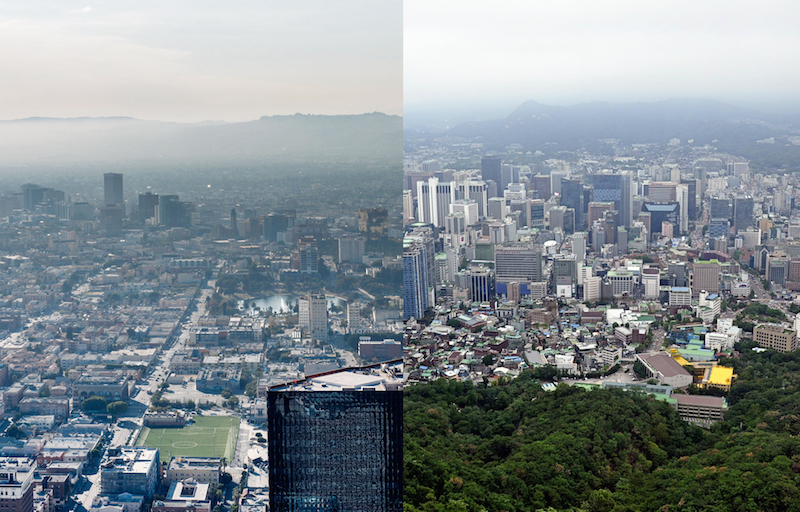
In her introduction, Bae writes of asking others for explanations of her hometown’s failure to gain literary traction. “Their answers were surprisingly unanimous,” she reports. “Seoul did not have a defining character. It was too bland. It was the quintessence of a modern metropolis, made up of concrete buildings and wide roads and a grey sky. If we were to compare it to a person, it would be that man or woman who worked for a marketing firm, dressed sensibly, and carried the last year’s model of iPhone (but no older).” That’s not an entirely unconvincing explanation. For my part, I’ve long wondered if the city simply looms too large to clearly be seen. Unlike the capitals of the US and Europe, whose size and power haven’t persuaded the countries that produced them to consider them exemplary rather than exceptional, Seoul — in the eyes of all but nature poets and travel writers — is South Korea.
The difficulty of rendering Seoul with a distinct identity, not unexpected among a class of residents who often struggle to understand the signs in its storefronts, afflicts Korean writers as well. I once stumped a well-known novelist here by asking for recommendations of novels with rich visions of the city, and he’d written an internationally acclaimed one himself. Korean authors telling stories with Korean characters can’t easily avoid writing about Seoul, but expatriates can — and in various forms, do — tell stories of Seoul practically without involving Korean characters at all. This owes to the intersection of the “write what you know” principle and the insular lifestyles of a certain kind of Westerner in this country: those who fashion for themselves an approximation of the life they’d have lived back in their homeland, associating exclusively with Westerners and the kind of English-speaking Koreans who take pains to set themselves apart from their countrymen.
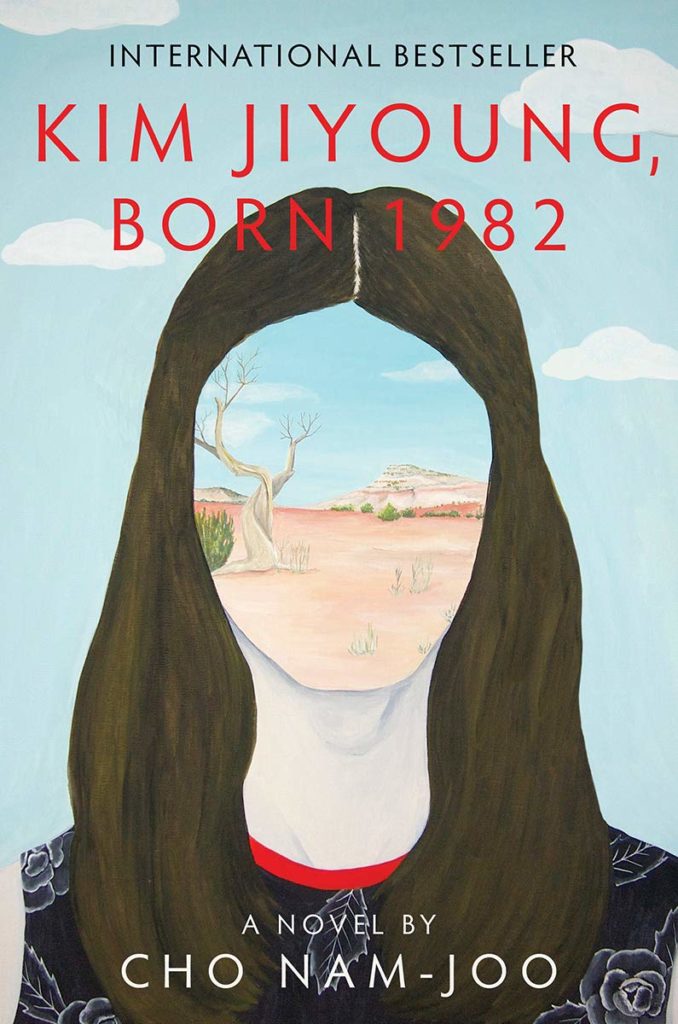
The tagline of last year’s cautiously anticipated film Kim Jiyoung: Born1982 (82년생 김지영) promised to tell “your story and mine.” The picture itself delivers only to the extent that you or I happen to be a Korean woman in early middle age, and even then to the extent that our background aligns with the title character’s. But that was more than understood, given the frenzy of attention already drawn by the picture’s source material: Kim Jiyoung, Born 1982, the debut novel by a former television writer named Cho Nam-joo. As I wrote here on the Korea Blog two years ago, this plain tale of a woman’s life of struggle and frustration in the realms of school, family, work, employment, and childrearing became an unlikely bestseller not long after its publication in late 2016.
At the same time, Cho’s novel also became an even less likely object of fierce controversy. Battle lines were drawn across society over its diagnosis of the plight of Korean womanhood in the 21st century. Social media, by its very nature, stoked the flames: on Instagram, an all-powerful force in Korea, the book’s familiar cover became a declamatory flag to hoist up in selfies. But however long a moment Kim Jiyoung, Born 1982 enjoyed, trends have a way of simmering down here no sooner than they’ve boiled up. Translations into other languages began appearing not long after the book turned into a social phenomenon, but the English-language publishing industry seems, true to form, to have dragged its feet. Published just this year, Jamie Chang’s rendering of Kim Jiyoung, Born 1982 can now give English-readers a clearer idea of what all the fuss was about.
I am not, it will be noted, a Korean woman in early middle age. In normal times this wouldn’t need saying, but these days — from what I gather watching the culture wars now raging on Western social media — one can’t be too careful about declaring one’s identity. By some lights, I’m disqualified from writing about this book entirely. Did I, like Kim Jiyoung, go through childhood making do with what was left after my brother had his fill? Was I tormented by boys at school and told simply to endure it? Have I felt the pressure exerted by an entire extended family to produce a son, and the judgment when I didn’t? Was I forced to quit a job I enjoyed (apart from being expected to make coffee for the higher-ups) when I did have a child, who turned out to be a daughter? Do I have to travel to my in-laws’ home every holiday and cook them food for days straight? Have I lived in fear of strangers’ hands on the bus, or of the pornographers’ cameras potentially hidden in every restroom stall? Have I withstood all this only to be derided as a “mom-roach”?
Many Western expatriates start feeling their days in Korea are numbered as soon as they become parents. “We’ll have to leave before the kid starts school,” I often hear; the combination of urgency and vagueness reminds me of Los Angeles parents insisting that one “just can’t” send one’s children to whichever local public school their address assigns them. Whether by leaving the country or by shelling for an international (in most cases, read: ersatz American) school, the Western parent — and increasingly, the Korean parent of means — instinctively avoids the Korean education system. What if the kids are subject to overly strict hierarchies? What if they don’t get enough English? What if they have to engage in “rote” and “uncreative” East Asian forms of learning?
Come off glazed and harried though they may, Korean students seem at least to internalize some knowledge in the classroom, which is more than I can say for myself or most of my classmates in the United States. The dreaded Suneung, Korea’s infamous do-or-die college entrance exam that for some families constitutes a reason to emigrate in itself, essentially tests one’s ability to memorize and, as Westerners might put it, “regurgitate” large amounts of information. But given the reliability of retention and recall as a proxy for general intelligence, the Suneung does a decent job as a sorting mechanism. Westerners who find that hard to believe also doubt the effectiveness of other unfamiliar Korean educational traditions: pilsa, for example, the practice of copying published texts out word-for-word by hand.
Just as I have yet to meet a single Korean unaware of pilsa, I have yet to come up with a proper English equivalent of the term itself. Some have suggested “transcription” or “copying,” but neither brings quite the right activity to mind. In Korean I’ve heard the task in which Herman Melville’s Bartleby the Scrivener is supposed to be professionally engaged referred to as pilsa, an apt label insofar as most Americans’ response to the prospect of doing something like pilsa is that they’d prefer not to. But the practice isn’t completely unknown in the West, and in some quarters it’s become a routine suggestion to aspiring writers looking to hone their craft: take the circulation, in recent years, of stories about the pilsa-like practice of no less an icon of American letters than Hunter S. Thompson.
Americans are attuned to Korean film like never before. The awakening came with the dominance of this past year’s Academy Awards by Bong Joon-ho’s “Parasite,” whose four Oscars included not just Best International Feature Film but Best Picture, an unprecedented victory for a non-English-language film. In the past twenty years, critics and film-festival habitués have consistently ranked South Korea’s film industry among the most exciting in the world, but many more casual moviegoers, it seems, still required the imprimatur of the Hollywood establishment before sampling its fruit.
Whatever they think of Bong’s visceral tale of class warfare in Seoul, viewers new to Korean cinema will notice a lingering, distinctly un-Hollywood-like aftertaste. They may wonder what other impressive, unsettling pictures have come out of a country whose most popular cultural exports, historically, have been elaborate (if rigorously formulaic) pop-music videos and television dramas. The answer is on YouTube, where the Korean Film Archive (kofa) maintains a channel of nearly two hundred movies, from the nineteen-thirties through the end of the twentieth century, all free to watch and with English subtitles available. Created in 2011, the channel has become an invaluable resource, especially now that so many of us are desperate for streaming entertainment.
Part of South Korea’s Ministry of Culture, Sports and Tourism, kofa is just one product of the government’s considerable support for its domestic film industry. In addition to restoring the often poorly preserved films from the past, kofa also operates a free film library and theatre in Seoul’s Digital Media City, both of which I’ve frequented since arriving in Korea. In that time, I’ve often been asked why I came here in the first place, and for that I can credit another government-funded organization: the Korean Film Council (kofic), the distributor of the Korean classics on DVD that I happened upon one fateful day in my university’s library. Despite having prided myself on the breadth of my viewing habits, I’d never seen anything quite like those Korean movies, by turns carefully constructed and seemingly improvisational, each one colored by a range of emotions that Western genre conventions punctiliously separate.
나는
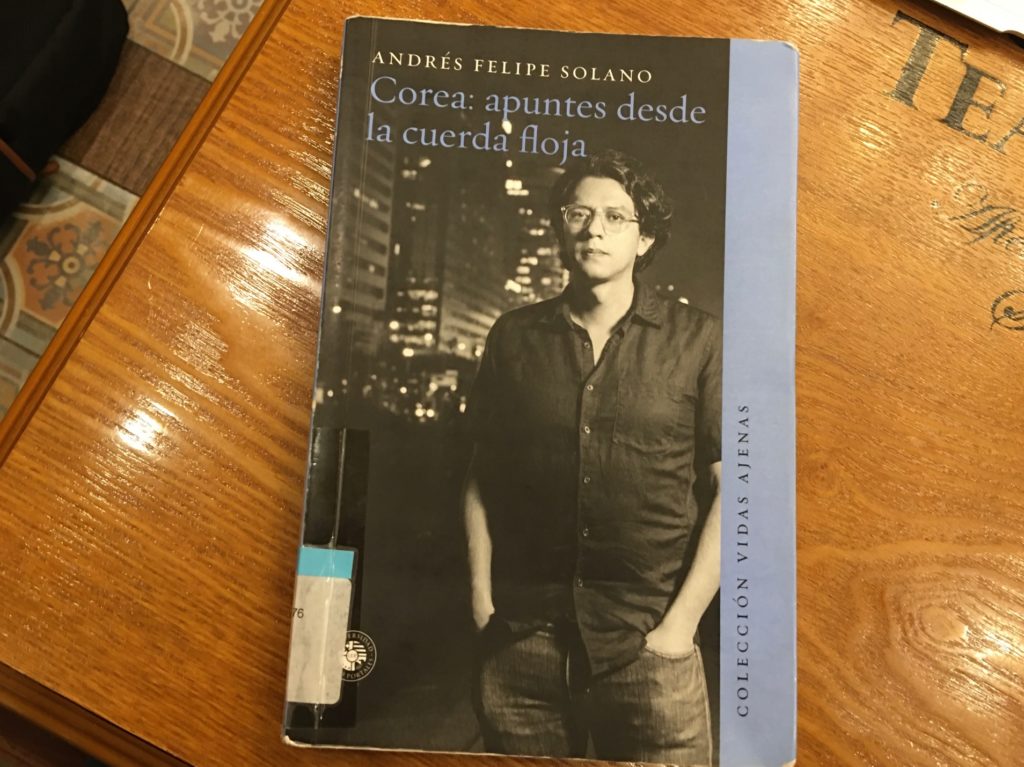
안드레스 펠리페 솔라노의 <외줄
위에서 본 한국>을
한글본으로 읽지 않았다.
그 이유는 한글로
읽는 부담을 피하고 싶기 때문이 아니라 스페인어 읽는
실력을 유지하고 싶었기 때문이다.
많은 미국인들이
학교에서 스페인어를 공부해야 되고 나 역시
초등학교 때부터 그 방식을 따라왔다.
그러나 학교 교육만으로는
외국어를 유창하게 구사할 수
없을 뿐만 아니라 외국어에 대한 관심이 있었어도 그
관심을 쉽게 잃게 된다.
내가
스페인어에 대한 흥미를 다시 갖게
된 때는 학교에서 전혀
공부하지도 않은 한국어를 독학하기
시작한 이후였다. 영어
원어민인 나에게는 한국어가 어려운 편이어서 한국어에
대해서 좌절할 때마다 더 쉽게
실력을 향상시킬 수 있는 다른 외국어가 필요했다.
어느 정도까지 이미 알고 있었고
한국어보다 영어와 비슷한 스페인어는 그 역할과 완벽히
들어 맞았다.
그
당시 한국어 왕초보이면서
스페인어는 중간 수준의 언어를 구사할 수 있는 나는
한국어와 스페인어를 동시에 독학하면서 스페인어
뿐만 아니라 한국 문화에 대해서도
동시에 배울 수 있는 책들이 있다는 것을 알게 되었다.
첫 번째로 읽게
된 그러한 책은 내가 한국에 이사오기 전
로스앤젤레스에서 열린 스페인어 책 축제에서 찾은
레온 플라센시아 뉼이라는 멕시코 작가의 <나의
서울 생활기>라는
에세이집이다. 그 다음으로
최근에 읽게 된 책은 정확히
콜롬비아 작가인 솔라노의 <외줄
위에서 본 한국>이다.
나는
로스앤젤레스에 살 때 번역을 배울 생각도 없었지만
결과적으로 한국문학번역원에서
2년 동안 공부하게 되었다.
한국문학번역원은 국제 교수진
중 솔라노를 포함한 스페인어 원어민 교수들이 있고
그 도서관에서 솔라노의 책을
찾았다. 그 책에서 솔라노는
한국문학번역원의 교수직과 영화
배우까지 여러 다른 직업을 하면서 한국에서 사는
경험을 묘사한다. 그러한
방식으로 살고 있는 그는 지금 한국에 산지 10년이
넘었다.
솔라노의
이야기는 한국에서 몇 개 월만 보내고 나서 <나의
서울 생활기>를 쓴 뉼의
이야기와는 전적으로 다르다.
스페인어를 쓰는 두 작가의
공통점 중 또 하나는 한국에 대한 책을 썼을 때 한국어를
거의 한 마디도 하지 못 했던 점이다. 솔라노와
뉼이 이야기하는 경험들은 한국에 처음으로 방문하기
전에도 한국어를 몇 년간 공부했던 나의 경험보다 더
힘들고 더 재미있다고 할 수 있다.
한국어를
공부할 뿐만 아니라 로스앤젤레스의 한인타운에 한동안
살았던 나는 한국에 도착
했을 때 문화 충격 같은 것을 전혀 느끼지 못했다.
한국에서 처음부터 비교적으로
편안하게 살게 된 나는 가끔 한국을 모른 채
신선한 눈으로 볼 기회를 놓쳐서 아쉽다는 생각이 들
때가 있다. 모국에 익숙한
한국인 뿐만 아니라 한국을 이미 알고 있었던 외국인에게
어떻게 보면 준비되지 않은 상태로 한국에 온 뉼과
솔라노의 책들은 한국의 문화 충격을 간접 경험할 수
있는 소중한 기회를 준다.
책
속에서 두 작가는 한국 생활에
대한 불평을 하면서 스스로가
한 문화적인 실수에 대한 이야기를 들려 준다.
예를 들면
뉼은 배가 고플 때 단체를 위한 고깃집에 혼자서 가고
따뜻한 나라에서 온 솔라노는 겨울이 될 때마다 얼어
줄을 뻔하다고 하며
계속해서 여러 다른 방식으로
글에서 언급한다. 솔라노는
한국인 여자와 결혼했고 그 부인과 같이 서울에 살긴
하지만 문화적인 측면에서는
한국에 살지 않는다고 할 수도
있다. 그 이유 중에 하나는
솔라노의 집이 다문화 동네로 알려져
있는 이태원에 위치해 있기 때문이다.
서울에
살고 있는 모든 서양인들이 알고 있듯이 이태원에서는
매일매일 주로 외국 음식만을
먹고 외국인 친구만을 만나며
영어로만 말해도 전혀 지장이
없다. 솔라노의 생활
뿐만 아니라 생각도 여전히 해외에 몰두해
있다. 사진에 관심이 많은
것 같은 솔라노는 일본인 아라키 노부요시와 미국인
윌리엄 이글스턴 같은 유명한 동경하는
사진작가들을 언급하다.
나도 그 사진작가들의 작품을
좋아하고 솔라노의 서울 생활에 대해서 읽으면서
아라키와 이글스턴 외에 다른 아는 이름들을 더 많이
인지하게 되었다. 캐나다인
가수 레너드 코헨과 독일인 소설가 W.G. 제발트
그리고 대만인 영화 감독 허우샤오셴을 비롯하여
미국인 라디오 방송인 울프먼 잭은
내가 인지하고 있는 이름들을 포함한다.
책의
초반부에서 외국 문화에 심취해
있는 솔라노가 한국 문화에 관심이 많이 없는
것처럼 보일 수도 있지만 결국에는 나도 좋아하는 두
소설인 김훈의 <칼의
노래>와 김영하의 <빛의
제국>을 스페인어 변역본으로
재미있게 읽은 것을 담담히
이야기한다. 한국 영화들을
가끔 보는 그가 가장 긍정적으로 이야기한 것은
1981년에 나온 임권택의
<만다라>이고
나는 그 사실을 알고 나서
<만다라>를
다시 보고 싶게 되었다. 내
생각에는 <외줄 위에서
본 한국>은 2010년대
초에 쓰여져서 솔라노는 그때 이래 한국 문화와 생활에
훨씬 더 익숙해졌을 수도 있겠다는 느낌을 가졌다.
더욱이
한국을 신선한 눈으로 보는 그가 이 책에서 인상적으로
묘사한 것들과 내가 여전히
인상적이라고 생각한 것들이 교차한다.
예를 들면 밤 지하철 안에서
술이 취한 사람들이 크게 바닥에 토할 수 있는 것이다.
그 것은 아무리 역겨워도 어떻게
보면 서울이 살기 좋다는 사실을 역설적으로
반영한다. 세계 여러 도시에
산 적이 있는 솔라노는 지하철 안에서 토하는 것을
보고 나서 서울에 살면서 가장 폭력적인 행동이라고
그 경험을 책에 적었다.