数週間前よく行くソウルの映画館で坂本龍一:コーダというドキュメンタリーを見ました。言うまでもなく坂本龍一は世界的に有名な作曲家です。70年代にYMOという電子音楽バンドの一員として初めて有名になり、その後映画音楽と試験的音楽を作りました。
YMOと一緒に作った音楽であったり、一人で作った音楽であったり、全て伝統てきな日本の楽器のかわりに一番新しい楽器を使っていますがある面では日本しきのように聞こえます。(坂本龍一によって作曲された映画の内私が大好きな戦場のメリークリスマスがあります。その映画で坂本龍一がしたことは音楽だけじゃなくて三島由紀夫みたいな役も演技しました。)
新しいドキュメンタリーの坂本龍一:コーダはTOKYO MELODYという昔の坂本龍一についてのドキュメンタリーの一部の場面が入っています。私は家に帰ってからユーチューブでTOKYO MELODYを検索して見ました。このような私が生まれた年である1984年に出てきた映画は、その時に坂本龍一が住んでいた東京の姿を見せています。
若い坂本龍一は「僕が考えるに日本は今世界一高度な資本的な国になって仕舞って、それがいいか悪いかは分からないけれども、政治の季節はとっくに過ぎ去って人々はそんなに反抗は考えないし。だけど凄く文化に対する飢餓感はとてもあって」と言っています。もし私がタイムマシンを持っていたら、その時代にYMOが歌の中でテクノポリスと呼んでいた東京に旅行するかもしれません。
TOKYO MELODYだけじゃなくてドイツの監督のヴィム・ヴェンダースが作った小津安二郎についてのTOKYO-GAや、フランスの監督のクリス・マルケルが作ったSANS SOLEILや、他に私が好きな80年代の日本と関係があるドキュメンタリーの中で80年代の東京の姿が見えます。(この全ての映画は東京を違う風に見せていますが、全部の映画が共通して最近にも毎週代々木公園でアメリカの50年代しきの服を着て踊っている人を撮っています。)
その東京は今は存在しませんが私が東京に行く際には痕跡をたくせん見たり、聞いたり、感じることが出来ます。私は次に東京にいく時は歩き回りながら坂本龍一の音楽を聞くつもりです。それはタイムマシンで旅行することと似ているでしょう。

“Anthony Bourdain.” “Anthony Bourdain Osaka Bar.” “Anthony Bourdain Osaka Hanshin Tigers Bar.” “アンソニーボーディン大阪阪神タイガース居酒屋.” I Googled all these search terms, and no small number of variations on them, one afternoon in a coffee shop at Gimpo International Airport. Soon to catch a flight to Osaka, my favorite city in Japan, I’d just found out that Toracy, my baseball bar of choice there, had shut down since last I visited. Searching for another Tigers-supporting watering hole, I learned that no less exacting a foreign experience-seeker than Anthony Bourdain began an episode of his travel show No Reservations in one. Considerably rowdier than Toracy, from what I gathered, it somehow also turned out to be all but secret: all the Googling I could do before takeoff time produced no positive identification.
Later that evening, having arrived in Osaka and needing directions to a restaurant, I turned on my phone to a notice that Bourdain had died. Sheer unexpectedness had made the death top-story notification material, but so had the high esteem in which the dead was widely held. As with the passing of every celebrity in the age of social media, seemingly all who could claim even the most tenuous connection with Bourdain stepped forward to tell their stories in tribute. Not only did I have no stories, I never even got to know the man’s body of work, apart from reading here and there in his books. I always meant to catch up on his writings and television programs, but never did.
I found myself reminded of that intention whenever I heard Bourdain had traveled to and appreciated one of my own places of interest in the world. He first made it to Korea in 2006, on his Travel Channel show No Reservations. I didn’t see it then, but I’d been harboring slow-burning Korea-related interests of my own: the following year I fell into studying the Korean language, a pursuit that played a part in my move, a few years thereafter, to Los Angeles’s Koreatown. In the middle of my time there, Bourdain turned up and made the neighborhood the subject of an episode of Parts Unknown, his CNN successor to No Reservations. Just a few months before I relocated from Los Angeles to Seoul, Bourdain returned to Korea to give it the Parts Unknown treatment, a hard-drinking, hard-eating, backwards-told travelogue that surely qualifies as avant-garde by the standards of mainstream cable television.
Read the whole thing at the Los Angeles Review of Books.
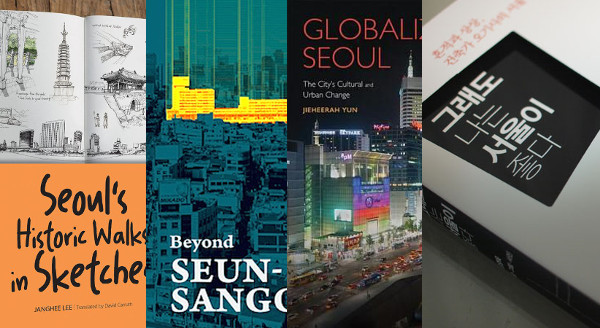
Each month I join Kurt Achin, host of Koreascape on Seoul’s English-language radio station TBS eFM, for an exploration of one of Seoul’s urban spaces. This month, as summer begins, we discuss four recommended books about Seoul, three in English and one in Korean: Janghee Lee’s Seoul’s Historic Walks in Sketches, Jieheerah Yun’s Globalizing Seoul: The City’s Cultural and Urban Change, SPACE Books’ Beyond Seun-sangga: 16 Ideas to Go Beyond Big Plans, and 오영욱’s 그래도 나는 서울이 좋다 (I Like Seoul Anyway). Each of them offers new ways to perceive and consider the city — political, economic, architectural, artistic — and paves the way for other writers to approach Seoul from their own points of view in the future.
Stay tuned for further explorations of Seoul’s architecture, infrastructure, and other parts of the built environment. You can hear our previous segments here or download them on iTunes.

Though I’ve lived in Korea only a few years, I sometimes fear I’ve already lost sight of the culture around me. When visiting foreign friends bring up sights that strike them as notable or even shocking, I increasingly have to admit that they no longer even register in my consciousness. Though I headed off the brunt of initial culture shock by studying the Korean language and living in Los Angeles’s Koreatown for years before ever visiting Korea, certain things still jumped out at me on my first trip here. The fearsome power of trends, for instance: as soon as a certain article of clothing gains popularity, you’ll see it on the streets of Seoul many times a day, every day. Every society has its fads, but the degree of speed, breadth, and regularity of adoption here boggles the Western mind. As a Korean-American friend once wondered aloud, “How do they get the memo?”
At this point, though, life in Seoul has dulled my sensitivity to these trends — in not just clothing but music, design, personal electronics, and much else besides — that wax and wane on a monthly and even weekly basis. This despite considerable effort, deliberate and otherwise, to retain my outsider’s perspective by keeping a foot in current Western culture. I do it primarily by reading magazines: not just those I write for like LARB, but others like the New Yorker, the New York Review of Books, and the London Review of Books as well. To that last I actually only started subscribing while living in Korea. I’d expected to purchase a digital-only subscription, as I’d done with the others, but from what I could tell the LRB offered no such thing, insisting on accompanying my online access with print issues mailed fortnightly all the way to my home in Seoul.
Maybe the regular arrival of each paper LRB, two weeks after its content comes available on the site, primed me to notice its tote bags. Not that I made too much, earlier this year, of the first 20-something Korean girl I spotted on a train platform with one on her shoulder. For all I knew she’d brought it back to Seoul as a souvenir of an afternoon snack at the London Review Cake Shop while on vacation in the English capital — or even a year of study abroad there. And it wasn’t impossible that she actually subscribed, probably out of the same kind of aspirational English-reading impulse that gets parents enrolling their young children in after-school academies that force them to read the likes of Time magazine. (I myself occasionally pick up esoteric Korean literary journals on the same principle.)
Read the whole thing at the Los Angeles Review of Books.
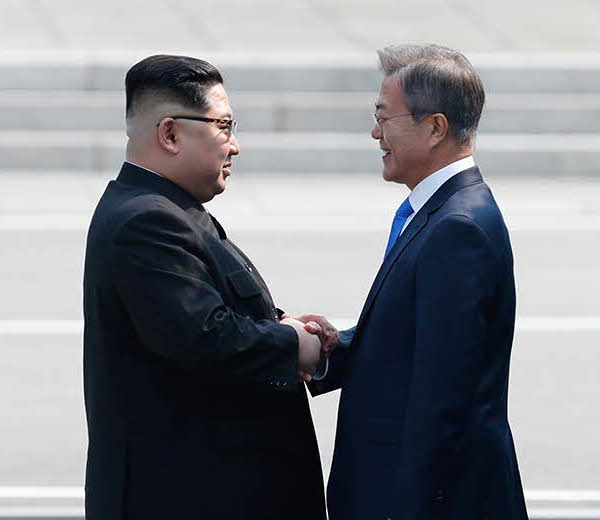
I once asked a former foreign correspondent in South Korea what he wrote about. “North Korea, North Korea, North Korea, and North Korea,” he said. “Oh, and some North Korea as well.” But he’d done that work, for the Economist, something like a decade ago, when the Korea he actually lived in commanded much less international attention than it does today. I naturally assumed, when moving to Seoul a bit over two years ago, that some semblance of a balance had since been struck between media focus on the North and media focus on the South. Events of recent years, including but not limited to the ejection of a president, have indeed put this country in the international headlines, but more of them have stoked the world’s persistently greater fascination with the other one.
That kind of attention has, at least, added to the list of subjects, most of them already threadbare, that reliably generate stories in South Korea: pop music, academic competitiveness, suicide, Samsung. Now we have the “Why aren’t South Koreans obsessed with North Korea?” piece, which usually reflects little more than Westerners’ own obsession with North Korea. I once asked a longtime American resident of South Korea for his thoughts on why so many expatriates here develop such bad attitudes, and he chalked it up to the universal tendency of expatriates everywhere to take on certain characteristics of their host population, in this case habitual complaining. Something similar seems to have happened to me, not in terms of an acquisition of the grumbling instinct but the loss of interest in — bordering on the loss of awareness of — North Korea.
It wasn’t always this way. I remember indulging a mild North Korea obsession of my own in college, scouring the internet for then-scarce photos of the streets of Pyongyang, with its nearly carless streets, blank-faced citizens, and stern traffic ladies, when I’d meant to study for finals. (Some of those procrastinated-on exams were for political science classes, I reminded myself by way of justification, though the professors didn’t then consider the Democratic People’s Republic of Korea anything more than a curiosity.) Something about the combination of orderly poverty, exotically bland aesthetics, ever-present ideological charge, and hilariously obsolete technology took me back to the Cold War. Or rather, since the Cold War ended quite early in my academic career (though world maps with the USSR hung in the classrooms I sat in for years thereafter), it took be back to a certain idea of the Cold War.
Read the whole thing at the Los Angeles Review of Books.
Few readers in Korea seem to lack an opinion about Kim Ji-young Born 1982 (82년생 김지영), the best-selling novel in the country last year. The first book by Cho Nam-joo, a 39-year-old former television scriptwriter who quit her job after her daughter was born, it tells a story at first engineered for a maximum of normality: the title character grows up, goes to school, gets married, gets a job, and like the author leaves that job to become a stay-at-home mom once she has a baby. In another experience shared with her creator, Ji-young strolls her daughter out to a coffee shop only to overhear a few office workers refer to her as a mam-chung (맘충), or “mom-worm,” the kind of demanding, child-toting, deeply entitled woman some Koreans have come to see as a kind of modern menace.
The novel has drawn so much attention because of the frank manner in which Cho renders the countless indignities visited upon Ji-young in her still-short life, from the fact that her own mother had hoped for a son instead to being told that the boys who pick on her in school must “like” her to fellow bus riders’ reluctance to give up their seats for her during her pregnancy. The final straw comes when she has to cross the country to cook an elaborate feast for her husband’s family, just as she does every year of her married life, for the Thanksgiving-like Chuseok holiday. Ji-young suddenly snaps and demands to know why she can never spend Chuseok with her own family back in Seoul, but she does it in the voice of her mother, one of the succession of personas that overtakes her as she plunges into a kind of insanity.
To this extent Kim Ji-young Born 1982 has much in common with Han Kang’s The Vegetarian, winner of the 2016 Man Booker International Prize in in Deborah Smith’s English translation, a novel whose thirtysomething female central character rebels against Korean society’s expectations by refusing to eat meat. This leads into a series of other increasingly eccentric behaviors, culminating in an intensely focused effort to live as a plant, whereas Ji-young remains essentially a recognizable everywoman right down to her name (anyone who spends much time in Korea will meet a Kim Ji-young sooner or later, and probably more than one) and the footnotes with which Cho documents the statistical basis of her averageness. “I feel like this is a story of a real Kim Ji-young living somewhere,” Cho writes in the novel’s prologue. “Her life resembles very much after that of my friends, colleagues and of myself.”
Read the whole thing at the Los Angeles Review of Books.
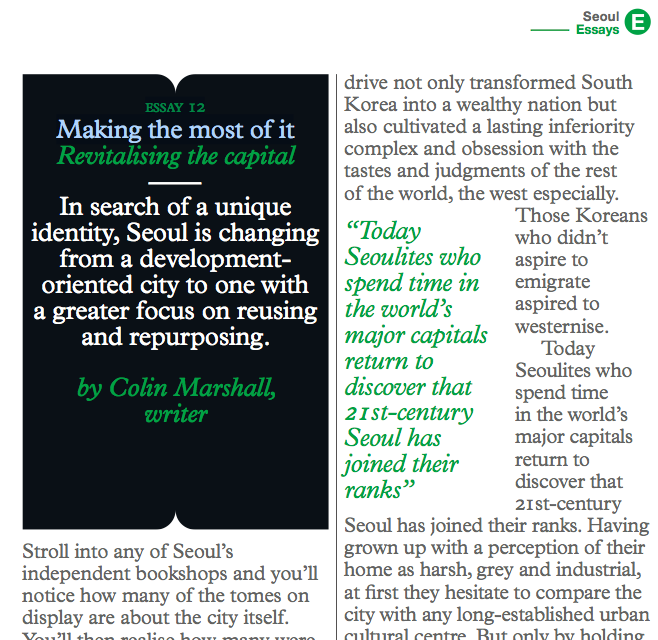
I’ve got an essay in the back of Monocle‘s newly published travel guide to Seoul. It begins with all the books about the city, its architecture, and its urbanism that have recently made their way to the shelves of Korean bookstores, continues on to the question whether Seoul can grow a distinctive urban culture organically rather than importing it from more established world capitals, and of course gets around to Seun Sangga and what it says about the city’s past as well as its future. (I think I also had a short piece on Gangneung somewhere in Monocle‘s most recent Korea issue.)
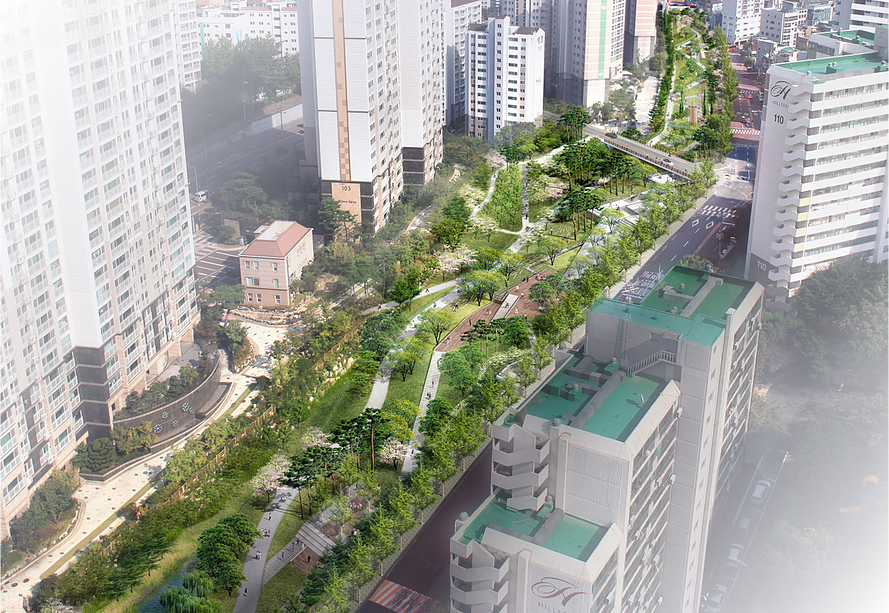
Each month I join Kurt Achin, host of Koreascape on Seoul’s English-language radio station TBS eFM, for an exploration of one of Seoul’s urban spaces. This month we walk the Gyeongui Line Forest Park, which cuts across four miles of Seoul on part of the path of the Gyeongui Line train, which back in the colonial period ran all the way to Manchuria. Spared from the high-rise development that now exists immediately alongside it, the area of the Gyeongui Line’s old tracks has become a linear park replete with bike paths, art installations, bookstores, and open spaces for members of the communities through which it passes to complete as they see fit. Beginning just south of Hyochang Park, it ends in the center of the Yeonnam-dong, a neighborhood that has in recent years become hugely popular among young people not least due to the Gyeongui Line Forest Park itself — whose lively Yeonnam-dong section its many young habitués now call “Yeontral Park.”
Stay tuned for further explorations of Seoul’s architecture, infrastructure, and other parts of the built environment. You can hear our previous segments here or download them on iTunes.
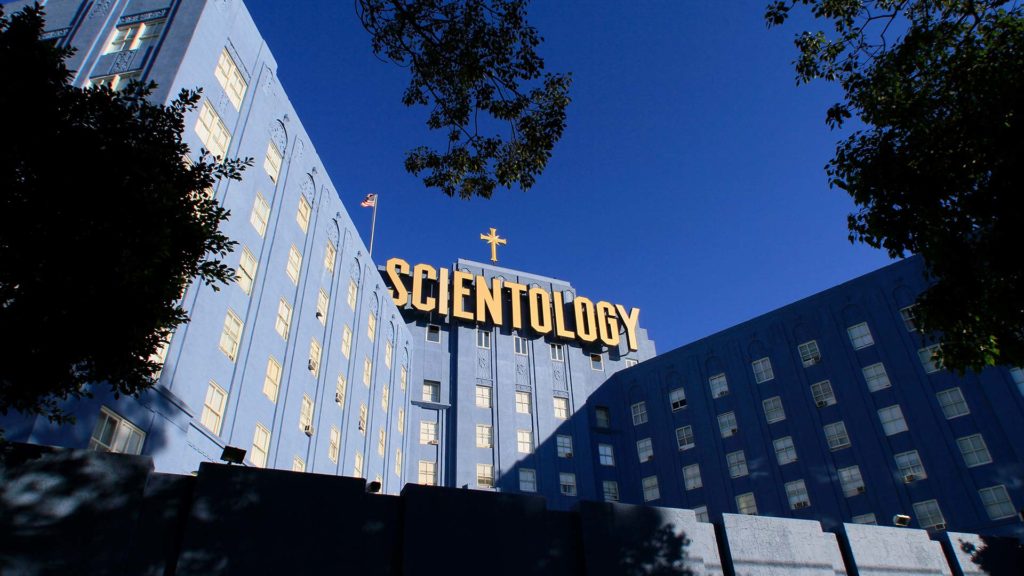
It isn’t always obvious who owns Los Angeles’ notable old buildings, but 4833 Fountain Avenue requires no research more intensive than an upward glance. There, in sixteen-foot letters, its current stewards have mounted — lest the symbolism of the eight-pointed cross at the tip of the rooftop pyramid prove too obscure — the word “SCIENTOLOGY.” Every Angeleno’s list of quintessential Los Angeles experiences differs, but mine includes brunching across the street from that sign, mimosas and migas enjoyed under its looming presence as well as the blue paint job (which, unsettlingly, sometimes matches the sky) and mammoth scale (at least compared to the blocks of Hollywood around it) of the building holding it aloft.
Then there’s another, even more palpable presence: that of security, not just in the form of endlessly looping, bicycle-mounted security guards, but cameras installed in countless positions both seen and no doubt unseen. That will surprise nobody even casually familiar with the public profile of the Church of Scientology, owner of 4833 Fountain and at least 25 other properties across Hollywood. Members who defect and publicly tell their stories have drawn stern responses from the organization, to say the least, as have investigative journalists who try to find just what goes on behind the azure walls of the building Scientology officially calls its Pacific Area Command Base, or more casually, “Big Blue.”
Though the information those ex-Scientologists and reporters have come out with suggests that its doctrine deals with events going back trillions of years, the Church of Scientology itself was founded relatively recently, in 1954, by science-fiction writer L. Ron Hubbard. Having made his first journey out to Los Angeles to write for the movies in the mid-1930s, the Nebraska-born Hubbard worked on “Dianetics,” which would become Scientology’s foundational text, in an office on Sunset Boulevard during the 1940s. At the time of the book’s publication in 1950, he’d opened an operation called the Hubbard Dianetic Research Foundation on Hoover Street. Despite having lead a fairly peripatetic life up to that point, he seemed to have adopted Hollywood as his own neighborhood.
Read the whole thing at KCET.