
지금은 Kickstarter Drive가 시작됐어요!
The Kickstarter drive for Notebook on Cities and Culture‘s Korea Tour, that is, a whole season of in-depth interviews with cultural creators, internationalists, and observers of the urban scene all across South Korea, the most fascinating country in Asia today. We need only raise its $5,000 budget in a week, and it will begin immediately after season four ends (at its sixtieth-ish episode).
If you back the Korea Tour on Kickstarter, not only do you improve the chances of its happening, but you can get postcards from Korea, your project or message mentioned on the show, or even your very own copy of my textual and photographic Korea Diary, to appear in only the most limited of print runs.
For more details, just have a look at the Korea Tour’s Kickstarter page. 읽어주셔서 감사합니다. 한국에 갑시다!
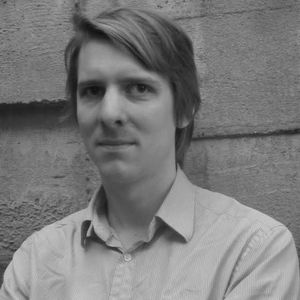 Colin Marshall sits down for bangers and mash in Woolwich, London, England, with writer on political aesthetics Owen Hatherley, author of the books Militant Modernism, A Guide to the New Ruins of Great Britain, A New Kind of Bleak, and Uncommon, on the pop group Pulp. They discuss the relevance of the combined sentiments of the Pet Shop Boys and the Human League to his critical mission; his sickness of “where’s my jetpack”-type complaint; the new limits of the possible; whether one more easily sees politics expressed in architecture in England that elsewhere; the coincidental rises of the welfare state and modern architecture; the nature of England’s north-south divide, one starker than that between the former East and West Germany, the unexpected tasteless drama of northern building, and the “ruin porn” richness of towns like Bradford and Liverpool; housing as the chief political issue of modern Britain; the shamefacedness of new English building, and the tendency of it to bear little relation to its own location; his view of buildings like the now-demolished Tricorn Centre in childhood, before he’d internalized “what architecture should look like”; how the still-standing Preston Bus Station demonstrated that a provincial city wasn’t parochial; the long-gone heyday of the City Architect; his upcoming book on architecture and communism, and what he’s discovered in his exploration of eastern Europe; why he might feel the need for a disclaimer stating that he already knows about the gulag; and how he found that the Soviet regime generated much more nostalgia, in its buildings and otherwise, than people think.
Download the interview here as an MP3 or on iTunes.
Notebook on Cities and Culture‘s Korea Tour, which will bring you at least 30-40 interviews from around the most fascinating country in Asia today, begins its Kickstarter fund drive this Monday, April 7. We need only raise its $5,000 budget — quite a bit less than season four’s! — within a week after that so you can begin hearing the interviews from Seoul, Busan, Incheon, Daegu, and beyond immediately after season four ends. As a backer, you’ll also have a chance to receive postcards from Korea, your project or message mentioned on the show, or even your very own copy of the (surely highly) limited print run of my sure-to-entertain Korea Diary. Hey, I’ll even inscribe it in Korean if you want.
To stay involved, just keep your eye on this space, or on the Notebook on Cities and Culture mailing list, on Twitter, or on Facebook. I’ll let you know where you can go to back the Korea Tour as soon as its Kickstarter page goes live. And as always, if you have any suggestions of guests you’d like to hear interviewed on it, please don’t hesitate to let me know. Koreans, foreigners, creators, observers, people in Seoul, people (especially) outside Seoul: I’ll look into everyone you want to hear. Thanks!
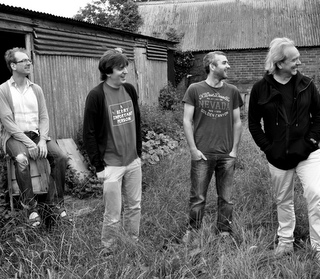 Colin Marshall sits down in Canterbury, England with Jack Hues, founding member of the rock band Wang Chung and jazz band The Quartet. Wang Chung’s latest album Tazer Up came out in 2012, and The Quartet’s next album Collaborations Volumes 1 & 2 comes out this fall. They discuss what makes the “Canterbury sound”; the differences between Wang Chung’s “English” and “American” albums; what recording in another city or country, and drawing in its “vibe,” gives a project; music as a language, and how different styles of music feed into each other as do different languages; the “librarian mentality” that has many of his students talking initially about musical genres rather than about musicians; what growing up with the Beatles made possible; his Haruki Murakami reference in Wang Chung’s “City of Light”, and how he works into songs other things simply happened upon in life; his formation of The Quartet after 9/11; how he gets to balance teaching, The Quartet, and Wang Chung now that the latter doesn’t demand an all-consuming lifestyle; how only his American students ask about Wang Chung, and how nearly all of them have internalized the form of the “pop song” unconsciously; critics’ misguided fixation on lyrics; Wang Chung’s use of unusual chords, and what makes some music generally more interesting than other music; whether the world of 1980s pop music could accommodate the darker side; art’s emergence from constraints, and how he goes about imposing them on The Quartet; the experience of revisiting “Dance Hall Days” for a remix; whether Wang Chung would play “Rising in the East” if someone shouted it out; the musical place where Wang Chung and The Quartet meet; how to enjoy feeling like an outsider yet use roots as an artist; and the reaction drawn at a recent Wang Chung show: “Wow, you guys are real musicians!”
Download the interview here as an MP3 or on iTunes.

PITY THE WESTERN JAPANOPHILE who longs to become Japanese. He either takes on every trapping he can manage of what he imagines as the Japanese existence, going as native as possible and in the process turning into a grotesque, or, having collided with one too many of the invisible barriers honeycombing his adopted homeland, throws up his hands and returns, filled with obscure frustration, to his actual one. Donald Richie, though known as a critic, novelist, curator, and filmmaker, had one real life’s work: to solve that problem, in a life lived almost entirely in Japan since service with the American occupation brought him there on New Year’s Eve, 1946, until his death one year ago. In his observations of, explorations in, and engagements with Japan, he exemplified how to place oneself advantageously in a land and culture not one’s own, a process begun by accepting, then embracing, how adamantly it will remain precisely that: not one’s own.
“The white man who goes native in Samoa or Marrakech,” Richie writes in his best-known work, 1971’s The Inland Sea, “the Japanese who goes native in New York or Paris — this is possible, but it is, I think, impossible for anyone but a Japanese to go Japanese.” Nominally an Ohioan, he stayed in Japan for about 60 years, except for two stretches in New York — first for an English degree at Columbia University, then to curate the Museum of Modern Art’s film program. In this time, he wrote some 40 books on his second, ever-strange country of residence: histories of Japanese film; Japanese travelogues like The Inland Sea; coffee-table books introducing Japan, its cuisine, its cities, its traditions, and its tattoos; novels set in ancient and modern Japan; and the 510-page Japan Journals, a collection, first intended for posthumous publication, of diary entries chronicling 57 years of his daily movement through Japanese society at all levels. What fascinated him throughout is its otherness. “If I were Japanese,” he liked to say of Japan, “I wouldn’t stay here ten minutes.”
Read the whole thing at the Los Angeles Review of Books.

This summer, we have the chance to take Notebook on Cities and Culture to South Korea, for my money easily the most fascinating country going in Asia right now. You may already have encountered and enjoyed its rich cultural output in the form of its food, its music (yes, the roots go deeper than “Gangnam Style”; I personally prefer the stuff from the sixties and seventies), its television, or its cinema. I had my own interest in Korea kindled by the films of Hong Sangsoo — to such an extent, in fact, that I’ve thrown myself into the study of the language and plan to move there within a couple years.
Having come to surprising economic prominence only since the fifties, Korea has more recently made serious efforts to share its considerable interestingness with the world. In that mission, I feel Notebook on Cities and Culture has something of a role to play. Hence the show’s Korea Tour: an entire season of in-depth conversations — the very same kind you’ve come to expect — with creators and observers living and working in Korea. And not just in the vast, obviously exciting capital of Seoul, either: I’ll make my way to many other intriguing cities as well, recording all sorts of interviews with Koreans and Korea-based non-Koreans alike for you to enjoy and from which you’ll (and I’ll) learn a great deal.
As with any season of Notebook on Cities and Culture, we’ll use Kickstarter to raise the Korea Tour’s budget. As a die-hard cheap traveler, I should be able to get you guys at the very least 30 to 40 long-form conversations (and, of course, neato vintage Korean postcards) for about $5,000 total. The Kickstarter drive will begin in April, and if it succeeds, the interviews will air immediately after season four ends. I’ll keep you posted, and if you have any ideas or guest recommendations, please don’t hesitate to get in touch.
Wednesday, March 26, 2014

The latest Los Angeles Review of Books podcast, a special on the second issue of their quarterly print journal, features a conversation between me and The Lost Art of Walking author Geoff Nicholson about his piece on travel writing without traveling and a reading by Colin Dickey from his piece on the arctic. You can listen to the conversation on the LARB’s site, or download it on iTunes.

As soon as you leave baggage claim, the apologies begin. “We are in the process of building a world-class airport for Los Angeles,” one announcement offers by way of explanation for the discomforts, delays, or other hassles you’ll soon endure. The increasing frequency with which I use Los Angeles International Airport, or LAX, has inured me to many of its difficulties, but that specific mitigating promise has stood out since I first heard it. You’d expect a city as future-oriented as Los Angeles to keep its main point of entry up to date, but how can it have put off making its airport truly “world-class” until now, solidly into the 21st century, over eighty years after it first opened?
In his essay “Where Worlds Collide,” Pico Iyer finds LAX “a surprisingly shabby and hollowed-out kind of place, certainly not adorned with the amenities one might expect of the world’s strongest and richest power.” Almost twenty years on, parts of it still come off, like much else in Los Angeles, as inexplicably unfit for a city of such undoubted economic and cultural prominence. Underneath the speakers promising that bright future, arrivals have one of the least appealing ground-transportation experiences in all the major airports of North America; the endless scrum of private vehicles weaving in and out of one another’s paths — a system that works haltingly in practice and surely not at all in theory — must look sadly familiar to those coming from, say, a struggling Latin American country.
Read the whole thing, my last excerpted essay from the book, at KCET Departures.
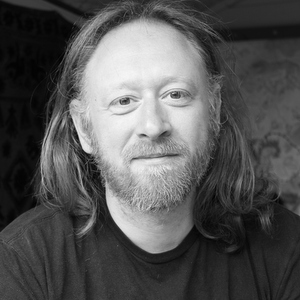 Colin Marshall walks through Stratford, London with John Rogers, author of the blog The Lost Byway and the book This Other London: Adventures in the Overlooked City. They discuss how one should approach one’s first London shopping mall, a built phenomenon that has changed dramatically over the decades; his memories of playing soccer with rotten fruit in Stratford’s Shopping City; whether knowing the “other” London requires you to first know the standard London; how “ramble books” got him writing about unwritten-about places; the importance of feeling proud of wherever you live; the unshrinking “London Book” industry, whose robustness possibly owes to the difficulty of pinning the city down; comparisons with Los Angeles, where myths and easy definitions go uncontested; when Leytonstone went from part of Essex to part of London, and what that meant; the historical John Rogers, who got burnt at the stake; what constitutes his walking “practice,” which has earned him a reputation as “the drinking man’s Iain Sinclair”; the richer connection to the environment you feel when walking, and the aid to thinking it provides; how he first began blogging about his walks, and how the activity took on elements of journalism; his curiosity about London places and place names, and how walking facilitates the accretion of related facts into knowledge; his use of pubs as “third places” and of samosas as walking fuel; the Orwellian enjoyment of hardship; and his memories of riding the Docklands Light Railway into the sunset when he first came to town.
Download the interview here as an MP3 or on iTunes.

I grew up thinking of the “inner city” as a byword for criminality, disrepair, inconvenience, and destitution. Only later did I realize that, outside the United States and much of the United Kingdom, the term and its international equivalents never picked up those off-putting associations. To most of the rest of the world, whose capitals’ established centers didn’t suffer the same extensive degree of postwar population drain, a city gets only more attractive (if exponentially more expensive) the farther in you go. But once-derelict downtowns all across America have enjoyed a renaissance of late, and Los Angeles’ downtown, once among the most derelict, now looks among the most promising. Walk through most of its neighborhoods, and you may well believe the hype; walk through Skid Row, a substantial piece of the old inner city spread for blocks and blocks from about 5th Street and San Pedro outward, and you begin to wonder.
The San Francisco of my early childhood left me with only a few memories, most of them having to do with the size and assertiveness of its homeless population. The situation there has improved, but then, when I saw it at three feet off the ground, I saw it at its late-1980s nadir — it had nothing left to do but improve. That sense memory of passing into an environment, no matter how otherwise stimulating, shot through with drug use, mental illness, aggression, and desperate poverty never quite left me. But anyone going to San Francisco back then would have expected to encounter all that; these days, in that city and others, you more often find it in unexpected pockets, or rather, you suddenly find yourself in those pockets. I think, to take one stark example, of Vancouver’s Hastings Street, onto which the city somehow steers what seem like all of its transients.
Read the whole thing at KCET Departures.