Skip to content

Favorite Open Culture posts of 2013

Every weekday I write a post at Open Culture, usually to do with literature, film, music, art, television, radio, or language. Here are ten of my favorites from the more than 250 I wrote in 2013:

See also my ten favorite Open Culture posts of 2012.

Notebook on Cities and Culture S4E17: Off Cinema on Rådhusstræde with Jack Stevenson

Colin Marshall sits down at Copenhagen’s Husets Biograf with Jack Stevenson, programmer of the theater and author of books on both Scandinavian and American film. They discuss Lars von Trier as the world’s representative of Danish cinema; the difficulty of creating scandal within unshockable Denmark; revival theaters across the world as a nation of their own; the film education he drew from haunting the revival houses of Boston; his plan to serve ten White Russians during a screening of The Big Lebowski; Copenhagen as Scandinavia’s most “real urban environment” in which to show films; the slow emergence of the strengths of the current generation of independent cinemas; the question asked about both Denmark and Korea, “How does that small country make such interesting films?”; his own introduction to Danish film, through Lars von Trier and others; how, in the era in America when “Scandinavian movie” meant, more or less, “porno movie,” Danish film helped make porn chic; the ideal grind house experience evoked by Jack Kerouac in On the Road; the days when every train station in Germany, “a special place,” had a porno theater; America’s lack of an “off cinema” scene like the ones in European countries; why Danes can’t accept film noir (and don’t know about soul food); the history of the Husets Biograf’s 19th-century industrial building, overtaken by anarchist squatters in the sixties; the surprises of filmgoing in Brussels; his resolve to program Halloween shows in the face of Danish indifference to Halloween; and his current work with traditional Danish ghost stories.

Download the interview here as an MP3 or on iTunes.

Podthoughts: Dear HK

Vital stats:
Format: talk about Hong Kong, but mostly talk in Hong Kong, from two chatting 23-year-old friendst
Episode duration: 30m-1h
Frequency: weekly, but with gaps

I read quite a bit about Hong Kong, not because I have any business there, nor because my fascinations in Asia incline that way (I’ve invested more in Japan, and far more in Korea), but because the place has proven a rich object interest for some of my favorite writers. Dated as they may now seem, books like Jan Morris’ Hong Kong and Christopher Rand’s Hongkong: The Island Between have put in my head all manner of captivating images of an omnisensorially vibrant entrepôt, bustling beyond bustle, where East meets West with both a time-worn casualness and a constant hum of undissipating commercial energy. Then again, other favorite writers regard the place more guardedly; Pico Iyer’s description of “a dream of Manhattan, arising from the South China Sea” has gained traction with the tourism bureaus, but I also remember him calling the place what you’d get if Manhattan’s financial sector completely absorbed the cultural one. Hong Kong, then, perhaps falls under the category of places you just have to go see and judge for yourself, but until that day comes for me — sooner, surely, than later — I figure I’ll prepare myself with podcasts.

Hong Kong’s English-language podcasting industry, while hardy mature yet, has produced a handful of intriguing shows. Dear HK [iTunes] in particular pitches itself by invoking “Stinky Tofu, Smokin’ Tai-Tais, and a Smashing Harbour,” declaring a mission to “talk all things Hong Kong.” Having smelled (though not eaten) stinky tofu last summer at a night market here in Los Angeles, I decided to start downloading. I must have done so before reading the unfortunate second half of its blurb: “Join Charlotte and Felix in their weekly random ramblings!” Oh dear. To ultimately devolve into aimless, unstructured gab has by now become a standard podcast syndrome, but what to make of a show that out-and-out declares it as a form? Most discerning podcast listeners would, I imagine, preemptively chuck it onto that enormous and ever-growing heap of probable time-wasters, atop the shows by 23-year-olds, the shows made up of nothing more than a couple of friends chatting, the shows produced in a parent’s basement, and the shows whose hosts talk about nothing of greater consequence than whatever they happen to have watched or eaten lately.

Read the whole thing at Maximum Fun.

Join me at Exosphere’s 12-Week Entrepreneurship Boot Camp next year in Santiago, Chile

Next year, do consider joining me at Exosphere, an alternative education platform where unique learning experiences cultivate the discipline, knowledge, and curiosity for building new enterprises that solve real problems. Its second 12-week Entrepreneurship Bootcamp, designed to accommodate people from all stages of life with a diversity of experience and ideas, happens from March to June 2014 in Santiago, Chile. I’ll be there for you as a full-time fellow, as will a whole faculty in residence specialized in coding, design, development, marketing, and emerging technology to help you develop your business and yourself. You can apply now through January 15.


More on Exosphere’s vision, which I can’t help but share:

We believe in a renaissance of humanism that puts curiosity, learning, and creation at the forefront of the human experience. We see technology as an artistic expression of human talent — in service of other people — making life healthier, more meaningful, more efficient, and full of variety. As creative beings, we delight in variety. We believe in a world where each person can delight in the variety of her own creation and in the creations of others.

Such a world can only exist when people are free — both politically and existentially. Entrepreneurship is the path to freedom, and simultaneously gives people a sustainable outlet for their creative energy.

There are two pains in life that we believe are the source of most of our everyday suffering: doing work that is out of alignment with our calling, and broken relationships with other people. With entrepreneurship, we can resolve the former, and in Community, we can heal the latter.

We see education as the entry point for this battle. Rather than talking about education reform, we are actively experimenting with alternative models and formats for inspiring and helping people to pursue a life of intentional, self-directed learning. We envision a world where this style of education starts in kindergarten and continues into old age.

We see the transformation of education as the essential first step to making science and technology accessible to more people.

(Only 20 spots left now, I might add, so jump on that application sooner than later.)
A Los Angeles Primer: L.A. Live

“Los Angeles is the most beautiful city in the world, provided it’s seen at night and from a distance.” You usually hear that line credited to the filmmaker Roman Polanski, but the observation at its core has proven so resonant for so long that the variations and attributions have multiplied. Often it comes delivered by a longtime or even native Angeleno, proactively expressing their distinctive combination of shame and pride. I tend to think some of this attitude comes from living in a city universally known by name but difficult to recognize by skyline, and even that depends on which sets of distant buildings you consider part of it. In search of a logo, the popular Los Angeles news site LAist simply accomplished by graphic design what many of us, especially the tourists, wish we could accomplish in the built environment — placing City Hall, the Capitol Records Building, the Disney Concert Hall and the Hollywood all together, right next to a palm tree. Part of me wishes that, given this suspension of geography, they’d gone ahead thrown in the Century Plaza Towers too.

But unless the much-discussed Big One strikes, necessitating a complete reconstruction of the city, Los Angeles will never put all its icons in one place. Hence the emphasis instead on the whole strikingly vast basin-draping blanket of lights against the darkness you see flying into LAX, or from high ground at the Getty Center or Griffith Observatory. Even if the remarkable development of recent decades hasn’t yet made downtown into a symbol of all Los Angeles, its glittering towers certainly give it the look of a jewel in the crown. A good deal of this post-sunset slickness now emanates from L.A. Live, an “entertainment complex” opened in 2007 at downtown’s southwestern corner. Comprising restaurants, bars, a couple of music venues, a hotel, condos, offices, broadcasting studios, an enormous movie theater, and the Grammy Museum — not to mention copious amounts of parking, with even more copious amounts promised to come — it also enjoys something of a symbiosis with the adjacent Staples Center. NBA enthusiasts thus count themselves as among the part of the population, with reasons to pass many of their nights at L.A. Live. Others still know it only as a point of light, albeit a 2.5-billion dollar one.

Read the whole thing at KCET Departures.

Notebook on Cities and Culture S4E16: Baby Steps Begone with Mikael Colville-Andersen

Colin Marshall sits down in Vesterbro with Mikael Colville-Andersen, urban mobility expert and CEO of Copenhagenize. They discuss where Los Angeles, with its “pockets of goodness,” ranks on the global scale of Copenhagenization; what it takes for a city’s population to become “intermodal”; his experience growing up in an English-Danish-Canadian household, biking all the time before the onset of the “culture of fear”; the qualities of a mainstream bicycle culture, including a lack of specialized cycling clothes of the type worn by the sport cyclists who have “hijacked” the practice; learning how not to promote cycling from environmentalism, the greatest marketing failure of all time; the need, in some places, to sell urbanism before you can sell urban cycling; his work busting myths about why Copenhagen allegedly differs so much from all other cities; why he settled in Copenhagen himself, beyond not needing to explain his name so often; the photo he took that “launched a million bicycles” and made him into a modern-day Jane Jacobs; the failed science of traffic engineering and how to rebuild it; cycling’s “modal share” and what it tells you about a city, especially when it rises above five percent; the bicycle as “the symbol of the future, man”; how helmets kill cycling culture, and his TED Talk on riding without one; our innate need, as human beings, to fear stuff; and what urban cycling promoters can learn from the success of automobiles, and especially their introduction of the term “jaywalking” and the very concept of playgrounds.

Download the interview here as an MP3 or on iTunes.

Los Angeles Review of Books Podcast: A. Scott Berg

On the latest Los Angeles Review of Books podcast I have a conversation with A. Scott Berg, author of books on Max Perkins, Charles Lindbergh, Samuel Goldwyn, Katharine Hepburn, and now, with Wilson, on the 28th president of the United States. You can listen to the conversation on the LARB’s site, or download it on iTunes.

A Los Angeles Primer: Pico Boulevard

In the early 1980s, well before his doggedly exploratory restaurant criticism in the Los Angeles Times and the Weekly made him famous, Jonathan Gold gave himself a mission: “to eat at every restaurant on Pico Boulevard and create a map of the senses that would get me from one end to the other.” This rigorous mandate demanded that he has at least a few bites of food in every one of Pico’s eateries, of every kind, in order. “As often happens with these restaurants, they close down,” he explains on a 1998 “This American Life” broadcast, “so if I’d gone two miles and a restaurant I’d gone to had closed down and opened up again, I would have to go and eat at that restaurant before the next one.” He soon “became obsessed with the idea of Pico Boulevard. Almost every ethnic group that exists in Los Angeles, you can find on Pico,” from “specific blocks that are Guatemalan, Nicaraguan blocks, Salvadoran blocks” to “parts you can drive a mile without seeing a sign that isn’t in Korean” to “a huge concentration of Persian Jews that came over around the time the Ayatollah took power. I don’t think there’s another street in Los Angeles quite like it.”

The young Gold’s mission strikes me as an appealingly and almost quintessentially Los Angeles journey to undertake: ambitious, hedonistic, self-assigned, and totally Sisyphean. He never finished it, but no one could have. He mentions the here-today-gone-tomorrow nature of the businesses on Pico, which goes a fair way toward explaining the difficulty of completist eating. When you multiply that by the boulevard’s sheer length, difficulty becomes impossibility. In most other American cities, having eaten everywhere on a particular street would sound mundane, almost dull, less an accomplishment than an admission that you don’t get very far afield. But Los Angeles’ streets present another experience entirely, something the Dutch novelist and traveler Cees Nooteboom discovered when he came to Los Angeles for a stay in Beverly Hills in 1973. “On the third day, I ventured outside,” he writes. “I walked, which was crazy — not because it is dangerous but because it does not make sense. In a city with streets longer than fifty kilometers, the measure of one foot is absurd, and so is the use of one’s feet as a means of transportation.”

Read the whole thing at KCET Departures.

Podthoughts: You Can’t Eat the Sunshine

Vital stats:
Format: comments on Los Angeles and the changes therein, followed by interviews with those tied to the region’s past
Episode duration: 1h-1h30m
Frequency: weekly

I’ve never taken a trip with Esotouric, which offers “provocative and complex, but never dry” bus bus tours of greater Los Angeles which mix “crime and social history, rock and roll and architecture, literature and film, fine art and urban studies into a simmering stew of original research and startling observations” on such territories as “Hot Rods, Adobes, and Early Modernism,” “Haunts of a Dirty Old Man” (i.e. Charles Bukowski), and “Pasadena Confidential with Crimebo the Crime Clown.” Until such time as I cough up the sixty bucks to board an actual Esotouric bus, I’ll opted for the next best thing: You Can’t Eat the Sunshine [RSS] [iTunes], a weekly podcast hosted by the company’s proprietors, the husband-and-wife team of near-obsessive Los Angeles enthusiasts Kim Cooper and Richard Schave. Each episode opens with a local place-name-checking theme song by a ukulele-playing lady known as the Ukulady, who looks, as her site reveals, exactly like she sounds, thus embodying a perfect union of form and substance. The podcast on which she plays enjoys a similar alignment between its own expansive form and that of the city/county/”mega-region”/half of the state of California it examines.

You Can’t Eat the Sunshine doesn’t make the obvious choice of offering audio versions of Esotouric tours, but it surely burns as much gas each time out with its actual mandate: to track down unusual people — poets, craftsmen, professors, impersonators of historical figures — living in Los Angeles and its environs, most of whom have strong ties to the place’s past, and interview them. On some episodes this just means going downtown; on others it means rolling to Long Beach, Eagle Rock, UCLA, Downey, La Mirada, or Lake Elsinore, the names of which wear me out in the typing alone. “We were born here,” announces Cooper in the 90-second back-and-forth spoken intro that precedes the Ukulady, and indeed, I’ve come to notice a certain divide between native Los Angeles appreciators and those transplanted. I fall into the latter group, having moved here for no better reason than that it fascinated me more than any other city in America — well, that and its robust revival cinema scene — and now my current projects include not just a book on the place but an interview podcast more than half of whose episodes deal with Los Angeles. By all rights, I should have taken every available Esotouric journey already, if not up and launched a competing provocatively complex, research-and-observation-stewing bus tour company of my own.

Read the whole thing at Maximum Fun.

Notebook on Cities and Culture S4E15: We Form Cities, They Form Us with Jan Gehl

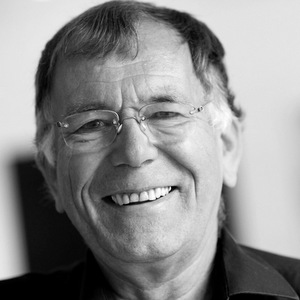
Colin Marshall sits down in the Copenhagen offices of Gehl Architects with founding partner Jan Gehl, architect, Professor Emeritus of Urban Design at the School of Architecture in Copenhagen, and author of books including Life Between Buildings, Cities for People, and How to Study Public Life. They discuss what important change occurred in Copenhagen in 1962, and what led to it; the midcentury “car invasion” in Europe and the first modern shopping mall’s construction in Kansas City; the re-emergence of the notion that “maybe pedestrians should walk”; the connectedness of walking in Copenhagen, which ultimately forms a “walking system”; the dullness of the anti-car position versus the richness of the pro-people one; the two movements of modernism and motorism, at whose intersection he found himself upon graduating from architecture school in 1960; what it meant to study “anti-tuberculosis architecture,” and what it meant to build for the old diseases rather than the new ones; his marriage to a psychoanalyst and ensuing interest in increasing architecture’s attention to people; how his PhD thesis became Life Between Buildings, and why that book has endured for over four decades in an ever-increasing number of languages; how first we form cities, and then they form us; what we can learn from Venice; the urban “acupuncture” performed on various American cities today; his long enjoyment of Melbourne; why we’ve only so slowly awoken to our dissatisfaction with the built environment; the loss of cheap petroleum and stable nuclear families, which propped up suburbia; how he and his team systematize and use their knowledge of cities to examine and assist the use of public space across the globe; and all he finds totally unsurprising about man’s use and enjoyment of place.

Download the interview here as an MP3 or on iTunes.