
Colin Marshall talks with Cynthia Kadohata, author of novels for young readers like the Newbery Medal-winning Kira-Kira, the National Book Award-winning The Thing About Luck, and the new Half a World Away. She has also written for adults with such novels In the Heart of the Valley of Love, a grim but hopeful vision of Los Angeles’ future.
You can stream the conversation just above, listen to it on the LARB’s site, or download it on iTunes.
 Notebook on Cities and Culture‘s Korea Tour is brought to you by Daniel Murphy, David Hayes, and The Polar Intertia Journal, an outlet for artists and researchers documenting the urban condition.
In Seoul’s Sinchon district, Colin talks with Matt VanVolkenburg, author of Gusts of Popular Feeling, a blog on “Korean society, history, urban space, cyberspace, film, and current events, among other things.” They discuss what it feels like to live in Seoul, of all places, without a smartphone; why navigating the city poses so much of a challenge to the newcomer; how he sees the relationship of the Korean media to foreign English teachers, “the new incarnation of the GIs”; what made it possible for the Korean media to talk freely about the acts of foreigners; the history of “Korea as a victim”; why non-English-teaching foreigners surprise Koreans; what makes some Koreans and foreigners alike see entry-level foreign English teachers as third-class citizens; the country’s distinctive combination of overregulation and under-enforcement, and what it says about the difference between the legal cultures of Korea and North America; what he does on trips instead of hitting the beach; Isabella Bird Bishop, the 19th-century traveler and write from whom Gusts of Popular Feeling takes its name; why the collapse of the Sampoong Department Store didn’t prevent the sinking of the Sewol; the writing of Percival Lowell and others who had more to comment on than dirtiness and superstition did about Korea in the late 19th century; the Chonggyecheon’s very short history as a “clean stream”; James Wade, one of the more prolific English-language observers of postwar Korea; what he finds reading old Korean newspapers; his incredulousness at a foreigner’s complaint that “you can’t get cheese here”; the 1988 Hustler article on the easiness of Korean women; the importance of the Status of Forces Agreement (SOFA) to Korean relations with foreigners in the country; the fallout of “Dog Poop Girl”; the thorough change he’s seen in the built environment of Seoul in his 13 years there, and what he notices about the less-developed cityscape revealed in old movies; Korea’s relative lack of the geek and the nerd; and what word he really doesn’t want to use when describing why he likes living in Korea.
Download the interview here as an MP3 or on iTunes.
 Notebook on Cities and Culture‘s Korea Tour is brought to you by Daniel Murphy, David Hayes, and The Polar Intertia Journal, an outlet for artists and researchers documenting the urban condition.
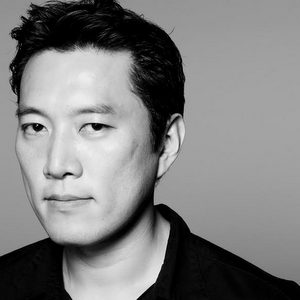
In Seoul’s Itaewon district, Colin talks with architect Minsuk Cho, principal at Mass Studies, designer of the Golden Lion-winning Korean pavilion at the Venice Architecture Biennale 2014. They discuss whether he talks about the use of space differently in English than in Korean; how copying, and especially while misinterpreting across cultural boundaries, counts as a way of creating; his earliest memories of Seoul’s “building explosion” that grew the city tenfold over fifty years; the difference between current Seoul and the Seoul of his childhood; the “concrete utopia” in which he grew up, and how quickly it went away when the branded “high-density gated community” high-rises that now characterize the city rose; the book that set him on the path to architecture (even as his architect father didn’t push him into the profession); the “toilet paper” life expectancy of Korean buildings; how he has reacted to the “bigger, higher, cheaper, faster” building ethos of Seoul; the “blessing” of so much building right up against so much nature; when Korea’s dictatorship didn’t want people to gather, and what effect that had on the built environment; his experience riding a Yellow Cab from LAX to Palm Springs; how Seoul passed through its “juvenile teenager phase,” and what mistakes it made that compare to Los Angeles’ onetime avoidance of density; the village fetish that has recently developed; what he felt in New York that made him cartwheel in the streets; why the flatness of Rotterdam bothered him when he worked for Rem Koolhaas; how Korea became, for him, a more appealing place to build things; Mass Studies’ Pixel House in the recently developed city of Paju and the island of Jeju; the beginning of a reverse migration out of Seoul; Itaewon’s varying role in the city as “a center that is also a void”; the importance of architecturally uniting North and South Korea in Mass Studies’ Venice Biennale pavilion; and what he thinks of the prospects of actually reuniting, for architecture or otherwise.
Download the interview here as an MP3 or on iTunes.
(Photo: Sukmu Yun)

On the latest Los Angeles Review of Books podcast, Colin Marshall speaks with Alain Mabanckou, the Congolese-born author of such novels as African Psycho, Broken Glass, Memoirs of a Porcupine, Black Bazaar, Tomorrow I’ll Be Twenty, and the coming The Lights of Pointe-Noire. His latest book translated into English, Letter to Jimmy, takes the form of a letter to his writing “mentor” James Baldwin on the twentieth anniversary of his death.
You can stream the conversation just above, listen to it on the LARB’s site, or download it on iTunes.

In the centre of one of the world’s most high-profile cities lies a concentration of desperate poverty unlike any other in the developed world. Los Angeles’s Skid Row, a common name for a once-common form of down-and-out quarter in American cities, persists as the last neighbourhood of its kind.
Skid Row’s very existence illustrates a major planning mistake the southern Californian metropolis made in the past. The struggles over what to do with it now reveal the extent of the challenge facing LA in its current transformation into a denser, more traditionally urban city. It’s no exaggeration to call Skid Row one of the main battlegrounds for the future of Los Angeles.
The neighbourhood went from metaphorical to literal battleground last Sunday when, on a rare rainy day in this city, an altercation with Los Angeles Police Department officers resulted in the death of a 45-year-old resident. Known locally by the name “Africa” or “Cameroon”, he was shot by several officers after allegedly grabbing one of their guns; beyond that, facts about the precise sequence of events have been slow to emerge.
We know the victim lived in a tent; he’d pitched it near the corner of San Pedro and 6th street. Every Angeleno has seen these tents – always between the hours of 9pm and 6am, when police look the other way about camping on the streets. One wrong turn out of a trendy night spot or the Disney concert hall and you can find yourself in another world, where encampments of the drug-addicted and mentally ill spill out on to the sidewalk for block after block after block.
Read the whole thing at The Guardian.
 Notebook on Cities and Culture‘s Korea Tour is brought to you by Daniel Murphy, David Hayes, and The Polar Intertia Journal, an outlet for artists and researchers documenting the urban condition.
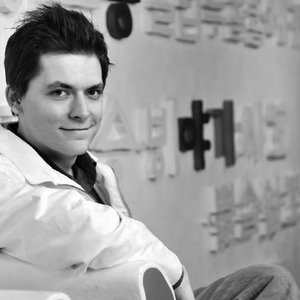
In Seoul’s Sinchon district, Colin talks with Michael Elliott, creator of the English-learning site for Koreans English in Korean and the Korean-learning site for English-speakers Korean Champ. They discuss why Koreans insist on the difficulty of their own language; whether and why he considers Korean difficult; what it means that “there are so many different ways to say the same thing” in Korean; the perennial issue of saying “you” in Korean; the “native speaker’s privilege” to go a little but out of grammatical bounds; why the Korean alphabet has displaced Chinese characters more or less entirely; why Koreans rarely acknowledge the language itself as a driver of interest in Korea; the different, more intense ways trends manifest themselves in Korea than in America; whether we can call English education in Korea a “craze,” and why Koreans spend so much money on it to so little apparent result; the degree of parental involvement in English education and how “keeping up with the Joneses” drives it; the trouble with studying the languages of “poor countries” in Korea; the dominance of “the right way and the wrong way” in Korean thought; what it takes to make it to the highest level of Korean study, and why that sets off suspicion in Korean people; how tired he’s grown of explaining to those “back home” why he went to Korea to study Korean in the first place; how he got an exemption not just from Korean trends but from American hipsterdom, or indeed any kind of “team”; how he came up with his new Korean Champ videos shot on the streets of Seoul; what would happen to the Cheonggyecheon Stream if built in America; how he studied multiple levels of Korean at once; the importance of observation when learning languages, and the general resistance to it; the “little bit of a scoff” with which Koreans sometimes correct Korean-learners; and the sleep he loses on the rare occasion he says something incorrectly in Korean.
Download the interview here as an MP3 or on iTunes.
 Notebook on Cities and Culture‘s Korea Tour is brought to you by Daniel Murphy, David Hayes, and The Polar Intertia Journal, an outlet for artists and researchers documenting the urban condition.
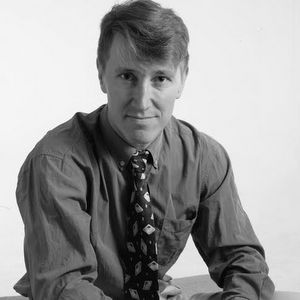
In Seoul’s Susong-dong, Colin talks with Andrew Salmon, author of To the Last Round: The Epic British Stand on the Imjin River, Korea 1951; Scorched Earth, Black Snow: Britain and Australia in the Korean War, 1950; and All That Matters: Modern Korea. They discuss how Korean culture has influenced the names of his cats; the dullness of London by comparison to Seoul, especially in drinking term; the provocative positions he has taken, such as finding the Koreans “a little unfair toward the Japanese”; how he sees the conflict between Korea and Japan over the Dokdo islets; the “drab, miserable-looking” Seoul full of “fierce” people to which martial arts brought him in 1989; the Korean shift from diligence as the sole virtue to diversity of lifestyle; how Korea came to look like a place he could live; why he “wanted answers” from Korea since his time here began; how everything Korean, in this land “ruled by the heart, not the head,” opposes everything English; the meaning of the 1988 Olympics and the 2002 World Cup as the “signposts” of modern Korea; the opening up of Korean national markets and Korea itself to international markets, resulting in the improvement of such native products as makgeolli; Korean sensitivity toward the awareness of “the Korean brand”; to what extent outside interest has shifted from North Korea to South; why editors don’t tend to ask for the North Korea stories that matter; what happens if reunification day ever comes; what Korean students “simply don’t learn” about their country’s history; why plaques in Korea give dimensions of bricks rather than tell stories; what the Korea neophyte should know in order to contextualize everything else they learn about the country; the mismatch between Korea’s “hardware” and its “software”; whether he hopes for a grand Korean deceleration; and what he’s stopped dreaming about quite so much before his trips to Europe.
Download the interview here as an MP3 or on iTunes.
Friday, February 27, 2015

Whenever I go to Portland, Oregon – my favourite city in America – I immediately catch the train downtown and make straight for the food carts on 10th Avenue and Alder Street. This spectacular collection of micro-eateries never disappoints.
I was there recently, making circuit after mouthwatering circuit of this cart-lined block, trying to decide between burritos, bento boxes, Indonesian satay, Hawaiian barbecue, classic kebabs, new-wave grilled cheese sandwiches, and the (presumably hyper-local) cuisine known as “Oregonian Bites”. Once satisfied, the rest of my day was spent shopping at Powell’s City of Books and drinking local craft beer at pubs converted out of old theatres and schoolhouses – the very things, in other words, that one goes to Portland to do.
Like San Francisco and New Orleans, the city has associated itself with a certain lifestyle. Just look at its unofficial “Keep Portland Weird” slogan. Yet it also boasts infrastructure far superior to New Orleans (its inadequacies starkly revealed byHurricane Katrina), and a cost of living far lower than San Francisco’s — hardly difficult tasks, you may say, but still it gives rise to an important urban question: how has Portland not only remained true to its identity, but remained so accessible too?
Read the whole thing at The Guardian.
Wednesday, February 25, 2015
 Notebook on Cities and Culture‘s Korea Tour is brought to you by Daniel Murphy, David Hayes, and The Polar Intertia Journal, an outlet for artists and researchers documenting the urban condition.
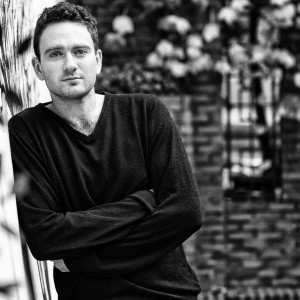
In Seoul’s Hongdae district, Colin Marshall talks with Daniel Tudor, former Economist correspondent in Korea, co-founder of craft beer pizza pub chain The Booth, author of the books Korea: The Impossible Country, A Geek in Korea, and (with James Pearson) North Korea Confidential. They discuss the difference between Gangnam and Gangbuk style; the recently emerging trend toward Korean nostalgia, and what happens when you pull out an two-year-old mobile phone; what he discovered in Korea during the time of the 2002 World Cup; his time among the “studying machines” that constitute Korean youth, and why so few want to break from that hard-driving mode; education, especially abroad, as a means of “jumping the queue” back in Korea; the progressivism he’s found among Koreans who’ve never left the country; why it matters when a foreigner voices the same criticism of Korea that Koreans think; whether he felt any fear of legal action when he publicly stated that Korean beer sucks; why Korean beer has continued to suck for so long; what it takes to get decent beer into Korea today; the “emotionalism” of Korean conversational style, and whether it plays in the wider world; to what extent Korea may westernize, given the presence of a certain “spineless love of all things American”; whether Korea’s narrative of weakness can accommodate the country’s new strength; what it was like writing for The Economist, a magazine newspaper given to short sentences, cynical humor, and an interest in “North Korea, North Korea, and sometimes North Korea”; where he still feels the presence of Park Chung-hee, and the backlash to his “developmentalist” mindset that seems to have begun; the possibility of “de-Seoulification”; what he experiences on train trips that tells him too much has concentrated in Seoul; the parallels between Park Chung-hee and Margaret Thatcher; Korea’s nature not as a conservative country, but as a country with a conservative veneer; the “natural socialism” that coexists in Korea with extreme capitalism; why Koreans believe their food too spicy for any foreigner to handle; why he hates even to hear the Korean term for “foreigner”; whether Korea can afford to continue burning so much energy on purely internal competition; the parallels between the chaebol system and North Korea; how soon a Pyongyang branch of The Booth would open after reunification; and what the English could learn from the attitudes of the Koreans.
Download the interview here as an MP3 or on iTunes.
Monday, February 23, 2015

A few minutes’ walk from the apartment I rented on my first trip to Seoul, I happened upon a branch of the Novel Cafe, a restaurant I know well from my life in Los Angeles (though the ones back home don’t advertise “California Cuisine since 1999″). Then, a few blocks later, came a shop called Who A.U. California Dream, selling clothes and accessories emblazoned with names and images of places such as Yosemite, the “Surf City” of Huntington Beach, and simply “California Farm Country.” Although it is an international brand, Who A.U. rode a particularly high wave of popularity across South Korea in the summer of 2014. Even in the biggest American cities, you hear the media agonizing over fashion trends long before you notice those trends in real life (if indeed you ever do).
In Seoul, however, the latest trends confront you right there on the street, immediately and constantly. On the sidewalks, in cafés, and riding the subway, the youth of South Korea presented me with constant invocations of my own current hometown: of USC and UCLA, of the Lakers and the “Dodgers Baseball Club,” of “Homiés South Central” and “Berkeley California 1968,” of Venice Beach and the LAX Theme Building, of the “California Road Trip,” and of Los Angeles itself accompanied by the inexplicably chosen zip code 90185. Young people the world over have dreamed of California for decades, but the sheer number and variety of California clichés invoked on the streets of Seoul reached a whole other level.
The mystery as to why deepened the closer I looked. Late one night during that trip, after the customary first round of drinks and food—and the equally customary second round of dinner and drinks after that—I found myself sharing a dimly lit booth at a bar with my Korean-born girlfriend’s cousins, two sisters in their twenties. We’d drunk halfway through our hefty copper pot of greenishmakgeolli, a fermented rice wine long written off as a poor farmer’s drink that is now enjoying a well-deserved renaissance, when the older cousin’s boyfriend turned up to help finish it off. He wore a bright, white polo shirt decorated with the words “SAN DIEGO IN CALIF.” Looking quite literally for common ground, I asked him, as best I could in my still-shaky Korean, when he’d spent time in San Diego. He explained, with what I’ve come to think of as a characteristically Korean mixture of pride and embarrassment, that he’d never left his homeland. The California dream burns particularly bright, it seems, within those who’ve never come near the state.
On a group bike ride through Changwon, a suburb of Busan (South Korea’s second-largest city), I struck up a conversation with a woman a few years out of college and employed at a local department store. When I told her I’d come from Los Angeles, she let me in on her own California dream. “I want to live there,” she explained. “I want a big house—and a dog.” She longed for the idea of a traditionally Californian lifestyle somehow as alien to me, someone born and resident in the state, as any lifestyle I saw in South Korea. I didn’t have the heart to tell her that, at least as far as I can see in Los Angeles, the dream of the “big house,” and indeed its viability, has entered a slow but inexorable downward slide. (The market for dogs, on the other hand, does look strong.)
Read the whole thing at Boom: A Journal of California.