Skip to content

Los Angeles Review of Books Podcast: Eric Lax


On the latest Los Angeles Review of Books podcast, I have a conversation with Eric Lax, author of books on Woody Allen, penicillin, Paul Newman, bone marrow transplantation. His new book, co-written with Robert Peter Gale M.D., is Radiation: What it Is, What You Need to Know. You can listen to the conversation on the LARB’s site, or download it on iTunes.

Notebook on Cities and Culture S3E10: Trouble Sparks Creativity with Christopher Stephens

Colin Marshall sits down in Nishinomiya, Japan with translator, writer, and former Kansai Time Out editor Christopher Stephens. They discuss whether higher Japanese skills get a foreigner more suspicion; the nearby presence and touristic effects of novelist Haruki Murakami’s elementary school; the older writers, like Yasunari Kawabata, Junichiro Tanizaki, and Yukio Mishima, who stoked his interest in Japan; the experimental music to be found in Japan, such as the work of Keiji Haino and the Boredoms, and specifically in the Kansai noise scene; the Osaka duality between money-making hard workers and underground weirdness; the local pride taken in relative roughness and unrefinement, and the stereotype of the bad Osakan; what actually distinguishes the Osaka dialect, and how entirely different words might see use in one city but not its neighbor; Japan’s visual culture, and the problematic emphasis on beauty that can ensue; his youth in Fresno, California, whose finest quality was the way it pushed him out; the time he took Wilco to an Osaka psychedelic sixties rock bar; how, when the Japanese open a psychedelic sixties rock bar, they really open a psychedelic sixties rock bar; his early struggles with regional backwardness in the eighties, and what happens when Japanese friends still ask him to hold their babies; Osaka’s high crime rate for Japan and Fresno’s high crime rate for California; whether Paris syndrome actually afflicts the Japanese; the West’s eagerness to believe everything they hear about Japan; photographer Kyoichi Tsuzuki’s purchase of the entire collection of Toba’s science-fiction erotic museum; the cannaboid substance known as “herb” that recently made the rounds in Japan; the persistence of visual art in Japan which goes well beyond Takashi Murakami, and his own specialty, the Gutai group of painters; why no Japanese person has yet appeared on this show, and what linguistic reasons might explain it; the corrections Japanese people make to his English; his work editing Kansai Time Out during the heyday of its breed of publication; Japan’s relatively robust print culture, at least by contrast to America’s; how little time translation leaves to learn new words or savor the language; and, despite the world’s having lost confidence in Japan, his theory that darkness always brings light, and that trouble sparks creativity.

Download the interview from Notebook on Cities and Culture’s feed or on iTunes.

Podthoughts: The F Plus

Vital stats:
Format: poor and/or freakish writing found on the internet, then read aloud
Episode duration: ~1h, plus the occasional special short
Frequency: weekly, in theory

The internet offers more of a chance than we’ve ever had to engage with the written word and with others who share our interests. As much fruit as this development has borne, The F Plus [iTunes] [RSS] reminds us that we’re dealing with, at best, a double-edged sword. Young “digital natives” aside, most internet users never prepared themselves for a life where they’d need to write anything at all, much less their everyday communication about the things most important to them. And who among us has adequately shielded himself against the universal human temptation to settle into a set of opinions and then retreat into an unthreatening — indeed, reinforcing — echo chamber? At the intersection of these two avenues of misfortune, this podcast taps into a considerable vein of comedy: almost 120 episodes’ worth, at this point, with no signs of resource depletion.

I don’t know whether anyone has written it as a rule of the internet, but for every interest, no matter how fringe, a forum must surely exist. Indeed, the fringier the interest, and so the deeper into the margins of society its practitioners must dwell, the more likely a forum somewhere supports it. The F Plus troupe — whom, for all my listening, still often sound to me like a barely differentiated gaggle of comedic-white-guy voices — scour these fora for the most bizarre, inept, or otherwise laughable posts, then read them out loud in funny voices. Some take pains to faithfully pronounce standard tics and errors — “LOL” becomes “lawl,” an apostrophe-less “I’m” becomes “im” — but that merely pours into the show’s abundant stream of cheap laughs. The deeper, more troubling humor, the kind that gives you as much of a pause as it does a chuckle, comes partially rooted in good old they-walk-among-us fear.

Read the whole thing at Maximum Fun.

Notebook on Cities and Culture S3E9: The Poet’s Peak with Stephen Gill

Colin Marshall sits down overlooking greater Kyoto on Mt. Ogura with Stephen Gill, poet, BBC radio scriptwriter, and executive director of People Together for Mt. Ogura. They discuss the mountain’s place in a traditional Japanese poetry card game; how, after scores of Japanese noticed in it an opportunity for free trash disposal, the mountain generated the headline “Ogurayama, gomi no yama” (Mt. Ogura, Mountain of Trash); the compilation of a collection about Mt. Ogura featuring verse by one hundred different poets; the onset of sightseeing season, which mostly brings visitors to the neighboring Mt. Arashiyama; the rich literary heritage of this now-suburban area, which even offers real locations from The Tale of Genji; the modern development of Kyoto, whose tower blocks at least cast into relief its more historical elements in the “glorious chaos” mixture well known to Asia; his three stretches in Japan, and the constant visits to the doctor his early acclimatization required; how he makes radio programs about Japan, always beginning with an image and then crafting a broadcast around it; how he only learned about his native Britain by living abroad, and what a foreign poet can offer Japan by way of a helpful thorn in the side; his view of Kyoto as a vast intermeshing of systems, which once there tend to last a hundred, or even five hundred years; what could possibly “shake up” Kyoto short of actual destruction; and what it means for him to “tune in” to a place like this. He also reads haiku poems, both his own and those by other People Together for Mt. Ogura participants.

Download the interview from Notebook on Cities and Culture’s feed or on iTunes.

Menswear books: Off the Cuff by Carson Kressley

About Queer Eye for the Straight Guy, Bravo’s hit reality program that ran from 2003 to 2007, you may recall exactly one thing: that despite their presentation as paragons of taste, none of the “Fab Five” dressed with much of it. Or, more charitably, they seldom displayed what a Put This On reader might value. “The kind of dress,” as Will Boehlke of A Suitable Wardrobe once put it, “that the eye passes over, only to return in appreciation.” But to object is to misunderstand the show’s central joke — its practical joke, really — of dropping a squadron of homosexual style consultants, playing up all applicable stereotypes at every chance, on schlub after heterosexual schlub. Though you wouldn’t necessarily covet his wardrobe, I always appreciated the sartorial inconspicuousness of Ted Allen, the team’s food-and-wine man, whose patient, mild manner offered these shaken straights a port in the storm of insistent fabulousness. But the laws of casting dictate that every such sober yin must balance a raging yang. Enter Carson Kressley, clothing specialist, “fashion savant,” and author of Off the Cuff: The Essential Style Guide for Men and the Women Who Love Them (also known asOff the Cuff: The Guy’s Guide to Looking Good.)

Should future cultural historians harshly re-evaluate Queer Eye as the minstrel show of our day, they’ll hold up Kressley’s performance as Exhibit A. Ablaze with bright colors and camera-distracting accessories, the man could, seemingly on cue, turn on a firehose of groanworthy sexual innuendo and witheringly sarcastic critique. If you never watched the show, you’ll find him insufferable already; if you did, you’ll understand that he nevertheless emerged as the most appealing character of many an episode. He somehow inspired the confidence, beneath all the theatrics, that he really did know his stuff. You wanted him in your corner. Cut to your core though his choice words about your shirts may, you knew he would sooner die than fail to find you better ones. Fans still argue, in comments below the broadcasts that have made it to YouTube, about whether the Fab Five truly left any given straight better off in the time-consuming food, complicated decor, or nebulous cultural departments, but at least Kressley always seemed to leave them more respectably clothed than he found them.

Read the whole thing at Put This On.

Notebook on Cities and Culture S3E8: Pyongyang Style with Rob Montz

Colin Marshall sits down in Los Angeles’ Koreatown with filmmaker Rob Montz, director of Juche Strong, a short documentary about North Korea and its propaganda. They discuss reaching the same age as Kim Jong-un without a hermit kingdom to rule; the question of why North Koreans continue to believe in their state, despite having good reason not to; his early fascination with North Korea’s World Cup showing, and how pursuing that fascination led him from standard opinions on the country to newer, more interesting ones; his realization that North Korean ideology comes built upon the same basic structures of psychological truth that any of us have; his interviewing of experts on North Korea, and their disagreements about the nature of the Juche idea; his trip to Pyongyang, and how it didn’t require him to hide underwater from North Korean commandos, breathing through a reed; the state’s aspirations to totalitarian watchfulness, and how incompetence shatters that image right at the airport; the boredom a visitor to North Korea endures, and how that boredom differs from the boredom we experience in the developed world, where we’ve mostly cured it; the nihilism that sets upon a mind deprived of the ability to autonomously create meaning and provide purpose; how life in the constant American stimulation stream may render you more vulnerable to boredom when you momentarily step out of it; how many pleasures a people will willingly forego if they’re given a larger sense of purpose and community, and how we know the North Korean government knows this; what North and South Korea still have ideologically in common, though the South chose the means of ideological expression that let its people get fed; Confucian values on both sides of the DMZ, and how they even manifest in the strange filial piety of East Asian friends; his extension of the examination of North Korean-style propaganda to United States politics, and especially the ceaseless repetition of the phrase “God bless America” therein; of Washington, D.C., where homosexual atheist political operatives instruct Republican politicians to insist  upon the divine ordainment of American exceptionalism an inveigh against the “gay menace”; and how you can help fund the completion of Juche Strong on Indie Go Go (not to mention the clam-roasting footage you can get for doing so).

Download the interview from Notebook on Cities and Culture’s feed or on iTunes.

Notebook on Cities and Culture S3E7: The Accidental Japanophile with Christopher Olson

Colin Marshall sits down near Nara, Japan’s Tōdai-ji temple with artist, critic, and teacher Christopher Olson. They discuss his thoughts, as a Winnipegger born and raised, on Guy Maddin’s My Winnipeg; the displacement, discombobulation, and respectable bullshitting of Chris Marker’s Sans Soleil, a copy of which he keeps at all times on his phone; high-risk art, and the stuff that requires more time spent absorbing than creating; the still-exciting art school idea of limitations and restrictions as the engines of creation; whether or not Japan is “a land of images”; why you can’t resist photographing your food in Japan, and what this has to do with the cultural sense of doing things properly or not doing them at all; the utilitarian, quick-and-dirty mindset of our North American homelands, which we notice with special force after having spent time amid Japan’s superlegitimacy; the modern west’s lack of filial piety, which he came to understand after getting involved with a Japanese lady (in a relationship that endured its Griffin and Sabine period); life in Japan as a constant process of auditing one’s assumptions, especially those instilled by western Buddhism; freeloading on the Japanese social contract as a foreigner, and enjoying the liberty to “create your own Japan”; the gaijin you meet in Japan, including the “weeaboo” and the last-refuge English teacher; how Japanese vending machines could possibly not be trashed, robbed, and stripped of all saleable metal; Vancouver, the city where Canadians go to figure their shit out; the benefit of the foreigner’s anti-inanity language barrier; how the force that makes Japanese trains run on time also causes the occasional Japanese to jump in front of one; the lack of ambient ambition in Japan, as opposed to the aspirational culture in North America that generates both resentment and a certain charge; his turn toward writing and criticism after an “I’m just not that good” moment in the visual arts; his desire to recapture that Chris Marker sense of delirious displacement in day-to-day life; and how he’s ridden that distinctively Japanese sawtooth pattern of culture shock.

Download the interview from Notebook on Cities and Culture’s feed or on iTunes.

Hear me interview Lani Hall Alpert (and soon, others) for the Los Angeles Review of Books

I’ve just begun hosting and producing interview podcasts for the Los Angeles Review of Books, with whose founding editor I recently sat down on Notebook on Cities and Culture. My first LARB (it’s not just a vital forum for cultural discussion; it’s also a delicious Thai dish) podcast finds me in Santa Monica, talking to Lani Hall Alpert, singer, member of Sergio Mendes’ Brasil ’66, wife of Herb Alpert, and now the author of a hybrid fiction-nonfiction collection called Emotional Memoirs. You can listen to the conversation on the LARB’s site, or download it on iTunes.

Podthoughts: Bookclub

Vital stats:
Format: moderated conversations between an author and an audience
Episode duration: ~30m (except when Douglas Adams comes on
Frequency: monthly

Despite having grown up in America, I’ve cultivated an overwhelmingly British, or at least British Empire, roster of favorite writers: Anthony Lane, Geoff Dyer, Pico Iyer, Clive James, Ian Buruma, Jan Morris — the list keeps unfurling, mostly on the other side of the Atlantic. (Even those who seem potentially American, like Douglas Coupland, usually turn out to come from fish-nor-fowl places like Canada.) Sometimes I’ll find my own readers — those, in any case, who’ve never heard me on a podcast — surprised at my lack of an English accent. (Not that they can then get a fix on the oddly placeless one I do have.) Should I put my attraction to U.K. letters down to my failure to master American English, or did too much time spent among all these Brits — natives, transplants, sons of former possessions — cause that failure? Either way, a reader like me can’t help but feast upon a show like BBC Radio 4’s Bookclub [RSS] [iTunes], which offers a robust archive of discussions with many of these very writers.

James and Morris turn up, anyway, as does Coupland. So, too, do an array of British men and women of letters whom I’ve barely read yet have always relished hearing speak: a Martin Amis, say, or a David Mitchell, or a Stephen Fry. Ironically, my serious reading career began when, as a youngster, I got into crime novelist Elmore Leonard and, a bit later, political humorist P.J. O’Rourke, two names I imagine strike reading Brits as among the most American wordsmiths alive. Leonard got his start with Westerns and went on to chronicle the sunnily sordid lives of wisecracking Florida lowlifes; P.J. O’Rourke dares simultaneously to have a functioning wit and vote Republican. They discuss these matters and others with Bookclub host James Naughtie and select audiences of twenty or so readers on their respective episodes or the program. Though most certainly of Britain, the broadcast hardly limits itself to Britain.

Read the whole thing at Maximum Fun.

Portland Diary 2013


“The blocks are unusually short in Portland, making for pleasant serendipity,” writes Jan Morris. “The architecture is mostly genial, there are plenty of coffee-shops, not all of them insisting that you drink their cappuccino out of plastic cups, and the gloriously rambling Powell’s City of Books must be one of the best bookshops on Earth.” No need to sell me on it: I read this sentence in Portland, at Powell’s City of Books. During the first book-shopping excursion of three we would make during our brief stay, me and my lady took a coffee break — my cappuccino, alas, came in paper — to review our prospective purchases. She carried a stack including Italo Calvino, Thomas Mann, and Kazuo Ishiguro; I hauled in, aside from an uncommon edition of Alexander Theroux’s Three Wogs, a predictable heap of books on places — places, even more predictably, like Japan and Los Angeles. My book-buying rules dictate that I only leave a store with novels I’ve read before, a distinction Three Wogs has earned thrice over, but that I may buy essay collections indiscriminately. Having long considered the essay my form, how could I deny myself a well-stocked library of forerunners?

The essayist’s mandate, it seems to me, demands the transformation of any given subject into a nexus of subjects. Taking a place as your subject sands down the edge of that challenge: start writing about a particular city, and soon you can credibly discuss its food, drink, technology, architecture, nature, culture — its manifestations of nearly every area of human concern. I’ve mentioned the name of Theroux, which may ring as the last word in the essayism of place. You’re thinking of Paul Theroux, Alexander’s younger brother and surely the best-known American name on the “travel writing” shelf. While both of them make literary use of wide curmudgeonly streaks, Alexander tends toward fiction of flamboyant vocabulary, grotesquely exaggerated reality, and deliciously savage bitterness. Yet you might read Three Wogs, a comparatively mild early entry in his canon, a book thoroughly about place: specifically, as an almost too-sharp observation of the perilous decrepitude and disoriented racism of seventies London. I enjoy Theroux-style indictments of place, just as I enjoy Pico Iyer’s dispatches from cultural and literary liminal places, just as I enjoy Bill Bryson’s calculated stumblings, alternately knowing and self-deprecating.

Jan Morris, now. I’d heard the name, I’d seen promising citations, and I’d received any number of recommendations from trusted writer friends, but never had I immersed myself in her worldview. Snatching a cheap but thick copy of her anthology The World: Travels 1950-2000 from one of Powell’s high “OVERSTOCK — EMPLOYEES ONLY” shelves, I decided to take the plunge. Flipping first to her essay on Los Angeles — my own city also being my means of writer-of-place calibration — I then moved on, favorably impressed, to her essay on Portland. “What with the cleanness and sensibleness of everything, the evident prosperity and the prospect of a late lunch at the Heathman Hotel (red snapper, perhaps, with a glass of one of the excellent local whites),” she continues, “I thought what a lesson in civility Portland, Oregon offered the world at large.”
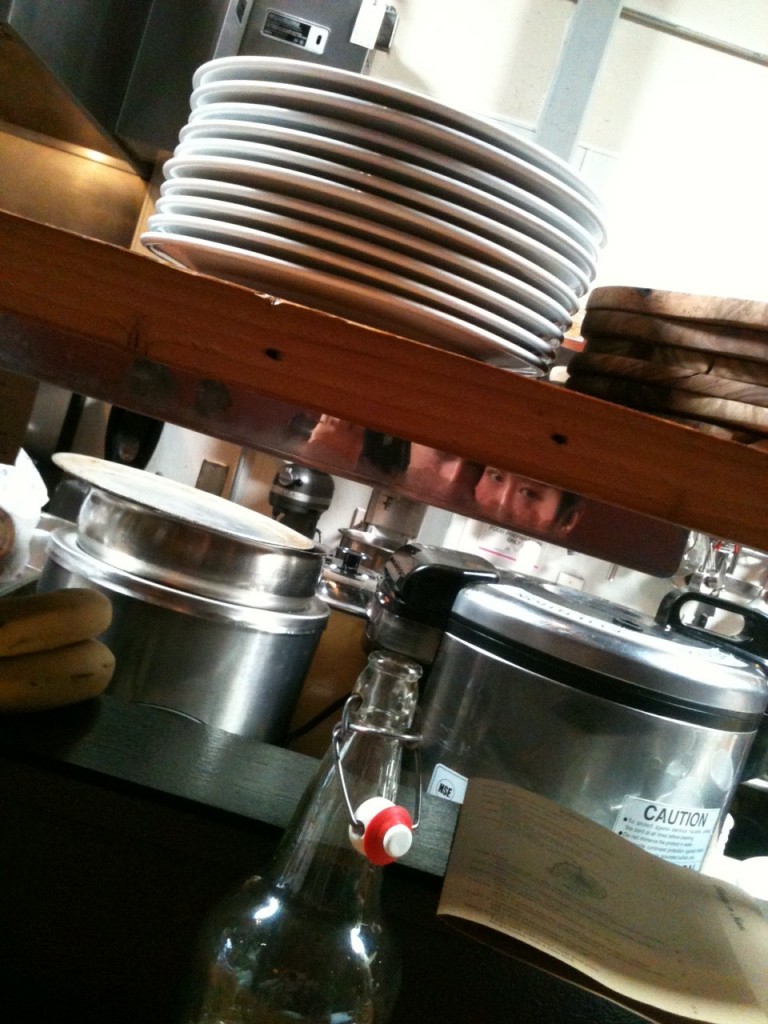


True enough. Portland’s cleanness, sensibleness, and civility, for their parts, make it my favorite city in America to visit. What’s more, the hipster cottage-industry boom of the past decade has flooded the town with artifacts appealing to the very emotional core of someone my age. How would my high-school self have reacted if I knew I would, just over a decade hence, enter a store selling hand-crafted, oversized Nintendo Entertainment System controllers? Whose clerk would then proceed to play New Edition’s Heart Break — on vinyl? And from where I could cross the street to the library, or go right next door for a cappuccino — in a proper cup? Yet in my heart of hearts I feel that little good can ultimately come of being catered to quite so directly. Morris sensed a dark side of Portland, too, though of a less Millennial stripe: “Following the tourist signs towards the Old Town District and Chinatown, and expecting the usual harmless flummery of restored gas-lamps and dragon-gates, I crossed Burnside Street and found myself in a corner of hell. Suddenly all around me were the people of Outer America, flat out on the sidewalk, propped against walls, sitting on steps, some apparently drugged. [ … ] They did not look exactly hostile, or even despairing, but simply stupefied, as though life and history had condemned them to permanent poverty-stricken sedation.”

A master essayist (as I, Johnny coming lately, have discovered her to be), Morris also sees on her eastward walk a greater national malaise. “The gods have loved America, but I sometimes think they are already making it mad,” she writes. “One expects insanity among those poor huddled masses of the sidewalk, but every time I come to this country I feel that the neuroses and paranoias are spreading, across all the Burnside Streets of the nation, into the amiable neighborhoods over the way.” This she ties into the fact that, by the nineties, “the Americans, even those civilized Americans of the centre, have gone half-crazy with legalism, feminism, and political correctness. They are well on their way to the asylum with sexual obsessions.” It often takes an outsider to diagnose a country’s ills, and the insistently Welsh Morris has proven a wistfully astute observer of the United States in winded retreat. But she also has the outsider’s gratitude for America’s cultural fruits, citing right here the Declaration of Independence, Bob Dylan, Hollywood, John Cheever, dry martini, and the Freedom of Information Act. “They have been, though, the gifts of a culture supremely confident and logical, recognizably the culture in fact that Jefferson and his colleagues created. What is emerging in America now, still to be exported willy-nilly around the glove, is a jumble of philosophies so distracted, so uncertain, that they seem to lack any cohesion at all, and are more like the nervous responses of hostages than any body of ruling values.”

Halfway through our visit to Portland, I received an e-mail from the producer of Monocle magazine’s podcast The Urbanist. He asked if I’d like to come on the show for a conversation with the magazine’s editor Andrew Tuck about how Los Angeles has been misunderstood, especially by Europeans. This sent me right back to “The Know-How City”, the Los Angeles piece from Morris, a European who certainly didn’t misunderstand. She means “Know-How” in the sense of the now-disused (and even then-disused) term for the pure scientific and technological elbow grease that washed over postwar America. Los Angeles she sees as a monument to that discredited era, just as Florence remains a monument to the Renaissance. But what a monument; few aerial experiences match the glory of coming in for a Los Angeles landing. Jan Morris knows it. My girlfriend, a resident of the greater region since coming to the United States over twenty years ago, knows it. My every return reminds me of it. How lucky that the Urbanist interview ended up scheduled for less than a day after our flight back from Portland, when the elaborate physical totality of the place — more than any other city, its own map incarnate — would stay clear in my mind’s eye.
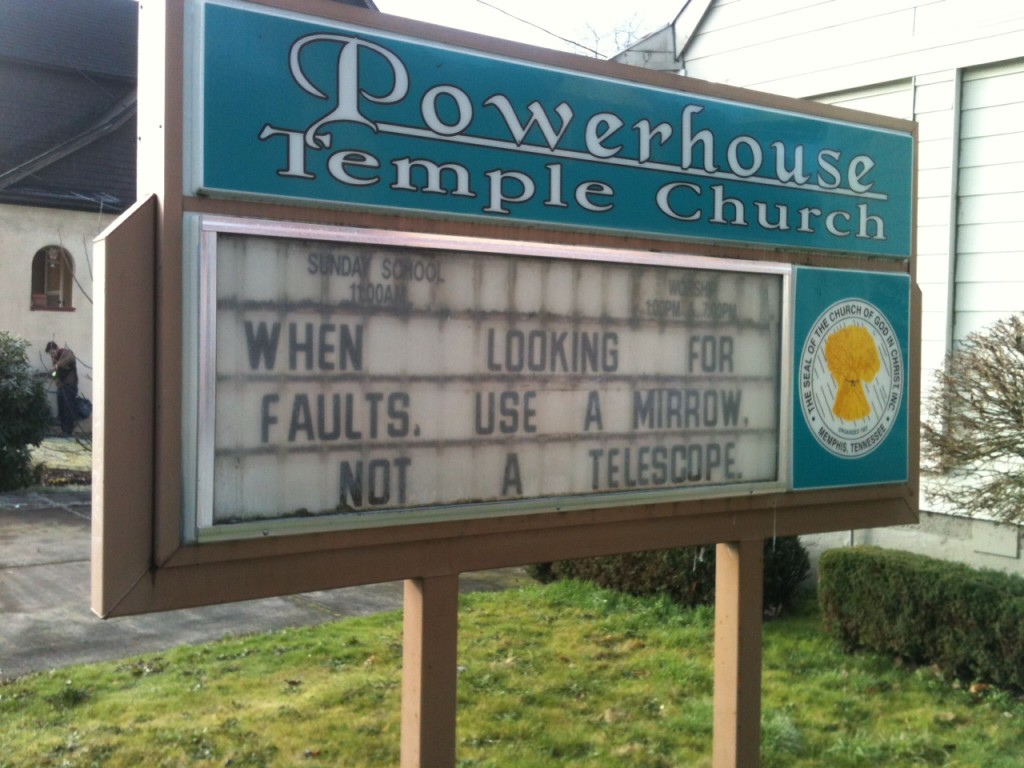


But what to tell Monocle? In my Podthought on The Urbanist last month, I suggested that Monocle‘s reliance on “livability” indices, for which I’m as much of a sucker as anyone, allows a blind spot over cities like Los Angeles, those perhaps less outwardly humane but as fascinating as or more fascinating than the Sydneys or the Zurichs or Copenhagens of the world. One of the very first questions that came up in the conversation asked what, exactly, livability rankings failed to capture about my “adopted hometown,” and here I had just returned from Portland, perhaps the most livably ranked American city of them all. We’d taken the light rail straight from the airport to our rented apartment! We’d enjoyed reasonably clean streets! We’d walked nearly everywhere, basically unbothered by the January chill! We’d eaten the latest in modestly priced west coast cuisine, out of carts and otherwise! We’d waited forty minutes for brunch and loved it! We’d ridden an aerial tram! We’d sipped a variety of local roasts! We’d shopped for books!

I find myself hard-pressed to answer these exclamations on their terms, even when they come from my own mouth. Tougher still to respond when the woman I love suggests, as she often does, moving up Portland way. Yet I fear that losing Portland as an easy place to visit would come as a blow, and that gaining it as an easy place to live would come as a hollow victory. Los Angeles challenges me on a number of levels, and only yields its experiential riches when I can meet those challenges. I tried my damndest to get this across to Tuck, conceding that the trilinguality my own neighborhood of Koreatown seems to expect may strike some as a bit much to ask. We talked about how anyone, from anywhere, no matter how recent their arrival or how thin their familiarity with the place, can become an Angeleno. But only those willing to learn to use the city can expect to engage with it, to learn from it, to enjoy it. I approach Los Angeles as a know-how city in a different sense: if you don’t know how — or, more commonly, don’t want to know how — forget it. (You can listen to the podcast here, by the way.)

Only after throwing out as many scattered points as I could come up with did I realize that I should simply have quoted Christopher Isherwood, another U.K. person who locked right in to Los Angeles, on the futility of explaining the city to its detractors: “Either they understand it’s the only place or they don’t.” Some people will continue to object to my unfathomable preferences (“What, you don’t like New York?” “What, not San Francisco?”), but at least I don’t suffer a lack of writers to point them to if they genuinely want to understand, a stable which now includes Morris. On our final night in Portland, on a walk down the block to pick up a gluten-free mushroom-garlic-goat cheese pizza from Sizzle Pie — ah, livability — I ducked into Powell’s for one more glance at the travel lit. There I found a four-dollar copy of her Hong Kong, a book on a place that has recently come to intrigue me by a writer who has done the same. And finally, I thought, a name to refute friends’ charge that I don’t read enough female writers. Let’s hope they never find out she was born James.
 

[Previous diaries: Kansai 2012, Seattle 2012Portland 2012San Francisco 2012Mexico City 2011]