Skip to content

Podthoughts: The Big Ideas

Vital stats:
Format: elucidation of oft-name-checked but thinly understood ideas
Episode duration: 9-20m
Frequency: monthly, almost

My brain has filed Benjamen Walker, host and producer of WFMU’s Too Much Information, as one of our time’s major public radio martyrs. Yes, the man seems alive and well, but public radio martyrdom doesn’t require literal death. He can go on breathing, eating, sleeping, and working, making intricate audio pieces for which people express great admiration on the internet; he simply must symbolize the bizarre thanklessness of crafting fine sonic media. When Bill McKibben wrote a piece for the New York Review of Books on just this phenomenona couple years back, he quoted Walker directly:

[Too Much Information is] good enough that 240,000 people have downloaded some of the twenty episodes he’s made so far. That’s a lot of people, but it’s zero money, since podcasts, like most websites, are by custom given away for free. Walker’s previous show, a similar effort called Theory of Everything, was widely promoted on the Public Radio Exchange, and six public radio stations across the country actually paid for and ran it. “I think I made $80,” he says. “If I thought about it too hard, I would just quit. It’s much better not to think about it.”This brings to mind Memory Palace creator Nate DiMeo’s alternately encouraging and debilitatingly discouraging article on public radio production. Walker commented with a j’accuse against stations willing to pay for digital consultants, brand consultants, and “content executives” instead of, uh, content. A bold declaration, you might think, although I personally would have tossed in an indictment of stations’ badly limiting and increasingly shameless tendency to pander to, and only to, listeners’ fear of having their ignorance exposed at the office water cooler. No surprise, then — or not so much of a surprise, anyway — that Walker’s latest high-profile project comes not in collaboration with a traditional public radio outfit, but with the British newspaper the Guardian. Together they bring you The Big Ideas [RSS] [iTunes], a podcast on just those.

Read the whole thing at maximumfun.org.

John Fante: Ask the Dust

Upon hearing that I’d never read it, an interviewee with three Los Angeles years on me pressed his personal copy of Ask the Dust into my hands. I had felt some responsibility and curiosity about the book, since it occupies the unusual position of a 1930s Los Angeles novel that “everyone” is suddenly reading again. In fact, so many people suggested it for my alternative Los Angeles literature roundup that I immediately decided not to include it. But since I instinctively trust this the judgment of this particular interviewee, a novelist himself, I soon broke down and took in this story of Arturo Bandini, a fledgling Italian-American writer who pulls up stakes from Depression-era Colorado and drops himself, alone, into in Depression-era Los Angeles.

I often wonder whether a truly insightful Los Angeles book should avoid mentioning either the “car culture” or “the Industry,” those two highly visible black holes that suck many a portrayal of the city into mediocrity. Fante does well enough on these counts: the impoverished young literary Bandini lacks the means to buy an automobile until late in the story, and at no point does he look into screenwriting. He spends most of his time downtown, riding the Angels Flight funicular between his boarding house in the dense neighborhood of Bunker Hill to visit/hassle a Mexican waitress (his “Mayan Princess”) at an eatery very similar to Clifton’s Cafeteria. The year is 1933, the heyday of the Los Angeles and Pacific Electric railways, the latter of which Bandini takes down to Long Beach for an assignation with a middle-aged lush possessed of — I don’t quite know how else to describe it — a dead vagina.

That comes as only one of the novel’s several unsettling sequences. Afterward, Bandini wakes up alone and walks outside right into the Long Beach Earthquake of 1933. When I think of that particular disaster, I think of a certain photo someone uploaded to Wikipedia that, while capturing the aftermath of the quake in messy detail, does so in a way that makes the scene surrealistically desolate and dreamily horrifying. The most memorable parts of Ask the Dust share these qualities. I’m thinking specifically of one low point when Bandini’s emaciated, drink-enfeebled neighbor, claiming to know where they can get a free steak, drives them out to the sticks in the middle of the night, stops at a barn. He steals a calf to kill then and there and, theoretically, cook back at the boarding house.

In the book’s film adaptation — shot almost entirely, as you’d expect, in South Africa — Donald Sutherland plays this neighbor. I feel great fascination to see the choices he makes with this character, as any filmgoer would, but I do wonder if the cinematic medium can convey Bandini’s personality as well as does the book’s first-person narration. Fante has him oscillating between hyperinflated pride (artistic and otherwise), near-solipsistic self-pity, and hair-shirt Catholic guilt with almost mechanical regularity. Bandini’s relationship with Camilla, the aforementioned Mayan princess, introduces cycles of impotent aggression, ethnic sniping (“To me you’ll always be a sweet little peon. A flower girl from old Mexico.” “Look at your skin. You’re dark like Eyetalians”), and thwarted longing. He becomes the sort of protagonist a writer of any era would construct to air their anti-Los Angeles grievances: rootless, alienated, gauche, self-serving, striving yet strangely aimless — and, ultimately, hollowly successful.

I report with relief, then, that Ask the Dust doesn’t really have grievances to air. If Fante lambasts anything, he lambasts the transplants who delusionally project their own failings onto Los Angeles, condemning it as the very opposite of all the good and the pure left behind in their Edenic hometowns. “Nostalgically he talked of meat, of the good old steaks you got back in Kansas City, of the wonderful T-bones and tender lamb chops.” “He was homesick for the middle-west. He talked of rabbit-hunting, of fishing, of the good old days when he was a kid.” “He reveled in memories of Memphis, Tennessee, where the real people come from, where there were friends and friends.” Naturally, this requires a robust illusion — around a grain of truth though it may have formed — of having been shoved out west by the hand of fate.

Should you arrange your own Long Beach assignation, with a vagina dead or living, you can now take the train there just like Bandini does, although it’ll be the Metro Blue Line instead of the Pacific Electric Red Car. After its half-block move south in 1996 and its mechanical upgrade last year, you can ride Angels Flight to Bunker Hill. Bunker Hill itself, which you might know as the site of Frank Gehry’s Disney Concert Hall, took a hit from Los Angeles’ freeway-building and redevelopment projects of the fifties and sixties. These, among their other unforeseen consequences, turned Bunker Hill into a platform for skyscrapers by the-mid eighties. When those towers fell into unprofitability, 1999’s Adaptive Reuse Ordinance opened them up to mixed usage and dense (i.e., parking-light) habitation. We have glimpsed the future Los Angeles, it seems, and it looks like Arturo Bandini’s.

Notebook on Cities and Culture S1E20: All the Single Ladies with Tony Pierce

Colin Marshall sits down at KPCC headquarters in Pasadena with Tony Pierce, the station’s blog editor, former editor at LAist and blog editor at the Los Angeles Times, and author of the Busblog. They discuss the time when he was the only English-language blogger to ride the bus; the longing for Los Angeles that brought him out of the Chicago suburbs; his years in the collegiate Eden of Isla Vista; making like the rich young prince in the bible and selling all his stuff in order to leave San Francisco and come back to Los Angeles; beginning to blog as a way to let all the city’s single ladies know he was here; his encounters with different groups of people on different transit lines, and his strategic use of the subway for drinking; how people in Los Angeles can live here for decades without ever bothering to be truly present, and how they might do that in any city in the world; his push, while editing LAist, to tap into as great a variety of voices and experiences as possible; his belief that the Busblog, despite its explosive popularity, never deserved to get known at all; the fixture of Los Angeles literary culture that is the paradoxically positive Charles Bukowski; and how, in all of the Busblog’s non-fanciness, he still wants to let the ladies of the world know he’s available.

Download the interview from Notebook on Cities and Culture’s feed here or on iTunes here.

Notebook on Cities and Culture S1E19: DJing the DJs with Mark “Frosty” McNeill

Colin Marshall sits down in an undisclosed Hollywood-ish location with Mark “Frosty” McNeill, co-founder and creative captain of the internet radio “future roots music” collective Dublab. They discuss founding an internet radio station in 1999, when everything sounded like a tin-can phone; the nature of future roots, where the very old meets the very new, the very traditional meets the very experimental, and everything sounds different yet retains a common undercurrent; Dublab’s mission to curate the curators, or “DJ the DJs”; his theory that all art is derivative, especially all music, but in a good way; his days doing gruntwork at USC’s classical station, and the roomful of free John Cage, Terry Riley, and Nonesuch albums it afforded him; Dublab’s early courtship by the companies of the internet bubble, and the free lunches (and nothing else) this offered; Los Angeles’ great advantages of diversity and space, of both the physical and mental varieties; what about music seems to incentivize narrow rather than wide appreciation, and how to get around that without being a pusher man; Secondhand Sureshots, the short documentary he co-directed, and what it says about the importance of repurposing forgotten and obscure sounds; whether and how the dust on a record acts as “seasoning”; and the joy of reconstructing someone’s personality by buying their record collection at a thrift store — and how he did just that by giving it a spin on his show Celsius Drop.
Download the interview from Notebook on Cities and Culture’s feed here or on iTunes here.

Notebook on Cities and Culture S1E18: Historic Détente with Andy Bowers

Colin Marshall sits down at NPR West in Culver City with Andy Bowers, Executive Producer of Slate‘s podcasts and fourth-generation Angeleno. They discuss his status as a “secret Angeleno”; what it takes to introduce microphones into entertaining conversations without things getting tiresome; the difference between podcasts as podcasts and podcasts as imitation radio; discovering the joy of biking in Los Angeles; the city’s troubled downtown bike lanes and what they emblematize about local civic projects; what problems arise when you try to get anything accomplished in a city with 88 distinct municipalities; Roger Rabbit, Chinatown, and the allure of mythical Los Angeles malice; whether or not you can really move into a Woody Allen movie; his youth in Los Angeles and his return which converted the city from an adolescent one into an adult one; the various placements and interpretations of Los Angeles’ great east-west divide; his time at National Public Radio bureaus in London and Moscow, and the accessibility of those cities’ cultural institutions; his time producing Day to Day, and the loss of public radio’s old eclecticism; podcasting as radio’s skunkworks, especially in this podcasting Mecca of southern California; podcast listeners connecting with hosts even more than with content; and why Stephen Metcalf stirs so many people up, anyway.

Download the interview from Notebook on Cities and Culture’s feed here or on iTunes here.

(Photo: Steve McFarland)

Podthoughts: Allan Gregg in Conversation

Vital stats:
Format: interviews about politics, history, science, and culture, both Canadian and non-
Episode duration: 8-28m
Frequency: 10-20 per month

Though it strays more often than it used to, I do keep an eye on Canadian politics. I do it for the same reason I keep an ear on Canadian media. The products and actions of a country with fewer than 53 million people and little direct influence on world affairs may strike you as less interesting, by definition, than those of a country with over 312 million people and arguably too much influence on world affairs. But since the small country doesn’t face nearly as harsh a glare of attention as the large country does, it can to that extent provide a setting for items of greater interest. So as marginal as Canadian politics and media can seem, I enjoy both because things exist within those systems that feel like they couldn’t exist in the States. Here, burdened with the need to appeal to hundreds of millions of people at once, politics and media get “blanded down.” They certainly haven’t produced anyone like Allan Gregg.

Neither a straight-up politician nor a traditional media figure, Gregg often gets called a “pollster” or a “pundit.” He’s advised politicians and parties, but he’s also run a record label, co-managed several bands, chaired the Toronto International Film Festival, and written magazine columns. But you read about him in Podthoughts today because of his talk show, Allan Gregg in Conversation [RSS] [iTunes]. Though produced as a television show for the Ontario public station TVO, it goes out as an audio podcast as well, and nothing I’ve heard on it suggests that I’m missing out by not getting the visual. From what I can tell, Ontarians sit down every Friday night for a half-hour program comprising a conversation or three between Gregg and noted writers, politicians, artists, and academics. The podcast feed distributes these conversations individually, and sometimes throws in a curveball of a talk from five, ten, even fifteen years ago. Ready to cast your mind back to the personal and professional failings of Bill Clinton? [MP3] [MP3]

Read the whole thing at maximumfun.org.

Gary Hustwit: Urbanized

This, as the internet cats say, is relevant to my interests. Urbanized, a documentary about how world cities have changed in the 21st century, comes as part three of Gary Hustwit’s “design trilogy.” I still use Helvetica, the first part, as a kind of litmus test: if someone turns it off partway through or doesn’t even start it in the first place because “come on, it’s just about a font,” I consider phasing them out of my social circle. The second part, Objectified, took on industrial design, a bite perhaps too large to chew in 75 minutes. This third draws from our moment’s resurgence of urbanism, which provides both the film’s subject and its motivating force. What with the intellectual charge I’ve gotten from watching (and sometimes experiencing) that resurgence, Urbanized could hardly fit more squarely into my wheelhouse, and I get the sense that thousands of other oldish young people and youngish old people can say the same.

If I can speak for the middle-younger cluster of these oldish young people, I pin our enthusiasm for cities on having grown up in suburban bedroom communities with single-digit WalkScores. My dad explained the Baby Boomers’ dispersal throughout such dead zones as an attempt to get their kids into halfway decent school districts. That makes sense, although as I grew up I couldn’t help but notice that many of my urban-raised peers had an ability and willingness to meet life’s challenges where I felt only a nebulous fear. Granted, ragging on the ‘burbs is and has always been a highly fashionable pursuit among teens, twentysomethings, and (especially) childless thirtysomethings, but I really do get the sense that the developed world has started to accept the fundamental failure of the Cold War picket-fence dream. Environmentalists decry suburbia’s sustainability issues and artists decry its hollow moral and intellectual core, but neither of those problems bother me as much as its lack of randomness.

While none of the interviewed architects, planners, designers, advocates, and politicians ever say the word, I do find that the city’s strength lies in its capacity to deliver randomness, and I think Urbanized agrees. The film doesn’t come off like an advocacy documentary, exactly, but you can’t mistake which way its wind is blowing. When Phoenix comes in for particular scorn, its lone defender can only muster the explanation that it exemplifies not “sprawl,” per se, but an “automobile-oriented postwar urban fabric” that, unlike “cute” condo life, at least affords its residents private backyards and pools. Brasília, the first foreign city that ever intrigued me, appears as the apotheosis of wrongheaded modernist ideals about large-scale organization of urban functions. Though I still find that city striking, in its way, I can see what Robert Hughes meant when he wrote, “This is what you get when perfectly decent, intelligent, and talented men start thinking in terms of space rather than place; and single rather than multiple meanings. [ … ] You get miles of jerry-built platonic nowhere infested with Volkswagens.” Cathedral of Brasília architect Oscar Niemeyer shows up to defend this distinctive urban plan, but he is, not to put too fine a point on it, 103 years old.

A few simple dos and don’ts emerge from these case studies. Don’t separate commerce, industry, and residence. (And especially don’t put the poor people into their own towers.) Do encourage the mixed-use buildings and neighborhoods so beloved of urban-planning writer Jane Jacobs. Don’t cut the city’s fabric apart with the freeways beloved of New York “master builder” Robert Moses. Do encourage non-car forms of transportation. Don’t bother rebuilding damaged freeways, like San Francisco didn’t with the Embarcadero. I’ve now started to suspect that the best thing for Los Angeles would be for the Big One to finally come and take out a few of our freeways, at least in the sections that run through the city itself. (As Adam Lisagor tweeted on the eve of “Carmageddon,” “What if it turns out we never really needed the 405 anyway?”) Los Angeles never appears in Urbanized, except maybe in one of the freeway shots near the beginning, and those aim from too low an angle to tell. We could probably chalk this up, in part, to the inertia of unchallenged prejudice — “Los Angeles? No, I mean a real city” —  but semi-sound objections remain. Los Angeles’ peculiar development history once strongly incentivized living in cheap, far-flung, nearly anonymous municipalities, then commuting by car to everywhere else. When you drive from exact points to other exact points, according to a specific plan, encountering only vast tracts of asphalt in between, urban randomness fast plummets toward zero.

The many kinds of city-builders featured in Urbanized face the same implicit question: “How to optimize our city’s randomness?” If you just want to maximize raw randomness, any absurd, bloody third-world warzone capital will do; fostering beneficial randomness — even defining beneficial randomness — proves a much more delicate task. I see examples of Los Angeles’ improvements in randomness by the month, emblematized by events like CicLAvia, which closes downtown to drivers and opens it to cyclists. Urbanized includes an entertaining chunk of face time with former Bogotá mayor Enrique Peñalosa, on whose watch that city began the weekly Ciclovía that inspired CicLAvia. In Copenhagen, we see bike lanes running not beside but between parked cars and the sidewalk. An inspiringly simple idea, sure, but, just like Bogotá’s dedicated-lane TransMileno buses, for some reason I can’t imagine Los Angeles catching up to it before the year 10000000000.

Hustwit crafts his documentaries with a certain slick rigor, making heavy use of crisp, high-definition montages; commissioning smooth scores with a slight “eclectic” edge; rounding up a robust selection of talking heads with thin spectacle frames, colorful accents, and often panethnic features; and never, ever exceeding 90 minutes per film. He thus leaves himself open to his critics’ accusations: of breeziness at best, and of a casual supercilious triumphalism at worst. Despite my fascination with how cities work, I don’t quite see it through the lens of “design;” that way, it seems to me, lies the mindset of those kids who play too much SimCity and grow up into stubborn technocrats who, staring through their narrow frames, insist that they know what’s best for poor people. While I desire few things more than randomness-conducive urban environments, I feel queasily suspect, perhaps unreasonably so, of anyone who tries to generate it from the top down. Not that this arrives as a new internal conflict: 2500 years of political philosophy, all I know is that I want more train lines now, yet I fear and loathe any government powerful enough to build them quickly.

Notebook on Cities and Culture S1E17: Food, Film, and Frugality with 99-Cent Chef Billy Vasquez

Colin Marshall takes a trip to the 99¢ Only Store and beyond with Billy Vasquez, better known as the 99 Cent Chef. They discuss the store as a prime venue for peoplewatching (whether the people dress in their Sunday best or in pink-striped miniskirts); the appeal of midcentury Googie diner architecture; how he drove out to Venice Beach on the 10 and stayed in Los Angeles for 37 years; the meaty usefulness of both chorizo and soyrizo; asparagus, a product you’d never have found at any 99-cent store a decade ago; 99-cent Italian beer with 99-cent Italian pasta, and 99-cent German beer with 99-cent German chocolate cake-coated marshmallows; ingredient substitution (like cumin for curry powder) as the essential skill of the 99-cent gourmand; the strange allure of Vienna Sausage corn dogs; inventing the only pasta that pays tribute to John Cassavetes; the suicidal possibilities of marshmallow ropes; the delicious possibilities of portobello crab rockefeller; the Banquet-to-Contessa spectrum of frozen dinners; the two-piece 99-cent deal to be had every Tuesday at Popeyes’; the Los Angeles Expo Line as a glorious passageway to places like Earlez Grille, Let’s Be Frank, and Chef Marilyn’s Soul Food Express, and his adventures at cheap eateries on rail lines past; how his Cajun heritage taught him, with nutria and crayfish, that you can eat anything; his street photography, and the Restaurant Nocturnes video series that came out of it; and all of the fascinating contradictions of Los Angeles, a city both beautiful and tarnished, that just might disappear if you don’t water it.
Download the interview from Notebook on Cities and Culture’s feed here or on iTunes here.

Notebook on Cities and Culture S1E16: Cavalcade of Marvels with Michael Silverblatt

Colin Marshall sits down in West Hollywood with Michael Silverblatt, host of the literary interview program Bookworm from KCRW in Santa Monica since 1989. They discuss how he’s managed to host a book show for so long “in Los Angeles, of all places;” the near-racist tradition of New York writers savaging Los Angeles in the thirties and forties; introducing the likes of Edward St. Aubyn to Angelenos and others well beyond; radio as a dreamlike “mad tea party,” whether dreamt in one’s car or at one’s computer; the band Sparks as American humorists, the writes Krys Lee as an exponent of ethnic writing as both exotic and erotic, and how to recommend both without resorting to anything so uninteresting as opinion; being not a critic, and not a fan, but an omnivorous conversationalist; the lamentable rise of “patented hip taste;” how Terence Malick’s Badlands drew him out to Los Angeles from the East Coast; the Angeleno phobia of cultural confrontation; Los Angeles’ failure to insist upon or preserve its genius; not driving because you never learned versus not driving because you don’t know how to get the money for a car; America as a “cavalcade of marvels;” and the importance of accepting and existing the confusion of an ungraspable whole, whether its the whole of a book, of a film, of an album, or of Los Angeles.

Download the interview from Notebook on Cities and Culture’s feed here or on iTunes here.

Jarrett Walker: Human Transit

Adam Cadre describes writing urban characters as a process of tapping into the part of his own personality formed by growing up “stranded in a blotch of Orange County where lacking a driver’s license was tantamount to quadriplegia.” Despite growing up 1200 miles north, in an eastern suburb of Seattle, I can relate! The first liberation day of my adolescence came when I discovered a route that, after a mere 45 minutes of biking, would take me out of the bedroom communities and into a genuine city. Sure, downtown Redmond lacked something of the hustle and bustle, but knowing I could take off by myself to browse Half Price Books, pick up a CD at Love Music, or eat a donburi bowl at Nara whenever I wanted substantially enriched the quality of my young life. The second liberation day of my adolescence came, of course, when I received my driver’s license, which widened my range, yet somehow failed to lessen the hassle factor. Going anywhere I usually did entailed a bit of a production: the gym, a five-mile drive; school, a nine-mile drive; girlfriend’s house, a ten-mile drive; cool theater, eighteen-mile drive; buddy’s house, a forty-mile drive. At least gas only cost a buck a gallon back then.


I loathe the bus. There has to be a more dignified mode of transportation.

Samantha Baker


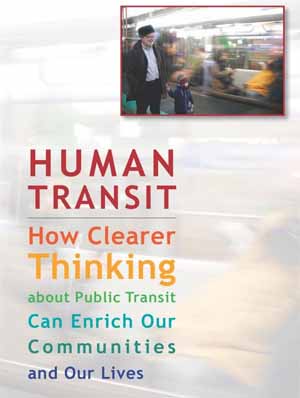
All this time, I hadn’t considered taking public transit, mostly because I’d never, ever seen a bus stop at the lonely route marker around the corner from my house. While growing up in this inconvenient corner of suburbia instilled in me a love of bikes and cycling as well as a love of cars and driving, it also kept me from imprinting on public transit use. I rode the poor old Seattle Center Monorail once in a while, but only in doing the tourist thing with friends, and buses meant noisy yellow tubes taking me the last place I wanted to go. Still, something inside me recognized and meditated on the deep undesirability of having to either get behind the wheel or spend half the day biking between small towns to do anything at all. Perhaps this drove me to move from English Hill (WalkScore 9, “Car Dependent”) to downtown Santa Barbara (WalkScore 88, “Very Walkable”) to Los Angeles’ Koreatown (Walkscore 92, “Walker’s Paradise”). I couldn’t have articulated my dissatisfaction with the Seattle ‘burbs back then, nor could I have said much about the inconveniences I still felt in Santa Barbara, but that’s why I turn to a guy like Jarrett Walker, author of the blog Human Transit, and now the book Human Transit: How Clearer Thinking About Public Transit Can Enrich Our Communities and Our Lives.

A public transit planning consultant for some twenty years, Walker has surely spent more time and energy explaining how to move people around cities than anyone I’ve ever heard of. His writing bears the mark of experience talking with riders, non-riders, planners, and developers, but especially governments; you can sense it in the extreme caution he takes with words and their definitions. He deliberately explains, as if to avoid a lawsuit, that when he says “walk,” he includes the use of wheelchairs; when he says “driver,” he includes transit vehicle operators that may not do anything resembling driving as we know it; and he insists that, when laying out the mechanics and consequences of different choices in transit operation, he doesn’t advocate for any particular one. Nevertheless, the book miraculously escapes the kind of binding neutral stiffness this would lead you to expect and, more than any other text I’ve read that so intently covers route/line geometry and connection timing, actually makes for a lively read. And while I wouldn’t say that Walker disingenuously plays the part of the dispassionate expert — the “plumber,” as he puts it, who tells you all the ways he can fix your sink but leaves the choice up to you — he describes certain qualities of public transit in such a way that makes you believe, as I suppose I already did, that cities in the non-European Anglosphere could run far superior service with a few near-obvious tweaks.


A man who, beyond the age of 26, finds himself on a bus can count himself as a failure.

Margaret Thatcher (though quite possibly apocryphal)


I haven’t had a car to drive since leaving Washington almost a decade ago. In Santa Barbara, I rode the buses, which helped cultivate in me an antipathy toward buses that someone like Walker might call unimaginative. Though possessed of clean-enough vehicles, friendly-enough drivers and convenient-enough stops, Santa Barbara’s transit system consisted entirely of buses running in what Walker terms a “Class C” way: through mixed traffic, in lanes neither exclusive nor separated. That is to say, they shared the road on equal terms with all the other cars, and thus operated as nothing more that bigger, slower, less convenient cars, and even then only before about 11:30 at night. Other than relieving you of parking costs, riding them offered no advantages over driving yourself. Therefore, Santa Barbarans who could drive — or, in my case, bike — almost always did. Before any bus trip, I had to consult the Santa Barbara MTD’s schedule and plan around it, lest I find myself alone at a stop with more than half an hour to kill. The system didn’t offer its users the frequency to “just go” anywhere, let alone to spontaneously change their plans with anything like ease.

Walker titles one chapter of Human Transit “Frequency is Freedom,” and throughout the book he treats frequency as one of the chief measures of a city’s transit system. To my mind as to his, if a transit vehicle shows up at least once every ten minutes, you can “just go” places on it. He’d like to see more maps that show only frequent lines, as opposed to every line, and having steeped myself for years in the information-design work of Edward Tufte, I endorse with all my being Walker’s suggestion of proportioning the map’s line thickness to the timetable’s line frequency. Another chapter called “Connections or Complexity?” left me convinced that, were Walker to take the gloves off and start flat-out telling cities what to do, he’d instruct them to run their transit frequently on as close to a grid pattern as possible, so that riders can easily and intuitively figure out how to get where they need to go by simply knowing which directions they need to travel in. And I’d like to think that he’d tell them to junk this Class C business and run all their lines as at least Class B, which means dedicating a whole lane to each, or better yet Class A, which means dedicating a whole lane to each and separating it from cross-traffic entirely.


Ah, the old number 22: clean, reliable public transportation; the chariot of the people; the ride of choice for the poor and very poor alike.

Lisa Simpson


You urbanites will recognize Class A as how subway trains run: down in their tunnels, impeded by nothing but the trains ahead of them. Class B you’ll have experienced if you’ve taken buses with dedicated lanes or light-rail trains running at street level which still stop at traffic lights. Moving to Los Angeles introduced both Class A and B transit into my daily life, as well as service frequent enough to liberate me of timetables and a grid network (at least comapred to Santa Barbara) to liberate me, for the most part, from maps. This has gotten me using public transit as perhaps the primary organizing framework for my thoughts on cities. A city’s transit system tells you much about the city itself, and though still only about half-built, Los Angeles’ rail network and its prospects for growth make appealing promises about the coming alterations in this urban fabric. No less an authority than Walker himself sees Los Angeles as quite possibly “the next great transit metropolis,” and the city pops up in illustrative examples throughout Human Transit. Late in the book, he tantalizingly sketches a vibrant, transit-rich boulevard of 2030, which “feels more like a Parisian boulevard in many ways, including generous sidewalks, shade trees, and of course a transit lane” in which “bus and streetcar technologies have converged into a long snakelike vehicle lined with many doors, so that people can flow on and off as easily as they do on a subway” which is “guided by optical technology” and which, “mostly transparent above waist height,” “feels like a continuation of the sidewalk.”

Here, Walker is writing specifically about the evolution of Los Angeles’ Metro Rapid buses. He’s come down as a fan of these in his blog, and he seems especially to like the one that runs on Wilshire Boulevard, which also happens to be the only Los Angeles bus I ride regularly. True, I’ve given the Rapids a hard time before for their crowding, their lack of most actual bus rapid transit system features, and how painfully they remind me that the subway should have opened in Santa Monica a decade ago. But I think he and I would agree that they’re only a dedicated lane (which they may get) and an offboard payment system away from escaping much standard bus awfulness. (In this as elsewhere, Los Angeles could do well to take a page from Mexico City’s transit playbook; I could envision their Metrobús system fitting in here. But good luck getting an American public official to look toward Mexico City as the future.) Walker takes pains to point out the relative irrelevance of transit technology, claiming that, if you have the correct geometry, frequency, the separation from traffic, it matters less whether you run a train or a bus or a tram or what have you. But the image of buses as slow, smelly, unpredictable, rolling canisters of poor people lingers in my mind, just as it does in the minds of so many Americans. Once a city has listened to the Jarrett Walkers of the world and built a truly functional transit system, it faces the even hairier challenge of getting reasonably wealthy and free urban-ish liberals — or, in the parlance of 2007, “white people” — to use it. Or maybe ten-dollar-a-gallon gas will do the job for them.