Skip to content

My recent ventures into the Korean and Korean-American media

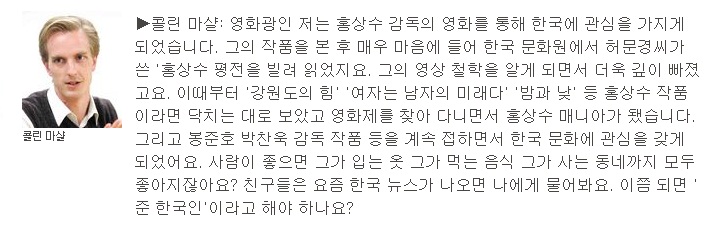
Last month, the culture editor of the Korean daily paper 중앙일보 interviewed me, alongside a few other students of the language, about the origins of our interest in Korean culture. She then asked for our suggestions of how to popularize Korean music, films, and television in the United States, an entirely trickier question to answer. (I’ve sensed some anxiety before about the comparatively weak influence of the Korean Wave in America as opposed to in the rest of Asia.)

I mostly talked about Sangsoo Hong, as the article reveals:

I also appeared for a three-hour session on Mike Kim‘s Koreatown-based podcast, K-Town Tonight. You may remember my last sit-down on that show, when it aired on Radio Korea. This time, unbound by FCC restrictions, we get right down into it. Mike summarized the discussion thusly:

Guess what? We finally talk about K-Town… sort of. In this episode we are joined by Colin Marshall and Yuji, both former guests. Mr. Pizza, sweet potatoes, KBBQ in LA vs. Korea. Park’s BBQ.

Kyochon & OB Bear for wings. Sool-jib vs. Pocha. Café Jack and Mok Maru Jong. Indoor smoking in K-Town. Prince. Scent. Yellow House Café. Haus. See? Lots of K-Town shit. Koreatown! Tom n Toms. Hae Jang Chon’s lunch specials. Yu Ga Ne.

Keungama. Namsan Fusion Café. Mom’s House. Face soup. Guelaguetza. El Jalapeno. Honey Pig. Yelpers can suck a fat penis. “Golf Galbi-tang” at Chilbo Myunok. Menupan.com in Korea. Italian restaurants in Korea.

Mike reveals his technique to get rid of stalkers. Korean-Americans are obnoxious when they visit Korea. Tahoe Galbi now serves Brazilian BBQ. Oo-Kook. You & Me Cuisine. Conversation bar (or whatever they’re called)? Moss. Jeonju.

Curry Hyang. Thai food in K-Town. Mike had his 31st birthday party at Hae Ha Heng. Mr. Young’s. Filipino food in or near Koreatown. Spicy Chicken Joy at Jollibee. Lots of Koreans in the Philippines. Burgos St in Makati City. Inwangsan Hotel in Manila. Aristocrat restaurant in the Philippines. Mike recommends the pork spare ribs and garlic rice.

Kimchi chigae in K-Town? Dak Galbi in K-Town. Chuncheon. Trying to date as a fat ass. Prostitution in Korea, and what happened in September 2004. Paul Pot discussion. Japanese porn discussion. Review our show on iTunes. Mike’s friends are messing with the K-Town Tonight Facebook page. Some podcasting tips from Colin. End with JYP.

Podthoughts: The KunstlerCast

Vital stats:
Format: interview-conversations about “the tragic comedy of suburban sprawl”
Episode duration: 12m-1h20m
Frequency: weekly

Suburbia sucks, and ever-rising energy prices will soon destroy it. There you have the collected ideas, in caricature, of self-styled public intellectual James Howard Kunstler. For twenty years, he’s worked the city-planning, architecture, transit and urbanism/New Urbanism beats, territory where self-styled public intellectuals have been known to tread. Perhaps you’ve read the work of activist-journalist Jane Jacobs, to whom Kunstler often gets compared. When her 1961 book The Death and Life of Great American Cities grew famous and influential, the caricature of her ideas developed as follows: modernist urban planning (i.e., freeways and function separation) sucks, and if you let it happen, it will soon destroy you. These caricatures fail to convey the depth and nuance of Jacobs and Kunstler’s writing, as caricatures do. Alas, it seems that public intellectuals, especially self-styled ones, pay the price of caricaturization to find purchase in the zeitgeist.

If you wish to know more about precisely why Kunstler thinks suburbia sucks, allow me to suggest The KunstlerCast [iTunes] [RSS]. Taking a more unusual form than it might at first seem, the podcast presents a weekly conversation — more formal than a two-sided gab session, but looser than an interview — between Kunstler and co-host Duncan Crary. Aside from the occasional field trip to real streets and malls and such, each episode has Crary asking Kunstler for his thoughts on a certain subject, be it a city he’s recently visited like, say, Portland [MP3]; the work of another urbanist like, say, Jane Jacobs [MP3]; or even the very definition terms as basic as “urban” [MP3]. This may sound a tad technical or academic, but Kunstler, neither an academic nor a technician, seems constitutionally unsuited to letting conversations go dry. The man comes armed with judgments, often swift and harsh, about which cities he finds livable, which cities he finds hellish, and which cities he feels certain that energy crises will simply sweep away.

Read the whole thing at Maximum Fun.

Notebook on Cities and Culture S1E22: The Discerning Cosmopolitan Cartographer with Eric Brightwell

Colin Marshall sits down in Silver Lake with Eric Brightwell, proprietor of both Pendersleigh & Sons Cartography, which offers hand-drawn maps of neighborhoods in Los Angeles and beyond (and posts them to Amoeba Music’s Amoeblog), and Brightwell, which offers luxury and craft items to the discerning cosmopolitan gentleman. They discuss the days when Silver Lake was Ivanhoe; the distinctively shifting and disputed nature of Los Angeles neighborhoods; the differences between neighborhood mapping by Google Maps, by Yahoo Maps, on subway station walls, and by hand; the unintended Berlin Wall effect of freeway construction; his attracting of angry, all-caps comments from the gangs of Frogtown; longtime Angelenos’ lack of awareness about the neighborhoods that surround them, and their need to believe that their own has gone to the dogs; Hollywood’s retailers of pimp-geared $169 three-suit deals; how an authenticity jones can ruin your experience of Los Angeles; his discovery of microsubcultures in unexpected places, and the larger fact that no one part of the city is more interesting than any other; Hitler’s Pacific Palisades bunker; and the advanced art of entering a neighborhood, exploring it, and documenting it without knowing anything at all going in.

Download the interview from Notebook on Cities and Culture’s feed here or on iTunes here.

(Photo: Fern)

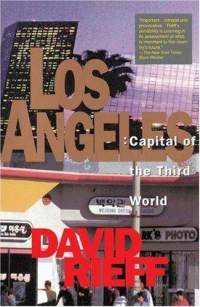
David Rieff: Los Angeles: Capital of the Third World

When I noticed this book on a downtown library shelf, the prospect of a twenty-year-old assessment of Los Angeles by Susan Sontag’s “polemicist” son did not immediately appeal. Thinking of Sontag’s cultural affiliations with New York and Europe, one easily envisions nothing more than a prolonged dismissal of this city as a vast, backward hellscape of philistines and oppressed laborers. But since pre-judging a writer by not even his mother but an idea of his mother struck me as uncharitable — the very thing my imagined son of the idea of Susan Sontag would do to Los Angeles — I began reading. Rieff opens with an almost savage critique of friends and acquaintances in his New York coterie who, despite priding themselves on thinking with nuance and balance about issues like Israel-Palestine and German reunification (the year was 1991), blithely condemn the whole of Los Angeles with a misremembered Gertrude Stein quote or a one-liner that sounded warmed-over back when it came out of Woody Allen. Clearly, I was in for something unexpected.

Not far into Los Angeles: Capital of the Third World, either I remembered or Rieff reminded me that Sontag, though born and deceased in New York and buried in Paris, did a fair bit of growing up in Los Angeles. She even graduated from North Hollywood High, which puts her in the company of no less a Valley luminary than Adam Carolla (who, by his own admission, the administration just sort of waved through). Rieff himself logged a chunk of his back-and-forth, divorced-parents childhood in Los Angeles. So here we have a many-rooted and thus seemingly rootless cosmopolitan returning, in some sense, to the dirt where just one of these thin strands buried itself. No sooner does he emerge from LAX than he marvels anew at the openness, cleanliness, and peculiar conveniences — smiles, for instance — he’d grown accustomed to doing without in New York.

While these stars in Rieff’s eyes soon dim, he holds to this premise: we New Yorkers think of Los Angeles as undeveloped and culturally benighted, sometimes with good cause, but, y’know, we ain’t doin’ so hot ourselves. He directly and incisively analogizes the teeth-grinding freeway traffic to which Angelenos freely submit to the pervasive “filth and insecurity” to which he and his fellow New Yorkers have long since surrendered. He pokes fun at New York society’s increasingly apparent bewilderment, that of an out-of-touch parent, not only at Los Angeles’ failure to look east for guidance, but its lack of concern about what goes on in Manhattan at all. He relates terse telephone conversations with flinty friends back home who defensively repeat mantras like “Life is hard,” ridiculing the very notion that anyone, especially those airheaded Angelenos, might expect pleasure from existence rather than pain.

While inoculating himself against the cruder anti-Los Angeles prejudices, Rieff performs his own criticism of the city from what must have read, at the time, like a fresh angle. He enters Los Angeles from and bases himself in its wealthier, coastal westside. There he attends cocktail parties and visits friends of friends who, slowly but surely, reveal their startlingly total ignorance about neighborhoods mere miles from their own. Investigating further, he builds a narrative of Los Angeles starting with an improbable early 20th-century greening of the desert. This continues into large-scale salesmanship for the resulting “Anglo-Saxon homemaker’s” ideal place in the sun. Then follows the development of a freeway-laden constellation of otherwise isolated municipalities optimistically meant to avoid the entrenched troubles of the eastern industrial metropolis. By 1990, where Rieff came in, we watch the bewilderment as this Los Angeles dream fragments into something much more alien.

Though he gets decent mileage out of conversations with their illegal “help,” Rieff ultimately loses interest in westsiders and their real estate-y concerns. He spends more “vivid, peculiar, and unsettling” days among Los Angeles’ various immigrant populations, whose steady inflow from Mexico, Central America, and Asia — not to mention all of that era’s ominously direct Japanese investment — seems to have taken the “natives,” Anglo-Saxon homemakers and otherwise, by surprise. Sensing a local knack for the language of branding, Rieff notes how many Angelenos respond by boosterishly calling Los Angeles “the capital of the Pacific Rim” — indeed, the only American sub-economy diverse enough to compete with shrewd, calculating Japanese corporations otherwise raring to buy and sell the entire country. Certain well-to-do westsiders insist that Los Angeles’ Latin Americans and Asians will assimilate like New York’s Italians and Jews, but Rieff doesn’t see it happening — in fact, sees it actively not happening.

Rieff writes of much white, middle-class hand-wringing over the possibility that, assimilated or no, these waves of foreigners will wash them out of their exceptionalist Eden. And I understand the appeal, at least in the abstract, of a land of year-round sunshine that affords you — afforded you — a quiet, detached home of your very own, surrounded by an apron of Shropshire-grade lawn, from which you can smoothly motor — Twenty Minutes to Everwhere! — on those gleaming new freeways to your secure job in a faraway downtown tower. But I don’t feel it. Even today, I witness spasms of this strange nativist anxiety from longtime Angelenos, often triggered by exasperation at the prominence of the Spanish language they refuse to learn. “Betrayal” is the word Rieff uses; these people feel betrayed by the densifying, variegated, hyperpolyglot Babel of trains, towers, and desert gardens “their” city is becoming. But I would have moved to no other Los Angeles.
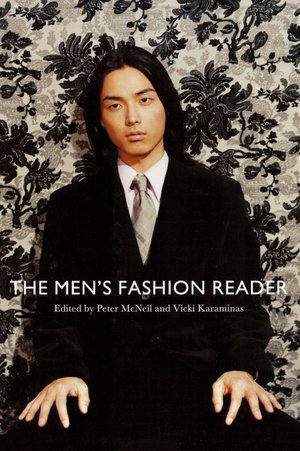
Peter MacNeil and Vicki Karaminas: The Men’s Fashion Reader

For all its relevance to their interests, I wonder how many menswear enthusiasts would, or could, sit down and read this book. Despite coming in the same thickness and glossiness as many standard menswear books do, The Men’s Fashion Reader has no dressing advice to offer, nor does it concentrate exclusively on the history, development, or mechanics of men’s clothing. It does contain a great deal of analysis, delivered in the form of 35 separate articles on everything from dandyism to the Japanese adoption of the western suit to the rise and fall of the Men’s Dress Reform Party. And indeed, any man who takes an active interest in what he wears will find dozens upon dozens of fascinating pages — embedded, alas, within hundreds of academic ones.
Here I use the word “academic” mostly by its neutral definition, of or pertaining to a college, academy, school, or other educational institution, especially one for higher education,” but not without an eye toward the more pejorative ones. “Of purely theoretical or speculative interest,” “excessively concerned with intellectual matters and lacking experience of practical affairs” — these charges often stick. McNeil and Karaminas make no bones about their book as a product of the academy, for the academy, and a quick glance across online collage syllabi reveals that professors do indeed assign it. Yet its relatively lush printing, complete with two sections of color plates showing off eighteenth-century finery, midcentury California leisurewear, and the unconventional fashion choices of Japanese youth surely makes it one of those burdensomely expensive, beer money-eating pieces of required reading. A peculiar hybrid, this book: its form keeps it from quite belonging on the student’s bookshelf, and its content keeps it from quite belonging on the well-dressed man’s.

Read the whole thing at Put This On.

Notebook on Cities and Culture S1E21: Connoisseur of Silence with Todd Levin

Colin Marshall sits down in Silver Lake with comedian, writer, and comedy writer Todd Levin, who’s written for Late Night with Conan O’Brien, The Tonight Show with Conan O’Brien, Conan, and the Onion News Network. They discuss using comedy performers as tools; the advantages of being a cipher; deliberately bewildering the audience, listening for reactions beyond laughter, and in the process becoming a connoisseur of silence; the comparative humorous possibilities of Tetley and Bigelow tea bag package copy; the inevitable and healthy decision to stop reading internet feedback on one’s work; Conan O’Brien’s coxcomb of hair; New York’s inherent masochism, and Los Angeles’ bus stops full of people who look just about to surrender; the pleasures of New York’s crosstown buses and the agonies of its garbage trains; Los Angeles’ lack of an excuse for shuffling around in flip-flops; his heightened suspicion of venues that aggressively promise good times, and what aggressive promises of laughter can do to comedy; the ultimately fruitless technique of reliable joke insertion, which reveals an anxiety to hold an audience’s attention and in so doing loses that attention; that particular Conan O’Brien brand of delivering silliness and lasting memories at once; and the haunting question of telling which of your actions indicate maturity, and which indicate complacency.

Download the interview from Notebook on Cities and Culture’s feed here or on iTunes here.

(Photo: Lisa Whiteman)

Podthoughts: The Big Ideas

Vital stats:
Format: elucidation of oft-name-checked but thinly understood ideas
Episode duration: 9-20m
Frequency: monthly, almost

My brain has filed Benjamen Walker, host and producer of WFMU’s Too Much Information, as one of our time’s major public radio martyrs. Yes, the man seems alive and well, but public radio martyrdom doesn’t require literal death. He can go on breathing, eating, sleeping, and working, making intricate audio pieces for which people express great admiration on the internet; he simply must symbolize the bizarre thanklessness of crafting fine sonic media. When Bill McKibben wrote a piece for the New York Review of Books on just this phenomenona couple years back, he quoted Walker directly:

[Too Much Information is] good enough that 240,000 people have downloaded some of the twenty episodes he’s made so far. That’s a lot of people, but it’s zero money, since podcasts, like most websites, are by custom given away for free. Walker’s previous show, a similar effort called Theory of Everything, was widely promoted on the Public Radio Exchange, and six public radio stations across the country actually paid for and ran it. “I think I made $80,” he says. “If I thought about it too hard, I would just quit. It’s much better not to think about it.”This brings to mind Memory Palace creator Nate DiMeo’s alternately encouraging and debilitatingly discouraging article on public radio production. Walker commented with a j’accuse against stations willing to pay for digital consultants, brand consultants, and “content executives” instead of, uh, content. A bold declaration, you might think, although I personally would have tossed in an indictment of stations’ badly limiting and increasingly shameless tendency to pander to, and only to, listeners’ fear of having their ignorance exposed at the office water cooler. No surprise, then — or not so much of a surprise, anyway — that Walker’s latest high-profile project comes not in collaboration with a traditional public radio outfit, but with the British newspaper the Guardian. Together they bring you The Big Ideas [RSS] [iTunes], a podcast on just those.

Read the whole thing at maximumfun.org.

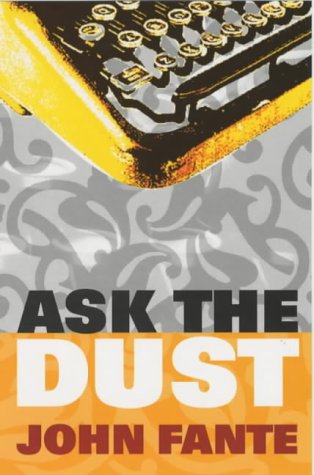
John Fante: Ask the Dust

Upon hearing that I’d never read it, an interviewee with three Los Angeles years on me pressed his personal copy of Ask the Dust into my hands. I had felt some responsibility and curiosity about the book, since it occupies the unusual position of a 1930s Los Angeles novel that “everyone” is suddenly reading again. In fact, so many people suggested it for my alternative Los Angeles literature roundup that I immediately decided not to include it. But since I instinctively trust this the judgment of this particular interviewee, a novelist himself, I soon broke down and took in this story of Arturo Bandini, a fledgling Italian-American writer who pulls up stakes from Depression-era Colorado and drops himself, alone, into in Depression-era Los Angeles.

I often wonder whether a truly insightful Los Angeles book should avoid mentioning either the “car culture” or “the Industry,” those two highly visible black holes that suck many a portrayal of the city into mediocrity. Fante does well enough on these counts: the impoverished young literary Bandini lacks the means to buy an automobile until late in the story, and at no point does he look into screenwriting. He spends most of his time downtown, riding the Angels Flight funicular between his boarding house in the dense neighborhood of Bunker Hill to visit/hassle a Mexican waitress (his “Mayan Princess”) at an eatery very similar to Clifton’s Cafeteria. The year is 1933, the heyday of the Los Angeles and Pacific Electric railways, the latter of which Bandini takes down to Long Beach for an assignation with a middle-aged lush possessed of — I don’t quite know how else to describe it — a dead vagina.

That comes as only one of the novel’s several unsettling sequences. Afterward, Bandini wakes up alone and walks outside right into the Long Beach Earthquake of 1933. When I think of that particular disaster, I think of a certain photo someone uploaded to Wikipedia that, while capturing the aftermath of the quake in messy detail, does so in a way that makes the scene surrealistically desolate and dreamily horrifying. The most memorable parts of Ask the Dust share these qualities. I’m thinking specifically of one low point when Bandini’s emaciated, drink-enfeebled neighbor, claiming to know where they can get a free steak, drives them out to the sticks in the middle of the night, stops at a barn. He steals a calf to kill then and there and, theoretically, cook back at the boarding house.

In the book’s film adaptation — shot almost entirely, as you’d expect, in South Africa — Donald Sutherland plays this neighbor. I feel great fascination to see the choices he makes with this character, as any filmgoer would, but I do wonder if the cinematic medium can convey Bandini’s personality as well as does the book’s first-person narration. Fante has him oscillating between hyperinflated pride (artistic and otherwise), near-solipsistic self-pity, and hair-shirt Catholic guilt with almost mechanical regularity. Bandini’s relationship with Camilla, the aforementioned Mayan princess, introduces cycles of impotent aggression, ethnic sniping (“To me you’ll always be a sweet little peon. A flower girl from old Mexico.” “Look at your skin. You’re dark like Eyetalians”), and thwarted longing. He becomes the sort of protagonist a writer of any era would construct to air their anti-Los Angeles grievances: rootless, alienated, gauche, self-serving, striving yet strangely aimless — and, ultimately, hollowly successful.

I report with relief, then, that Ask the Dust doesn’t really have grievances to air. If Fante lambasts anything, he lambasts the transplants who delusionally project their own failings onto Los Angeles, condemning it as the very opposite of all the good and the pure left behind in their Edenic hometowns. “Nostalgically he talked of meat, of the good old steaks you got back in Kansas City, of the wonderful T-bones and tender lamb chops.” “He was homesick for the middle-west. He talked of rabbit-hunting, of fishing, of the good old days when he was a kid.” “He reveled in memories of Memphis, Tennessee, where the real people come from, where there were friends and friends.” Naturally, this requires a robust illusion — around a grain of truth though it may have formed — of having been shoved out west by the hand of fate.

Should you arrange your own Long Beach assignation, with a vagina dead or living, you can now take the train there just like Bandini does, although it’ll be the Metro Blue Line instead of the Pacific Electric Red Car. After its half-block move south in 1996 and its mechanical upgrade last year, you can ride Angels Flight to Bunker Hill. Bunker Hill itself, which you might know as the site of Frank Gehry’s Disney Concert Hall, took a hit from Los Angeles’ freeway-building and redevelopment projects of the fifties and sixties. These, among their other unforeseen consequences, turned Bunker Hill into a platform for skyscrapers by the-mid eighties. When those towers fell into unprofitability, 1999’s Adaptive Reuse Ordinance opened them up to mixed usage and dense (i.e., parking-light) habitation. We have glimpsed the future Los Angeles, it seems, and it looks like Arturo Bandini’s.

Notebook on Cities and Culture S1E20: All the Single Ladies with Tony Pierce

Colin Marshall sits down at KPCC headquarters in Pasadena with Tony Pierce, the station’s blog editor, former editor at LAist and blog editor at the Los Angeles Times, and author of the Busblog. They discuss the time when he was the only English-language blogger to ride the bus; the longing for Los Angeles that brought him out of the Chicago suburbs; his years in the collegiate Eden of Isla Vista; making like the rich young prince in the bible and selling all his stuff in order to leave San Francisco and come back to Los Angeles; beginning to blog as a way to let all the city’s single ladies know he was here; his encounters with different groups of people on different transit lines, and his strategic use of the subway for drinking; how people in Los Angeles can live here for decades without ever bothering to be truly present, and how they might do that in any city in the world; his push, while editing LAist, to tap into as great a variety of voices and experiences as possible; his belief that the Busblog, despite its explosive popularity, never deserved to get known at all; the fixture of Los Angeles literary culture that is the paradoxically positive Charles Bukowski; and how, in all of the Busblog’s non-fanciness, he still wants to let the ladies of the world know he’s available.

Download the interview from Notebook on Cities and Culture’s feed here or on iTunes here.

Notebook on Cities and Culture S1E19: DJing the DJs with Mark “Frosty” McNeill

Colin Marshall sits down in an undisclosed Hollywood-ish location with Mark “Frosty” McNeill, co-founder and creative captain of the internet radio “future roots music” collective Dublab. They discuss founding an internet radio station in 1999, when everything sounded like a tin-can phone; the nature of future roots, where the very old meets the very new, the very traditional meets the very experimental, and everything sounds different yet retains a common undercurrent; Dublab’s mission to curate the curators, or “DJ the DJs”; his theory that all art is derivative, especially all music, but in a good way; his days doing gruntwork at USC’s classical station, and the roomful of free John Cage, Terry Riley, and Nonesuch albums it afforded him; Dublab’s early courtship by the companies of the internet bubble, and the free lunches (and nothing else) this offered; Los Angeles’ great advantages of diversity and space, of both the physical and mental varieties; what about music seems to incentivize narrow rather than wide appreciation, and how to get around that without being a pusher man; Secondhand Sureshots, the short documentary he co-directed, and what it says about the importance of repurposing forgotten and obscure sounds; whether and how the dust on a record acts as “seasoning”; and the joy of reconstructing someone’s personality by buying their record collection at a thrift store — and how he did just that by giving it a spin on his show Celsius Drop.

Download the interview from Notebook on Cities and Culture’s feed here or on iTunes here.