
Vital stats:
Format: Portland-related gab sessions and interviews
Episode duration: 30-38m
Frequency: weekly
As soon as my feet touch Portland soil, in flood the good vibes. Every time I emerge from a car, plane, or MAX train into the fresh, cool, only slightly moist Portland air, I echo the words of Brigham Young reaching Salt Lake City: “This is the place.” These feelings only intensify when I’ve sat myself down in the nearest McMenamin’s with something locally brewed in hand. Yet I live not in Portland but Los Angeles, a city whose neighborhoods Portlanders either denounce as Portland’s moral and aesthetic enemies or deride as mere brittle simulacra of Portland. In search of convenient shots of Essence of Portland when I can’t fit in an actual trip north, I discovered a new, highly suitable-sounding podcast called The Portland Adventure Hour [RSS] [iTunes].
At first listen, the show sounds like a typical three-man gab session where you can’t tell which voice belongs to whom and don’t bother because it will peter out in eighteen months anyway. But, being Portland residents, these three men make occasional reference to the things they see and do in their fair city, which immediately ups the interest level. (Usually, this sort of production emanates from spare rooms fifteen or twenty miles outside my own fair city, not that that stops the hosts from griping about “living in Los Angeles.”) The format quickly takes on an unusual hybridity: some episodes go with the gab, while others present one-on-one interviews with Portland-resident creators and businessmen, like a comedian [MP3], a wildlife photographer [MP3], a ski-builder [MP3], and the proprietor of something called a bouldering gym [MP3].
Read the whole thing at Maximum Fun.
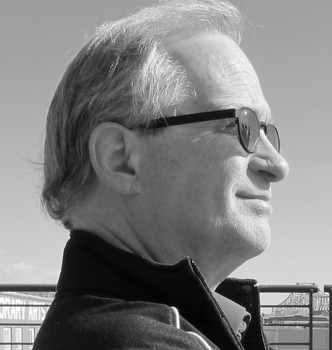 Colin Marshall sits down in Del Rey with David C. Sloane, professor and director of undergraduate programs at the University of California’s Price School of Public Policy and editor of Planning Los Angeles. They discuss the book’s obvious contrarian marketing angle against the widely held idea of Los Angeles as the most chaotic, least planned U.S. city; how people assume Los Angeles to be both older and newer than it really is; the city’s much-discussed “polycentricity” coming from trains, not cars; freeways as conduits, Berlin Walls, psychological shortcuts, and Brasília-style monuments; the fears surrounding the non-disaster of “Carmageddon” and what they say about the increasing difficulty of the midcentury Los Angeles lifestyle; the transition to a world of multimodal transportation, where bicycles, cars, and trains coexist; his move to Los Angeles during the inauspicious year of 1992, though one that paradoxically saw several highly auspicious urban developments on the way; the changes in thinking that led to the changes in American cities from their nadir in the late seventies and early eighties; whether Los Angeles, having spread to its geographical limits, has now run out of excuses for not looking inward; and the city’s anxiety about which places are “real” and which “fake.”
Download the interview from Notebook on Cities and Culture’s feed here or on iTunes here.

Vital stats:
Format: the literary WTF
Episode duration: 1h-1h30m
Frequency: weekly
Damn, are ever there a lot of novels to read. I get this mixed rush of excitement, gratitude, incredulity, and hopelessness whenever I plug into an outlet of contemporary literary culture. In one hour, I’ll hear of dozens of authors and hundreds of books I might want but will never have the lifespan to read. How did this Jenga tower rise? When will it fall? Imagine what a comparable situation in the auto industry: respectable, productive new car companies appear every week; comfortable, well-built new models enter the market every day; lots teem with more vehicles than the entire driving population could reasonably buy and use, let alone fit onto the roads at once; time-tested old cars, some of the finest ever produced, remain abundant and far cheaper than their curiously pricey modern counterparts. Yet automotive design and engineering schools continue pumping out waves of expectant graduates each year, and everyone else seems less and less eager to drive.
From Other People [iTunes] [RSS], a literary version of Marc Maron’s WTF, I get vibrations of this same psychodrama. Host Brad Listi, a novelist-interviewer/novelist interviewer to Maron’s comedian-interviewer/comedian interviewer, sits down with the very people who write all these worthy recent novels to compare notes about growing up, pulling a writing career together, and physically doing the work, in sessions spiced with various opinions and anxieties. After having heard a sizable chunk of the archive, I can assure you that these episodes all have much of interest to offer: rich stories, sudden laughs, ponder-worthy observations, memorable strategies for living. The show’s conversations deliver just what I confidently imagine their participants’ actual books do. But where to start listening?
Read the whole thing at Maximum Fun.
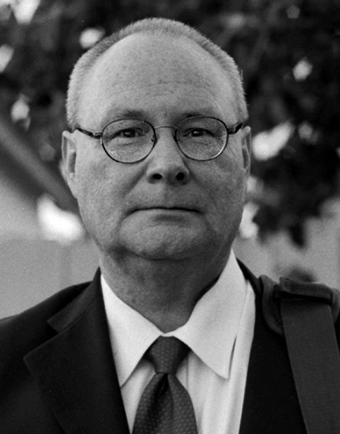 Colin Marshall sits down in Lakewood City Hall with D.J. Waldie, author of books like Holy Land: A Suburban Memoir and Where We Are Now: Notes from Los Angeles, collaborator on books like Real City with photographer Marissa Roth, and a 34-year employee of the City of Lakewood as Public Information Officer and Deputy City Manager. They discuss the importance of Wallace Stevens’ “work and walking” to his own writing; his advice to the latest wave of Los Angeles newcomers looking for solutions to the problem of how to live here; what it means to lead a “redemptive” suburban life, and whether “suburban” means the same thing to every writer; Lakewood and other rapidly built postwar tract-home communities as exciting, frightening experiments in living from which new democratic vistas could well; the meaning of Lakewood’s motto that “Times Change, Values Don’t”; how considerable variation can arise from built uniformity; his premise that there are no “good” places, and his ongoing interest in the question of what would happen if you fell in love with the place where you are; how knowledge of a place, if not quite love for it, can enrich the experience of that place; how the newest Angelenos seem to long to connect to and invest in their place; and how Los Angeles’ resistance to its own history has contributed to bad choices over the years, leading to frustrations financial, racial, and otherwise.
Download the interview from Notebook on Cities and Culture’s feed here or on iTunes here.
(Photo: Tom Johnson)

Vital stats:
Format: talk about all aspects of cycling and cycling culture
Episode duration: typically ~30m, with occasional longer specials
Frequency: weekly
London’s Resonance FM broadcasts not what we would think of as straightforward talk programming, and not what we would think of as straightforward music programming, but something called “radio art.” This broad label turns out to cover a badly underutilized patch of radio’s philosophical spectrum, one safely distant from both bland jukeboxing and tiresome politicking. Eschew traditional news, sports, hits, and complaints, and you open up the creative space for shows a thinking listener might actually enjoy. This I realized when I Podthought about the podcast of every Resonance FM broadcast available in that form. I’d previously written up The Wire magazine’s Adventures in Modern Music, the most straightforward music show I’ve heard on Resonance (and The Wire has R. Stevie Moore on its cover this month). Now I’ve cycled back around, as it were, to listen hard to a program no other station has produced, or possibly could produce: The Bike Show [RSS] [iTunes].
When first I heard The Bike Show, host/producer Jack Thurston impressed me not only with his professionalism and stealthy production skill — qualities not immediately associated, alas, with freeform radio — but a dedication that had him not only chatting in the studio but recording out in the field, on long trips, and even while riding. (These signature “rolling interviews” have their own page on the show’s site.) But back then I lived in Santa Barbara, where cycling meant only an idyllic way to commute. Now that I’ve dropped myself into the vast complexity of Los Angeles with my old brown Nishiki as primary means of transport, cycling has taken a rather more essential place. An encounter with David Byrne’s Bicycle Diaries made me consciously grasp a fact my lifestyle had already incorporated: no more efficient, absorbing, and intellectually or aesthetically connected form of urban transportation exists. I had much to learn; I had to catch up on The Bike Show immediately.
Read the whole thing at Maximum Fun.
 Rudie Obias and West Anthony invited me on their podcast The Auteurcast, a show which picks out fascinating directors and discusses all their films one-by-one. I joined them during a Stanley Kubrick cycle. They would have had no way of knowing this — except due to sheer film-geek likelihood — but Kubrick counts among the first three or four directors I actually recognized as directors. (Now that I think about it, “directors you actually recognize as directors,” makes for as concisely accurate a definition of “auteur” as I’ve heard.) Going to screening after screening of Dr. Strangelove with my dad no doubt encouraged that.
But I didn’t discuss Dr. Strangelove, my most-viewed Kubrick film, with Rudie and West. Nor did we discuss Barry Lyndon, the Kubrick film I think about most often these days. We discussed A Clockwork Orange, of which I just so happened to catch a screening with Malcolm McDowell in attendance. (To name just one of the reasons I moved to Los Angeles.) We got into the distance between the film’s reality and that of 1960s England and the surprisingly enduring impact of non-explicit violence. You can listen to the show here. I remember taking a girlfriend, at age fifteen, to a double-bill of A Clockwork Orange and The Shining at Seattle’s Varsity Theater. I wonder where she is now. Well, not really.
Other recent press and guest appearances:
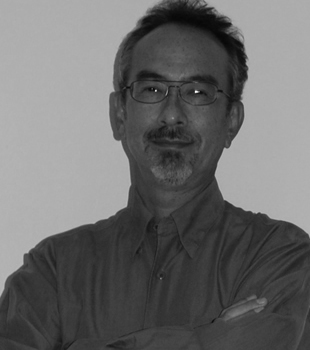 Colin Marshall sits down in Little Tokyo with novelist Todd Shimoda, author, in collaboration with visual artist L.J.C. Shimoda, of “philosophical mystery” novels with science, engineering, Japanese and Japanese-American themes. His latest, Subduction, follows a disgraced young physician into his four-year exile on a tiny, earthquake-prone, mythology-freighted island off the Japanese coast. They discuss Japan’s very real earthquakes in Kobe and Fukushima; the book’s obsessed characters, whether obsessed with seismology, documentation, or simply staying on the island; the question of how much scientific data he can safely include in a novel, and if this age of Wikipedia changes that; the “four-dimensional” Japanese cultural co-existence of mythology and science, and its blurred boundary between practice and belief; writing a novel of Japan without writing a novel of Japanese-ness, and avoiding other problems that befall Westerners’ writing about the East; Haruki Murakami, Kobo Abe, and the Japanese International Style; his risk of real-life island despair while living on Kauai, and his regular, pendulum-like moves between the urban, suburban, and rural worlds; how to use the cultures that converge in Los Angeles to write a novel of Los Angeles, where the appearance of no neighborhoods becomes the reality of too many; the city’s actual earthquake of the previous evening; Chin Music Press’ sense of geographic place; and the availability of a constant stream of Western fascination with Japan for a novelist to tap into.
Download the interview from Notebook on Cities and Culture’s feed here or on iTunes here.
(Photo: Mike Mazzoli)
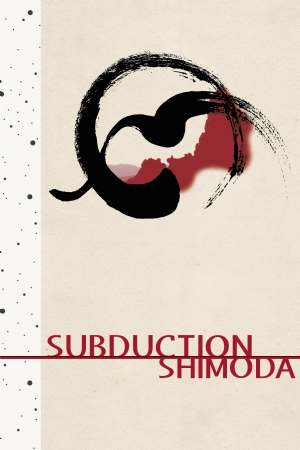 Angelenos, you can catch me live-interviewing Todd Shimoda, author of Japanese- and Japanese-Amercan-themed “philosophical mysteries,” at Diesel, A Bookstore in Brentwood this Thursday, May 31st. You may remember my first interview with Todd on The Marketplace of Ideas, when I talked to him about reading Kobo Abe, integrating art with text, and writing his novel Oh!: Mystery of Mono no Aware. The Diesel event will launch his new, equally philosophical, mysterious, and visual book, Subduction.
Diesel’s blurb for the party:
Diesel, A Bookstore in Brentwood welcomes acclaimed author-artist couple Todd and Linda Shimoda to the store to celebrate the publication of their new book, Subduction, on Thursday, May 31st at 7pm. Colin Marshall, host and producer of the podcast Notebook on Cities and Culture, will join Todd and Linda for an informal Q&A and discussion.
Subduction is a seductive mystery set on a tiny, earthquake-plagued island. Endo, a young physician unjustly charged with a patient’s death, is banished to the island to care for the few remaining elderly residents. After a mysterious death, he discovers why the islanders don’t wish to leave: years ago, jealousies, lust, and violence ripped apart their lives, and the wounds haven’t healed. Exquisitely designed with L.J.C. Shimoda’s artwork throughout, Subduction also features a sixteen-page illustrated retelling of the myth of Kashima, the god who controls a giant, thrashing catfish that causes earthquakes.
“Sake, snacks, and art too,” says Todd. Come one, come all.

Vital stats:
Format: sound-oriented radio fictions
Episode duration: 9-18m
Frequency: 2-3 per month
“I thought there would be a revival of fiction and theater on the radio,” says science-fiction author Terry Bisson, “and I’ve been very disappointed that it hasn’t, kind of, worked out that way.” You and me both, brother. I say this as someone who, in childhood, obsessively collected bootleg tapes of old-time radio shows like Amos & Andy and X Minus One and had the newer, more internationalist productions of the ZBS Foundation playing on infinite loop. I dreamed of re-introducing “movies for your mind,” in the words of one radio-drama survivor whose tapings I attended as a kid, to the dead airwaves of my benighted time. Bisson made his lament to producer Jonathan Mitchell on an episode of Mitchell’s podcast The Truth [RSS] [iTunes] which adapts Bisson’s story “They’re Made Out of Meat” [MP3]. I bet Mitchell went through similar youthful befuddlement, wondering what made all those cool old shows go away and hoping — knowing, in some quasi-messianic sense — that they would return. It hasn’t, kind of, worked out that way.
What to blame? Maybe the increasingly utilitarian slant of modern American radio, which either feeds listeners’ anxiety over not having the latest news and information or numbs them completely with three-minute shots of anesthetic familiarity. But I get the sense that, deep in the minds of even dedicated tuners-in, radio just isn’t for fiction. They may express great admiration for the idea of new radio drama, and they may even bemoan the past 50 years’ lack of it, but they’ll keep turning the dial if they suspect what they’re hearing isn’t true. I doubt they do it for strictly gray-flannel-suit reasons; they probably just fear that they can’t keep up with a fictional narrative on the radio, or that they’ve already missed some plot point critical to understanding what happens next, or that they’ll get where they’re going before the big twist ending when everything falls into place. Or they just assume the story won’t give them much to talk about at the water cooler.
Read the whole thing at Maximum Fun.
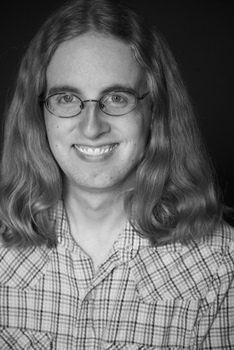 Colin Marshall sits down in Barnsdall Art Park with Hollywood Steve Huey, writer and media personality, former critic at All Music Guide and host of the web series Yacht Rock. They discuss his introductions to the likes of Michael Jackson, Yngwie Malmsteen, and Barry Manilow; elements of his home state of Michigan, including Big Rapids (not to be confused with Grand Rapids), Ann Arbor, and the urban ruins and $5,000 mansions of Detroit; the All Music Guide’s shaping force on his musical consciousness; the lack of a genre equivalent to Yacht Rock today thanks to marketing departments’ lack of imagination; great works, like Nirvana’s Nevermind, that both found genres and dissolve them; life in the music nerd ghetto within the entertainment capital of the world at the time of bewildering musical (and cinematic and televisual) bounty; acquiring the name “Hollywood Steve” through a one-off gig on Pirates of the Caribbean; how he came to appreciate Barry Manilow, an artist known to some as a byword for bad music; and why guilty pleasures — whether musical ones in the case of Barry Manilow, or urban ones in the case of Los Angeles — are better enjoyed as regular pleasures.
Download the interview from Notebook on Cities and Culture’s feed here or on iTunes here.
(Photo: Sammy Primero)