 Notebook on Cities and Culture‘s Korea Tour is brought to you by Daniel Murphy, David Hayes, and The Polar Intertia Journal, an outlet for artists and researchers documenting the urban condition.
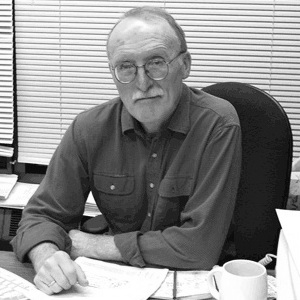
Near the University of Seoul, Colin talks with Bruce Fulton, Young-Bin Min Chair in Korean Literature and Literary Translation in the Department of Asian Studies, University of British Columbia and, with his wife Ju-chan Fulton, half of an acclaimed Korean literary translation team. They discuss when Korean writers get too good at reflecting their own society; his first experience with Korea in the Peace Corps in 1978; his window past the military culture onto the rest of the culture; what he gained by his host family’s running a restaurant; how the divide between city and countryside has changed since first he observed it from North Jeolla; when Korea’s literature entered his life; how quickly world-class Korean stories started appearing in publication in the 20th century; why authors have had to “check in” with traditional subjects; the extent to which the Peace Corps expected him to learn Korean; why Koreans study english, and why that reason doesn’t help them learn English; where you can still spot neo-Confucian tradition in Korean literature; what it means for a writer to “take the stage,” and the contests they have to win to do it; what makes a writer like Kim Young-ha an anomaly; how much of a Korean connection Seattle and Vancouver have; the increasing number of non-Koreans he sees in his classes at UBC; whether and how Korean food has come up alongside Korean literature, and how their richness may have made them difficult; the iceberg whose tip current K-pop culture represents; the changes he notices between the Seoul he first saw and the one he sees today (and the things he notices haven’t changed); whether Korean literature can help one understand Korea today; and which parts of Korean life Korean literature still captures well today.
Download the interview here as an MP3 or on iTunes.
Saturday, January 31, 2015
Los Angeles noirs don’t come much noirer than Kiss Me Deadly, Robert Aldrich’s adaptation of a Mickey Spillane bestseller that transplants the story from New York and boils it even harder by turning its private detective protagonist Mike Hammer into a sociopath as thuggish as the criminals around him. An ill-considered pickup of a hitchhiker on a lonely road outside of town turns into the pursuit of a nuclear threat in a briefcase, a story that puts the zeitgeist of the mid-1950s in a blender and sends Hammer all up and down Los Angeles, from the low city to the high, from Bunker Hill to Beverly Hills.
The video essays of “Los Angeles, the City in Cinema” examine the variety of Los Angeleses revealed in the films set there, both those new and old, mainstream and obscure, respectable and schlocky, appealing and unappealing — just like the city itself.
Tuesday, January 27, 2015
 Notebook on Cities and Culture‘s Korea Tour is brought to you by Daniel Murphy, David Hayes, and The Polar Intertia Journal, an outlet for artists and researchers documenting the urban condition.
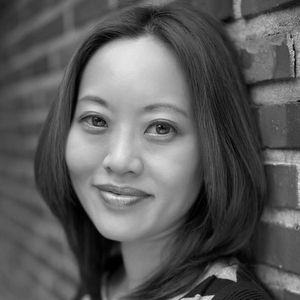
In Seoul’s Seodaemun-gu, Colin talks with Krys Lee, author of the story collection Drifting House. They discuss the impression of Korean life as a living hell; the way she prefers to mix the light and the dark; the “obsession with violence” that led her to write about a woman who longs to be beaten; “Koreanness” as Drifting House‘s accidental unifier; what brought her to identify with “the outsider”; her suspicions of “socialization in general”; why she thinks about what it would be like if one person simply told another, “I wish I were a raccoon”; whether one can keep a foot in reality and a foot “somewhere else” through solitude; the surprising presence in Korea of “ideas, strangeness,” “girls who wear dog collars,” and at least one person with a pet squirrel; her problem with genre boundaries; what makes her focus on “individuals both of and not of their culture”; her own pathway from Korea, then around the world and back to Korea again; the importance, in her time in the United Kingdom, of meeting not just other Koreans but artists; how she came to write about Korea’s IMF period, one instance of her writing “driven by anger”; education as, at least theoretically, Korea’s “grand equalizer”; why some Korean families who go to America pretend they aren’t in America, and what Korean disasters observed from afar might make them feel; how she thinks about “getting it right” with North Korean characters; what surprises Koreans who leave and come back; the condition of the stranger in Korean culture; why some readers thought Drifting House must have had a “really good translator”; and whether a writer can use the western fascination with North Korea to pull them deeper into a real story, one that tells the “grayness.”
Download the interview here as an MP3 or on iTunes.
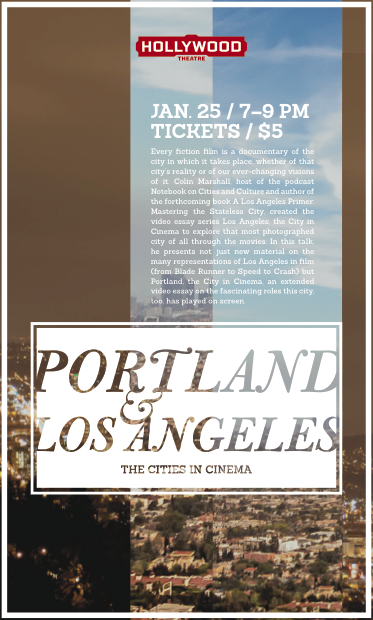
One night only, Portlanders! Tonight at 7:00 at the Hollywood Theatre, I’ll give my talk and screening “Portland and Los Angeles: The Cities in Cinema“, a look at how movies — respectable ones and schlockfests, Hollywood blockbusters and indie favorites, visions of the future and the past — reveal both the City of Angels and the City of Roses. It’ll involve never-before-seen “The City in Cinema” video essays as well as the world premiere of the long-form “Portland: The City in Cinema”.
Reliable sources have also informed me that Q&As at the Hollywood usually extend to the dive bar across the street afterward, so rest assured that beers will be imbibed.
You can get tickets and more details here.
 Notebook on Cities and Culture‘s Korea Tour is brought to you by Daniel Murphy, David Hayes, and The Polar Intertia Journal, an outlet for artists and researchers documenting the urban condition.
In Seoul’s Yangjae station, Colin talks with Barry Welsh, host of the Seoul Book & Culture Club and Seoul Film Society as well as professor at Sookmyung Women’s University. They discuss what Koreans know about the Isle of Man, the last place he lived; how he founded his now well-known book club; his literary encounters with the concept of han; how Kim Young-ha’s I Have the Right to Destroy Myself introduced him to the real Seoul; how little time people have to waste in Korea versus how much they have on the Isle of Man; how his life in various parts of the British Isles prepared him for the kind of regional differences important in Korea; whether he endorses the view of Koreans as “the Irish of Asia”; what got him out of his homeland in the first place; the rich mundanity he experienced when he first came to Seoul; who turns up when the Book Club talks about North Korea; how Korean movies, especially older ones by auteurs of previous generations, have helped him get a grip on things in the country; howe he learned to interview writers; the first things he noticed about Seoul, such as the number of shops still open at 10:00 at night (and how that differs from his hometown of Auchterarder); with what authority he can speak on the matter of where “Scottish people eat spicy food”; how Koreans talk about “our country,” but Scots don’t; the stylistic difference in questions about books asked by Korean readers versus foreign readers; the feeling of safety of Seoul versus the ambient threat of Glasglow; the commonalities between “Cool Britannia” and the “Korean Wave”; his non-fandom of haggis; his perspective on the issue of Scottish independence from all the way over in Korea; the advantages of book club operation as a foreigner; and his impressions of the Korean generation represented by his students.
Download the interview here as an MP3 or on iTunes.
Tuesday, January 20, 2015
 Notebook on Cities and Culture‘s Korea Tour is brought to you by Daniel Murphy, David Hayes, and The Polar Intertia Journal, an outlet for artists and researchers documenting the urban condition.
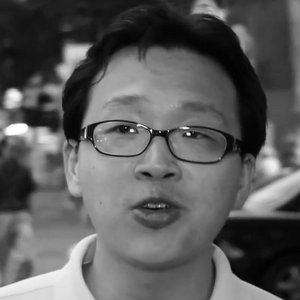
Right across the street from Seoul’s Insadong district, Colin talks with Daniel Gray, creator of the site Seoul Eats, proprietor of craft beer restaurants Brew 3.14π and Brew 3.15π, and for four years a partner at O’ngo Food Communications. They discuss his weariness of the term “Seoul food”; what part of Korean culture happens around the table; what goes into “Daniel Gray’s Ultimate Food Tour”; the pre-existing perceptions food tourists bring about Korean cuisine; the two senses in which Koreans “eat everything together”; why Koreans ask not if foreigners want to eat Korean food, but if they can; how he grew up adopted in Delaware and decided to explore Korea only after college; his first encounter with Korea in adulthood, attempting to find breakfast in Gyeongju; whether any remnants of the Korean language remained in his mind from the first five years of his life; how he got started writing not about food, but about his experience seeking out his biological mother; the meals that made him realize he loved Korean food; the dishes that took him the most getting used to, especially Korea’s “nostalgic foods” from the 1960s and 70s; the way Koreans use American cheese; the sugar on Korean garlic bread; the importance of balancing all the flavors; whether the average Korean has a higher awareness of food than the average Westerner; what happened to a pizzeria in Korea when it didn’t serve pickles; what makes Brew 3.14π’s pizza different; what a Korean gets when they want American food; why you can’t badly criticize a restaurant in the Korean media, and how that made Seoul Eats a refreshing read; the difference in attitude toward (and ease of) opening one’s own restaurant in Korea and America; how restaurants show their generosity with their side dishes; the foreigner’s search for “real Korean flavor” and “authenticity” in general; where to go first to get a handle on eating in Seoul; why Korean food hasn’t taken off in the wider world to the extent that, for example, Japanese food has, and what that might have to do with its lack of a unifying idea; the international barriers to entry of 떡볶이; the food experiences without which you cannot understand Korean food; what he learns about international Korean food from the stream of food tourists he’s met; and how he introduced his American parents to Korean food.
Download the interview here as an MP3 or on iTunes.
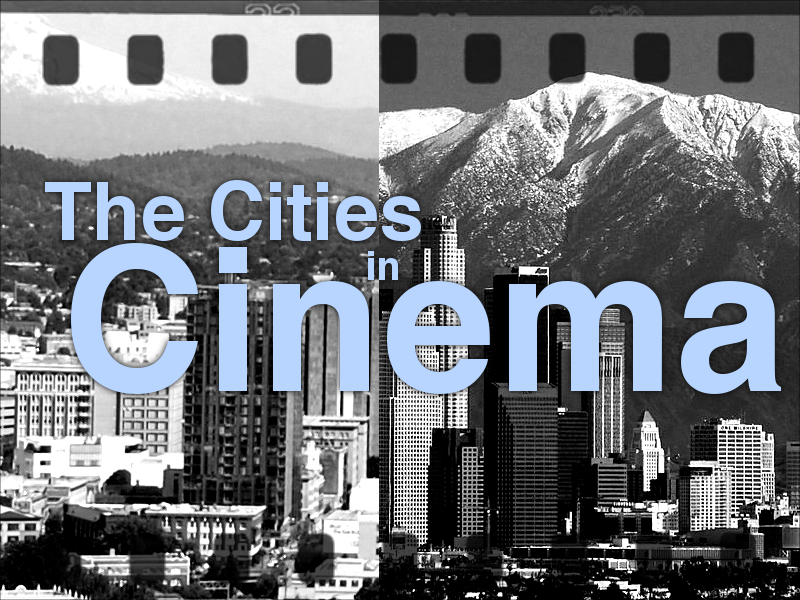
This Sunday, January 25, at 7:00 p.m., my live talk and screening happens at Portland, Oregon’s Hollywood Theatre. I’ll show both never-before-seen video essays from “Los Angeles, the City in Cinema” and present to you the world premiere of “Portland, the City in Cinema”, a new, long-form video essay on the roles the City of Roses has played in the modern urban films shot there, from well-known Portland-based director Gus Van Sant’s gritty stories of youth like Mala Noche, My Own Private Idaho, and Paranoid Park to major motion pictures of the mid-1990s like Zero Effect and Mr. Holland’s Opus to more recent, more contemplative indies like Old Joy and Some Days Are Better Than Others.
You can get your tickets (quantities are limited!) here. Much beer-drinking will surely occur afterward. And if you know any Portland urbanist-cinephiles whom this may interest please don’t hesitate to spread the word.
Saturday, January 17, 2015
 Notebook on Cities and Culture‘s Korea Tour is brought to you by Daniel Murphy, David Hayes, and The Polar Intertia Journal, an outlet for artists and researchers documenting the urban condition.
In Seoul’s Itaewon district, Colin talks with Alex Jensen, host of weekday news show This Morning on TBS eFM. They discuss whether he envisions who he’s talking to when he’s talking on-air; what first strikes him about the Tube whenever he goes back to London; when he very first took to the airwaves; how much he knew about the existence of English broadcasting in Korean when he headed there in pursuit of the probable love of his life; how he developed his professional broadcasting life in Korea through “friends of friends”; what put him off music radio, and “the full breadth of life” offered by current-events radio; his grasp of the “raw emotions” of Korean, and how they came into play when he reported the sinking of the Sewol (and how it compared to his newsroom experience during the London bombings of 2005); his preference of fairness over neutrality; how the movies introduced him to the depth of Korean sentiment; why Seoul doesn’t confront you with packs of drunken fifteen-year-olds on the way home; what Korean freedom consists of today; whether he, too, has a “Korean dream”; his very first impressions of Seoul, and how he sought out similarities to London while receiving them; the utmost importance of simply getting to know people; how much an English-speaking job impedes the learning of Korean; why Korea has so much English radio in the first place; the culture that develops in major media not in a country’s dominant language; the questions he can ask that a Korean might hesitate to; the sensationalism over North Korea in foreign media versus the shrugging in South Korea; how different Itaewon, where he lives, feels from the rest of Korea; where he sees the emergence of a more international Korea; where to find the best British food in Seoul; and how having a long, large-scale media conversation with Korean society has helped him integrate into it.
Download the interview here as an MP3 or on iTunes.
On January 25, 2015 Colin and “The City in Cinema” come live to Portland, Oregon’s Hollywood Theatre – for details and tickets, visit hollywoodtheatre.org
In the mid-1990s, Takeshi Kitano, who made his name in Japan as a television comedian, broke into the west as an auteur. Did it with Sonatine, a tale of a Tokyo yakuza exiled on remote Okinawa, by turns violent and lighthearted, tense and languorous. By the end of that decade, he had the chance to crack America with Brother, which follows a similar operator forced out to Los Angeles. As he uncomprehendingly roams the city in search of his drug-dealer half-brother, he develops a death with that only all-out war with the city’s other gangs can satiate, resulting in what Kitano calls a Pearl Harbor-paralleling “film about going to America to die.”
The video essays of “Los Angeles, the City in Cinema” examine the variety of Los Angeleses revealed in the films set there, both those new and old, mainstream and obscure, respectable and schlocky, appealing and unappealing — just like the city itself.
Wednesday, January 14, 2015
 Notebook on Cities and Culture‘s Korea Tour is brought to you by Daniel Murphy, David Hayes, and The Polar Intertia Journal, an outlet for artists and researchers documenting the urban condition.
In Seoul’s Haebangchon district, Colin Marshall talks with Charles Montgomery, professor in the English Interpretation and Translation Division of Dongguk University, editor of the site KTlit.com, and global ambassador of Korean literature in translation. They discuss the first Korean books that excited him; the mistakes he made in choosing his first works of Korean literature to read; the significance of bestseller authors Kim Young-ha and Shin Kyoung-sook; the impossibility of getting around the literary prize system, and how that suppresses genre; how the substantial literature of the Korean War compares to what literature America has of its own Civil War; how his Korean best friend influenced the course of his professional life; why he burnt out as a marketing director and how it led him to Korea; the intense nature of Korean emotional bonds (and the intensity of their absence); why you have to treat everyone in the United States as a “potential shooter”; what happens when you read Korean literature with an understanding of the culture; whether Americans can ever internalize the Korean sense of obligation to society; how much Korean literature makes it into English; the idea that, to write for foreigners, a Korean writer somehow becomes less Korean; the popularity of Haruki Murakami in Korean translation; how he got “inside the elbow”; America and Korea as cultural antidotes to one another; why cities back in the U.S. seem to lag so far behind those of Korea; how one translated bestseller “drags” the rest of its country’s literature behind it; how Dalkey Archive handled Korean literature; the Korean preference for short stories and novellas over full-length novels; the insights into Korean society that literature still gives him; why Korean characters seem to lack agency; what Western literature he likes; which Korean writers have a tantalizing amount of work still untranslated; why Koreans have considered so many elements of their culture unknowable to foreigners; the exalted status of the 작가님; the signs that will let us know Korean literature has made it; and what stands a chance of becoming Korea’s geisha, chrysanthemum, sword, sushi, and Shinjuku.
Download the interview here as an MP3 or on iTunes.

