Sunday, February 15, 2015
 Notebook on Cities and Culture‘s Korea Tour is brought to you by Daniel Murphy, David Hayes, and The Polar Intertia Journal, an outlet for artists and researchers documenting the urban condition.
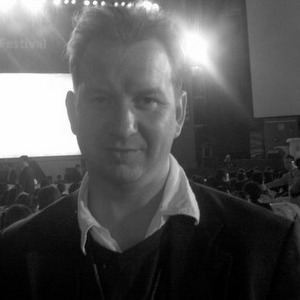
Near Busan’s Kyungsung University, Colin talks with Jeff Liebsch, managing editor and partner at the magazine Busan Haps. They discuss what makes Korean baseball games more fun than baseball games in the West; the Toronto-Detroit sports divide in his hometown of Windsor; why a disproportionate number of the Westerners in Korea seem to have come from Canada; the difficulty of understanding Busan, and of leaving it; the traces of “country people” Busan’s population has retained, even as it has supposedly turned international; the funniest Korean-film subtitle he’s ever seen; how he learned to speak Korean without studying; how Busan Haps got started, and how he got involved; some of the strategies the magazine has used to attain prominence in the English-language media in Korea and abroad; how he observes people he spots reading the magazine; the importance of “beautiful pictures of food” to their Korean readership; the changing coffee situation in Busan, and what else has evolved since he arrived; the time when bars closed at midnight, and what it illustrated about how Koreans find away to get around everything; the mystery of how Busan once had seven beaches and no outdoor seating anywhere; what happens in Korean when someone gets a good idea for a business; the changes he now observes in the Korean beer scene (in all settings but the baseball stadium); Korean sports teams’ ties to corporations, not cities; the reputation of the Lotte fan; his experience in Korea during the 2002 World Cup, when he first saw the Koreans “let loose”; how he felt during the “IMF” economic crisis, and what he thought when he saw Koreans turn in their own personal gold to save the country’s economy; the Korean sense of collectivism versus the Western sense of collectivism; why Psyworld couldn’t go international, and what its problems represent to him about Korea’s “lack of a global vision” in some respects; what happens during the Busan International Film Festival, his favorite time of the year; the push to transform Busan into Korea’s film center; the film events that go on in Busan even apart from the BIFF; the way people living in Busan tend to stick to ten percent of the city, and visitors tend not to see the “real” parts of it; how he makes sure to get the feeling of “actually being in a different country”; his experience working in Detroit, and whether it felt like a city with a future or a city without one; how he pronounces “process”; and what he likes about observing North America from a distance.
Download the interview here as an MP3 or on iTunes.
Wednesday, February 11, 2015
 Notebook on Cities and Culture‘s Korea Tour is brought to you by Daniel Murphy, David Hayes, and The Polar Intertia Journal, an outlet for artists and researchers documenting the urban condition.
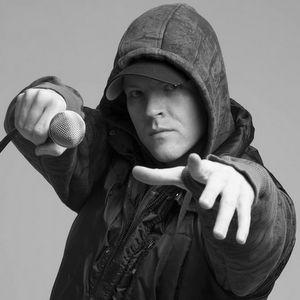
Colin sits down at Busan’s eFM with broadcaster, teacher, rapper, and television star Chad Kirton, also known as Fusion. They discuss whether the setting gets him into Korean or English mode; how he came up with his show segment “Don’t Trust the Dictionary”; what a “bunnyhug” is; how the Korean desire for perfection affects their acquisition of foreign languages; the danger of agreeing in Korean when you have no idea what people are saying; what he seeks out in Busan when he goes on television; what powers burnt eel can supposedly give you; why many Koreans seem to forget Busan exists; the perpetually educational nature of Korean media; how he travels for hardworking Koreans live vicariously through television; what constitutes his 16-hour workday; when he first came to Korea, studying tae kwon do in Pohang; how Korea sometimes brings out in the Westerner the desires they might not have let out at home; how bilingual broadcasting became his speciality, beginning with the English-learning show for which he phonetically memorized his Korean lines; his first night as The Midnight Rider; how his version of “Winner, Winner, Chicken Dinner” works; the diversity of age he’s discovered among his listenership; how he began rapping — in Korea, freestyle, on the air; how he keeps learning Korean when many long-term expatriates plateau; his first home in Korea, with frozen pipes and above a river of raw sewage; the way that Koreans seem able to feel each other’s feelings; what it meant to him when he first experienced Busan’s T.G.I. Friday’s; what counts as Canadian food; how he answers questions about how Canadians do things; what he tells people who want to come to Korea and teach English; how you still have to start at the bottom in Korea, but why the bottom isn’t so bad; the need to understand how to “think like a Korean”; his encounter with Koreans who lived in, of all places, Medicine Hat; how much time to spend in a foreign country to really internalize the culture; the similarities and differences between his radio, television, rapping, and teaching personalities; and the difficulty of avoiding all forbidden words (in both the English and Korean “swearing Rolodex”) while freestyling on the radio.
Download the interview here as an MP3 or on iTunes.
Tuesday, February 10, 2015

On the latest Los Angeles Review of Books podcast, I talk with Scott Timberg, editor of The Misread City: New Literary Los Angeles and author of Culture Crash: The Killing of the Creative Class, an examination of the damages to our cultural landscape wrought by recent technological and economic shifts and an argument for a more equitable and navigable future.
You can stream the conversation just above, listen to it on the LARB’s site, or download it on iTunes.

The Las Vegas Strip isn’t in Las Vegas. You’ve got to understand that before you can understand anything else about this glittering, 4.2-mile stretch of Las Vegas Boulevard described by William L Fox as “the most aggressively branded and promoted concatenation of adult theme parks in the world”. It is also among the most visited places on Earth, having surpassed Mecca back in 1999.
The Strip was created in Paradise, an idyllically named township of Nevada’s Clark County formed by hotel builders who had already built strategically outside city limits as a means of minimising taxes, dodging regulations and avoiding utility disputes with the city proper. Since Paradise’s founding in 1950, the unabashedly capitalistic and hedonistic Strip has seen an astonishing buildup, especially during its two most notable boom times: the mob-run 1960s and the corporatised 1990s.
But what kind of an urban experience has resulted? To a first-time visitor (myself included), the Strip can look and feel like the concretisation of unplanned chaos – with its waves of pulsing lights and scrolling video screens; its “riot” of clashing, garish architectural styles; the wide central river of frequently gridlocked traffic; and the swarms of tourists, all dressed with aggressive casualness and milling blindly every which way. But does it make any sense at all to apply the term “urban planning” to the Strip? Or is this simply what happens when money dictates every aspect of a built environment?
Read the whole thing at The Guardian.
Notebook on Cities and Culture‘s Korea Tour is brought to you by Daniel Murphy, David Hayes, and The Polar Intertia Journal, an outlet for artists and researchers documenting the urban condition.
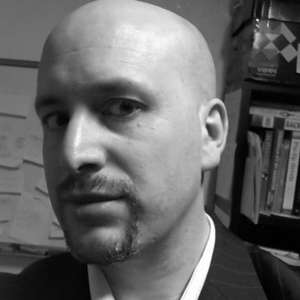
In Busan’s Daeyeon-dong, Colin talks with James Turnbull, author of The Grand Narrative, a blog on Korean feminism, sexuality, and popular culture. They discuss what Westerners find so unappealing about Korean plastic surgery; the associations of the “double eyelids” so often surgically created; why he used to believe that Koreans “want to look white”; the meaning of such mystifying terms as “V-line,” “S-line,” and “small face”; the uncommon seriousness about the Western-invented concept of the “thigh gap”; how corn tea became publicly associated with the shape of the drinker’s jaw; Korea’s status as the only OECD country with young women getting thinner, not fatter; Korean advertising culture and the extent of its involvement with the “minefield” of Korean irony; the prominence of celebrities in Korean ads, and why the advertisers don’t like it; how long it takes to get tired of the pop industry’s increasingly provocative “sexy concepts”; the result of Korea’s lack of Western-style reality television; how making-of documentaries about 15-second commercials make the viewers feel closer to the celebrities acting in them; why he doesn’t want his daughters internalizing the Korean sense of hierarchy; why an expat hates Korea one day and loves it the next; how much homework his daughters do versus how much homework he did; the true role of private academies in Korea, and what he learned when he taught at one himself; the issues with English education in Korea and the oft-heard calls for its reform; the parallels between English test scores and cosmetic surgery procedures; the incomprehension that greets students of the Korean language introduced to the concept of “pretending to be pretty”; and how to describe the way Korean superficiality differs from the Western variety.
Download the interview here as an MP3 or on iTunes.
Thursday, February 5, 2015
 Notebook on Cities and Culture‘s Korea Tour is brought to you by Daniel Murphy, David Hayes, and The Polar Intertia Journal, an outlet for artists and researchers documenting the urban condition.
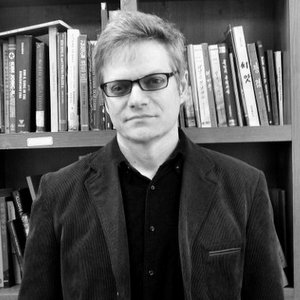
At Busan’s Dongseo University, Colin talks with North Korea analyst Brian Reynolds Myers, author of such books as A Reader’s Manifesto and The Cleanest Race: How North Koreans See Themselves and Why It Matters. They discuss why South Koreans don’t care about the Sword of Damocles that is North Korea; how Korea’s capital-centricity looks from relatively far-flung Busan; why Koreans from outside Seoul seem to lack “local patriotism”; why Busan feels, to him, more like an “aggregation of apartment buildings than a community,” but nevertheless like home; the benefits he enjoys of his outsider status in Korean society; the intellectual questions he can ask about Korea that a Korean couldn’t; what makes the Koreans as an “ahistoric people,” like the Greeks and unlike the Egyptians (and more Confucian societies); why he thinks Koreans should learn Indonesian, and why they refuse to; the difference between what Koreans tell themselves and what they tell the world; why so many fewer expatriates in Korea learn the language than in Japan or China, and what makes it so hard; how he got his Soviet Studies degree just before the Berlin Wall came down; what the reunification of Germany has to teach us about the reunification of Korea; how he became well-known among arch-conservatives for a piece on Korea’s lack of “state spirit”; why he got his higher degrees in Germany, where they didn’t make him go to classes; his arrival in Korea in the time of 9/11, and what took the most mental readjustment from then on; his trial by fire of lecturing at length about North Korea, in Korean; what South Koreans seem to think America is, and why it still attracts them; what it means to “behave like an American” in Korea; the “expiration period” on a foreigner’s respectability; what he has come to value about Korean “flexibility”; the free-floating aggression he dislikes about America but doesn’t sense in Korea; how he sees the literary pretension situation as having changed in the years since A Reader’s Manifesto (and since e-books have taken off); why he hasn’t fully engaged with Korean literature and cinema; and one of the highlights of his time in Busan, meeting Isabelle Huppert on the street; and whether he sees more differences or similarities emerging between North and South Korea in recent years.
Download the interview here as an MP3 or on iTunes.
Tuesday, February 3, 2015
… and you can find all the posts I put up — whose subjects have thus far included 1980s Japanese pop-funk, Jackie Chan’s Hong Kong, the BBC view of Los Angeles, the Korean Film Archive, Douglas Coupland, Yasujirō Ozu, Jonathan Gold, doomsday in Portland, and Gentlemen Broncos — here.
(If you’re into Boing Boing, consider also having a listen to my Notebook on Cities and Culture conversation with one of its founders, Mark Frauenfelder.)
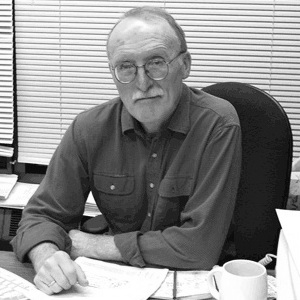 Notebook on Cities and Culture‘s Korea Tour is brought to you by Daniel Murphy, David Hayes, and The Polar Intertia Journal, an outlet for artists and researchers documenting the urban condition.
Near the University of Seoul, Colin talks with Bruce Fulton, Young-Bin Min Chair in Korean Literature and Literary Translation in the Department of Asian Studies, University of British Columbia and, with his wife Ju-chan Fulton, half of an acclaimed Korean literary translation team. They discuss when Korean writers get too good at reflecting their own society; his first experience with Korea in the Peace Corps in 1978; his window past the military culture onto the rest of the culture; what he gained by his host family’s running a restaurant; how the divide between city and countryside has changed since first he observed it from North Jeolla; when Korea’s literature entered his life; how quickly world-class Korean stories started appearing in publication in the 20th century; why authors have had to “check in” with traditional subjects; the extent to which the Peace Corps expected him to learn Korean; why Koreans study english, and why that reason doesn’t help them learn English; where you can still spot neo-Confucian tradition in Korean literature; what it means for a writer to “take the stage,” and the contests they have to win to do it; what makes a writer like Kim Young-ha an anomaly; how much of a Korean connection Seattle and Vancouver have; the increasing number of non-Koreans he sees in his classes at UBC; whether and how Korean food has come up alongside Korean literature, and how their richness may have made them difficult; the iceberg whose tip current K-pop culture represents; the changes he notices between the Seoul he first saw and the one he sees today (and the things he notices haven’t changed); whether Korean literature can help one understand Korea today; and which parts of Korean life Korean literature still captures well today.
Download the interview here as an MP3 or on iTunes.
Saturday, January 31, 2015
Los Angeles noirs don’t come much noirer than Kiss Me Deadly, Robert Aldrich’s adaptation of a Mickey Spillane bestseller that transplants the story from New York and boils it even harder by turning its private detective protagonist Mike Hammer into a sociopath as thuggish as the criminals around him. An ill-considered pickup of a hitchhiker on a lonely road outside of town turns into the pursuit of a nuclear threat in a briefcase, a story that puts the zeitgeist of the mid-1950s in a blender and sends Hammer all up and down Los Angeles, from the low city to the high, from Bunker Hill to Beverly Hills.
The video essays of “Los Angeles, the City in Cinema” examine the variety of Los Angeleses revealed in the films set there, both those new and old, mainstream and obscure, respectable and schlocky, appealing and unappealing — just like the city itself.
Tuesday, January 27, 2015
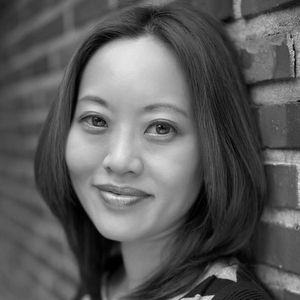 Notebook on Cities and Culture‘s Korea Tour is brought to you by Daniel Murphy, David Hayes, and The Polar Intertia Journal, an outlet for artists and researchers documenting the urban condition.
In Seoul’s Seodaemun-gu, Colin talks with Krys Lee, author of the story collection Drifting House. They discuss the impression of Korean life as a living hell; the way she prefers to mix the light and the dark; the “obsession with violence” that led her to write about a woman who longs to be beaten; “Koreanness” as Drifting House‘s accidental unifier; what brought her to identify with “the outsider”; her suspicions of “socialization in general”; why she thinks about what it would be like if one person simply told another, “I wish I were a raccoon”; whether one can keep a foot in reality and a foot “somewhere else” through solitude; the surprising presence in Korea of “ideas, strangeness,” “girls who wear dog collars,” and at least one person with a pet squirrel; her problem with genre boundaries; what makes her focus on “individuals both of and not of their culture”; her own pathway from Korea, then around the world and back to Korea again; the importance, in her time in the United Kingdom, of meeting not just other Koreans but artists; how she came to write about Korea’s IMF period, one instance of her writing “driven by anger”; education as, at least theoretically, Korea’s “grand equalizer”; why some Korean families who go to America pretend they aren’t in America, and what Korean disasters observed from afar might make them feel; how she thinks about “getting it right” with North Korean characters; what surprises Koreans who leave and come back; the condition of the stranger in Korean culture; why some readers thought Drifting House must have had a “really good translator”; and whether a writer can use the western fascination with North Korea to pull them deeper into a real story, one that tells the “grayness.”
Download the interview here as an MP3 or on iTunes.