Skip to content

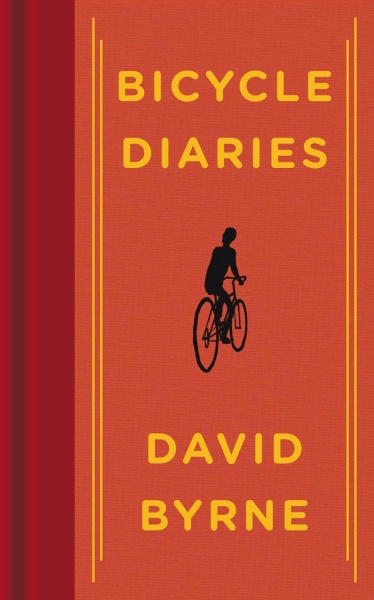
David Byrne: Bicycle Diaries

Sometimes you run across books that happen to ring a whole row of your intellectual cherries. I’ve actually had Bicycle Diaries on my shelf for a couple years, slowly fueling the fire of my readerly anticipation all the while. When my interests came into unprecedentedly close alignment with the book’s own, I couldn’t resist de-prioritizing all other projects and pulling it down.

The book resonates strongly with, off the top of my head, at least ten of my current enthusiasms:

  • Cycling as transportation
  • Cities and their structures
  • The effects of mixed human interaction on creative output and vice versa
  • Internationalism and foreign travel
  • Experimental music
  • Unconventional uses of irony
  • The nature of normality
  • Late-seventies/early-eighties alternative pop culture, especially when partially U.K.-derived (as Byrne is)
  • Diarism
  • Meditative practices that aren’t actual meditation

Byrne took up cycling back in the early eighties, a time when it got him strange looks. He observes that, on a bike, “your unconscious is free to kind of mull over what it is you’ve got to deal with that day or whatever creative stuff you’re working on. Sometimes the problems get a little closer to being solved by the time you get to where you’re going.” He even blocks out time on trips for bike-based “random wandering,” which “clears the head of worries and the concerns that might be lurking, and sometimes it’s even inspiring.”

These writings on cycling (and every subject the mind of David Byrne can connect to cycling) reveal that he uses his bike not just for meditative practice, but as a means of transport and a delivery system for urban aesthetic experiences. He mentions several times the joy of gliding around a city on two wheels, gazing out from a perspective above a pedestrian’s and above most drivers’ as well. Observations made prom this perspective provide jumping-off points for chapters on such variously bikeable cities as Berlin, Istanbul, Buenos Aires, Manila, Sydney, London, and New York. (Disappointingly, he makes mention of neither Los Angeles nor Mexico City, except in passing references to their non-density.)

Byrne’s love of cycling purely as a means of transit might not sound notable, unless you, like me, have looked around the street and noticed that almost every other rider looks like a crypto-competitor, dramatically bent over and partially kitted out with toe clips, wraparound shades, and maybe specialized pants. I found some measure of validation for my habit of dressing normally on my bike when I read that Byrne does it too (“You don’t really need the spandex”), thought I wonder how far “But David Byrne does it!” will take me as a life strategy. (Pretty far, I bet.)

Noting down how well each city he visits accommodates his cycling and what he thinks they could do better, Byrne takes a bike advocate’s position, certainly, but an advocate of bikes as almost another form of public transportation. This idea doesn’t strike me as especially far out; I use my bike effectively as an extension of the L.A. Metro (because there’s almost always room to take your bike onboard), and I noticed that the bikes of Mexico City’s Ecobici rental system (for D.F. residents only, unfortunately, but very similar to some of the schemes Byrne tries out in his travels) bear the words “Sistema de Transporte Individual,” echoing the subway’s “Sistema de Transporte Colectivo.”

This means he reserves special praise for towns full of carefully thought-out bike lanes, like Copenhagen has. I’ve been happy with L.A.’s bikeability — I find it even easier to get around that way here than I did in Santa Barbara or Seattle — but I do have to devote a chunk of my mental bandwith to getting around or through the next unusual or unpredictable obstacle. I oscillate between the road and the sidewalks (legal to ride on here), take unusual positions within lanes, and use routes that look wonky mapped out. Rarely without a helmet, I take a certain pleasure in this hint of extreme sportiness — as does Byrne — but the image of all those freely biking, utterly unprotected Copenhageners, toddling and septuagenarian alike, gives me pause.

In L.A., such a caliber of bike lane remains, uh, eventually forthcoming, but I choose to deal with the inconveniences and ride this city for the same reasons Byrne rides his hometown of New York and and well beyond, especially the ones to do with experiencing the urban fabric more directly. The natural exposure and flexibility of cycling, so Byrne argues in a way that persuades me well enough, offer the higest-bandwidth connection. But he’s got thoughts on the fabric itself as well.

Many of these thoughts have to do with diversity — financial, racial, aesthetic, industrial, artistic — and the liveliness it generates, the sort of liveliness that presumably did its part to forge Byrne’s creative persona decades ago. “A neighborhood that has many kinds of people and businesses in it is usually a good place to live,” he writes. “If there were some legislation that ensured that a mixed-use and mixed-income neighborhood would emerge when developers move in, it would be wise, because those are the liveliest and healthiest kinds of communities. [ … ] Creativity gets a boost when people rub shoulders, when they collide in bars and cafes and have an tentative sense of community. [ … ] Creativity will be extinguished in New York if random and frequent social contact is eliminated.”

I’ve left my own jury out on the matter of whether legislation is the way to accomplish this, since I get nervous about any solution that premised upon giving politicians and bureaucrats more power. Sure, maybe you’ve got a far-sighted, forward-thinking visionary in office now, but what about the guy who succeeds him? But for all its much-discussed fragmentation, L.A. certainly seems to have more and more neighborhoods moving in just this direction.  I feel excited to see how that changes the sort of culture this city generates over the next decade or so, especially if I can observe it, as much as possible, from a vantage point that isn’t the inside of a car. As Byrne frames it, “the city is a 3D manifestation of the social and personal — and I’m suggesting that, in turn, a city, its physical being, reinforces those ethics and re-created them in successive generations and in those who have immigrated to the city. Cities self-perpetuate the mind-set that made them.”

Aki Kaurismäki: La Vie de Bohème

Up today, my latest Humanists column for 3Quarksdaily on Aki Kaurismäki’s La Vie de Bohème:

Do even lovers of world cinema think much about Finland’s working class? Does Aki Kaurismäki think about much else? Clearly, when not thinking about Finland’s working class, he thinks about world cinema, even going so far as to produce a short film thanking Yasujirō Ozu for his influence. “So far I’ve made eleven lousy films,” the Finn says to a pair of portraits of the Japanese master, “and I’ve decided to make another thirty, because I refuse to go to my grave until I have proved to myself that I’ll never reach your level, Mr. Ozu.”

But Kaurismäki has reached Ozu’s level, at least by one particularly objective measure: drinking. Both filmmakers have gone on record measuring out their lives by number of glasses and bottles emptied. While Ozu and his collaborator Kōgo Noda might famously have put away 180 liters of sake in the process of writing each and every script, their films usually focused on characters who might only indulge in a couple rounds after work. Ozu’s people tend to operate under a slow but steady upward mobility, albeit one that sends subtly devastating waves through their long-established but delicate familial relationships. Kaurismäki’s people, who might easily drink instead of working, can count themselves lucky to have any kind of relationships at all.

In Finland as Kaurismäki uses it, you might just as well call the working class the drinking class. When he leaves his homeland for La Vie de Bohème, a part of that simple formula goes missing: the French playwright Marcel, the Albanian painter Rodolfo, and the Irish composer Schaunard want to create and want to find women, but above all, they want not to work. At the point the film begins, getting jobs seems to have transcended the position of priority in their lives to become the unquestioned foundational principle of their lives. Though neither successful nor prosperous by any common definitions of the words, they nevertheless hold themselves up higher than, say, the still-teetering wreckages in the Kaurismäki-influenced Helsinki segment of Jim Jarmusch’s Night on Earth. As members of what you could call the non-working class, they skirt the standard set of human obligations with a kind of… style.

Read the whole thing here.

Afri-Cola emphatically rejects anything that is not Afri-, and fully supports anything that is

Madelaine inadvertently released a Proustian memory cascade in my mind when she played me this German soda commercial from 1968. While it looks and sounds like a perfect example of one of those distant cultural artifacts, made strange by time and nationality — which it exactly is, I suppose — it exhumed a part of my own childhood the sands of time had long obscured.

I’d just started fourth grade in a new school. Navigating its unfamiliar cafeteria on a daily basis, I grew more and more captivated by a certain bottle I’d see in the drink fridges. The stark, classy black-and-white design of its label drew me over, but its cultural associations left me bewildered. “Afri-Cola”? So, cola from Africa, right? But then, below the logo: “EINGETRAGENE SCHUTZMARKE.” German, then? Or maybe South African? Or maybe African and German? Both cultures scared me enough that I don’t think I ever actually drank the stuff, as much as my curiosity compelled me to.

No, I didn’t grow up in sixties Berlin; I grew up in nineties Seattle, where, as I’ve since found out, major drink manufacturers tended to test-market new products. When I moved to Santa Barbara and started reminiscing about the Gen-X baiting OK Soda, the blank Californian stares I got in return moved me to do some research. By virtue of growing up in that northwesterly city of marketing guinea pigs, I suppose I spend childhood in a slightly parallel product universe to the ones most American kids experience. But can someone marketing-savvy enlighten me as to why Seattle became such a preferred proving ground?

* * *

Sitting in cafés on Wilshire Boulevard, I often take a moment to watch the long, bendy, red 720 Metro Rapid buses go by. Sometimes I even ride them! If you need to travel west of Koreatown, don’t have a bike, and don’t want to pay the extra dollar to ride one of Santa Monica’s buses, they provide the present moment’s only viable option. They tend to show up less than ten minutes apart, they hold a lot of people, they only stop each mile or so, and they use some sort of technology from the future to extend their green lights (within Los Angeles city limits, that is). As the low, low standards of buses go, they have some neato aspects.

And yet, as with most branches of L.A. public transit, you have to know exactly what you’re doing to use these properly. If you accidentally overshoot your stop, you really overshoot it; often, you just have to stand around waiting for the next Rapid going the other way, which can eat up your day if you get in the habit. Despite numbers that sometimes make them look like a stream of fish migrating along Wilshire, they still take on third world-density crowds at rush hour and at night. And if you’re going to Santa Monica, prepare to spend 45 minutes, an hour, or maybe more doing so. Slick as these Rapid buses may look, buses they remain.

The word “Rapid” comes perilously close to false advertising here, evoking as it does the concept of Bus Rapid Transit (BRT) systems like Metrobús in Mexico City or RIT in Curitiba. While those systems use dedicated lanes, covered stations, and pre-boarding payment technology, L.A. Metro Rapid lines stubbornly cling to most of the qualities that make buses the least appealing form of public transportation: they share the road with cars, their stops usually amount to little more than sticks in the sidewalk, and they expect you to fumble through the standard pay-as-you-board process. (I’ve heard pleasing noises about dedicating a lane to Rapid buses during rush hour, but I can’t even imagine how that’ll work.)

But if they did run in dedicated lanes, into covered stations, carried only pre-paid passengers, etc., would they thus impede the progress of the underground Purple Line? Whenever I board a Rapid 720, it seems to scream, “This is what the subway should be doing by now!” (Or maybe I scream that; if so, I’d blend in with the unmedicated schizophrenics you often see on the buses here.) Until the Purple Line can carry us under Wilshire all the way to Santa Monica, though, you could do worse for a neither-here-nor-there stopgap solution than ride the Rapid. Unless, as I said, you’re on your bike. You’ll at least have more fun pedaling all the way there — and you might well arrive sooner.

Hear me on The Criterioncast, Radio Korea, and G.I.O. Get It On

I appeared on the latest episode of The Criterioncast, the podcast dedicated to discussing the classic and contemporary films issued on video by The Criterion Collection, to talk about Chantal Akerman’s Jeanne Dielman 23 quai du Commerce, 1080 Bruxelles. When the show’s host Ryan Gallagher offered me the chance to return to the show — I last went on for Abbas Kiarostami’s Taste of Cherry — I jumped at the scheduled discussion of this particular movie. A picture so intimately tied up with the mechanics of food preparation would feel perfectly to think about at Thanksgiving time.

But also, I’d already watched Jeanne Dielman four times since Criterion issued it in two or three years ago and had been jonesing to pop it in for a fifth. I’ve watched it more frequently in these recent years than anything but maybe Apichatpong Weerasethakul’s Syndromes and a Century. (You can read my Humanists columns on the former here, and the latter here.) Not everybody feels this way about Jeanne Dielman, apparently, and you’ll get a taste of that in the episode. (You’ll also get a little bit of previously unspoken information about my next project!)

About a month ago, I made my third appearance on G.I.O. Get It On, the podcast of unofficial (but highly dedicated) Loveline archivist Giovanni Giorgio. As two guys in their late-mid-twenties who came up in western Washington state cultivating insatiable desires for the teachings of the radio show’s 1995-2005 “golden age” pairing of Adam Carolla and Dr. Drew, we have a lot to talk about. In this latest conversation, I bring my Podthinking skills to the table and Giovanni brings his voracious podcast-listening skills to the table, and we try to nail down just what makes the best podcasts the best.

Shortly after I moved to L.A., I received an invitation to come on Radio Korea’s only English-language talk show, K-Town Tonight. The intersection of radio, Korea, and Los Angeles? I couldn’t say no. Hosts Mike and Elli ask me about my interest in Korean culture, how I decided to move to Koreatown, and whether I think that one island is called Dokdo or Takeshima. I also say a few words in Korean, which, on a 50,000-watt station, surely has to count for something in my language-learning progress.

So here’s the list of all my guest appearances on other podcasts, publications, radio shows, and television shows to date:

Suketu Mehta: Maximum City

Packing for Mexico City, I briefly considered taking the perverse (as usual) reading route and packing no books about Mexico City at all. Maybe I’d just take the first few on the couch pile: Lonely Planet Japan, In the Dutch Mountains, Maximum City. In the event, I chickened out and stuffed at least five D.F.-centric volumes in my bag, but that third book, subtitled “Bombay Lost and Found,” wouldn’t have made so little sense as it seems. It actually came recommended by a friend who himself writes books about place as a means of preparing myself for Mexico City. Deeply intrigued by the idea of absorbing 542 pages about the Indian megalopolis in order to better understand the Mexican one, I picked it up immediately. (Another friend who writes books about place then disrecommended it, but he was too late.)

Mehta, a Calcutta-born but primarily New York-raised nonresident Indian — or “NRI,” in international parlance — frames his book in the years he and his family moved temporarily to Bombay in the late nineties. But his real project uses what I call the “pointillist portrait” method of writing about a city: accepting the impossibility of getting all Bombay down on paper, he gathers and interprets the stories of citizens he meets all across the social spectrum. Mehta’s focus falls mainly on romantic figures: policemen, gangsters, bar dancers, Bollywood filmmakers, striving slum-swellers, and monks so ascetic they cut their hair by asking someone to pull it out. (They could have walked right out of Vikram Chandra’s Sacred Games, a 900-ish-page novel of cops, robbers, and religion that I devoured when it came out six or seven years ago. Making the web of connections denser still, Chandra himself, a semi-relation of Mehta’s, appears in Maximum City.) These are the Bombayites, as the author puts it, who don’t pay taxes.

Beneath that joke lay the the intricately complex gearworks of Bombay life that interest me — and before Mehta pointed them out, I’d hardly ever thought about Bombay at all. In his description, almost every element of the city’s formal sector either broke a long time ago or never worked in the first place, and as a result, its 18 million people live under rules so informal that they come around the other side to feel like rigid codes. Mehta finds that

You have to break the law to survive. I break the law often and casually. I dislike giving bribes, I dislike buying movie tickets in the black. But since the legal option is so ridiculously arduous — in getting a driver’s license, in buying a movie ticket — I take the easy way out. If the whole country collectively takes the easy way out, an alternate system is established whose rules are more or less known to all, whose rates are fixed. The “parallel economy,” a traveling partner of the official economy, is always there, just turn your head a little to the left or right and you’ll see it. To survive in Bombay, you have to know its habits.  If you have a child, you have to know how much “donation” to give the school to get admission. If you have a traffic accident, you have to know how much to give the cops to dispose of the matter and how much to give to the father of the child you’ve run over to stop the mob from lynching you. If you’re a tenant, you have to know how much to demand in key money from the landlord to move out.

This seems to obtain in any large city that doesn’t care about order in the abstract. I take it you see the opposite, at least for now, in, say, German or Swedish cities. While I’d feel too neat and snappy declaring that the Bombays and the Berlins of the world wind up in the very same web of expected procedures and practices through opposite routes, the observation strikes me as useful. You move somewhere in northern Europe to enjoy trygghet by the thousands of dictates of a central, effective ruling body; you move to Bombay to enjoy something else entirely.

Observers often apply adjectives like “chaotic” to vast third-world metropolises like Bombay. Maybe Mehta does too, but I don’t take an impression of chaos, exactly, from the Bombay of Maximum City. It runs on its own kind of order, but an order that comes from the social behavior of the individual, not the legal behavior of the whole. “We begin making friends again, adding to our wealth,” Mehta writes as he and his wife get with the program:

Other things start changing for us. We begin understanding simple things: how to negotiate with shopkeepers, taxi drivers, and relatives. Sunita’s Hindi gets better, and she learns how not to get ripped off by the servants. We now know never to go to anyone’s place for dinner before nine-thirty. In the first year, we would show up at eight — New York time — and sit around nervously as the hostess attempted to get dressed and cook and make conversation with us all at the same time.

[ … ]

We learn the uses of “influence.”  The WIAA club, when I phone to ask for a reservation for an out-of-town visitor, says there are no rooms available. Then my uncle calls a friend, who uses his influence, and a room miraculously materializes, like the universe manifesting itself from nothing. I had forgotten the crucial difference. There’s very little you can do anonymously, as a member of the vast masses. You have to go through someone. The reservations clerk needs that personal touch of a human being he recognizes. […] You cannot jump the chain by going directly to someone who doesn’t know you, connected only by the phone line. Then it becomes just a buyer and a seller, a transaction rather than a favor. [ … ] This is why people stay on in Bombay, in spite of everything. They have built a network here; they have influence.

I can understand the pleasures to be won operating in such a connection-driven urban space. I can also understand the desire for a society cultivated under fixed, transparent systems subject to minimal individual influence. (The latter variety of cities also seem to come with clean streets, something few Indian cities seem able to even pretend to offer.) Mehta’s Bombay reminds me of those industries where people complain that it’s “all who you know” writ enormously large. This deepens in the sections about Bollywood, the quintessential who-you-know industry within perhaps the ultimate who-you-know city — financed by the mob, the most who-you know organization imaginable.

Introverts wouldn’t do well in Bombay, just as they seem to struggle in Mexico City or in the parts of Los Angeles dominated by the entertainment business (which, incidentally, turn out to be fewer than you’d imagine). I sometimes think about the probable Myers-Briggs personality types of major cities and, while it’s surely the most specifically geeky mental pursuit ever, I think it has some relevance here. Would Bombay come out as, say, an ENFP? Would Mexico City, which feels like it uses a smaller-scale protocol of Bombay’s formal informality, have the same type? And what would Oslo or Helsinki be? ISTJ? Should we think of these as the personalities of the cities’ most suitable inhabitants, or as the personalities of the cities themselves? Does something about the compatibility between them explain, to those who feel like they’ll never understand, why people remain in and even love big cities, enduring or ignoring the famed discomfort and open hostility of New York, the famed seediness and anomie of Los Angeles, or the famed poverty, labyrinthine inconvenience, and “chaos” of Bombay?

“Cities should be examined like countries,” Mehta writes early in Maximum City. “Each has a city culture, as countries possess a national culture.” Toward the book’s end, he adds that “a city is only as thriving or sickly as your place in it. Each Bombayite inhabits his own Bombay.” I don’t plan on relocating there any time soon, but I do hope to attain the same mindset one needs to exist well there. I bet it’d even come in handy in Stockholm.

Probably coming in 2012 to an internet near you

Since it looks increasingly like The Marketplace of Ideas may well take its final bow at the end of this year, I’ve been cranking away in secret, developing the show’s potential replacement. While not at liberty to reveal much of importance, I can unveil its icon:


So stay tuned.

The Marketplace of Ideas: in Mexico City with David Lida

This week on The Marketplace of Ideas, recorded live on location in Mexico City, I talk to David Lida, author of First Stop in the New World, Las llaves de la ciudad, Travel Advisory: Stories of Mexico, and the blog Mostly Mexico City. A native New Yorker, Lida moved to Mexico City in 1990 — a year considered by many to have been the megalopolis’ absolute nadir in terms of crime, crowding, and pollution — and hasn’t looked back, becoming the best-known English-language chronicler of el Distrito Federal in the 21st century.

The way I see it, one can’t help but get fascinated by Mexico City right now. My own fascination boiled to the point that I had no possible choice but to pay a visit to el Distrito Federal myself. You can read about my exploration of the city at colinmarshall.org (specifically under the “Mexico City” category), but you’ll do even better if you pick up the books I read in preparation for the trip: Rubén Gallo’s The Mexico City Reader, Daniel Hernandez’s Down and Delirious in Mexico City (be sure to catch him here on The Marketplace of Ideas too!), John Ross’ El Monstruo, and absolutely everything David Lida has written. Whether he’s using English or Spanish, whether he’s observing grand or minute urban phenomena, or whether he’s discussing something beautiful, frightful, or simply bizarre, he’s looked at Mexico City from the angle you want.

Download the conversation on iTunes here or on the web site here.

Today’s young American aesthetic zeitgeist

Weirdly, I didn’t start drinking coffee until about age 25. I spent my life up to that point in thrall to the fear of turning into either a coffee snob or a coffee masochist; I figured just one sip could trigger the transformation. We’ve all witnessed the ugly spectacle of coffee snobbery — I suspect my habit of spending entire nights drinking the coffee at Denny’s inoculates me against this — but coffee masochism spooked me even more deeply. Maybe you also felt surrounded by it in your teenage years: remember those friends who wouldn’t stop getting into pissing contests about how “sweet,” how “stupidly sweet,” or how “ragingly sweet” the coffee everyone else drank was? Or were you one of them?

(And ironically, I grew up in Seattle — I should’ve become one of them.)

Ultimately, coffee simply proved too rich and varied a drinking experience to resist. Even if I didn’t like the stuff, it remains just about the cheapest hot drink you can buy, and thus the most cost-effective purchase when reading in cafés all day long. If I come to long for anything about Santa Barbara, I’ll long for its abundance of places in which to do this: Coffee Cat on Anacapa, The Daily Grind on De la Vina (I’ll be back for another Gemini sandwich, I can assure you), The French Press on Figueroa, Jitters on State… the list goes on.

Mexico City’s coffee culture I kind of do long to return to, since all those excess employees displayed what seemed like a decent skill at brewing my Americanos right in front of me. Plus they don’t care if you hang out — nobody dreams of bringing you the check there unless you ask, and even then it can take a while — and sometimes, as in the case of “Cafebrería” El Péndulo, you can drink your coffee amid tables piled with editions from Anagrama, Sexto Piso, and Tusquets.

The Los Angeles coffee world I’m still learning, though it seems as essentially ungraspable as the city itself. I’ve made sure to hit several coffee shops of the rolled-up-pants variety that supposedly inhabit the dead center of today’s young American aesthetic zeitgeist — Coffee Commissary in Fairfax Village, Intellegentsia in Silver Lake — and found myself entirely unbothered by them. I’ve known people who would burn these places to the ground as nothing more than a blow to “hipsterism,” but, in the exact same way that I don’t want American Apparel ads to go away, I don’t want these coffee shops to.

But I live in Koreatown, where the coffee shops are… different. Allow me to explain the phenomenon of the Korean coffee shop. From the outside, they look quite a bit slicker, significantly cleaner, and — let’s not mince words — maybe slightly more garish than coffee shops in other part of the city. When you look over their menus, you’ll notice that they tend to offer not just a large selection of drinks but a wide variety of unusual comestibles, from elaborately topped pretzels to elaborately topped ice cream sundaes. You’ll also notice that a coffee costs like four bucks, and an iced tea might well clear five.

What gives? Near as I can figure, Korean coffee shops operate on this premise: offer your clientele a pleasant place to sit and study for hours and hours on end, just enough food that they won’t need to leave for lunch, at least a few (if not infinite) refills on the drinks, and — naturally — a place to smoke, and they won’t mind paying twice as much as they would elsewhere. If I had some money, I certainly wouldn’t mind, but alas. What a piece of good luck that I haven’t yet gotten hooked on the “sweet potato latte,” a beverage I’ve seen at every single Korean coffee shop in L.A., and nowhere else. Given that it tastes like a liquefied sweet potato, the possibilities for addiction are obvious. And all those classmates frontin’ with their complaints about raging sweetness? Man, they’d better prepare for a whole other universe of raging sweetness for these things.

When I don’t feel like rolling up my pants for Intelligentsia or the Commissary or dropping a fiver on a sweet potato latte in Koreatown, I catch a train to Cafe Dulce in Little Tokyo’s Japanese Village Plaza. Of all the Los Angeles coffee shops I’ve visited so far, this one comes the closest to matching the relaxed, lingerer-friendly, yet not particularly expensive sensibility to which I grew accustomed in Santa Barbara. I order one of their Vietnamese iced coffees — “Vietnamese” here seems to mean “brewed for a very long time indeed” — and a spirulina chewy roll — even greener on the inside than the outside! — and park myself at an outdoor table for an afternoon’s reading.

I strongly recommend sitting outside, since it affords a superior vantage point on the comings and goings of all who pass under the bright blue plastic roof tiles of the JVP. You can watch whole groups tentatively gather and sign their names on the waiting list for the shabu shabu place across the way which, even though it doesn’t present itself like anything special, certainly must be. (Not an unusual contrast in this neighborhood, I find.) Other people have fascinating-looking meetings at the Joy Mart Restaurant over in the other direction. And the woman who runs the arts-and-crafts shop between those two certainly seems to keep busy. If any of these sights stops being entertaining, I like to walk through the nearly deserted bottom floor of the nearby Little Tokyo Mall. That tobacco store has really hung in there!

One governing factor on how long you can spend hanging out at Cafe Dulce: no obvious bathroom. I mean, they might have a bathroom, but if they do, I haven’t seen it. I bet if I asked, they would tell me it’s just off-site and hand me a key or something. I don’t think it would be a problem, but for whatever reason I’ve just felt hesitant about asking. Maybe I fear disrupting the delicate balance I’ve got going: an iced coffee, a chewy roll, my books on various cities of the world, the local proprietors and passers-by on display, and, of course, the hotels Miyako and New Otani Kyoto Grand in the background. I take great pleasure in sitting where I can see both of those aging hulks of the near-colonial Japanese prosperity of the seventies and eighties at once. Defocus your eyes a little, and you almost feel like the Bubble never burst.

Now, I don’t mean to come off as a loner. Let me assure you that it’s just as much fun to read at coffee shops with other people. But if you want to go the route of the loner, you could do no better for an example than Thomas, the alienated fashion photographer at the center of Michaelangelo Antonioni’s Blow-Up. I caught a screening of the film right after Mexico City and wanted to find out more about David Hemmings, its then-25-year-old star.

The year after Blow-Up, the (also 25-year-old!) Roger Ebert wrote a profile on Hemmings in which he mentions an intriguing idea for an art show. While Antonioni’s film, set in “swinging” mid-sixties London, went on to emblematize that place and time, I got from it on this viewing a serious and unexplainable L.A. vibe. It so happens that L.A. fascinated Hemmings even then:

“You take Los Angeles, now. London is supposed to be the swinging city, but Los Angeles has the opportunity to become the next great city of the world.

“What Dennis Hopper and I are going to show in our ‘Los Angeles Primer’ is, we hope, an exhibition of what is happening in Los Angeles. Some of the artifacts that make the city a work of art. Cheap restaurant glasses that, in a century, will be collector’s items. Street signs. Buildings. And the people.”

Will he and Hopper use photographs?

“Yes, where they are appropriate.”

And the actual objects?

“Yes, the actual objects in some cases. And the people, too, who are the real artwork of this city.” But surely you aren’t going to put people in an art gallery?

Hemmings smiled enigmatically. “Just you wait and see.”

Over 35 years later and just months before his death, Hemmings spoke again about this idea in a profile for The Age:

“Once, Dennis Hopper and I proposed this wonderful exhibition called A Los Angeles Primer. We took two coaches of dignitaries from the Ferris-Pace gallery in La Cienega to Malibu and back. On the way, Dennis got out of the front coach and signed the Beverly Hilton and the Beverly Hills Hotel. At Malibu, he went into the water and signed a wave. And then the coaches were driven back to the gallery where, behind a huge screen, the Mamas and Papas played California Dreamin’ constantly. Cards were given to the dignitaries saying, ‘You are the art of Los Angeles. Look at each other carefully’. Blank walls all around the gallery, of course, just music playing. That was the exhibition. And that was the swinging ’60s.”

Did that really happen? “If you wanted to report that we did, Dennis would back me up.” The answer to the question seems to be no.

Four views from my rooftop

At Psychanaut (“a portmanteau of “psychonaut” [mind-explorer], “cha” [茶/tea], and “chan” [禪/zen buddhism]”), my friend Nick writes about the adventures he’s having after a recent move to Taipei. He drinks mango juice, studies Chinese, plays guitar at open mics, searches for tea houses, haunts jazz clubs, takes trips to Hong Kong and Seoul, eats turnip cakes, gets creeped out by sculptures, and absorbs the culture by osmosis.

Taipei fascinates me a bit, but most of what I know about the city comes straight from the films of Ming-liang Tsai. Nick tells me that, in his experience, people in Taipei don’t watch much Tsai, just as Germans don’t watch much Werner Herzog, or Americans don’t watch much Jim Jarmusch. Perhaps, though I almost consider film culture a city unto itself, and my explorations of film culture explorations of that virtual city in a grand attempt to find and befriend its most interesting residents.

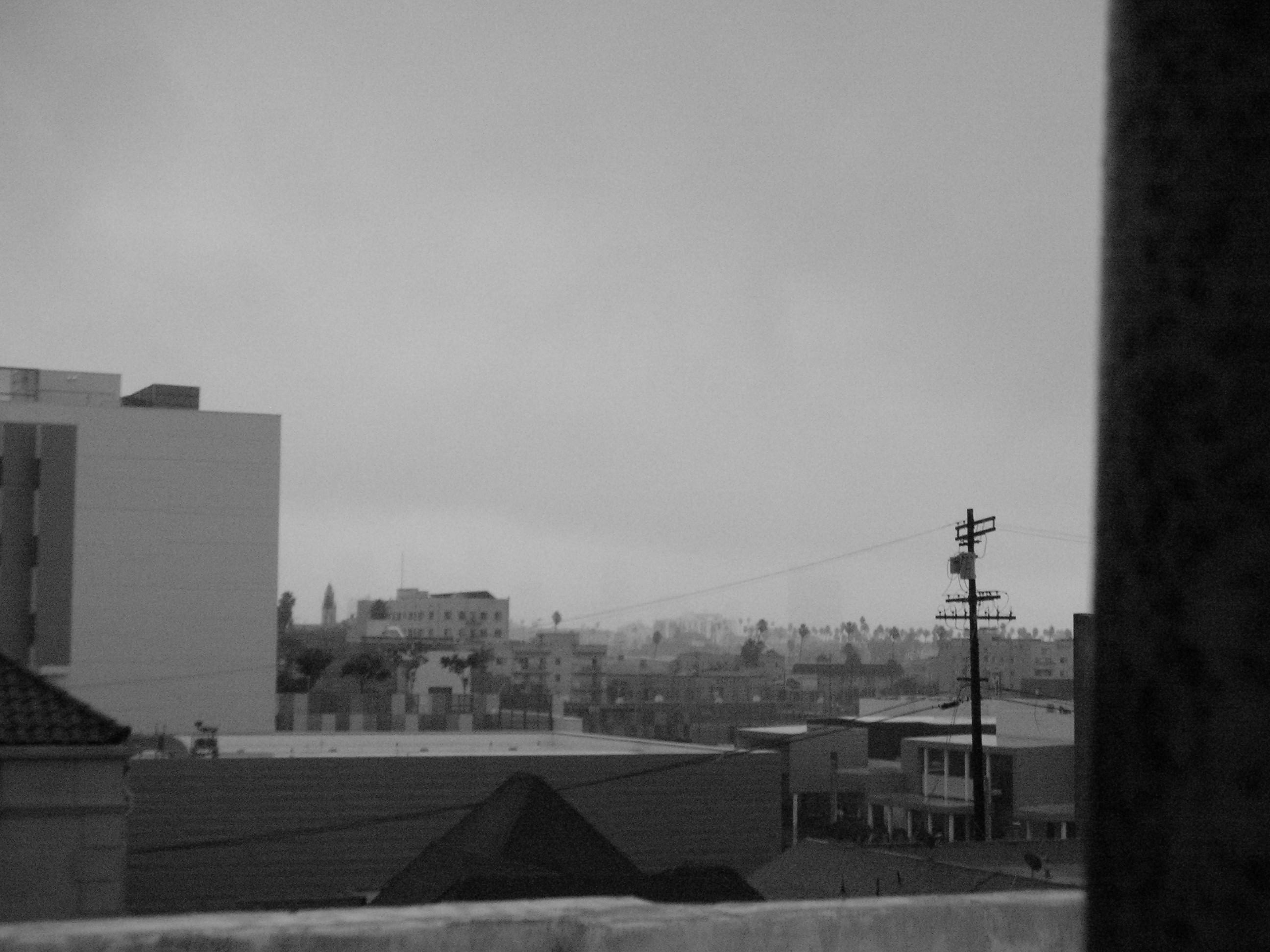
But speaking of capturing cities in images, Nick provides a view of Taipei I haven’t gotten before with his post “Five views from my rooftop“. In response, I went upstairs on this uncharacteristically wet Los Angeles day and snapped four views from mine.

Rainy days in Southern California make me listen to Roy Ayers’ “Everybody Loves the Sunshine“, not out of wishful thinking or (heaven forbid) irony, but because the song feels so suitable, on a sonic-aesthetic level, for times when the clouds roll in.

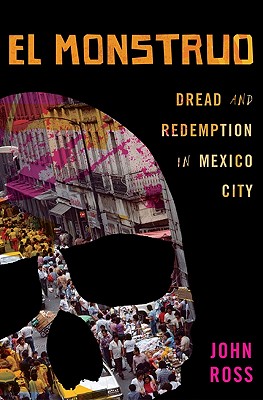
John Ross: El Monstruo

Of all the Mexico City books I brought there, John Ross wrote the biggest, heaviest, and most ambitious. Just as I recorded a Marketplace of Ideas interview with David Lida during the trip, so I would have recorded one with Ross, had he not died in January. Ross’ lifespan, 1938-2011, nearly matches that of my friend Tom, 1937-2011, who passed five months later. Since the dying Ross composed El Monstruo in as much an autobiographical frame of mind as an urban-historical one, I assembled the author’s storied life and persona in my mind as much as I did Mexico City’s.  While my concepts of “Tom” and “Mexico City” remain distant from one another, I now can’t quite make out where my concept of “Tom” ends and my concept of “John Ross” begins.

Neither man, dare I assume, would take offense if called an “old lefty” — or would much hesitate to refer to himself that way. In many an online back-and-forth over political and economic issues that now seem unimportant, I butted my head against certain elements of Tom’s worldview. It seemed to me then that he put too much faith — or assumed too much usefulness — in the notion of heroes and villains, or at least of rightheaded and wrongheaded figures who, when installed in power, could and would steer the world right or wrong. Milton Friedman often came up as his bête noire; the likes of John Kenneth Galbraith and Naomi Klein represented, for him, the team that knew what was up.

Klein tends to conflate Friedman with harsh dictators like Augusto Pinochet, who ruled Chile in the seventies and eighties with very little patience for political opposition. I don’t know if Tom, who had a lot of involvement in Chile over the decades, did the same, though he did tend to bring the subject back to the market reforms advised by economists trained at Friedman’s University of Chicago. Tom had a favorite phrase to use in these conversations: “greed barons.”

By John Ross’ standards, “greed barons” would count as an exceptionally civil way to refer to his own political villains. Though it takes the form of a history of Mexico City from the Big Bang to 2009, El Monstruo devotes the bulk of its pages to a chronicle of wrongs visited upon the city and its precursors by the powerful, be they Conquistadors, traitorous Indians, trespassing gringos, military strongmen, bloated tycoons, misguided intellectuals, or any of thousands of corrupt politicians at every conceivable level of influence. Ross covers natural disasters, too — he makes especially fascinating points about the 1985 earthquake and the subsequent rise of a downtown civil society — but mainly as opportunities to show the rulers, elected or otherwise, failing yet again to meet their obligations to the poor, the very poor, and the sort of poor alike.

Ross’ uncompromising ideological views shape each and every one of El Monstruo’s 453 pages, but he mitigates objections by (a) cramming more raw facts about Mexico City into the book than any other chronicler has and (b) admitting everything. Throughout the text, he delivers an unceasing stream of asides pointing out who in the historical and political life of el D.F. he considers conniving, slimy, devious, sociopathic, solipsistic, black-hearted, or — the best most high-profile Chilangos can do in Ross’ cosmology — well-intentioned but rendered ineffectual by the scheming opposition. He writes as a fount of judgment, but hey, so did Hunter Thompson.

With tendencies similar to those of his Freak-Powered generational (1937-2005) and professional compatriot, Ross includes much of his personal history in this city’s history. One paragraph you’re reading about a president draining Mexico’s coffers or a covered-up student massacre or the formation of a rebel Indian paramilitary unit, and the next you’re reading about John Ross getting hit by a speeding Hummer, John Ross sleeping under the stars in the Zócalo, or John Ross chatting with the waiters, watch-sellers, and street musicians who hang out in his neighborhood, el Centro Historico. Some might consider this contamination of the book’s scholarly value, but smart money says that nobody will write a richer history of Mexico City for a very long time indeed.

Ross’ publisher tends to promote his work with a rare blurb of praise from Thomas Pynchon (b. 1937), the fourth member of the American “Silent Generation” I’ve brought up so far. This is telling; Pynchon, Thompson, and Ross’ writing, from what I can tell, all seems driven by eminently conspiracy-fueled worldviews saturated by the idea that everyone and everything with power is deliberately connected, and the resulting evil web intends, secretly or not-so-secretly, to screw us. I may enjoy these guys’ books, but I just don’t see in humanity, at the top of the hierarchy or the bottom, the kind of competence — or even fully formed intention — needed to successfully pull such a screwing off. But I do see, for good or ill, the pragmatically improvisational spirit many writers celebrate about Mexico City, and which Ross himself ends El Monstruo by placing his faith in. This beloved dump of ours has already taken 500 years of screwing, he believes; it ain’t goin’ nowhere.

That said, despite my ever-increasing cultural fascination with Latin American countries like Mexico and Chile, I’ve never really understood all the excitement so many journalists and artists have drawn from Latin American politics. Maybe this comes down to another generational difference, but fascination is fascination. Next time I visit el D.F. — and there will be a next time — I’ll take a special trip on Line 1, get off at Isabel La Católica, and drink a café con leche for John Ross in front of the Hotel Isabel he called home for 25 years. And I don’t know what Tom drank, but when I finally get to Santiago, I’ll have one of those.